


¿Qué es una billetera GD?
Una billetera GD es una interfaz digital especializada diseñada para facilitar el almacenamiento, la gestión y la interacción con tus tokens GD. Dado que GD opera dentro del ecosistema EVM (Ethereum Virtual Machine), requiere una billetera que sea totalmente compatible con los estándares basados en Ethereum, lo que permite una integración perfecta con contratos inteligentes y aplicaciones descentralizadas. Ya sea que estés guardando GD para una inversión a largo plazo o participando activamente en el ecosistema, tener una billetera confiable es el primer paso hacia la autocustodia.
¿Estás buscando una billetera cripto confiable y segura para tus GD? Bitget Wallet será tu mejor opción. Con la confianza de 40 millones de usuarios, puedes explorar libremente la Web3 en Bitget Wallet. ¡Comienza tu viaje ahora!
Descarga la billetera GD de Bitget
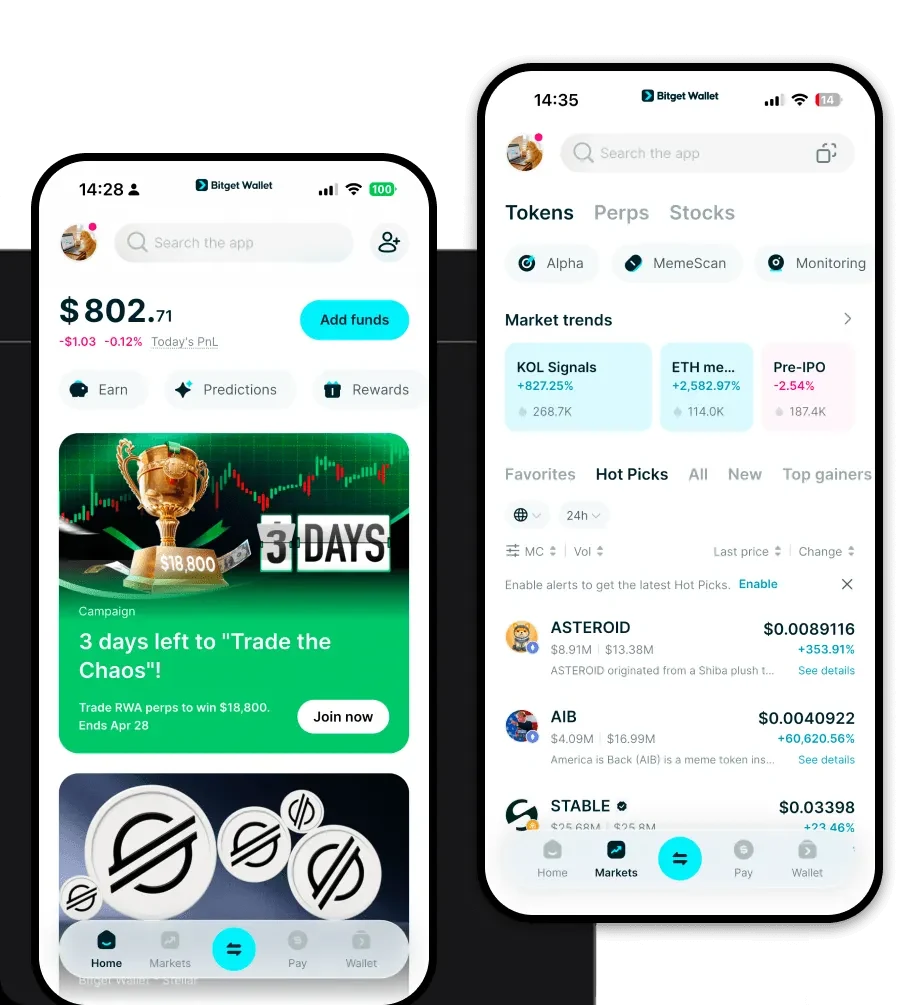
Para comenzar a administrar tus activos, necesitas una puerta de entrada sólida al mundo Web3. Bitget Wallet ofrece una experiencia integral y centrada en el usuario que garantiza que mantengas el control total sobre tus claves privadas. Con soporte multicadena, no estás limitado a un solo ecosistema; puedes administrar tus GD junto con miles de otros activos sin esfuerzo.
Puedes acceder a tus activos en cualquier lugar y en cualquier momento, ya que la plataforma ofrece una accesibilidad multiplataforma completa. Ya sea que prefieras administrar tu cartera sobre la marcha a través de iOS o Android, o que necesites la comodidad de una extensión de navegador para interacciones de escritorio, Bitget Wallet te cubre. Para comenzar, puedes descargar Bitget Wallet y configurar al instante tu cuenta segura de autocustodia.
¿Por qué elegir la billetera GD de Bitget?
- Compatibilidad nativa con EVM: Bitget Wallet está construida con una integración profunda de EVM, lo que garantiza que la interacción con contratos inteligentes y protocolos DeFi relacionados con GD sea fluida y sin errores.
- Seguridad robusta de activos: Con un fondo de protección de usuarios dedicado de 300 millones de USD y tecnología de cifrado avanzada, tus tokens GD están protegidos contra el acceso no autorizado y las amenazas cibernéticas comunes.
- Integración perfecta con el ecosistema Web3: Más allá del simple almacenamiento, la billetera actúa como un portal a todo el espacio Web3, permitiéndote conectarte directamente a DApps, mercados de NFT y plataformas DeFi.
- Gestión inteligente de gas: Como activo basado en EVM, las transacciones de GD requieren tarifas de gas; Bitget Wallet proporciona herramientas intuitivas de estimación y optimización de tarifas de gas para garantizar que tus transacciones sean rápidas y rentables.
Cómo crear una billetera GD
Configurar tu billetera es un proceso sencillo diseñado tanto para principiantes como para usuarios experimentados:
- Descarga e instalación: Visita el sitio web oficial para descargar Bitget Wallet para tu dispositivo preferido (móvil o extensión de navegador).
- Crear una nueva billetera: Abre la aplicación y selecciona 'Crear billetera'. Se te pedirá que establezcas una contraseña segura para el acceso a tu dispositivo local.
- Copia de seguridad de tu frase de recuperación: La aplicación generará una frase mnemotécnica de 12 palabras. Escríbela en papel y guárdala en un lugar seguro y sin conexión; esta es la llave maestra de tus activos GD.
- Verificar frase: Confirma la frase de recuperación en la aplicación para finalizar el proceso de creación.
- Importar o agregar GD: Una vez que tu billetera esté activa, puedes usar la función 'Agregar token' para buscar GD manualmente si no aparece automáticamente, asegurándote de estar conectado a la dirección de contrato EVM correcta.
- Trading: Ejecuta intercambios (swaps) directamente dentro de la interfaz de la billetera utilizando liquidez agregada de DEX, lo que garantiza que obtengas el mejor precio para tus operaciones de GD.
- Gestión de activos: Organiza, visualiza y transfiere tus tokens GD a través de diferentes direcciones con un panel limpio e intuitivo que simplifica el seguimiento financiero complejo.
- Seguimiento de cartera: Monitorea el rendimiento en tiempo real y los cambios de valor histórico de tus tenencias de GD con herramientas analíticas integradas que brindan información profunda sobre tus activos.
- Interacción entre cadenas (Cross-chain): Aprovecha las capacidades de puente (bridge) de la billetera para mover activos entre diferentes cadenas, lo que te permite utilizar tu liquidez de GD en ecosistemas DeFi más amplios.
¿Qué puedes hacer con una billetera GD?
Tener una billetera GD abre una variedad de opciones de utilidad dentro de la infraestructura EVM:
En qué se diferencian las billeteras GD de otras billeteras cripto
Elegir la billetera adecuada para un token basado en EVM como GD a menudo se reduce a la arquitectura subyacente. A diferencia de las billeteras basadas en UTXO (como las de Bitcoin), que se centran en las entradas y salidas de transacciones, una billetera GD opera con un modelo basado en cuentas. Esto significa que tu billetera funciona como el saldo de una cuenta bancaria, lo que la hace significativamente más eficiente para interactuar con contratos inteligentes complejos.
Además, debido a que GD es parte del ecosistema EVM, tu billetera maneja las tarifas de gas de manera diferente a las cadenas que no son EVM. Bitget Wallet está optimizada para manejar la naturaleza dinámica de las fluctuaciones de gas de EVM, brindando una experiencia más fluida en comparación con las billeteras genéricas que pueden tener dificultades con la congestión de la red o el tráfico alto. Mientras que otras billeteras podrían priorizar el almacenamiento simple, Bitget Wallet prioriza la experiencia de 'Infraestructura', centrándose en la velocidad, la interoperabilidad y la capacidad de ejecutar comandos complejos en la cadena sin salir de la aplicación.
