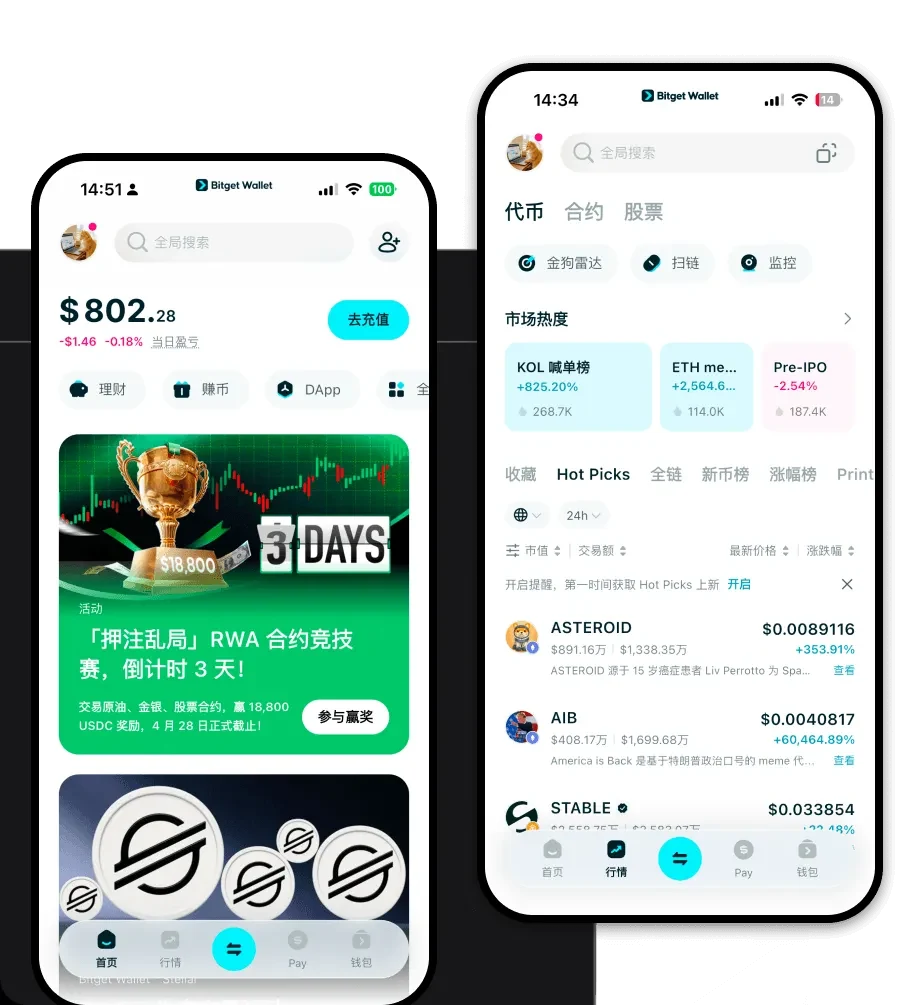
What is a QuestEum Wallet?
A QuestEum wallet is a digital interface that allows you to interact with the QuestEum asset, which operates on the EVM (Ethereum Virtual Machine) blockchain. Because QuestEum is built on EVM-compatible infrastructure, it functions as a digital asset project that leverages blockchain technology, often associated with decentralized ecosystems. It is supported by major wallets like Bitget Wallet, allowing users to store, manage, and explore Web3 functionalities securely. Having a dedicated wallet is the first step toward self-custody, ensuring that you—and only you—have full control over your private keys and digital assets.
Download Bitget QuestEum Wallet
To start your journey with QuestEum, you need a robust, user-friendly gateway that supports the complexities of EVM ecosystems. Bitget Wallet offers a comprehensive solution, providing a seamless experience for both beginners and advanced DeFi users. Whether you are on the move or at your desktop, the platform ensures you stay connected to your assets.
Bitget Wallet stands out by providing true self-custody, meaning your private keys are stored locally on your device, not on a server. It supports a vast array of chains and tokens, making it the perfect "best wallet for QuestEum." You can access your portfolio via a mobile app on iOS and Android, or through a browser extension for desktop interactions. To get started, you can download Bitget Wallet and instantly gain access to a secure environment designed for the modern Web3 user.
Why Choose Bitget QuestEum Wallet?
Choosing the right wallet for an EVM-based DeFi token is crucial for both security and efficiency. Bitget Wallet is specifically optimized for the EVM environment, offering several distinct advantages:
- Seamless EVM Compatibility: Bitget Wallet integrates perfectly with all EVM-compatible networks, ensuring that you can interact with QuestEum smart contracts without compatibility issues.
- Advanced DeFi Functionality: As a DeFi-focused wallet, it provides built-in tools for seamless interaction with decentralized applications (DApps), making it easier to navigate complex protocols.
- Smart Contract Visualization: Before signing transactions, Bitget Wallet provides clear, human-readable insights into smart contract interactions, adding a critical layer of security against malicious dApps.
- Aggregated DEX Liquidity: You can execute trades directly within the wallet, leveraging aggregated liquidity from hundreds of DEXs to ensure you get the best possible price for your QuestEum swaps.
- Gas Fee Optimization: The wallet provides intelligent gas fee estimations, helping you manage transaction costs effectively on the EVM network.
How to Create a QuestEum Wallet
Setting up your wallet is a straightforward process that prioritizes security. Follow these steps to get your QuestEum wallet address ready:
1. Download and Install: Head to the official website and download the Bitget Wallet app for your mobile device or browser extension.2. Create a New Wallet: Open the app, select "Create a New Wallet," and set a strong password to protect your local access.3. Backup Your Seed Phrase: The app will generate a 12 or 24-word recovery phrase. Write this down on paper and store it securely—this is your only way to recover funds if your device is lost.4. Verify Your Backup: Confirm the recovery phrase in the app to ensure you have recorded it correctly.5. Add QuestEum to Your Dashboard: Once your wallet is active, navigate to the token list, search for QuestEum, and add it to your main dashboard to view your balance and QuestEum wallet address.
What Can You Do With a QuestEum Wallet?
With your QuestEum safely stored in your Bitget Wallet, you can fully participate in the decentralized economy. Here is how you can utilize your assets:
- Trading: You can exchange QuestEum for other tokens directly within the Bitget Wallet interface by utilizing the integrated DEX swap feature, which routes your trade through the most efficient liquidity pools.
- Staking: By connecting your wallet to authorized DeFi protocols, you can participate in staking, allowing you to lock up your QuestEum tokens to help secure the network in exchange for potential yield rewards.
- Liquidity Provision: You can use your QuestEum to provide liquidity to decentralized exchanges, earning a share of the transaction fees generated by other users who trade against your pool.
- Holding for Long-term Value: You can safely store your QuestEum in a self-custodial wallet, ensuring that your assets remain protected in cold or hot storage while you wait for your long-term investment goals to materialize.
How QuestEum Wallets Are Different from Other Crypto Wallets
Not all wallets are created equal, especially when handling EVM-based DeFi tokens like QuestEum. While some wallets are designed for simple Bitcoin storage (using the UTXO model), a specialized EVM wallet like Bitget Wallet is architected for the Account Model used by Ethereum and its derivatives.
Unlike simple wallets that lack DApp support, Bitget Wallet is built to handle the complexities of smart contract interactions. It manages EVM-specific requirements, such as gas limit configurations and token approval management, which are essential for DeFi activities. Furthermore, while some wallets struggle with cross-platform synchronization, Bitget Wallet ensures your assets are perfectly synced across mobile and desktop, providing a consistent experience regardless of where you manage your QuestEum.