





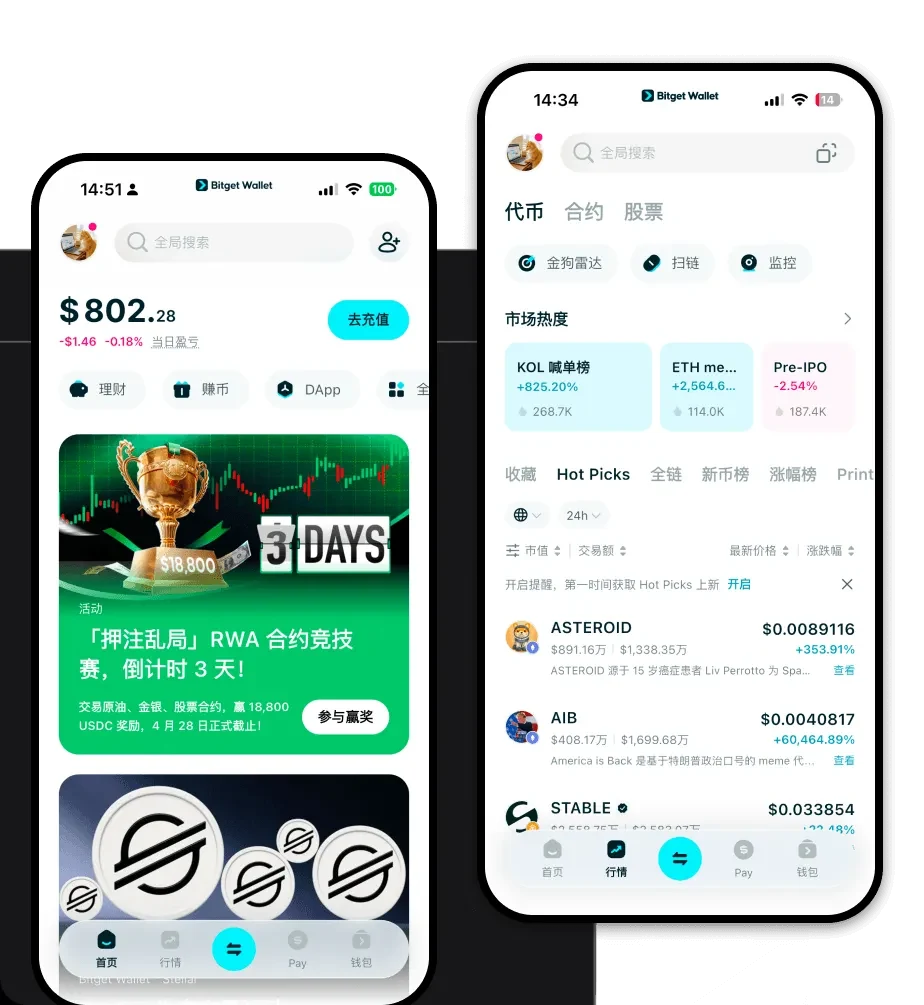
What is a JFD Wallet?
A JFD wallet is a specialized digital interface designed to interact with the blockchain network where the JFD token resides. Specifically, as an asset operating within the EVM (Ethereum Virtual Machine) ecosystem, JFD requires a wallet that supports Ethereum-based standards, enabling seamless integration with decentralized applications and smart contracts. JFD is a digital asset that can be securely managed and stored using Bitget Wallet. Bitget Wallet provides a reliable platform for users to access Web3 services and interact with their JFD holdings, trusted by 40 million users globally.
Download Bitget JFD Wallet
To begin managing your assets, you need a robust, multi-chain solution that offers full control over your digital identity. Bitget Wallet stands out as a premier choice, providing a user-friendly interface that simplifies the complexities of Web3. Whether you are a beginner or an experienced trader, you can download Bitget Wallet across various platforms, including iOS, Android, and browser extensions.
The application ensures that you maintain full custody of your private keys, meaning your assets remain under your direct control at all times without reliance on centralized intermediaries. By integrating support for over 130 public chains, Bitget Wallet allows you to manage JFD alongside a vast array of other tokens, ensuring that your digital portfolio is always accessible and synchronized across all your devices.
Why Choose Bitget JFD Wallet?
Choosing the right wallet for JFD involves looking for performance, security, and compatibility. Bitget Wallet is architected to handle the specific requirements of the EVM ecosystem effectively:
- Native EVM Compatibility: Bitget Wallet is built to fully support the Ethereum Virtual Machine, ensuring that you can interact with JFD smart contracts and DeFi protocols without compatibility issues.
- Optimized Gas Fee Management: The wallet provides real-time gas fee estimations and transaction speed settings, allowing you to manage costs efficiently during network congestion.
- Comprehensive Security Infrastructure: With a $300 million user protection fund and advanced encryption, the wallet adds a crucial layer of safety for your JFD holdings.
- Seamless DApp Integration: Access the expansive world of decentralized finance directly through the built-in DApp browser, which is optimized for high-speed interaction with JFD-related platforms.
- Cross-Platform Synchronization: Whether you prefer mobile trading or desktop browser extensions, your wallet data remains consistent, offering a unified experience across all environments.
How to Create a JFD Wallet
Creating your wallet is a straightforward process designed for security and ease of use. Follow these steps to get started:
1. Download and Install: Visit the official website to download Bitget Wallet for your specific device (iOS, Android, or Browser Extension).
2. Initiate Wallet Creation: Open the application and select the 'Create a New Wallet' option. You will be prompted to set a strong password to secure your local device access.
3. Secure Your Seed Phrase: The application will generate a unique 12-to-24-word recovery phrase. Write this down on paper and store it in a secure, offline location. Never share this with anyone, as it is the only way to recover your JFD assets if you lose your device.
4. Verify Your Phrase: You will be asked to re-enter the recovery words in the correct order to confirm that you have saved them correctly.
5. Import or Add JFD: Once the wallet is initialized, navigate to the asset management section. If JFD is not automatically visible, use the 'Add Token' feature and paste the JFD contract address to display your balance.
What Can You Do With a JFD Wallet?
A JFD wallet is more than just a storage container; it is a gateway to the broader DeFi ecosystem. By using a compatible wallet like Bitget, you can perform several key activities:
- Trading: Execute swaps and trades for JFD directly through the wallet's integrated DEX aggregator, which sources liquidity from multiple decentralized exchanges to provide the best possible prices.
- Wallet Storage: Safely hold your JFD tokens with the peace of mind that comes from self-custody and robust encryption protocols that protect your private keys.
- Liquidity Provision: Participate in decentralized finance by contributing your JFD to liquidity pools, allowing you to earn potential rewards based on trading volume within those pools.
- Asset Management: Monitor your entire portfolio in one place, tracking the performance of your JFD alongside other assets and managing your multi-chain holdings from a single, intuitive dashboard.
How JFD Wallets Are Different from Other Crypto Wallets
Not all wallets are created equal, especially when dealing with specific token standards. A JFD wallet, being EVM-based, functions differently than wallets designed for non-EVM chains like Bitcoin or Solana. While Bitcoin wallets often utilize the UTXO (Unspent Transaction Output) model, which focuses on tracking individual transaction outputs, your JFD wallet operates on an 'Account-Based' model. This allows for more complex state changes, which is essential for executing smart contracts in the DeFi space.
Furthermore, because JFD exists on an EVM chain, you must account for 'Gas Fees'—the transaction costs paid to network validators. Unlike chains with resource-based models (like EOS) that require staking for CPU/RAM, your JFD wallet requires a native chain coin to pay for these gas fees to process any transaction. Bitget Wallet simplifies this by providing an interface that clearly displays these fee requirements, helping you avoid failed transactions and ensuring that your interactions with JFD are as smooth and predictable as possible.
