





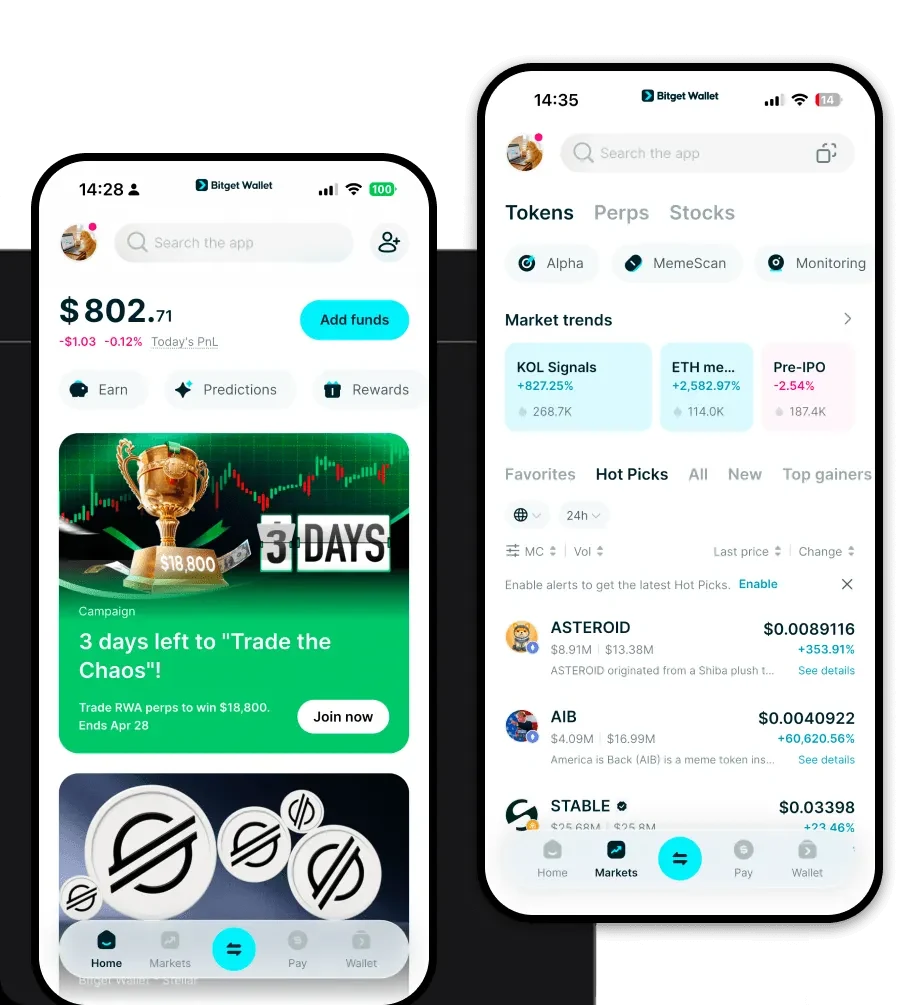
What is a BSDETH Wallet?
A BSDETH wallet serves as your personal gateway to the Ethereum network, allowing you to securely interact with the blockchain and manage your assets. BSDETH is an Ethereum-based token that can be securely managed and stored using the Bitget Wallet, which is trusted by 40 million users for exploring Web3. As an EVM-based asset, BSDETH operates within the robust Ethereum ecosystem, benefiting from its decentralized infrastructure and extensive smart contract capabilities.
Download Bitget BSDETH Wallet
Getting started with your digital assets requires a reliable interface that prioritizes both security and user experience. Bitget Wallet provides a comprehensive solution for managing your tokens across multiple chains, ensuring you remain in total control of your private keys through a self-custodial architecture. Whether you are on the move with an iOS or Android device, or prefer the convenience of a browser extension for desktop interactions, the platform is designed to be intuitive for both newcomers and advanced users. You can download Bitget Wallet today to start managing your BSDETH with professional-grade tools.
Why Choose Bitget BSDETH Wallet?
For DeFi assets like BSDETH, choosing the right infrastructure is critical. Bitget Wallet is optimized for the EVM environment, providing a seamless experience for token holders:
- EVM Compatibility: Designed specifically for Ethereum-based tokens, ensuring that your BSDETH transactions are processed smoothly within the standard EVM framework.
- Ethereum Network Security: Leverages the battle-tested security protocols of the Ethereum blockchain, combined with a 300 million USD user protection fund for added peace of mind.
- Smart Contract Interoperability: Easily connect with various dApps and protocols without compatibility issues, essential for complex DeFi operations.
- High Liquidity Access: Aggregates hundreds of decentralized exchanges (DEXs) and liquidity pools, ensuring you always get the best rates for your trades.
How to Create a BSDETH Wallet
Setting up your wallet is a straightforward process designed to secure your assets from the very first step:
- Download and Install: Visit the official website or your app store to download the Bitget Wallet application.
- Create a New Wallet: Select 'Create Wallet' and ensure you back up your mnemonic phrase in a secure, offline location.
- Configure Network Settings: Since BSDETH is an Ethereum-based token, ensure your wallet is set to the Ethereum Mainnet, which is usually the default setting.
- Verification: Complete the security setup, such as setting a transaction password or enabling biometric authentication.
- Add Token: Use the 'Add Token' feature and paste the BSDETH contract address to make the asset visible in your dashboard.
What Can You Do With a BSDETH Wallet?
Holding BSDETH in a specialized wallet unlocks the full potential of your DeFi strategy. Here is how you can utilize your tokens:
- Trading: Execute instant swaps for BSDETH against other Ethereum-based assets directly through the integrated DEX aggregator.
- Staking: Participate in network or protocol-level staking to potentially earn yields on your idle BSDETH holdings.
- Providing Liquidity: Deposit your BSDETH into liquidity pools to facilitate decentralized trading and earn transaction fee rewards.
- Cross-chain Bridging: Utilize the built-in cross-chain bridge to move your assets between Ethereum and other supported networks with minimal friction.
- Portfolio Management: Monitor your entire asset performance in real-time, tracking price fluctuations and historical data within a single, unified interface.
How BSDETH Wallets Are Different from Other Crypto Wallets
Not all wallets are created equal, especially when dealing with EVM-based DeFi tokens. Unlike legacy wallets that might struggle with complex smart contract interactions, a dedicated BSDETH wallet utilizing the EVM account model allows for precise gas fee estimation and transaction speed adjustments. While BTC-based wallets focus on UTXO (Unspent Transaction Output) management, an Ethereum-centric wallet like Bitget is designed to handle state-based account models, allowing for the complex logic required for DeFi participation. This makes it significantly more efficient for interacting with dApps compared to generic wallets that lack deep integration with Ethereum's specific architecture.
