What is VietQR: How to Use QR Code Payment in Vietnam?
VietQR is a payment system in Vietnam that uses a code. This code is like a shortcut that helps people pay for things quickly. When you use VietQR you do not have to enter your bank details by hand. You can just scan the code with your phone. The payment is made.
People in Vietnam are using QR codes to pay for things more. VietQR is a part of this because it connects banks, users and merchants together. You can use VietQR to pay for food at a restaurant to buy things or to send money to a friend. It is very easy to use. You just scan the code. Confirm the payment.
VietQR is very popular in Vietnam because it is fast, accurate and easy to use. Lots of people are using VietQR to pay for things every day. You can use VietQR with your banking app or with other tools like Bitget Wallet. These tools let you manage your money and try ways of paying that work, with QR codes.
In this article we will explain how VietQR works in Vietnam. We will also tell you how to use VietQR to make payments and why it is becoming the popular way to pay in Vietnam. VietQR is a part of the way people pay for things in Vietnam now. VietQR makes it easy for people to pay for things without having to enter their bank details every time.
Key Takeaways
- What is VietQR: a national QR code system enabling instant bank transfer Vietnam
- VietQR payment is fast, secure, and widely accepted across Vietnam
- Works across multiple banks using one unified QR standard
- Used for in-store, online shopping, and peer-to-peer payments
- Easy to use with mobile banking apps and digital wallets
What Is VietQR?
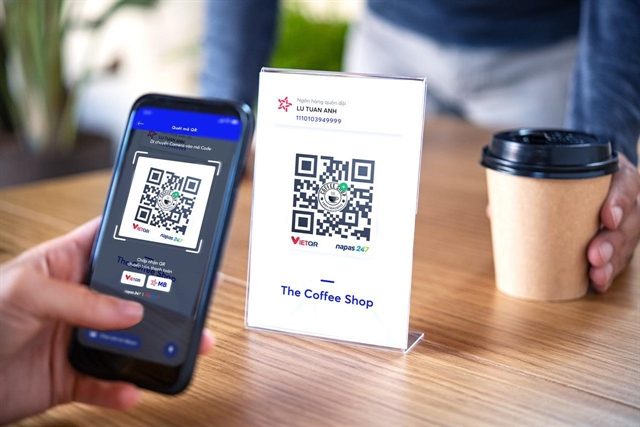
What is VietQR? VietQR is Vietnam’s national QR code standard developed by NAPAS, enabling seamless VietQR bank transfer Vietnam transactions across banks and payment apps. It allows users to scan a QR code and instantly transfer money without manually entering account details.
This VietQR payment method Vietnam connects multiple banks into a single ecosystem, ensuring compatibility across different mobile apps. By standardizing QR code payment Vietnam, VietQR eliminates errors and improves transaction efficiency.
Source X
Why Do Users Prefer VietQR for QR Payments in Vietnam?
VietQR payment has quickly become a preferred option for daily transactions in Vietnam due to its speed, simplicity, and reliability. As QR code payment Vietnam continues to grow, users are increasingly choosing VietQR because it removes friction from traditional banking processes. Instead of manually entering account details, users can complete a VietQR bank transfer Vietnam in just a few seconds with minimal effort, making it ideal for both small purchases and larger transactions.
- Fast and instant payment confirmation (real-time via Napas247, typically within seconds)
- No need to manually input bank account details, reducing errors and saving time
- Works 24/7, including weekends and holidays, without delays
- Simple and user-friendly interface, suitable for all age groups
- Widely accepted across merchants nationwide, from street vendors to major retailers
How Do QR Code Payments Work in Vietnam?
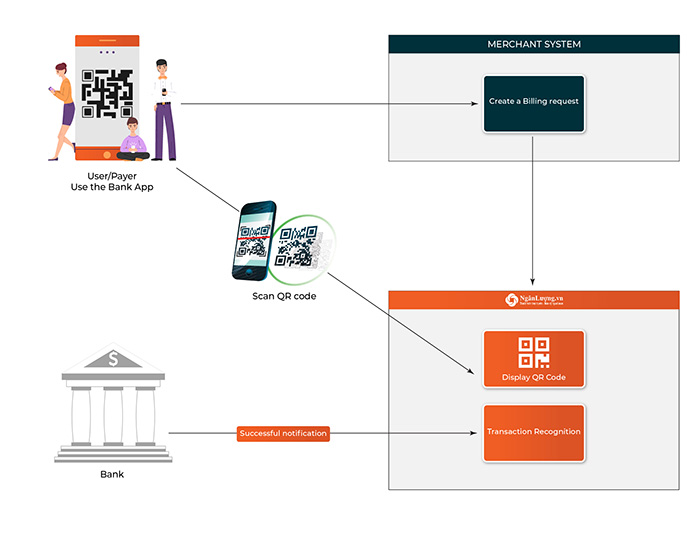
Do QR code payments work in Vietnam? Yes—and VietQR is the core system behind this process. The VietQR payment process allows users to scan a code that contains pre-filled transaction details, making payments faster and more accurate.
In a typical VietQR QR code payment, the merchant displays a QR code linked to their bank account. Users scan it using their banking app, confirm the payment, and complete an instant bank transfer Vietnam transaction.
This system bridges traditional banking with modern digital payments, making VietQR one of the most efficient payment solutions in the country.
Source X
Where Can You Use VietQR in Vietnam?
Where can you use VietQR in Vietnam? VietQR is widely accepted across both urban and rural areas, making it one of the most practical QR code payment Vietnam solutions for everyday use.
1. In-Store Payment (Restaurants, Retail Shops, Taxis)
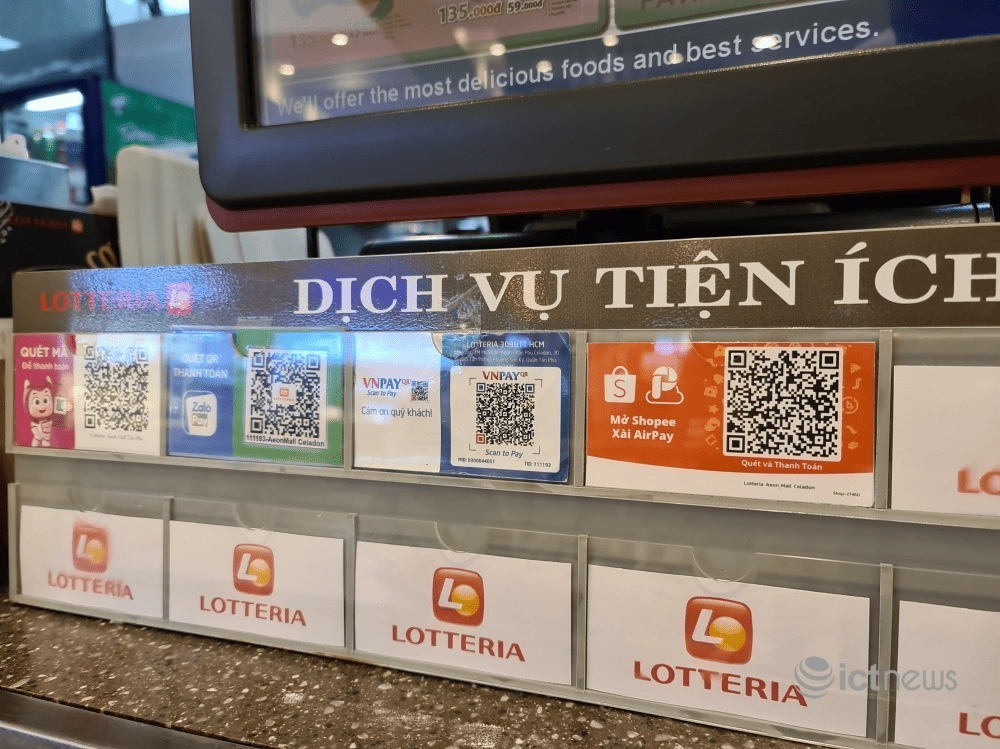
VietQR payment is widely used for in-store transactions across Vietnam, making it one of the most convenient ways to pay in daily life. From street food vendors to large retail chains, customers can simply scan a QR code and complete an instant bank transfer Vietnam without handling cash. This seamless QR code payment Vietnam experience is especially popular in busy cities like Ho Chi Minh City and Hanoi, where speed and convenience are essential.
- Pay at restaurants, cafés, and street food vendors with a quick scan
- Use in retail shops, supermarkets, and convenience stores
- Accepted by taxi drivers and ride-hailing services
- Simple scan-and-pay experience with instant confirmation
Source X
2. Online Checkout (eCommerce, CellphoneS, etc.)
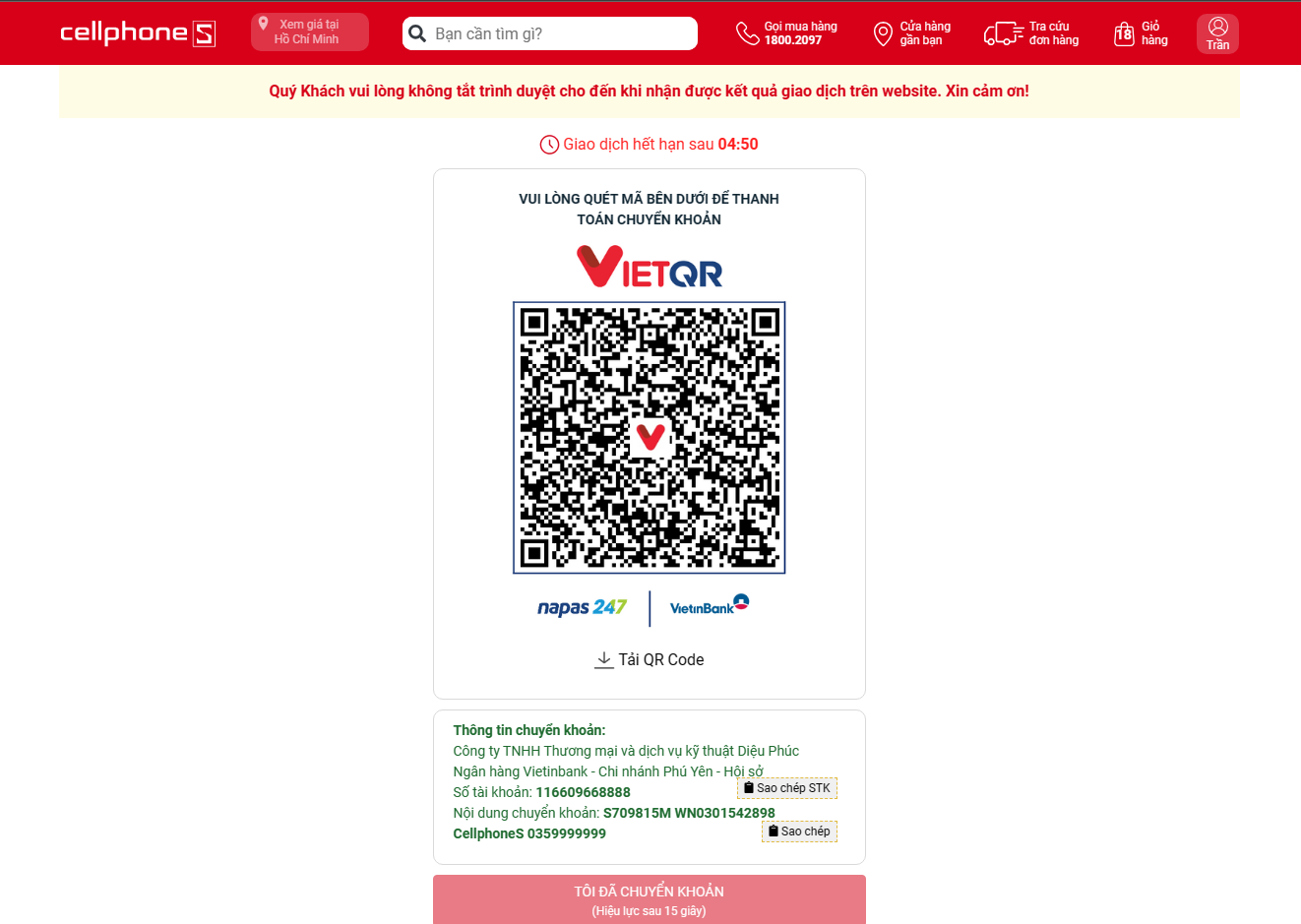
VietQR payment for online shopping has become increasingly common as more eCommerce platforms integrate QR-based checkout options. During the checkout process, a QR code is displayed, allowing users to complete the VietQR QR code payment instantly through their banking app. This eliminates the need for manual input and ensures a smooth and accurate payment experience.
- QR code displayed during checkout on eCommerce platforms
- Scan using a supported mobile banking app
- Auto-filled payment details (amount, account, order info)
- Complete payment instantly with real-time confirmation
Source X
3. Peer-to-Peer Transfer and Bill Payments
Beyond retail and online purchases, VietQR bank transfer Vietnam is also widely used for peer-to-peer transactions and bill payments. Users can quickly send money to friends, split expenses, or pay for services using a simple QR scan. This flexibility makes VietQR a practical payment method Vietnam for both personal and everyday financial needs.
- Send money instantly to friends and family
- Pay utility bills and service fees
- Split payments easily in group transactions
- Use VietQR payment for online shopping, invoices, and transfers
Is VietQR Safe?
Yes, VietQR is safe because it operates within the official banking system. Every VietQR payment is processed through secure bank infrastructure, reducing the risk of fraud.
The VietQR QR code payment system minimizes human error by auto-filling transaction details, which improves accuracy and reduces mistakes.
However, users should still verify merchant information before confirming payments and avoid scanning unknown QR codes to ensure safe usage.
What Banks Support VietQR and What Are the Limits?
VietQR supported banks Vietnam include most major financial institutions connected through the NAPAS network, making the system highly accessible.
Which Banks Support VietQR in Vietnam?
VietQR supported banks in Vietnam include most major financial institutions connected through the NAPAS network, making VietQR bank transfer Vietnam highly accessible nationwide. Thanks to this unified system, users can perform VietQR payment transactions seamlessly across different banks without compatibility issues, which is a key reason why QR code payment Vietnam adoption continues to grow.
- Major banks such as Vietcombank, BIDV, and VietinBank
- Popular private banks including Techcombank, ACB, and VPBank
- Other widely used banks like MB Bank, TPBank, and Sacombank
- Many additional banks integrated within the NAPAS ecosystem
| Bank Group | Examples | VietQR Coverage | Fee Policy (Typical) | User Experience | Key VietQR Benefits |
| State-Owned Banks | Vietcombank, BIDV, VietinBank | Full NAPAS integration | Low fees / often free | Stable but slightly traditional UI | High trust, strong infrastructure, wide acceptance |
| Top Private Banks | Techcombank, ACB, VPBank | Full support with strong mobile apps | Free or very low fees | Modern, fast, user-friendly apps | Better UX, fast QR scanning, optimized mobile experience |
| Digital-First Banks | MB Bank, TPBank | Advanced VietQR features | Mostly free transfers | Highly optimized digital interface | Fastest processing, strong QR integration, automation features |
| Other Commercial Banks | Sacombank, VIB, HDBank | Broad NAPAS compatibility | Varies (low fees) | متوسط (depends on app quality) | Wide accessibility, supports most QR payment use cases |
What Are the Transaction Limits and Fees?
VietQR payment method Vietnam offers flexible transaction limits and generally low costs, making it suitable for both small daily payments and large-value transfers. While limits and fees may vary depending on the bank, the system is designed to support instant bank transfer Vietnam transactions efficiently and affordably.
- Minimum transaction: around 2,000 VND
- Maximum transaction: up to billions of VND per transfer (depending on bank policies)
- Fees: vary by bank, but often low or free for standard transactions
| Criteria | VietQR (General - NAPAS System) | Traditional Bank Transfer |
| Minimum Transaction | ~2,000 VND | Usually no strict minimum |
| Maximum Transaction | Up to billions VND (bank-dependent) | Similar, but may require additional verification |
| Transfer Fees | Low or free (many banks waive fees) | Often charged (fixed fee or % depending on bank) |
| Processing Fee Transparency | Clear before confirmation | Sometimes varies by transfer type |
| Speed | Instant (Napas247, real-time) | Instant (if same system) or delayed |
| Availability | 24/7, including holidays | May depend on banking hours (non-247 cases) |
| User Effort Cost | Very low (scan QR, auto-fill) | Higher (manual input, more steps) |
| Error Risk Cost | Minimal (auto-filled details) | Higher (manual entry errors may cause delays or fees) |
How fast are VietQR transactions processed?
VietQR transactions are designed to deliver instant bank transfer Vietnam performance, making them one of the fastest payment methods available today. Unlike traditional bank transfers that may take minutes or even hours, the VietQR payment process operates in real time through the Napas247 system, ensuring immediate confirmation and settlement.
This speed advantage is especially important for everyday QR code payment Vietnam use cases, where users expect fast, seamless, and reliable transactions across different banks and platforms.
| Feature | VietQR Payment | Traditional Bank Transfer | E-Wallet Payment (MoMo, ZaloPay) |
| Speed | Instant (1–3 seconds via Napas247) | Instant (same bank) or minutes–hours (interbank) | Instant (within wallet ecosystem) |
| Processing Type | Real-time settlement | Batch or semi real-time (depending on bank) | Real-time (wallet-based) |
| Availability | 24/7, including weekends & holidays | May be delayed outside working hours (non-247 cases) | 24/7 |
| Cross-Bank Transfers | Seamless via unified QR system | Slower, requires manual input | Limited to wallet users |
| User Confirmation Time | Immediate confirmation after scan | May require waiting for confirmation | Instant confirmation |
| Failure Risk (Timing) | Very low | Higher during peak hours or system delays | Low within ecosystem |
| Best Use Case | Daily payments, retail, instant transfers | Scheduled or large transfers | Small payments within wallet apps |
How Does VietQR Compare to Other Payment Methods in Vietnam?
As digital payments continue to evolve, users now have multiple options including cash, traditional bank transfers, and e-wallets. However, VietQR stands out due to its simplicity, speed, and seamless cross-bank functionality.
By combining the reliability of banking infrastructure with the convenience of QR code payment Vietnam, VietQR payment offers a more efficient and user-friendly experience for everyday transactions.
Is VietQR better than cash payments?
As Vietnam moves toward a cashless economy, many users are shifting from physical cash to digital solutions like VietQR payment. Compared to traditional cash transactions, VietQR QR code payment offers a more modern, efficient, and secure way to complete everyday purchases. By enabling instant bank transfer Vietnam through a simple scan, VietQR reduces friction and improves the overall payment experience.
- Contactless and hygienic, no need to handle physical cash
- Faster checkout, especially in busy environments like restaurants and retail stores
- No need to carry physical money, reducing risk of loss or theft
- Instant transaction confirmation, eliminating the need for change or waiting
- More convenient for both users and merchants, with a simple scan-and-pay process
How does VietQR compare to traditional banking?
When it comes to sending money, VietQR offers a modern alternative to traditional bank transfers. By leveraging QR codes, it simplifies payments, reduces errors, and speeds up the process, making daily transactions faster and more convenient. The table below highlights how VietQR stacks up against traditional banking methods:
| Feature | VietQR Payment | Traditional Bank Transfer |
| Speed | Instant (1–3 seconds via Napas247) | Slower (minutes to hours, especially interbank) |
| Input Method | Auto-filled via QR scan | Manual entry (account number, bank, amount) |
| Convenience | High (scan → confirm) | Medium (multiple steps required) |
| Error Risk | Very low (pre-filled details) | Higher (manual input errors) |
| Availability | 24/7, including holidays | May be delayed outside banking hours |
| User Experience | Mobile-first, seamless | More complex and time-consuming |
| Best Use Case | Daily payments, quick transfers | Scheduled or formal transactions |
How does VietQR compare to e-wallets like MoMo or ZaloPay?
To help you better understand what is VietQR and how it works in real-world scenarios, here are answers to some of the most common questions about VietQR payment, security, supported banks, and usage in Vietnam.
| Feature | VietQR Payment | E-Wallets (MoMo, ZaloPay) |
| Funding Source | Direct bank account | Stored wallet balance |
| Top-Up Requirement | Not required | Required before spending |
| Cross-Bank Compatibility | Works across all supported banks | Limited within wallet ecosystem |
| Speed | Instant (real-time bank transfer) | Instant within wallet |
| Adoption Scope | Nationwide (banks + merchants) | Strong but app-dependent |
| User Flow | Scan QR → confirm payment | Open app → ensure balance → pay |
| Flexibility | High (works with any linked bank) | Medium (depends on wallet usage) |
| Best Use Case | Bank-based QR payments | Promotions, cashback, micro-payments |
How does VietQR compare to e-wallets like MoMo or ZaloPay?
As digital payments grow in Vietnam, users often compare VietQR with popular e-wallets like MoMo and ZaloPay to determine which option better fits their needs.
While both offer fast and convenient QR code payment Vietnam experiences, VietQR payment stands out by connecting directly to bank accounts, eliminating the need for top-ups and enabling seamless cross-bank transactions.
| Feature | VietQR Payment | E-Wallets (MoMo, ZaloPay) |
| Funding Source | Direct bank account | Stored wallet balance |
| Top-Up Requirement | Not required | Required before spending |
| Cross-Bank Compatibility | Works across all supported banks | Limited within wallet ecosystem |
| Speed | Instant (real-time bank transfer) | Instant within wallet |
| Adoption Scope | Nationwide (banks + merchants) | Strong but app-dependent |
| User Flow | Scan QR → confirm payment | Open app → ensure balance → pay |
| Flexibility | High (works with any linked bank) | Medium (depends on wallet usage) |
| Best Use Case | Bank-based QR payments | Promotions, cashback, micro-payments |
Why should users choose VietQR over other methods?
As digital payments continue to evolve in Vietnam, users are increasingly looking for solutions that combine speed, accuracy, and convenience. VietQR payment stands out as a practical choice because it simplifies the entire payment process while maintaining the reliability of the banking system. By enabling instant bank transfer Vietnam through a simple QR scan, VietQR eliminates many of the common friction points found in cash, traditional transfers, and even some e-wallets.
- Faster transactions, with real-time processing and instant confirmation
- Higher accuracy, thanks to auto-filled payment details that reduce manual errors
- Broad acceptance, from street vendors to major retailers and online platforms
- Simple user experience, requiring only a scan and confirmation to complete payment
- No need for intermediaries or top-ups, unlike some wallet-based systems
Why should users choose VietQR over other methods?
As digital payments continue to evolve in Vietnam, users are increasingly looking for solutions that combine speed, accuracy, and convenience. VietQR payment stands out as a practical choice because it simplifies the entire payment process while maintaining the reliability of the banking system. By enabling instant bank transfer Vietnam through a simple QR scan, VietQR eliminates many of the common friction points found in cash, traditional transfers, and even some e-wallets.
- Faster transactions, with real-time processing and instant confirmation
- Higher accuracy, thanks to auto-filled payment details that reduce manual errors
- Broad acceptance, from street vendors to major retailers and online platforms
- Simple user experience, requiring only a scan and confirmation to complete payment
- No need for intermediaries or top-ups, unlike some wallet-based systems
How to Use VietQR for Payment Step by Step?
The QR code bank transfer Vietnam guide is simple and intuitive, making it easy for anyone to learn how to use VietQR for payment.
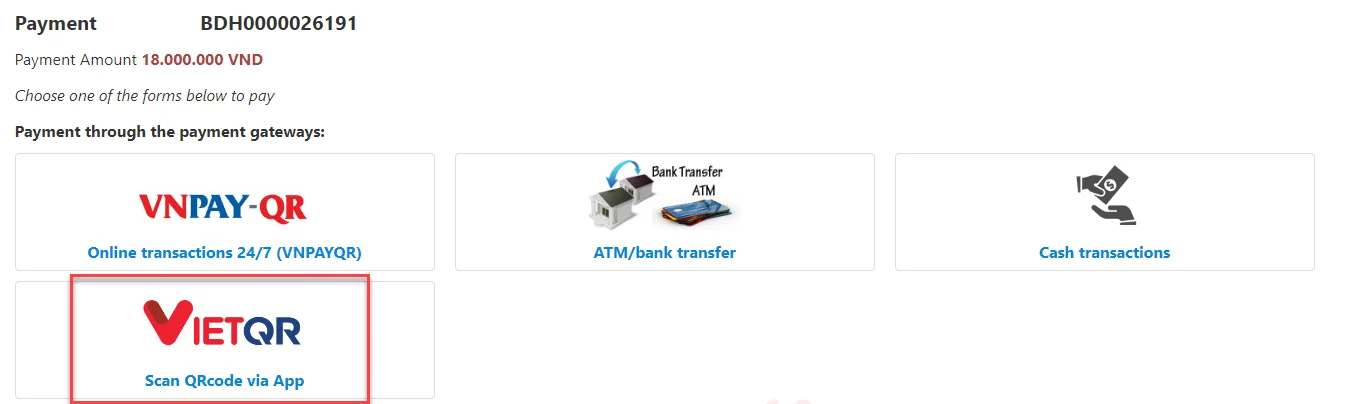
Step 1: Choose VietQR payment option
Select VietQR at checkout or merchant payment screen
Step 2: Open banking app
Use a supported mobile banking or e-wallet app
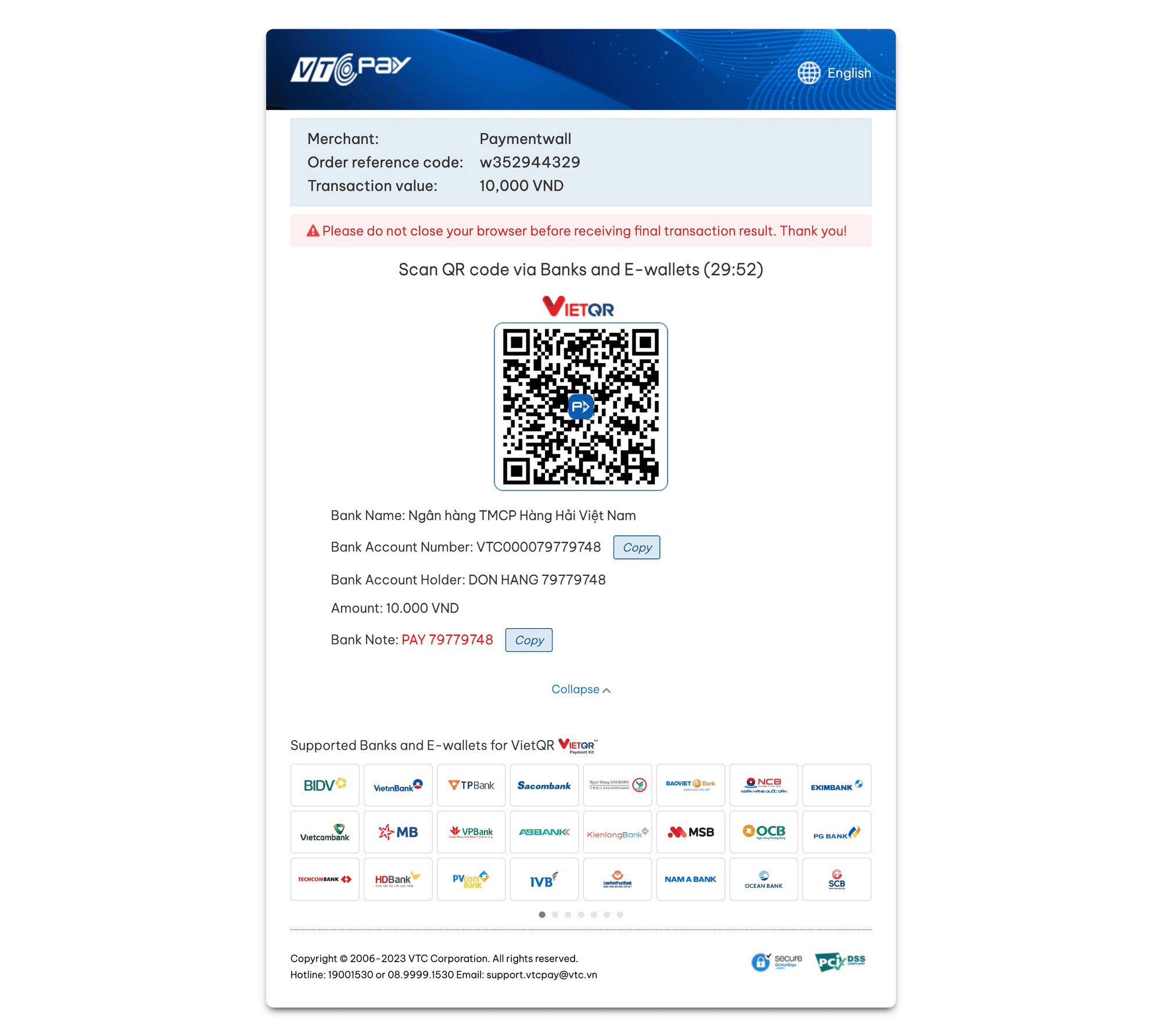
Step 3: Scan QR code
Scan the VietQR QR code payment displayed
Step 4: Confirm transaction
- Verify details and confirm payment
- Complete instant bank transfer Vietnam
How Can You Use Bitget Wallet with VietQR QR Codes for Payments in Vietnam?
Bitget Wallet allows users to manage digital assets while interacting with local payment systems like VietQR. This creates a bridge between crypto and real-world payments.
How does Bitget Wallet help you manage assets alongside local payment methods like VietQR?
As digital payments and blockchain technology continue to converge, tools like Bitget Wallet allow users to manage both crypto assets and real-world payment interactions in one place. While VietQR enables seamless QR code payment Vietnam through traditional banking infrastructure, Bitget Wallet complements this by giving users full control over their digital assets. This creates a more flexible financial experience, where users can participate in on-chain finance while still engaging with everyday payment systems like VietQR.
- Store and manage crypto assets securely, including stablecoins and tokens
- Track balances and transactions in a self-custody environment
- Participate in Web3 and on-chain finance, including swaps and DApps
- Connect digital assets with QR-based payment flows, bridging crypto and local payment ecosystems
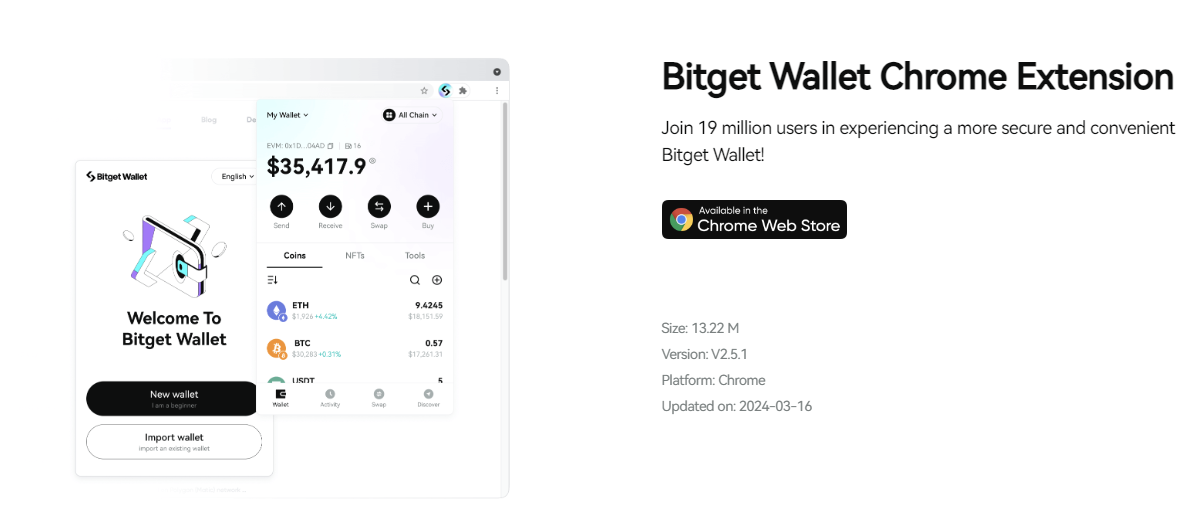
Step 1: Download and set up Bitget Wallet
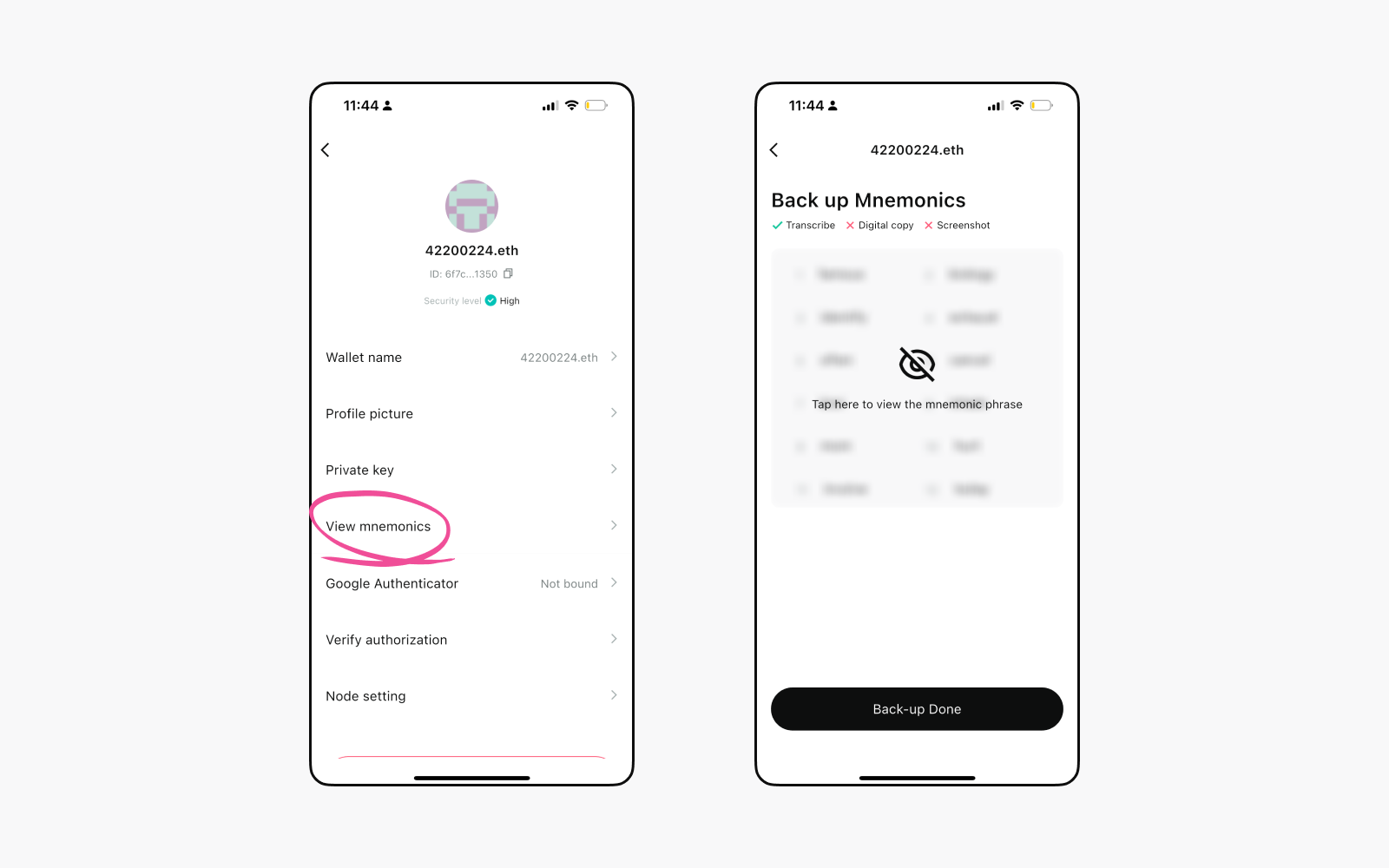
Step 2: Secure your private keys
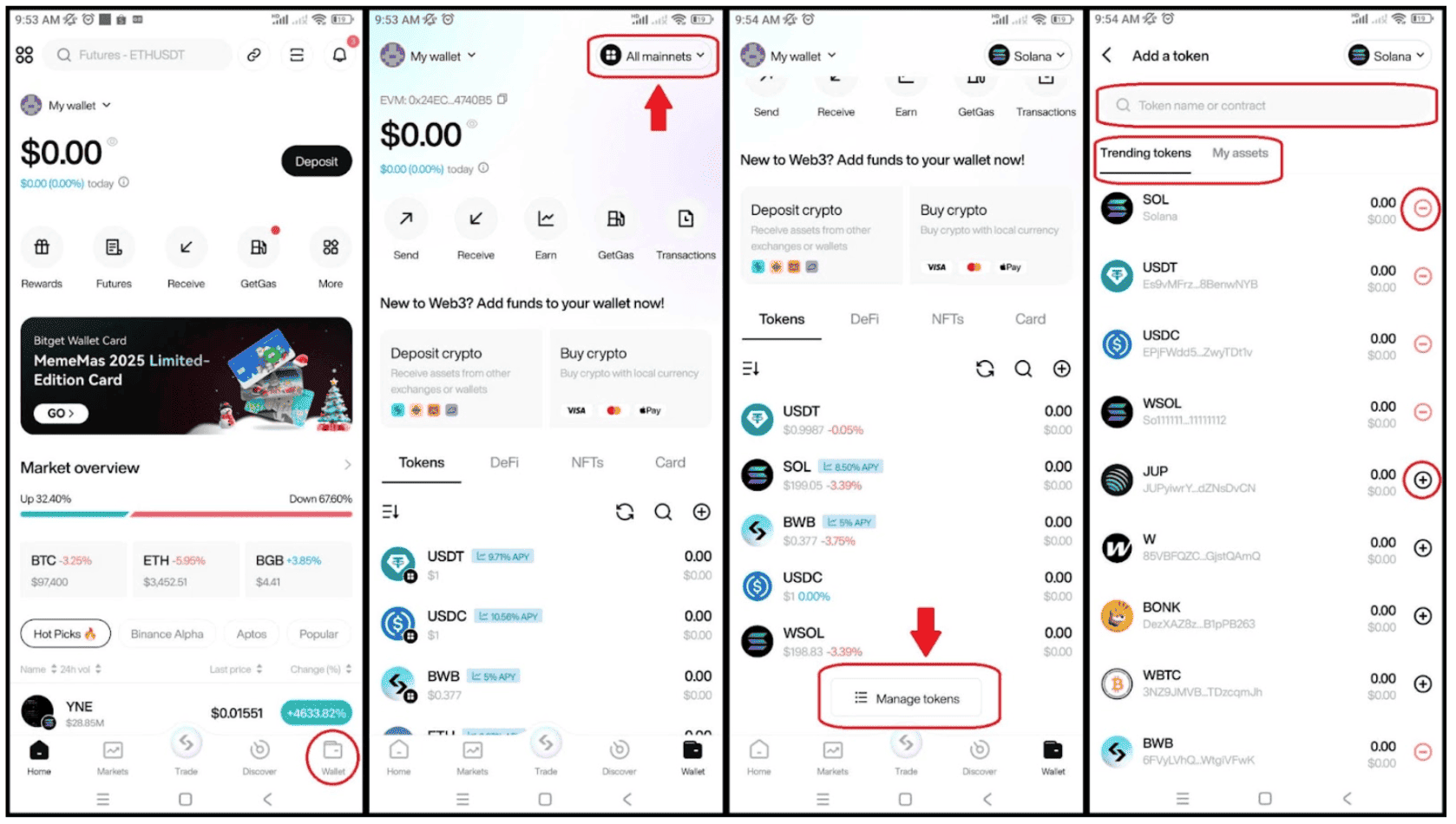
Step 3: Explore asset management features
Step 4: Use digital assets alongside VietQR-supported environments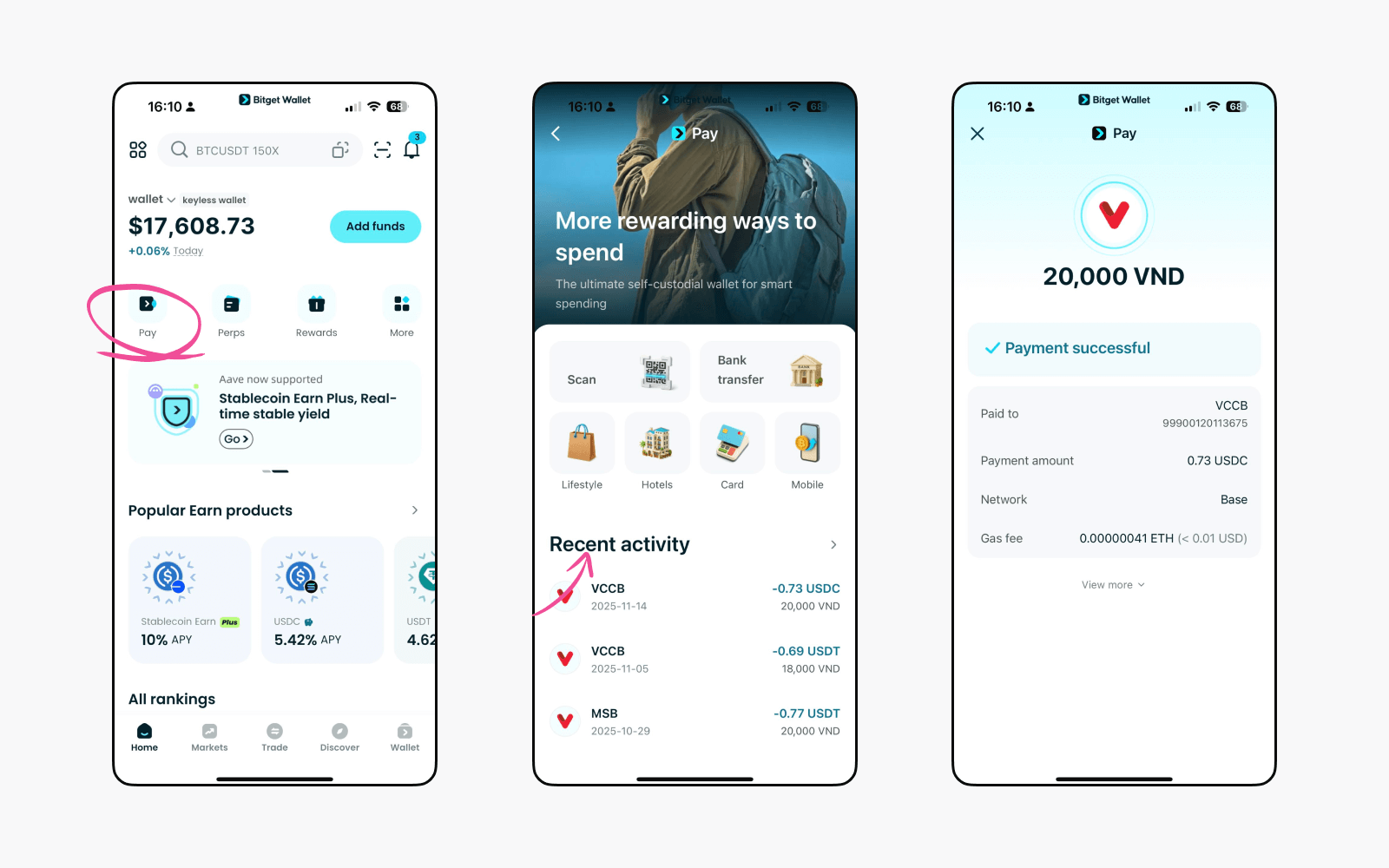
Related Reading on Crypto Payment
If you're exploring how to use crypto payment in real-world scenarios — from travel bookings and airport spending to everyday bills and international purchases — these guides will help you understand where and how crypto works in practice.
🔹 Paying with Crypto in Everyday Life
- How to Pay with Crypto for Everyday Purchases — From Bills to Travel
- How to Buy Cars with Crypto in the USA and EU: Drivers Guide
🔹 Travel & Booking with Crypto
- How to Travel with Crypto and Crypto Card: Save Money on Hotels and Spending Abroad
- Travel Websites That Accept Crypto in 2026: Top Platforms for Flights and Hotels
- How to Book Hotels on Bitget Wallet: A Complete Guide to Crypto Travel
- Top Airports That Accept Crypto: A Complete Travel Guide for Bitcoin and Stablecoins
🔹 Crypto Cards & Cross-Border Spending
Sign up Bitget Wallet now - grab your $2 bonus!
Conclusion
What is VietQR? It is a unified QR code payment system that enables instant bank transfer Vietnam transactions through a simple scan-and-confirm experience. As this article has shown, VietQR QR code payment has become a core part of how people pay in Vietnam—offering speed, accuracy, and seamless integration across banks and merchants.
From daily purchases to online shopping and peer-to-peer transfers, VietQR payment continues to grow as a dominant VietQR payment method Vietnam. Its ability to eliminate manual input, reduce errors, and process transactions in real time makes it one of the most efficient solutions in the QR code payment Vietnam ecosystem today.
As Vietnam accelerates toward a cashless economy, understanding what is VietQR and how VietQR bank transfer Vietnam works gives users a clear advantage in navigating modern payments. Whether you're a local user or a visitor, adopting VietQR means faster, safer, and more convenient transactions in everyday life.
To go beyond traditional payments, users can combine VietQR with digital asset management tools like Bitget Wallet. With Bitget Wallet, you can securely store crypto, explore Web3, and interact with emerging payment experiences that connect on-chain assets with real-world transactions.
FAQs
What is VietQR and how does it work?
What is VietQR? VietQR is a national QR code payment standard in Vietnam that enables instant bank transfer Vietnam transactions through a simple scan-and-confirm process. When users scan a VietQR QR code payment, the system automatically fills in the merchant’s bank details, allowing them to confirm and complete the payment instantly using their mobile banking app.
Is VietQR safe to use for payments?
Yes, VietQR payment is safe because it operates within the official banking system and uses secure transaction infrastructure. Each VietQR bank transfer Vietnam is processed in real time, reducing risks of fraud and errors. Additionally, auto-filled payment details improve accuracy, but users should always verify transaction information before confirming.
Which banks support VietQR in Vietnam?
VietQR supported banks Vietnam include most major financial institutions connected through the NAPAS network. This includes banks such as Vietcombank, BIDV, VietinBank, Techcombank, ACB, VPBank, MB Bank, and TPBank. Thanks to this wide coverage, users can perform VietQR payment transactions seamlessly across different banks.
Can I use VietQR for online shopping?
Yes, VietQR payment for online shopping is widely supported on many eCommerce platforms in Vietnam. During checkout, a QR code is displayed, and users can scan it using their banking app to complete the payment instantly. This VietQR payment process ensures fast, accurate, and convenient transactions without manual input.
Risk Disclosure
Please be aware that cryptocurrency trading involves high market risk. Bitget Wallet is not responsible for any trading losses incurred. Always perform your own research and trade responsibly.
 OpenAI IPO Date: How to Trade OpenAI Stocks2026-04-07 | 5 mins