How to Buy ROAR in 2026: A Beginner’s Step-by-Step Guide to Russian Oil Asset Reserve
How to buy ROAR is a question many beginners ask after seeing Russian Oil Asset Reserve (ROAR) trend across Solana trading screens. ROAR is a Solana-based token, and it as a speculative digital asset rather than a government-backed or physically oil-backed reserve, which makes contract verification and execution quality especially important.
For users who want a simpler way to buy ROAR on-chain while keeping control of their assets, Bitget Wallet can be a practical option because it is a non-custodial wallet with multi-chain access and built-in swap features.
In this article, we’ll cover what ROAR is, where to buy ROAR, how to buy ROAR step by step, and how to reduce avoidable risks when trading it.
Key Takeaways
- How to buy ROAR starts with contract verification, because multiple ROAR pairs and copycat-style listings can appear on Solana.
- Where to buy ROAR depends on liquidity and custody preference, but current public trading activity is mainly visible on Solana DEX liquidity.
- Buy ROAR with Bitget Wallet can suit users who want self-custody, direct on-chain swaps, and easier access to Solana liquidity.
What Is Project Name ROAR?
Russian Oil Asset Reserve (ROAR) is a Solana token built around an energy and geopolitical narrative. The official website calls it a “sovereign energy protocol on Solana,” but it also states clearly that ROAR is a speculative digital asset and is not backed by physical oil reserves or any government entity.
What makes Russian Oil Asset Reserve (ROAR) different from utility tokens?
How to buy ROAR makes more sense when users first understand that ROAR is driven more by narrative and market attention than by a proven utility model.
- Narrative vs utility: Russian Oil Asset Reserve (ROAR) is marketed around “energy” and “sovereign reserve” storytelling, but the project’s own site labels it a speculative Solana asset, which places it closer to a narrative token than a traditional utility token.
- Price driver: ROAR price volatility appears to be shaped by liquidity, short trading history, and sentiment. Public on-chain data currently shows a very recent pair creation, modest liquidity, and active short-term trading volume, which is typical of a newly launched speculative token.
- Where it trades: Current public market data shows ROAR trading on Solana through DEX liquidity, including a ROAR/USDC pair on Meteora linked from its token page.
Source: roargov.com
Is Russian Oil Asset Reserve (ROAR) a scam or just high-risk?
Russian Oil Asset Reserve (ROAR) should be classified carefully. It is not automatically a scam, and one public risk page says it is not flagged as rugged, but the same analysis rates it High Risk, gives it a low safety score, and notes that the active trading pair is very new.
That means users should focus on behavior, not hype:
- Verify the ROAR contract address
- Avoid unofficial links and random Telegram or X posts
- Check ROAR liquidity, pair age, and holder concentration before buying
- Treat “backed by energy” claims cautiously, because the official site itself says ROAR is not backed by physical oil reserves or any government entity
Where to Buy ROAR?
When users ask “where to buy ROAR,” they usually mean the best mix of convenience, safety, and execution quality. The real decision is the custody model: custodial platforms hold assets for you, while on-chain swaps let you trade directly from your own wallet. Bitget Wallet’s own materials explain this distinction clearly, emphasizing that non-custodial wallets keep private key control with the user.
What is available depends on actual listings and liquidity. Based on current public data, ROAR’s visible market activity is on Solana DEX infrastructure, which means users researching where to buy ROAR will likely encounter on-chain routes before broad exchange-style access.
Comparison of ROAR Buying Methods
| Buying Method | Custody Model | Execution | Control | Recommended For | Main Risks |
| On-chain Swap (DEX via Wallet) | Non-custodial | User-controlled, on-chain | High | Self-custody, DeFi users | Contract impersonation • Price slippage • Gas fee volatility |
| On-chain UEX (via Exchange) | Custodial | Platform-managed, on-chain | Medium | Users who want on-chain exposure without wallet management | • Custodial exposure • Withdrawal limits • Platform dependency |
| Centralized exchange (CEX) | Custodial | Platform-managed | Low | Beginners, high-liquidity traders, fiat on-ramps | • Custodial risk • Withdrawal delays • Regional or national regulatory restrictions |
Why Many Users Buy ROAR With Bitget Wallet?
If Russian Oil Asset Reserve (ROAR) liquidity is mainly on-chain, a non-custodial wallet helps you swap while keeping control of assets. Bitget Wallet also supports cross-chain access and helps reduce common beginner mistakes like interacting with impersonation tokens.
What Bitget Wallet Helps With?
✅ Self-custody and asset control Users retain full ownership of private keys and funds, reducing exposure to custodial and platform-related risks.
✅ On-chain swaps with transparent execution Explore over 1M tokens with real-time in-app rankings—discover trending assets early and stay ahead of the market.
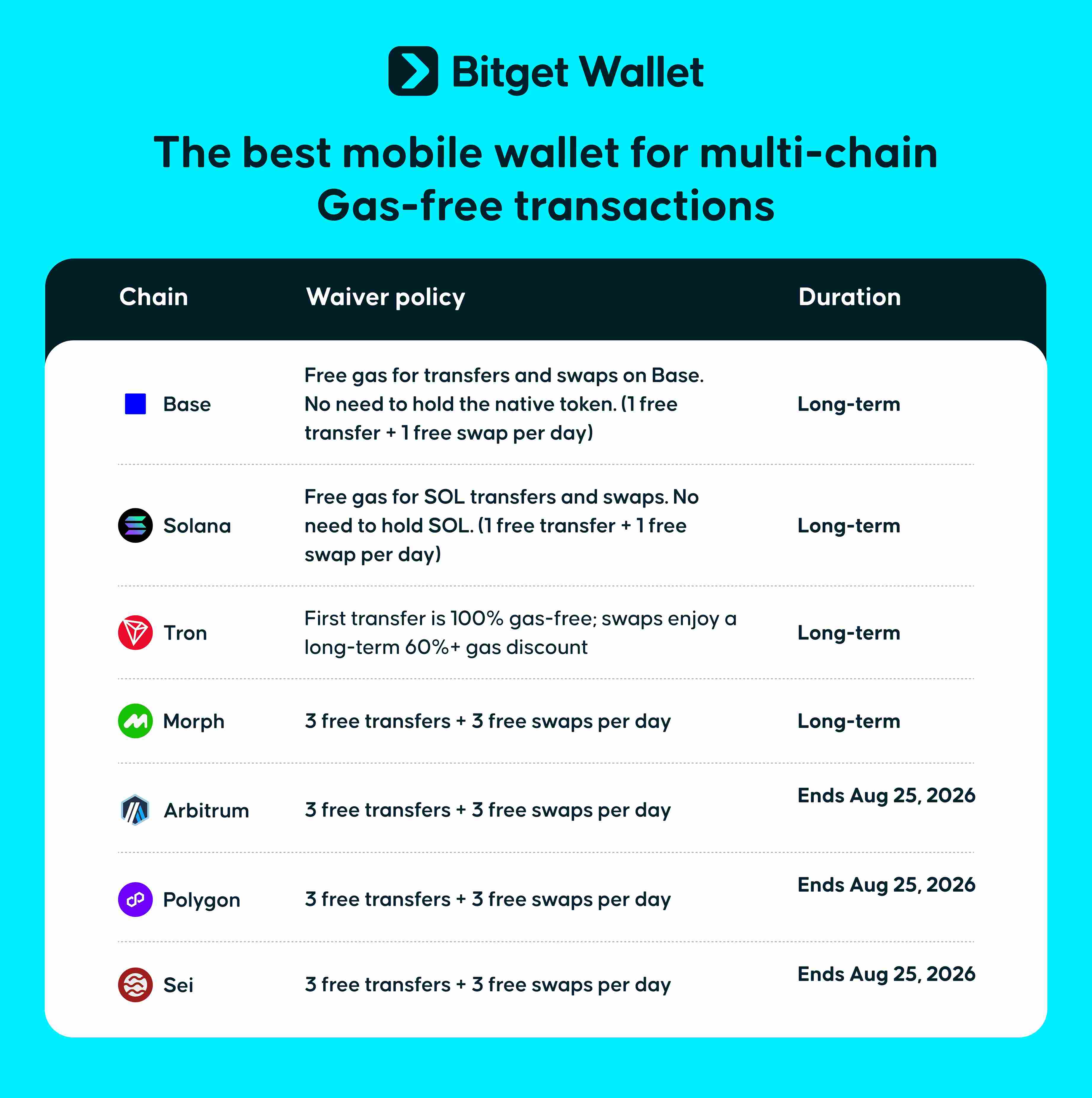
✅ Multi-chain access with cost-efficient execution Bitget Wallet supports 130+ blockchains, including 7 major networks such as Solana, Base, Arbitrum, Polygon, Tron, and more. This allows users to buy, hold, and manage ROAR across different ecosystems without being locked into a single chain environment.
On supported networks, users can also benefit from gas-free transactions or long-term gas discounts, helping reduce execution costs when swapping, transferring, or managing assets across chains—an advantage for users who trade frequently or operate across multiple ecosystems.
✅ Flexible post-purchase asset management After buying ROAR, users can hold, transfer, or manage assets freely across supported chains without withdrawal limits or third-party restrictions, making it easier to adapt to changing liquidity or market conditions.
Sign up Bitget Wallet now - grab your $2 bonus!
How to Buy ROAR on Bitget Wallet?
Buying Russian Oil Asset Reserve (ROAR) on Bitget Wallet is easy! Just follow these simple steps:
Step 1: Create a wallet
- If you don't have a wallet, download Bitget Wallet app now.
- Register with your phone number or email, verify quickly and you can use it right away.
Step 2: Deposit money into your wallet
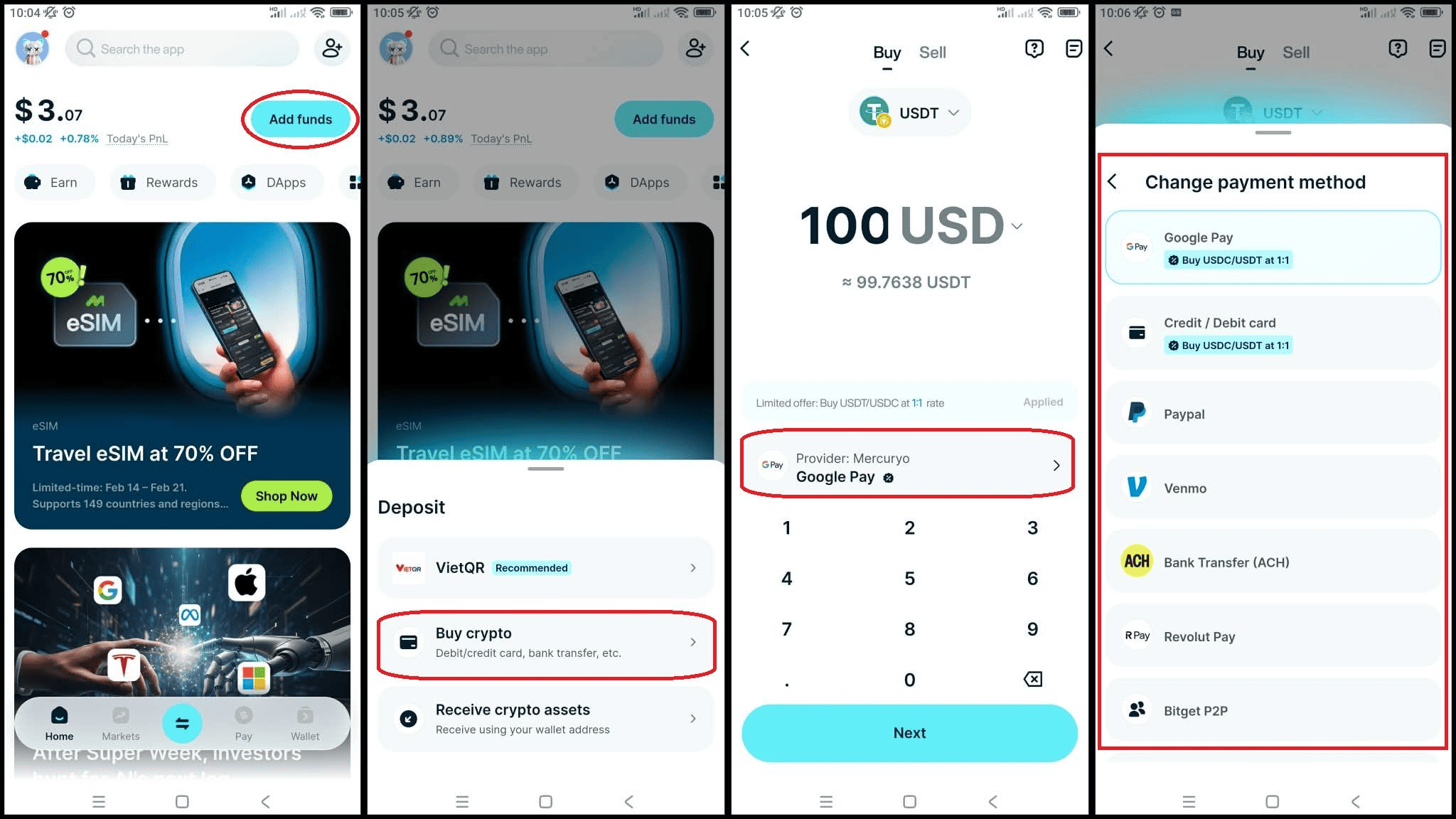
Once you have finished your wallet, you just need to deposit money into it. You can:
- Transfer coins from other wallets: Send BTC, ETH or any coin you have from an external wallet.
- Buy directly with a card: Use a bank card or credit card to buy USDT or ETH right in the app and then exchange it for USDC.
Step 3: Find Russian Oil Asset Reserve (ROAR)
- In the main interface of the wallet, go to Market, type "ROAR" or “RoARruzbesVGAZgCzSoQCEdyVWytvzLbyNaxXBF7dnF” in the search bar.
- Select Russian Oil Asset Reserve (ROAR) to see the trading page.
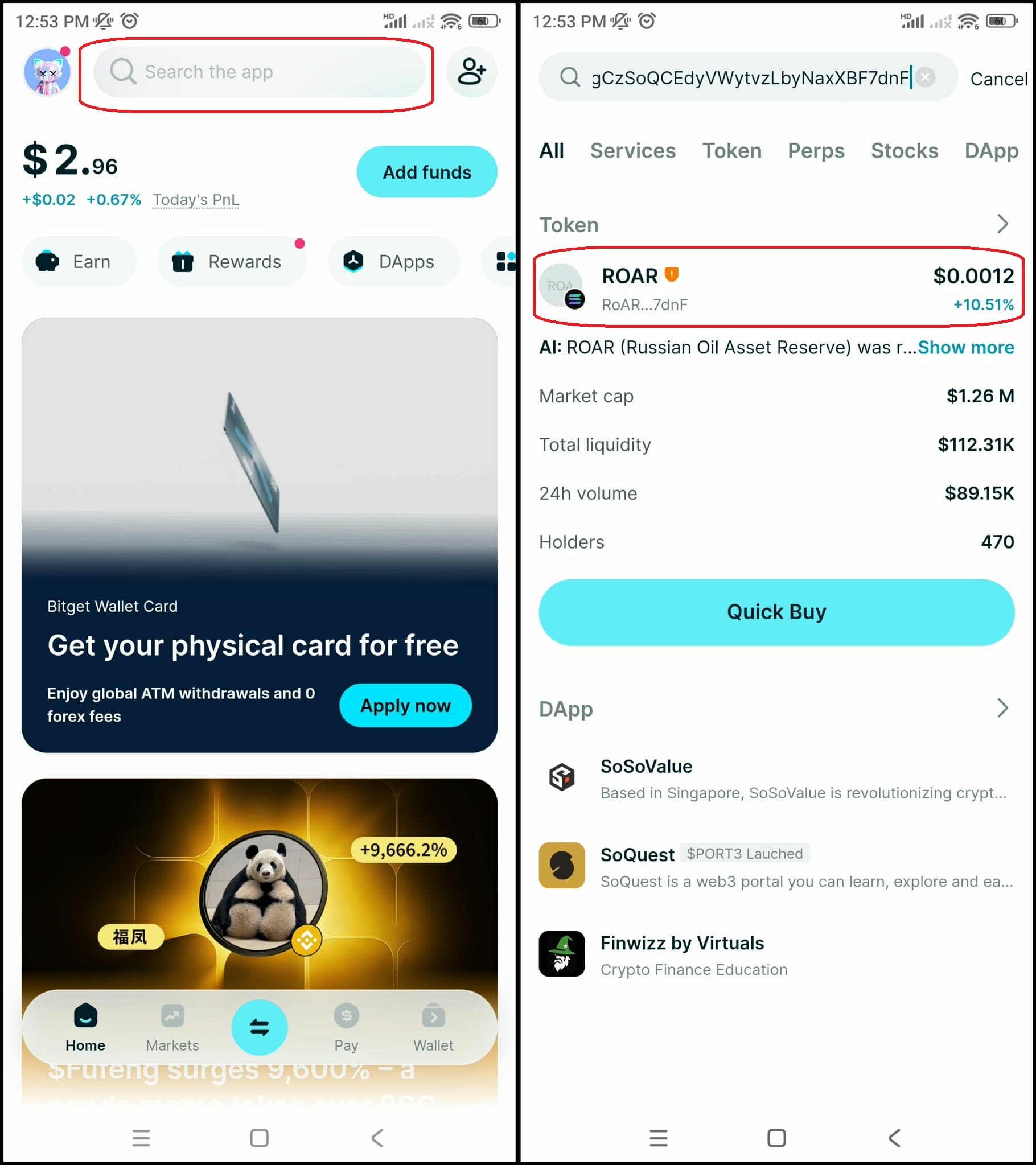
Step 4: Select the trading pair
Select the pair you want to trade, for example ROAR/USDT. So you can use USDT to buy Russian Oil Asset Reserve (ROAR), or vice versa.
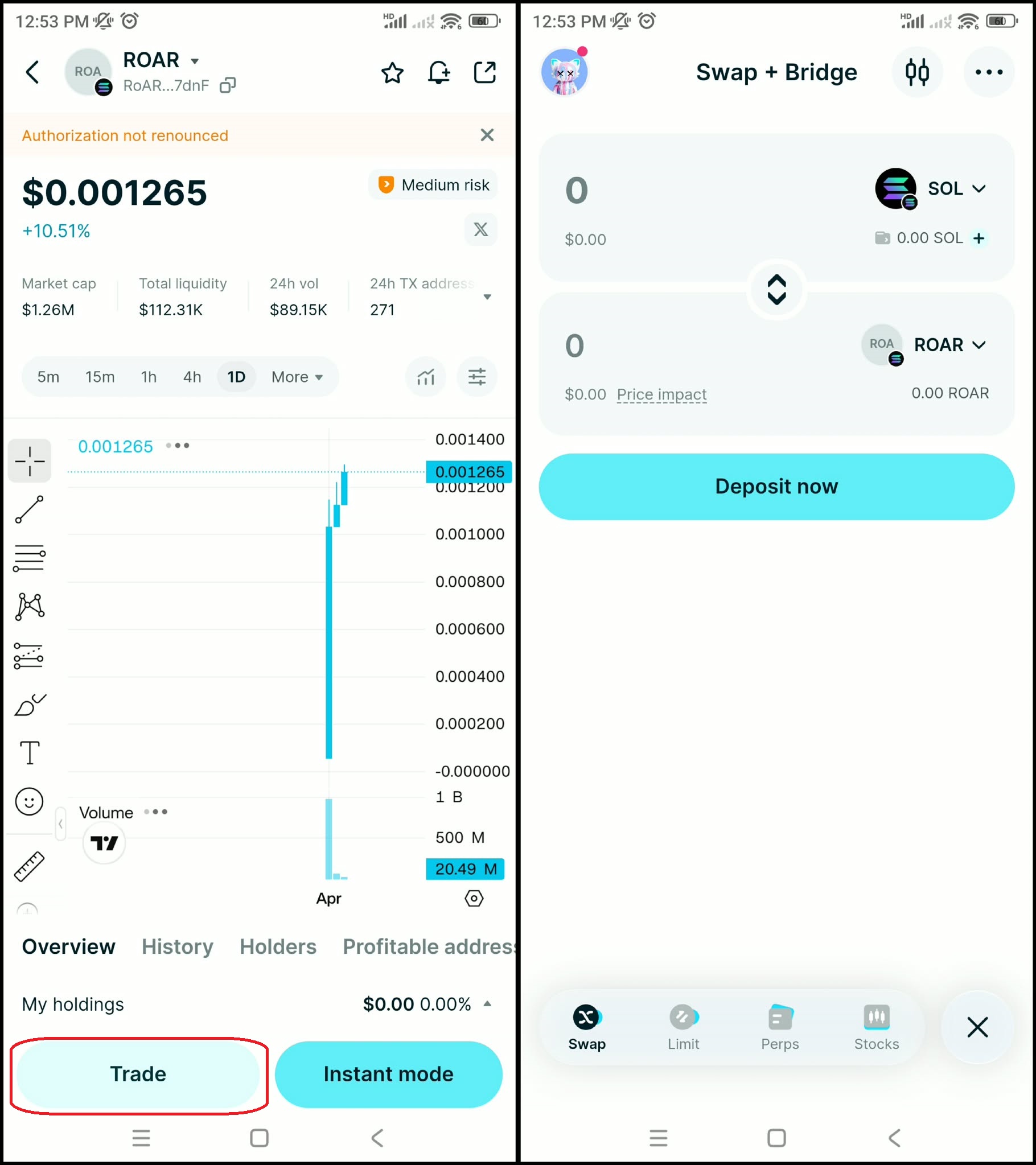
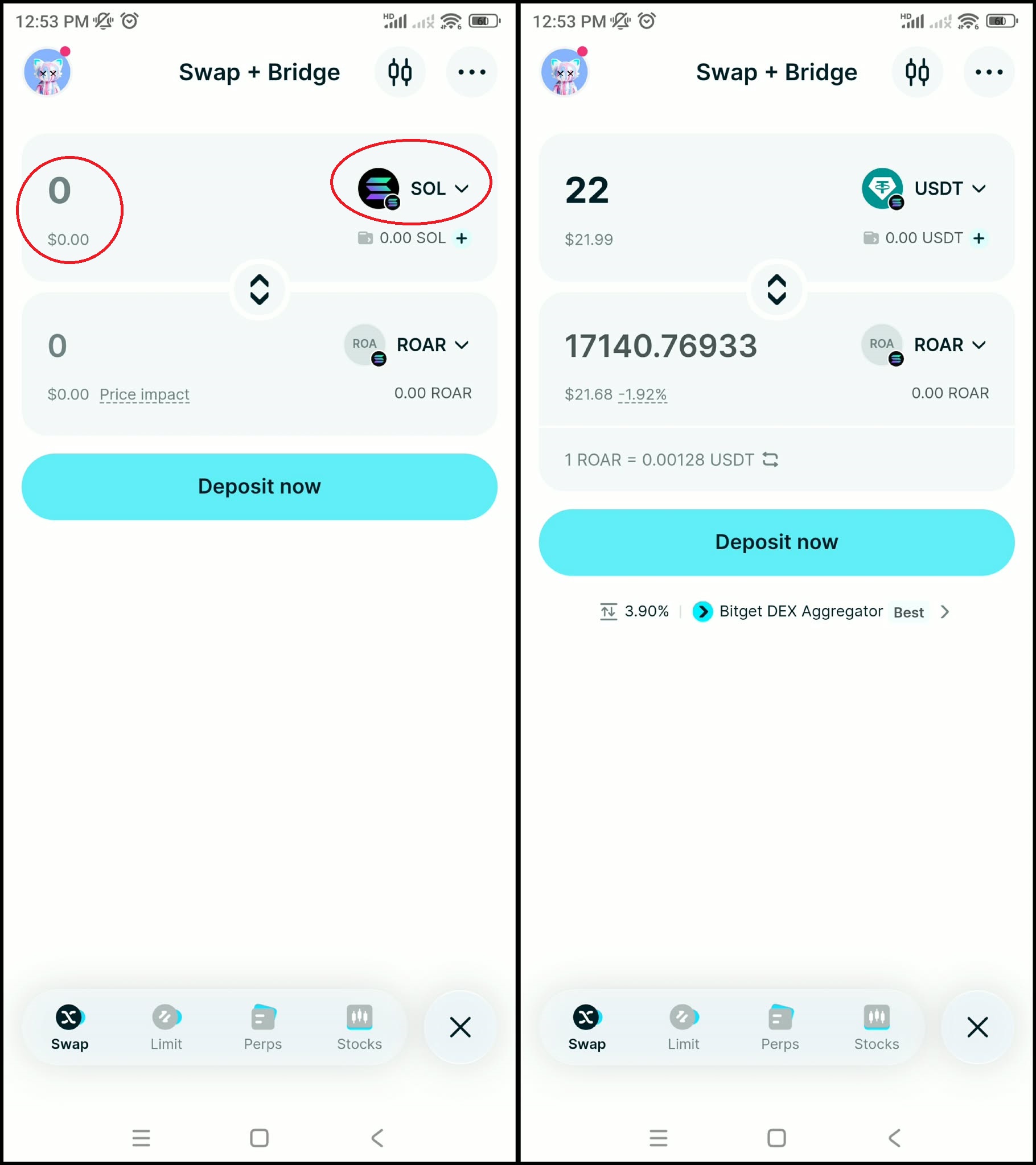
Step 5: Place an order
Enter the amount of Russian Oil Asset Reserve (ROAR) you want to buy, check carefully and confirm the order.
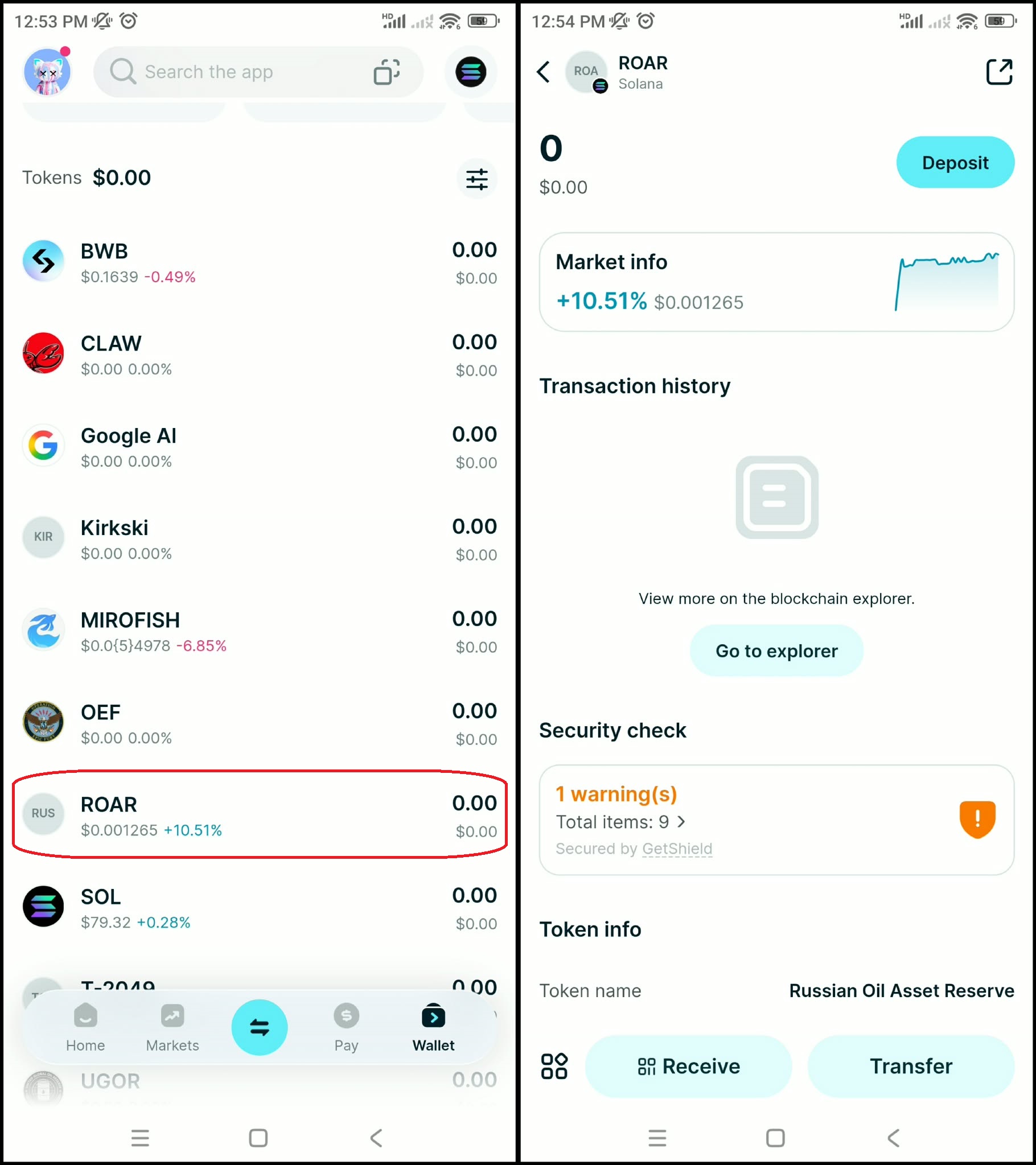
Step 6: Check the order
After buying, you can check your ROAR in the Wallet section.
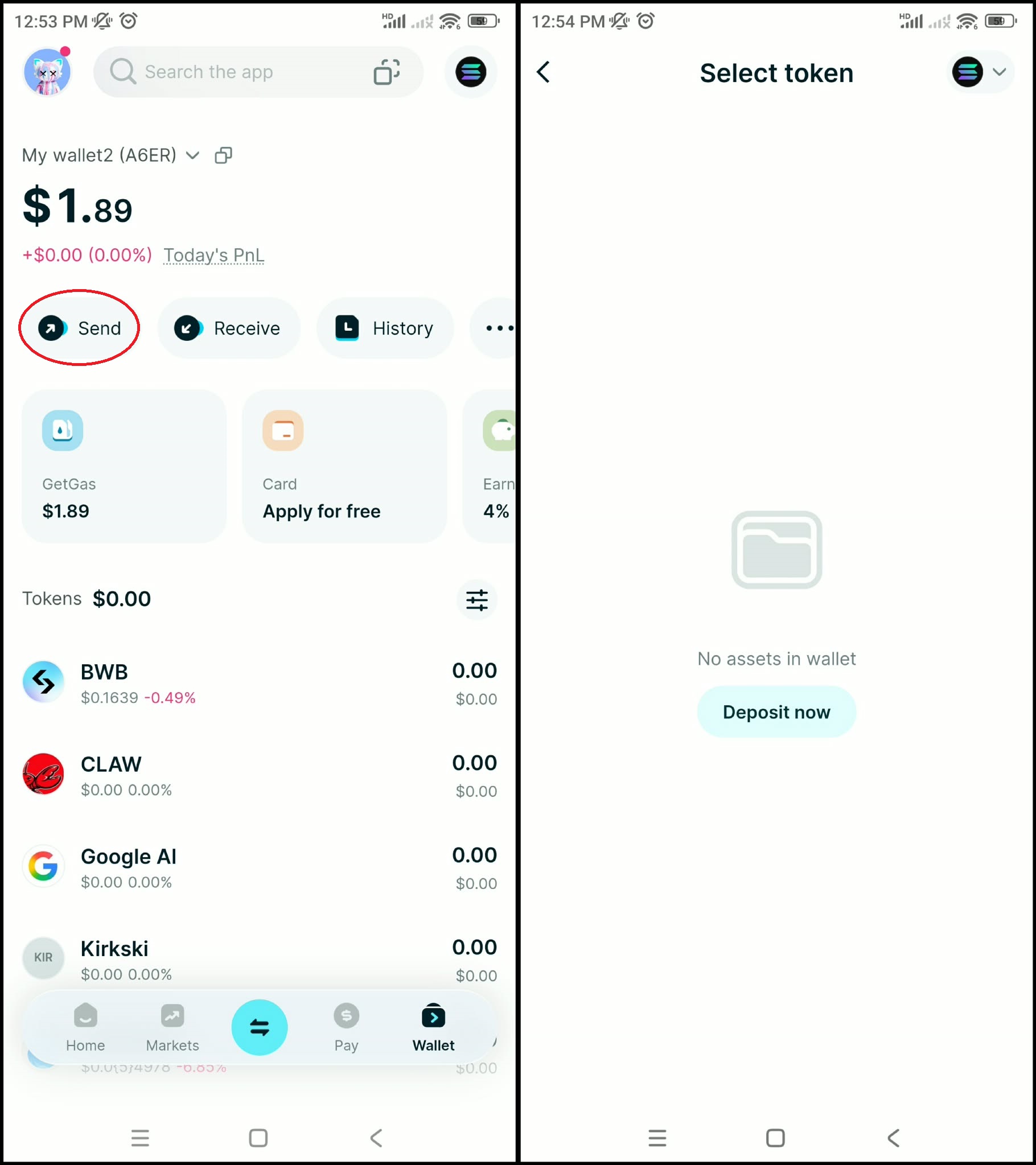
Step 7: Withdraw (if needed)
Once you have Russian Oil Asset Reserve (ROAR), if you want to withdraw to another wallet, go to Send, fill in the receiving wallet address, check the blockchain network and the amount carefully, then confirm.
▶Learn more about Russian Oil Asset Reserve (ROAR):
- What is Russian Oil Asset Reserve (ROAR)?
- Russian Oil Asset Reserve (ROAR) Airdrop Guide
- Russian Oil Asset Reserve (ROAR) Listing Date and How to Buy It
What Should You Know About ROAR Price Volatility?
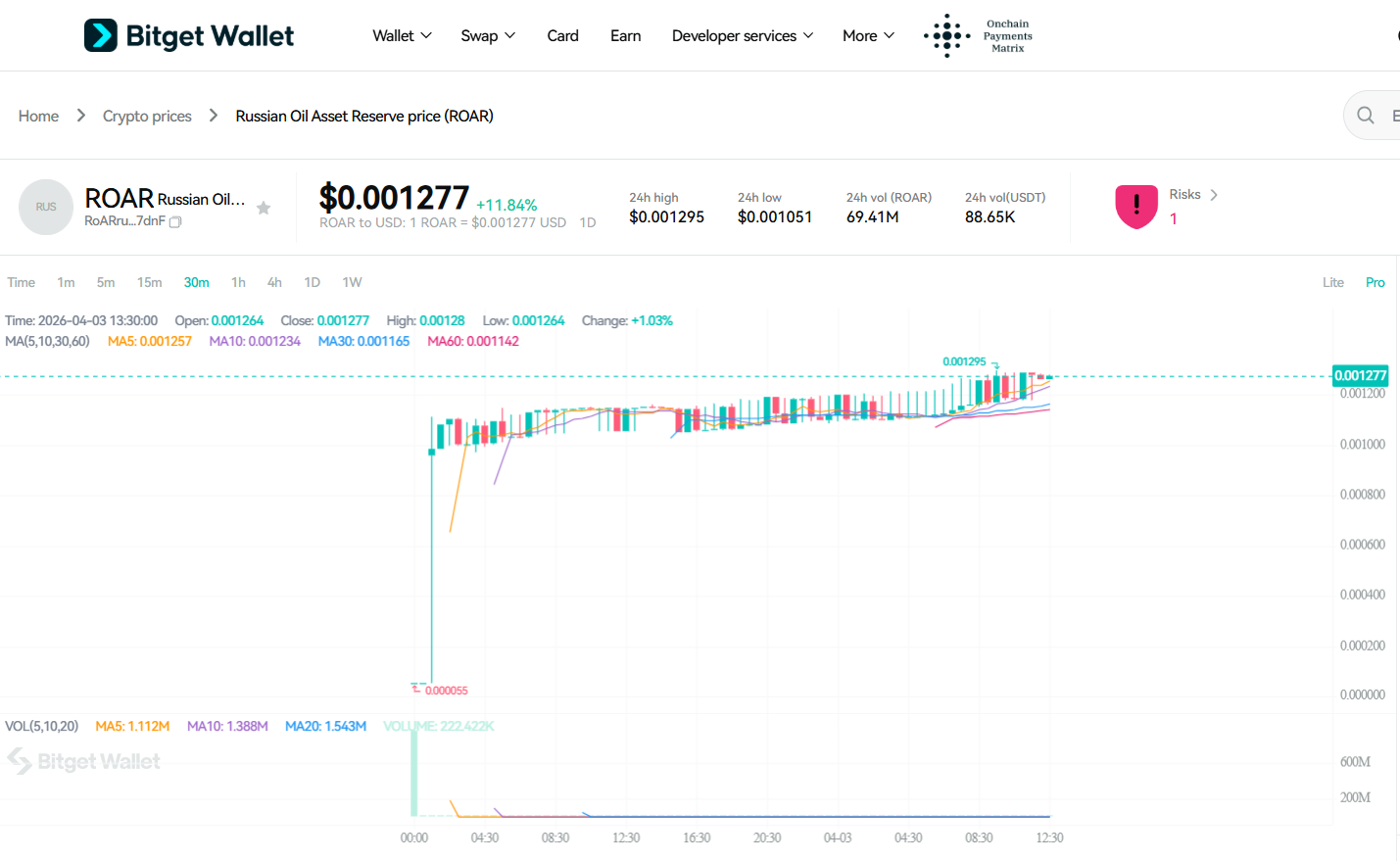
ROAR price volatility is best understood as the behavior of a newly active, narrative-driven Solana token. Current public data shows a recently created pair, relatively limited liquidity, and high-risk labeling from a public on-chain analysis platform, which means price movement is likely to be driven more by attention and liquidity shifts than by established fundamentals.
- Why sharp fluctuations happen: ROAR is a recent on-chain token with modest liquidity, so relatively small trades can move price quickly.
- Why sentiment matters more than fundamentals: The project uses a strong geopolitical and energy narrative, while the official site also says it is speculative and not physically backed, so sentiment can outweigh fundamentals.
- Why volatility is a risk characteristic: ROAR price volatility should be treated as a warning sign for position sizing, execution, and timing risk, not as proof of long-term strength.
ROAR Price Prediction: How High Can Russian Oil Asset Reserve Go?
The value of Russian Oil Asset Reserve (ROAR) is shaped by market trends, project strength, and community participation. As a speculative Solana token with a strong narrative angle, it may trade within a wide range depending on liquidity, sentiment, and on-chain attention. Should development progress steadily and adoption expand, the token's price may rise toward [NA].
Key Factors Impacting Russian Oil Asset Reserve (ROAR) Price
- Market Conditions: ROAR is likely to react strongly to Solana trading sentiment, memecoin risk appetite, and short-term market momentum.
- Adoption & Utility: At present, the public positioning is narrative-heavy, so adoption depends more on trader interest than on proven utility.
- Project Expansion: Broader visibility, stronger liquidity, and more transparent token data could influence how traders value ROAR over time.
Future Price Outlook
As Russian Oil Asset Reserve (ROAR) expands further in the speculative on-chain token market, growing attention could drive demand higher, but risk remains elevated. Analysts and traders should treat any upside discussion as conditional, and ongoing innovation or deeper market integration may push its price toward [NA]. Before investing, individuals should carefully assess market risks, policy developments, and overall execution quality.
Source: Bitget Wallet
Is ROAR Crypto Safe to Invest In?
Safety in ROAR does not come from the token alone. Even if you already understand how to buy ROAR, real safety depends on how users verify the ROAR contract address, manage position size, and execute trades in a high-risk, thin-liquidity environment. Public data currently supports viewing ROAR as a speculative Solana token with meaningful risk rather than a low-risk asset.
- Fake token risk: Users can encounter imitation ROAR tokens if they search by ticker only, which is why learning how to buy ROAR safely always starts with contract verification.
- Liquidity risk: Low or uneven liquidity can create slippage and difficult exits, especially for users who rush into trades without fully understanding how to buy ROAR on-chain.
- Overexposure risk: A highly volatile token can damage a portfolio if position sizing is too large.
No speculative crypto asset is risk-free, and ROAR should be approached with caution even when the execution process is smooth
How to Approach ROAR Volatility With a Smarter Strategy?
A smarter approach to ROAR focuses on education and controlled exposure rather than short-term profit chasing. Understanding how to buy ROAR is only the first step—discipline matters more than perfect timing because users who understand liquidity, contract verification, and wallet security usually avoid more mistakes than users who simply move fast.
- Observe on-chain liquidity behavior before entering any trade
- Use small position sizes when testing how to buy ROAR safely
- Set clear capital limits to avoid emotional decisions
- Prioritize secure execution when buying ROAR on-chain
This approach helps users build transferable on-chain skills that remain useful far beyond a single token trade, especially for those continuously learning how to buy ROAR and similar assets.
Which Crypto Wallet Is the Best Choice to Buy ROAR: Bitget Wallet
Users searching for the best wallet to buy ROAR usually care about security, liquidity access, and execution reliability. When learning how to buy ROAR, choosing the right wallet is just as important as choosing the right entry point.
For a token that is primarily accessed through on-chain liquidity, a non-custodial wallet is often the most practical route, because it gives users direct access while preserving self-custody. Bitget Wallet fits that use case because it is non-custodial and supports 130+ blockchains with built-in swap and Web3 access.
- Security: Users keep control of private keys in a self-custody model.
- Liquidity access: Tokens with on-chain liquidity are often easiest to access through a non-custodial wallet.
- Multi-chain reach: Bitget Wallet supports 130+ blockchains, which is useful when liquidity is fragmented across ecosystems.
- Practical execution: Built-in swap and asset discovery tools can simplify the process for beginners.
Why Many Traders Choose Bitget Wallet to Buy ROAR?
For users who want early on-chain access without giving up asset control, Bitget Wallet can be a strong practical choice.
| Self-custody | • Users keep full control of private keys and assets • Reduces custodial risk compared with centralized platforms |
| On-chain swap access | • Ability to interact with decentralized liquidity pools • Many new tokens appear on DEX before exchange listings |
| Multi-chain compatibility | • Bitget Wallet supports 130+ blockchains • Allows users to access liquidity across ecosystems |
| Trading interface | • Built-in token discovery and swap tools • Simplifies execution for beginners |
On-chain wallets often provide the earliest access to new tokens because they connect users directly to DEX liquidity, and integrated swap tools can improve execution efficiency when users already know the correct token contract and route.
Sign up Bitget Wallet now - grab your $2 bonus!
FAQs
1. How to buy ROAR safely as a beginner?
How to buy ROAR safely starts with using the official contract address, checking ROAR liquidity, confirming the trading pair, and keeping position size small. Beginners should avoid searching by ticker alone and should treat ROAR as a high-risk speculative token.
2. Where can I buy ROAR?
Bitget Wallet can be a practical way to buy ROAR if you want direct on-chain access and self-custody. Based on current public data, ROAR’s visible liquidity is on Solana DEX infrastructure rather than broad mainstream exchange coverage
3. Do I need KYC to buy ROAR?
Whether KYC is required depends on the purchase method. Centralized exchanges (CEXs) typically require KYC, as users trade through custodial accounts managed by the platform.
In contrast, buying ROAR through on-chain swaps using a non-custodial wallet like Bitget Wallet does not require KYC. Users interact directly with decentralized liquidity from their own wallet, without submitting identity information. However, this also means users are fully responsible for security, contract verification, and transaction execution.
4. Is ROAR crypto high risk?
Yes. Public on-chain analysis currently labels ROAR as High Risk, and the pair is still very new, which increases execution and liquidity risk.
5. Which is The Best Wallet for Store ROAR?
Bitget Wallet is a practical choice for storing ROAR if you want self-custody, direct control of private keys, and access to on-chain tools in one place. That matters for a token like ROAR, where verifying the contract and managing assets directly can reduce avoidable mistakes.
Risk Disclosure
Please be aware that cryptocurrency trading involves high market risk. Bitget Wallet is not responsible for any trading losses incurred. Always perform your own research and trade responsibly.