


OpenAI IPO Date: How to Trade OpenAI Stocks

The OpenAI IPO date is becoming one of the most closely watched events in the financial markets, as investors look for ways to gain exposure to one of the fastest-growing artificial intelligence companies. Many are asking when will OpenAI go public and how they can participate in its stock. With strong demand driven by generative AI adoption, many are asking when OpenAI will go public and how they can participate in its stock.
For most investors, the key questions go beyond timing. Can you trade OpenAI stock yet? How will the OpenAI stock IPO work, and what is the best way to approach trading after listing? In this guide, we break down the OpenAI IPO timeline, trading access, step-by-step strategies, and key risks to help you prepare effectively. Investors can also use tools like Bitget Wallet to manage assets while preparing for new market opportunities.
Key Takeaways
- The OpenAI IPO date is expected around 2026 but remains unconfirmed, and OpenAI stock is not yet publicly tradable
- Investors will only gain access after the OpenAI stock IPO listing, making timing critical for market entry
- Understanding how to trade OpenAI stock after the IPO is essential, as pre-IPO access remains limited with only indirect exposure available
OpenAI IPO Date: When Will OpenAI Go Public?
The OpenAI IPO date is widely expected to fall around 2026, although no official confirmation has been announced. As one of the most influential AI companies globally, OpenAI’s transition to public markets is closely watched by investors seeking exposure to the fast-growing generative AI sector. This is why many investors continue to ask when will OpenAI go public as part of their market planning.
With strong revenue growth driven by products like ChatGPT and increasing enterprise adoption, the OpenAI IPO is shaping up to be one of the most anticipated events in the tech IPO market 2026.

Source: Multi.app
Timeline and Latest OpenAI IPO Updates
Based on the OpenAI IPO latest news and timeline, current projections suggest a potential OpenAI IPO 2026 window, although the company has not confirmed any official listing date.
Key timeline signals:
- Expected window: OpenAI IPO 2026 (unconfirmed)
- Status: still a privately held company
- Trigger factors: revenue growth from ChatGPT and enterprise AI products
- Increasing focus on enterprise revenue and productivity-driven AI products
Market positioning:
- Strong valuation momentum from recent private funding rounds
- Increasing relevance in the tech IPO market 2026
- Continued investor demand for AI company IPO exposure
Strategic backing:
- Significant support from Microsoft, reflecting the role of the OpenAI investors Microsoft stake
- Ongoing infrastructure and capital partnership supporting long-term growth
- Positioned at the center of generative AI market growth
A key question remains whether OpenAI is going public in 2026, as market conditions will ultimately determine the final timing.
Source: Microsoft
Can You Trade OpenAI Stock Yet?
OpenAI stock is not listed on any public exchange, and there is currently no official ticker symbol available. Because the company has not completed its OpenAI stock IPO, trading access remains restricted to a limited group of stakeholders.
At this stage, access is limited to:
- private investors and venture capital firms
- institutional stakeholders
- early employees or insiders
Retail investors cannot participate yet, and public trading will only begin after the IPO is officially completed.
What this means for investors
For investors, this makes the OpenAI IPO date a critical point of entry. Since direct access is not yet possible, preparation becomes the most important step.
Before the IPO, investors should focus on:
- setting up a brokerage account for IPO access
- monitoring official IPO announcements and timeline updates
- learning how to trade OpenAI stock after listing
Taking these steps early allows investors to act quickly once the stock becomes available on public markets.
How to Trade OpenAI Stock After the IPO: Step-by-Step Guide
After the OpenAI stock IPO, investors will be able to trade shares on public exchanges through brokerage platforms. The key to success is not just access, but knowing how to execute trades efficiently during the highly volatile IPO phase.
Step 1: Set up your trading access
Before the OpenAI IPO date, make sure your account is fully ready so you can act immediately when trading opens.
What to prepare:
- a verified brokerage account
- sufficient funding for trading
- access to IPO and newly listed stocks
Some investors also use tools like Bitget Wallet to manage digital assets alongside traditional trading accounts.
Step 2: Track the IPO listing details
Once OpenAI goes public, identifying the correct listing information is essential before placing any trades.
What to check:
- official ticker symbol
- listing exchange (e.g., NASDAQ or NYSE)
- confirmed IPO date and trading start time
Step 3: Execute your first trade
When trading begins, speed and discipline matter. IPO stocks often move quickly, so your execution strategy should be clear.
Trading options:
- use market orders for immediate entry
- use limit orders to control price
- consider waiting for early volatility to settle
Step 4: Manage your position and risk
After entering a trade, managing risk becomes the priority, especially during the early trading phase of the OpenAI stock IPO.
Risk management tips:
- start with smaller position sizes
- set stop-loss levels
- avoid chasing rapid price spikes
Can Retail Investors Buy OpenAI Stock Before the IPO?
Before the OpenAI IPO date, retail investors cannot buy OpenAI stock directly because the company remains privately held. Access is restricted to institutional investors and early stakeholders, meaning public participation only begins after the IPO.
Why OpenAI stock is not available to retail investors
OpenAI operates as a private company, which means its shares are not listed on public exchanges. Ownership is limited to a small group of stakeholders, including venture capital firms, institutional investors, and early contributors.
As a result, retail investors do not have direct access and must wait until the OpenAI stock IPO to participate in public trading.
Indirect ways to invest in OpenAI before the IPO
Although direct investment is not possible, many investors are searching for how to invest in OpenAI before IPO through indirect strategies.
Some of the most common approaches include:
- investing in companies with strong ties to OpenAI, such as Microsoft
- gaining exposure through AI-focused ETFs that track artificial intelligence stocks
- positioning capital in the broader generative AI market growth trend
These strategies do not provide direct ownership of OpenAI, but they allow investors to benefit from the same ecosystem driving its valuation.
What Traders Should Know Before Buying
Before trading OpenAI stock, investors should evaluate key factors that influence pricing, valuation, and timing. A structured approach helps traders avoid hype-driven mistakes and make better decisions around the OpenAI IPO date and valuation.
OpenAI IPO valuation expectations and pricing outlook
The OpenAI valuation IPO is widely expected to exceed $100 billion, positioning the company as one of the most significant AI company IPO events in recent years. This valuation reflects strong demand for AI infrastructure, rapid product adoption, and increasing enterprise integration.
However, valuation should not be viewed in isolation. In IPO scenarios, pricing often includes a premium driven by market expectations rather than fully realized performance. As a result, traders need to assess whether the initial valuation reflects sustainable growth or short-term hype, especially during early trading phases when price discovery is still unfolding.
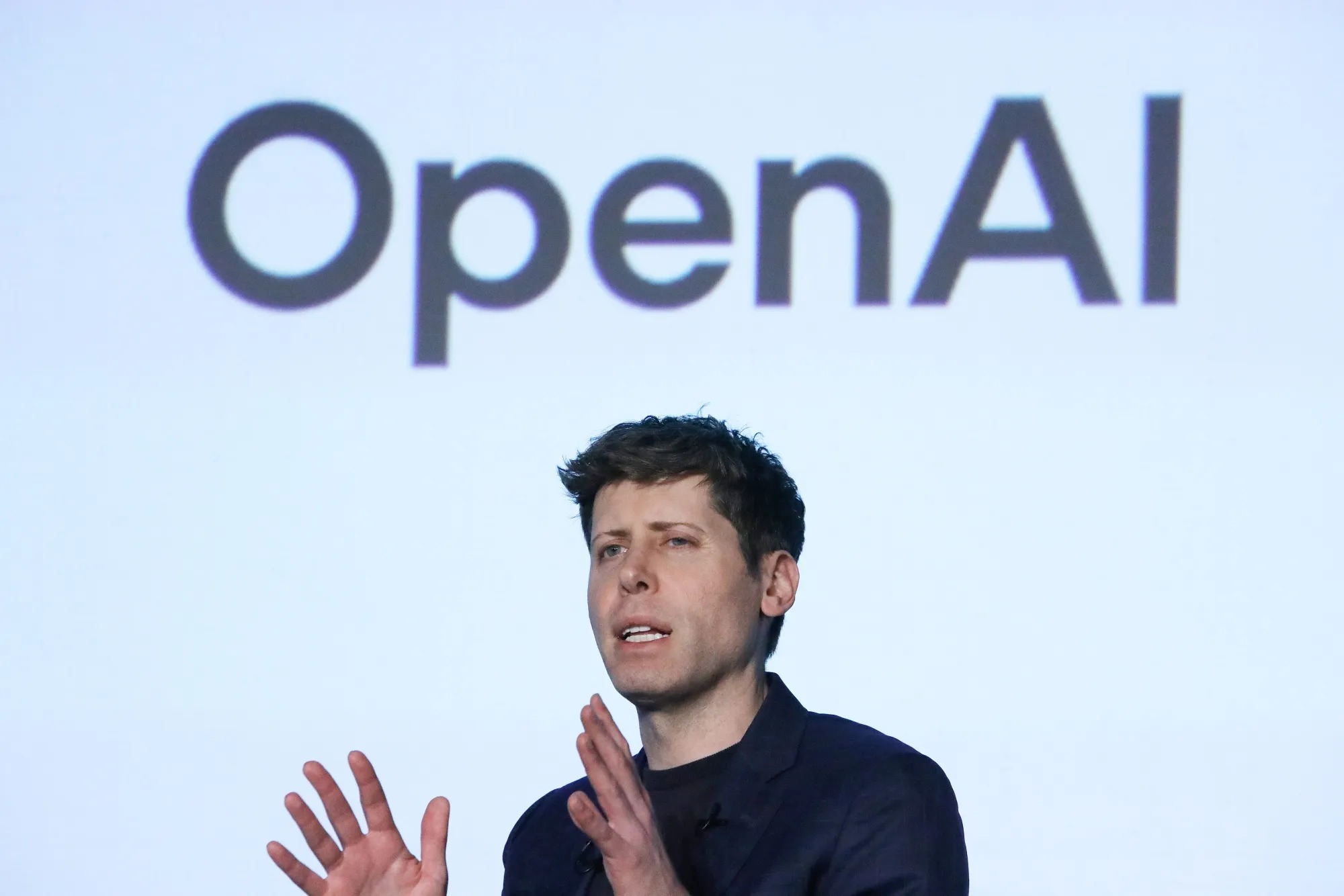
OpenAI is reportedly laying the groundwork for a future IPO that could target a valuation of up to $1 trillion, highlighting strong investor expectations around generative AI growth and long-term market dominance.
Source: Bloomberg (via Reuters)
Key factors influencing OpenAI stock valuation
OpenAI’s valuation is driven by multiple structural factors tied to the expansion of the AI economy. Rapid generative AI market growth, combined with enterprise adoption, continues to strengthen its long-term outlook.
Key drivers include:
- increasing demand for AI-powered tools and services
- strong enterprise integration and recurring revenue potential
- strategic support from Microsoft, including infrastructure and capital
These elements position OpenAI at the center of the evolving AI ecosystem.
Market timing and entry strategy for OpenAI stock
IPO stocks often experience sharp volatility during initial trading, driven by hype, demand imbalance, and price discovery. This makes entry timing one of the most important decisions for traders.
When planning entry, consider:
- entering early for momentum, but accepting higher risk
- waiting for price stabilization after initial volatility
- using staged entries instead of committing full capital at once
Balancing timing with risk management can help traders navigate the early phases of the OpenAI stock IPO more effectively.
How Could the OpenAI IPO Affect AI Stocks and Trading Opportunities?
The OpenAI IPO is expected to have a significant impact on the broader market, particularly within the artificial intelligence stocks sector. As one of the most anticipated AI company IPO events, it could reshape investor sentiment, redirect capital flows, and create new trading opportunities across the AI ecosystem.
Impact of the OpenAI IPO on artificial intelligence stocks
A successful OpenAI IPO could influence valuation benchmarks across the AI sector. When a large, high-growth company enters public markets, investors often reassess comparable firms, which can lead to broader repricing within the sector.
This may increase demand for both established and emerging artificial intelligence stocks, as investors look for alternative ways to gain exposure beyond a single listing. Capital allocation could shift toward AI-focused companies, particularly if OpenAI’s performance supports existing growth expectations.
At the same time, the IPO may create uneven short-term performance across the sector. Some stocks could benefit from increased attention, while others may face pressure if valuations are viewed as stretched.
Trading opportunities created by the OpenAI IPO
From a trading perspective, the OpenAI IPO is likely to create multiple layers of opportunity. IPO events often generate heightened volatility, especially during the initial price discovery phase, where supply and demand are still balancing.
Traders may take advantage of:
- short-term volatility during the first trading sessions
- momentum strategies driven by market hype and news cycles
- sector-wide movements across related AI stocks
These conditions are particularly common in high-growth sectors, where sentiment plays a major role in price action. For traders, understanding how the OpenAI IPO influences both the company itself and the broader market can unlock additional opportunities beyond a single stock.
Key Risks and Considerations Before Trading OpenAI Stock
While the OpenAI stock IPO may create may create significant trading opportunities, it also introduces a range of risks that investors need to evaluate carefully. High-profile IPOs often come with elevated expectations, rapid price movements, and sensitivity to broader market conditions.
1. Valuation and hype risk
Strong demand around the OpenAI IPO could result in elevated pricing at listing. In high-profile IPOs, initial valuations often reflect expectations rather than fully realized performance.
Traders should assess whether pricing is supported by fundamentals or driven by short-term sentiment.
Key considerations include:
- valuation premium compared to other AI companies
- expectations already priced into the IPO
- risk of post-listing price correction
2. Volatility and timing risk
IPO stocks typically experience significant price swings during the early trading phase. This volatility is driven by price discovery, order imbalance, and shifting investor sentiment.
Key risks include:
- sharp intraday price movements
- rapid reversals after initial spikes
- difficulty timing entry during early sessions
Entering at the wrong moment can expose traders to short-term losses, making timing a critical factor.
3. Market and liquidity risk
IPO performance is also influenced by external market conditions. Broader trends in the tech IPO market 2026, interest rates, and liquidity levels can affect demand for new listings.
Key external risks include:
- weak overall market sentiment
- reduced liquidity in risk assets
- lower-than-expected investor demand
Even strong companies can face unstable price action if broader conditions are unfavorable.
Conclusion
The OpenAI IPO date is expected to be one of the most closely watched events in the current market cycle, with many projections pointing toward a potential 2026 listing. Until the IPO is officially confirmed, however, OpenAI stock remains unavailable for public trading.
For investors, preparation is essential. Understanding how to trade OpenAI stock after the IPO, evaluating valuation signals, and managing risks will play a key role in navigating early market conditions and making informed decisions.
As the IPO approaches, staying informed and maintaining flexibility in strategy will be critical for capturing opportunities in both OpenAI and the broader AI sector. Investors can also use tools like Bitget Wallet to manage assets and stay prepared for emerging market opportunities.
Sign up Bitget Wallet now - grab your $2 bonus!
FAQs
1. When is the OpenAI IPO date?
The OpenAI IPO date is expected around 2026, based on current market projections and company growth signals. However, no official confirmation has been announced, and investors are still asking when will OpenAI go public as timelines may change.
2. Can you trade OpenAI stock now?
No, OpenAI stock is not yet publicly tradable because the company remains privately held. Investors will only be able to trade shares after the OpenAI stock IPO is completed and listed on a public exchange.
3. How to trade OpenAI stock after the IPO?
You can trade OpenAI stock through a brokerage platform once it becomes publicly listed. Investors can use market or limit orders depending on their strategy and risk tolerance during early trading.
4. Can retail investors buy OpenAI stock before IPO?
Retail investors cannot directly buy OpenAI stock before the IPO due to restricted private ownership. However, indirect exposure may be possible through companies or funds connected to the AI sector.
Risk Disclosure
Please be aware that cryptocurrency trading involves high market risk. Bitget Wallet is not responsible for any trading losses incurred. Always perform your own research and trade responsibly.

 Top Arc Tokens and Memecoins: What’s Trending on Arc Mainnet2026-09-16 | 5 mins
 Circle Arc Mainnet Launch: What Is Arc and Why Does It Matter?2026-09-14 | 5 mins
 Top Robinhood Chain Memecoins 20262026-09-09 | 5 mins



