


Highest Safe Stablecoin Yield 2026: A Practical Strategy to Reach 7.2% with Lower Risk
Highest safe stablecoin yield in 2026 is not about getting the best rate. It's about getting the yield across different platforms. As people move their money from gold to stablecoins, ways of investing are not working well. This is because the interest rates for stablecoins also known as APY keep changing. For example data from DeFiLlama shows that stablecoin yields can go up or down every week. This means that investors need to be active and adjust their investments often. Of just looking for high returns investors are now using smart strategies like the 7.2% stablecoin yield plan.
Tools, like Bitget Wallet make it easier and faster to manage and move assets across platforms. This helps investors get the stablecoin yield.
Key Takeaways
- The highest safe stablecoin yield 2026 sits within a realistic 5%–8% APY range
- Stablecoin APY fluctuates → active optimization is essential
- A stablecoin yield strategy can outperform static allocation
- A rolling allocation DeFi strategy enables consistent yield capture
- A 7.2% yield is achievable without increasing risk when executed properly
What Is the Highest Safe Stablecoin Yield in 2026?
The highest safe stablecoin yield 2026 is not a fixed number—it exists within a range shaped by liquidity conditions, platform demand and macro trends.
Now you can usually earn between 3% and 8% APY with DeFi stablecoins. It depends on the protocol and where we are in the market cycle. If you're looking for a bet with good returns you want to aim for 5% to 8%. That's where the yield is still reasonable, without being too risky.
In this spot getting a 7.2% return isn't crazy. You can actually get there by choosing the right stablecoin APY.
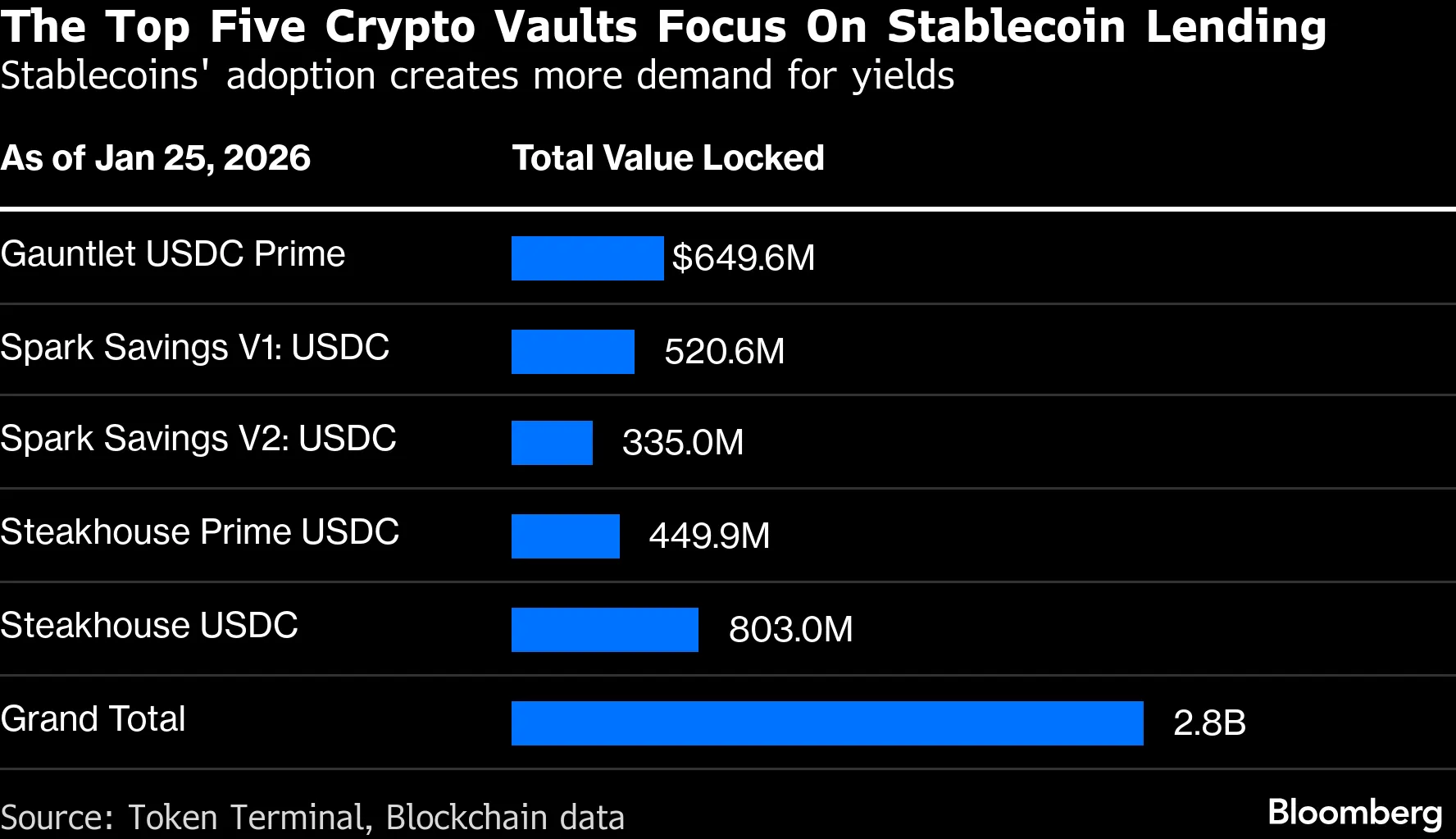
Source X
What is the typical stablecoin yield range in 2026?
Understanding the highest safe stablecoin yield 2026 begins with recognizing how the baseline yield environment works across DeFi markets. In today’s landscape, DeFi stablecoin yield is not fixed—it fluctuates based on liquidity demand, borrowing activity, and overall market conditions. This is why applying a clear stablecoin yield strategy is essential for consistent returns.
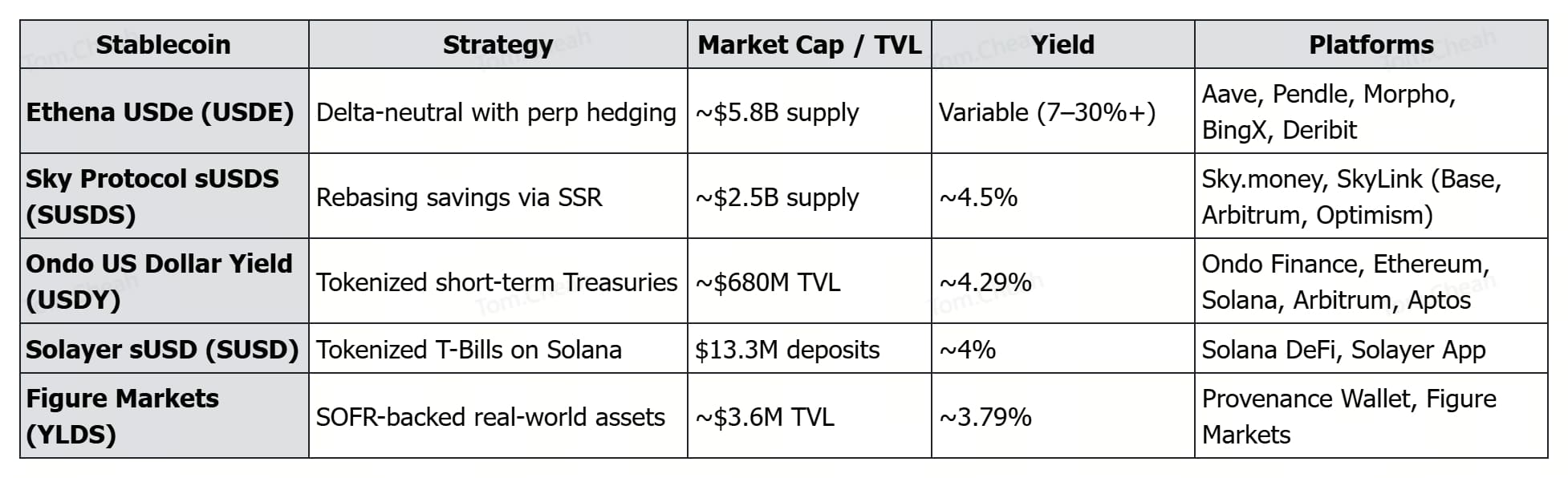
Source X
In general, stablecoin yields in 2026 fall into three main categories:
- 3% – 5% APY → Baseline yield This range represents the most conservative tier of DeFi stablecoin yield, typically found on established lending platforms like Aave or Compound. It is considered the foundation for investors who prioritize capital preservation while learning how to earn stablecoin yield safely.
- 5% – 8% APY → Optimized, sustainable yield This is widely regarded as the optimal zone for the highest safe stablecoin yield 2026, where returns are enhanced through stablecoin APY optimization rather than excessive risk-taking. Investors often reach this range by applying a structured stablecoin yield strategy, including diversification and cross-platform allocation.
- Above 8% APY → High yield, higher risk Yields above 8% are typically driven by incentives, liquidity mining, or newer protocols. While attractive, these returns often involve additional risks such as smart contract exposure or unstable liquidity. For those targeting the highest safe stablecoin yield 2026, this range should be approached cautiously and used only as a small part of a broader rolling allocation DeFi strategy.
Ultimately, achieving the highest safe stablecoin yield 2026 is not about chasing the highest number, but about staying within the sustainable 5%–8% range and applying consistent stablecoin APY optimization techniques.
What is considered a safe stablecoin yield today?
A safe yield is defined by consistency, sustainability, and risk control—not just the highest return. In the context of DeFi stablecoin yield, investors aiming for the highest safe stablecoin yield 2026 should focus on maintaining stable performance within a realistic range rather than chasing temporary spikes.
In practice, a safe yield typically falls within the 5%–8% APY range, where returns are supported by real lending demand or RWA-backed income, rather than short-term incentives. Achieving this level consistently requires a disciplined stablecoin yield strategy and ongoing stablecoin APY optimization.
Safety in stablecoin yield comes from:
- Using established lending protocols such as Aave or Compound, which offer deep liquidity and proven track records
- Prioritizing stable APY over short-term spikes, avoiding sudden yield surges that often disappear quickly
- Comparing yield sources across lending, RWA platforms, and liquidity pools to identify sustainable returns
- Avoiding high-risk, incentive-driven farms that rely on token emissions rather than real economic activity
Ultimately, reaching the highest safe stablecoin yield 2026 is about balancing return with reliability—ensuring that yield is both repeatable and resilient across different market conditions.
Why Is Capital Rotating from Gold to Stablecoins in 2026?
A defining trend behind the highest safe stablecoin yield 2026 is the growing shift of capital from traditional safe havens like gold into yield-generating assets such as stablecoins. As macro conditions evolve, investors are prioritizing income-generating stability over passive store-of-value assets.

Source X
Why is gold losing its safe-haven role?
Gold has long been considered a safe haven, but in 2026, its limitations are becoming more evident—especially in the stablecoin vs gold safe haven discussion.
- No yield → rising opportunity cost Unlike DeFi stablecoin yield, gold does not generate income. In a high interest rate environment, holding non-yielding assets becomes increasingly inefficient.
- Pressure from higher interest rates As rates rise, investors can earn returns elsewhere, making gold less attractive compared to assets that provide stablecoin APY optimization opportunities.
- Liquidity tightening across markets When liquidity is constrained, capital flows toward assets that can both preserve value and generate yield, reinforcing the shift toward stablecoins.
Why are stablecoins becoming a preferred alternative?
Stablecoins are increasingly seen as a modern safe haven, especially in the context of the highest safe stablecoin yield 2026, because they combine stability with income generation—something traditional assets cannot offer.
- Price stability (~$1 peg) Stablecoins maintain a tight range around $1, reducing volatility while preserving capital—an essential factor in the stablecoin vs gold safe haven debate.
- Yield generation via DeFi Unlike gold, stablecoins can generate DeFi stablecoin yield, allowing investors to earn passive income through lending and liquidity strategies. This makes them a key tool for stablecoin APY optimization.
- Increasing institutional adoption Institutions are entering the market through regulated platforms and RWA-backed products, reinforcing trust and expanding use cases for stablecoins.
As a result, global capital rotation into stablecoins continues to accelerate, redefining the concept of a safe haven—from passive value storage to yield-generating stability aligned with the highest safe stablecoin yield 2026.
How Do Stablecoin Yields Actually Work in DeFi?
To achieve the highest safe stablecoin yield 2026, investors must first understand how yield is generated within DeFi ecosystems. Unlike traditional savings, DeFi stablecoin yield comes from real market activity, primarily driven by borrowing demand and liquidity supply across protocols.
Platforms like Aave, Morpho, and Compound form the core infrastructure of this system. These protocols allow users to lend stablecoins (such as USDT or USDC) to borrowers, who pay interest to access liquidity.
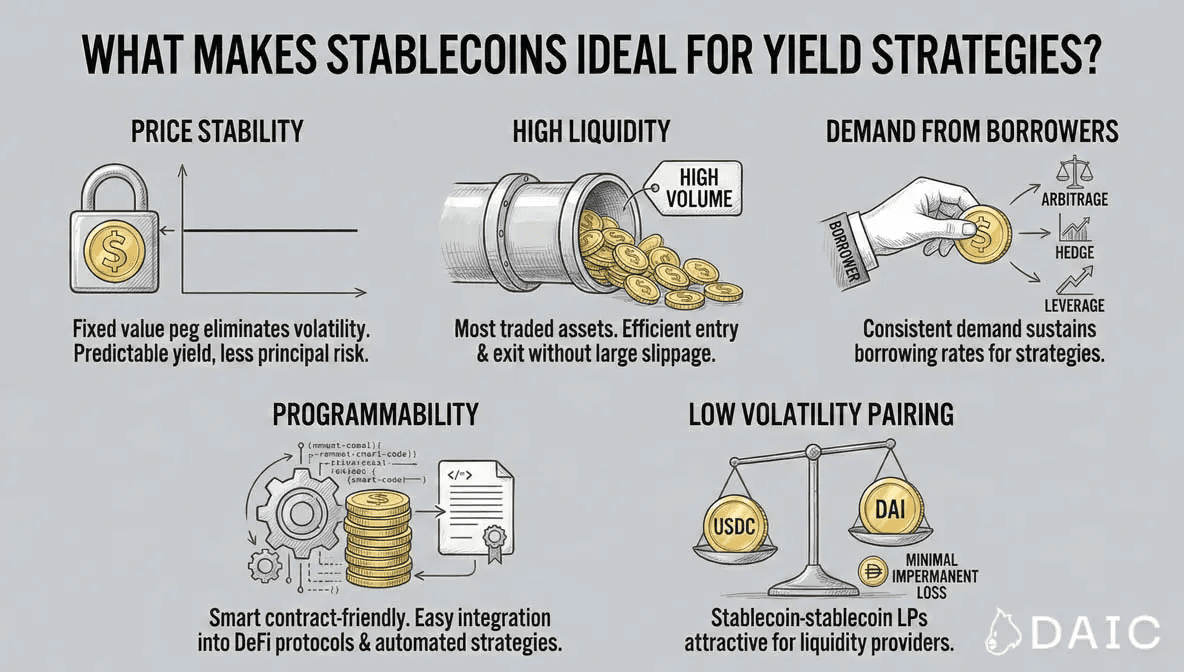
Source X
In simple terms:
- Users deposit stablecoins into lending pools
- Borrowers take loans and pay interest
- That interest becomes yield for lenders
However, not all yields are the same. Differences arise due to:
- Supply and demand dynamics (more borrowing = higher yield)
- Protocol efficiency (e.g., Morpho improves matching for better rates)
- Incentives or rewards offered by platforms
This is why stablecoin APY constantly changes, making static allocation inefficient. To consistently reach the highest safe stablecoin yield 2026, investors need to apply a flexible stablecoin yield strategy and actively optimize where their capital is deployed.
What drives yield differences across platforms?
To reach the highest safe stablecoin yield 2026, it’s essential to understand why yields vary across DeFi platforms. Even for the same asset, DeFi stablecoin yield can differ significantly depending on market conditions and protocol design.
Key factors include:
- Supply vs borrowing demand When borrowing demand is high and available supply is limited, yields increase. Conversely, excess liquidity with low borrowing demand pushes APY down. This dynamic is the primary driver behind yield fluctuations on platforms like Aave and Compound.
- Liquidity availability Larger pools with deep liquidity tend to offer more stable but slightly lower yields, while smaller pools may provide higher returns but with greater variability—impacting stablecoin APY optimization decisions.
- Incentives and token rewards Some platforms boost yield through additional token incentives. While this can temporarily increase returns, it may also introduce higher risk, making it less suitable for those targeting the highest safe stablecoin yield 2026.
Understanding these factors is critical for building an effective stablecoin yield strategy and identifying when to reallocate capital across platforms.
Why is static allocation inefficient?
To achieve the highest safe stablecoin yield 2026, relying on a fixed allocation is no longer effective in a dynamic DeFi environment. DeFi stablecoin yield constantly shifts, meaning the platform you choose today may not offer the best return tomorrow.
For example:
- Current yield: 4.6%
- 30-day average: 6.6%
👉 This gap clearly shows why stablecoin APY optimization is essential.
When investors keep funds in a single pool, they often miss periods where higher yields are available elsewhere. Platforms like Aave, Morpho, and Compound frequently rotate in performance based on market demand.
A static approach leads to:
- Missed yield opportunities
- Lower overall returns
- Inefficient capital usage
In contrast, an active stablecoin yield strategy—such as a rolling allocation DeFi strategy—allows investors to adapt to changing APY conditions and move closer to the highest safe stablecoin yield 2026 without increasing risk.
How Can You Reach the Highest Safe Stablecoin Yield in 2026 with a Rolling Allocation Strategy?
Reaching the highest safe stablecoin yield 2026 is not about choosing a single platform, but applying a dynamic allocation approach. Because DeFi stablecoin yield and APY constantly shift across protocols, investors who actively adjust their positions can capture higher returns without increasing risk. This is where a rolling allocation DeFi strategy becomes highly effective. By systematically reallocating capital, investors can move closer to a stablecoin yield 7.2% strategy while staying within the safe yield zone.
Use a rolling allocation strategy to capture changing APY opportunities
The foundation of achieving the highest safe stablecoin yield 2026 lies in active capital movement, not passive holding. A stablecoin yield strategy based on rolling allocation allows investors to follow yield opportunities as they rotate across platforms like Aave, Morpho, and Compound.
- Move funds based on real-time APY differences
- Allocate across multiple platforms to diversify exposure
- Avoid reliance on a single yield source
- Improve overall capital efficiency through stablecoin APY optimization
Apply a 7-day rotation strategy to optimize stablecoin yield
A practical way to implement a rolling allocation DeFi strategy is through a structured weekly cycle:
- Day 1–2: Data Review & Initial Allocation
- Analyze APY trends across key platforms
- Identify high-yield vs. stable pools
- Allocate capital across 2–3 platforms
- Day 3–5: Hold & Monitor
- Observe yield consistency without frequent changes
- Ignore short-term fluctuations and noise
- Focus on sustained APY trends
- Day 6: Evaluation
- Compare performance across pools
- Identify outperforming platforms
- Plan partial reallocation if needed
- Day 7: Rebalance
- Shift funds strategically
- Maintain diversification (core + satellite allocation)
- Prepare for the next optimization cycle
By following this structured approach, investors can consistently adapt to changing market conditions and move closer to achieving the highest safe stablecoin yield 2026 without taking on unnecessary risk.
Combine base yield with active optimization to reach ~7.2%
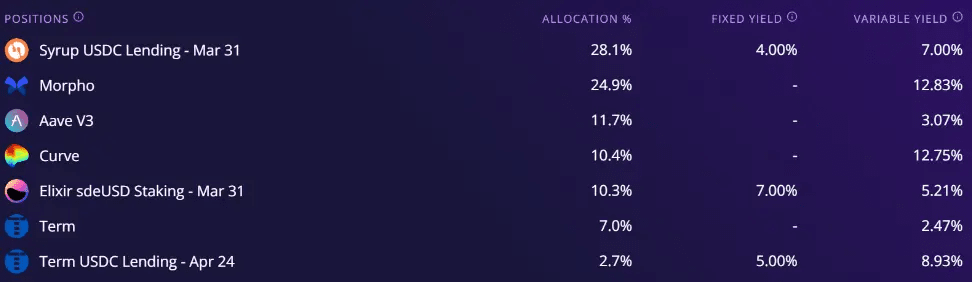
A stablecoin yield 7.2% strategy is achieved by layering stablecoin APY optimization on top of a reliable base yield, rather than chasing high-risk opportunities. To reach the highest safe stablecoin yield 2026, investors focus on improving allocation efficiency across platforms like Aave, Morpho, and Compound. This approach allows them to enhance returns while maintaining a controlled risk profile within the safe yield zone.
Source X
- Base yield: ~4%–5% from stable, low-risk lending platforms
- Optimization: +1%–3% through active reallocation and timing
- Capture yield differences across protocols using a rolling allocation DeFi strategy
- Stay within the 5%–8% range, aligned with the highest safe stablecoin yield 2026
Follow key rules to maintain safety while increasing yield
Maximizing returns should never come at the expense of risk control. To consistently achieve the highest safe stablecoin yield 2026, investors must combine a strong stablecoin yield strategy with disciplined execution and ongoing stablecoin APY optimization. The goal is to enhance yield while preserving capital across changing market conditions.
- Avoid unusually high or unstable APY pools, as they often rely on short-term incentives or carry hidden risks
- Prioritize liquidity and trusted protocols such as Aave and Compound
- Diversify across platforms and strategies to reduce exposure to any single point of failure
- Adjust allocation based on market conditions, using a flexible rolling allocation DeFi strategy to stay aligned with the highest safe stablecoin yield 2026
What Are the Best Stablecoin Yield Platforms in 2026?
Choosing the best stablecoin yield platforms 2026 is essential for investors aiming to achieve the highest safe stablecoin yield 2026. Rather than relying on a single protocol, a well-structured stablecoin yield strategy combines multiple platforms to balance consistency, efficiency, and risk.
Which platforms offer the most consistent yields?
- Aave → Known for stability and deep liquidity, making it ideal for low-risk, consistent DeFi stablecoin yield
- Morpho → Enhances lending efficiency by optimizing rates, helping users achieve better stablecoin APY optimization
- Compound → Offers transparent, market-driven yields that adjust based on supply and demand
- Ondo Finance → Provides exposure to real-world assets, offering more stable and predictable yield sources
How should investors allocate across platforms?
To understand how to earn stablecoin yield safely, investors should apply a structured allocation model:
- Core allocation (60–80%) → Focus on low-risk platforms like Aave and Ondo for stable baseline yield
- Satellite allocation (20–40%) → Use higher-yield platforms like Morpho or dynamic pools on Compound
- Diversification logic → Spread capital across multiple platforms to reduce risk and improve overall yield consistency
This approach supports long-term stablecoin APY optimization while staying aligned with the highest safe stablecoin yield 2026.
Comparison Table: Best Stablecoin Yield Platforms 2026
| Platform | Yield Type | Typical APY Range | Risk Level | Key Advantage | Best For |
| Aave | Lending (overcollateralized) | 3% – 6% | Low | High liquidity, stable rates | Conservative investors |
| Morpho | Optimized lending (P2P layer) | 5% – 9% | Low–Medium | Better yields via optimization | Yield optimizers |
| Compound | Algorithmic lending | 3% – 7% | Low–Medium | Transparent, market-driven rates | Passive users |
| Ondo Finance | RWA-backed yield | 4% – 8% | Low | Exposure to real-world assets | Institutional-style investors |
How Can You Safely Optimize Stablecoin Yield Without Increasing Risk?
To achieve the highest safe stablecoin yield 2026, investors must prioritize risk management alongside return optimization. While DeFi stablecoin yield offers attractive opportunities, it also comes with structural risks that require careful handling. Understanding how to earn stablecoin yield safely is essential for building a sustainable and resilient strategy.
What are the main risks in stablecoin yield strategies?
To achieve the highest safe stablecoin yield 2026, investors must understand that even stablecoin strategies carry inherent risks. While DeFi stablecoin yield can be attractive, these risks often come from the underlying infrastructure and market conditions rather than price volatility alone.
- Smart contract risk DeFi protocols rely on code execution. Vulnerabilities or exploits in smart contracts can lead to loss of funds, even on established platforms like Aave or Compound.
- Liquidity risk In periods of market stress, liquidity may decrease, making it harder to withdraw funds or maintain stable yield levels. This can directly impact stablecoin APY optimization strategies.
- Platform risk Each protocol carries its own operational and governance risks. Changes in rules, failures, or unexpected events can affect yield stability and access to funds.
How can investors reduce these risks?
To consistently reach the highest safe stablecoin yield 2026, investors should apply a disciplined and proactive approach to risk management.
- Diversify across platforms Avoid concentrating capital in a single protocol. A multi-platform stablecoin yield strategy reduces exposure to individual risks.
- Avoid chasing extreme APY High yields often come from unstable or incentive-driven pools. Staying within the 5%–8% safe range helps maintain long-term sustainability.
- Monitor market conditions Regularly track APY changes and liquidity trends to adjust allocation using stablecoin APY optimization techniques.
How Can You Execute a Stablecoin Yield Strategy Using Bitget Wallet?
Executing a stablecoin yield strategy efficiently requires more than just choosing the right platforms—it also depends on how easily you can manage, move, and monitor your assets. Tools like Bitget Wallet help simplify this process by providing a unified interface for cross-chain stablecoin management, making it easier to pursue the highest safe stablecoin yield 2026 in a structured and controlled way.
Managing assets across different blockchains can be complex, especially when optimizing DeFi stablecoin yield. A multi-chain wallet allows you to:
- Store USDT / USDC securely in one place
- Access multiple networks such as Ethereum and BNB Chain
- Simplify cross-chain stablecoin management without switching between platforms
To achieve the highest safe stablecoin yield 2026, investors need both efficient execution and a cautious learning approach. By using tools that allow real-time monitoring, quick fund reallocation, and seamless stablecoin APY optimization, users can respond effectively to changing yield conditions and implement a smooth rolling allocation DeFi strategy.
At the same time, beginners should start with small capital, focus on trusted platforms, and gradually build experience—ensuring they develop a sustainable stablecoin yield strategy while minimizing risk.
Related Reading on USDC Earn
If you're exploring USDC earn opportunities — from understanding APY mechanics to evaluating liquidity and smart contract exposure — these guides will help you assess yield potential and risks more clearly.
🔹 Understanding USDC & Stablecoin Basics
🔹 USDC Earn Explained
- USDC Earn Explained: A Complete Guide to Yield, APY, and Risk
- USDC Earn Returns: How to Evaluate APY, Liquidity, and Smart Contract Exposure
- USDC Yield: How to Earn Yield on USDC Safely in 2026?
- Best USDC Yield Strategies: How to Earn Stablecoin Interest?
- USDC Yield and Passive Income: How Much Capital Do You Need?
- USDC Yield vs Traditional Savings: How Stablecoin Earn Plus Structures Passive Income?
🔹 Stablecoin Earn Plus & Yield Options
- Stablecoin Earn Plus: What USDC Earn Is and How to Start Generating Yield
- Stablecoin Earn Plus: Earn Up to 10% APY with Flexible Withdrawal
Conclusion
Highest safe stablecoin yield 2026 is no longer about locking funds into a single platform—it’s about understanding that yield is dynamic and driven by strategy, not static rates. As the market evolves, investors who apply a structured stablecoin yield strategy and focus on stablecoin APY optimization can consistently operate within the 5%–8% range, where a 7.2% return represents an optimized “safe zone” rather than an outlier.
At the same time, the macro shift from traditional assets like gold toward stablecoins highlights a new reality: capital is flowing into assets that combine stability with yield. This makes active allocation and rolling strategies essential for capturing opportunities across changing market conditions.
Ultimately, investors who adapt to APY fluctuations and optimize their allocation gain a clear advantage in achieving the highest safe stablecoin yield 2026. To get started, focus on managing your assets securely, exploring cross-chain opportunities, and executing strategies efficiently with tools like Bitget Wallet—a beginner-friendly gateway to stablecoin yield optimization.
Sign up Bitget Wallet now - grab your $2 bonus!
FAQs
What is the highest safe stablecoin yield in 2026?
The highest safe stablecoin yield 2026 typically falls within the 5%–8% APY range. Returns around 7.2% are considered achievable through a well-structured stablecoin yield strategy and consistent stablecoin APY optimization, rather than relying on a single platform.
How to earn stablecoin yield safely?
To earn stablecoin yield safely, focus on trusted lending platforms, diversify across protocols, and avoid chasing unusually high APY. Applying a disciplined stablecoin yield strategy and monitoring market conditions are key to maintaining stable returns.
Is a 7.2% stablecoin yield realistic?
Yes, a stablecoin yield 7.2% strategy is realistic within the safe yield zone. It is typically achieved through cross-platform allocation and active stablecoin APY optimization, not from a single pool.
What are the best stablecoin yield platforms in 2026?
Some of the best stablecoin yield platforms 2026 include Aave, Morpho, Compound, and Ondo Finance. Each offers different yield mechanisms, making diversification important.
Risk Disclosure
Please be aware that cryptocurrency trading involves high market risk. Bitget Wallet is not responsible for any trading losses incurred. Always perform your own research and trade responsibly.

 Top Arc Tokens and Memecoins: What’s Trending on Arc Mainnet2026-09-16 | 5 mins
 Circle Arc Mainnet Launch: What Is Arc and Why Does It Matter?2026-09-14 | 5 mins
 Top Robinhood Chain Memecoins 20262026-09-09 | 5 mins



