





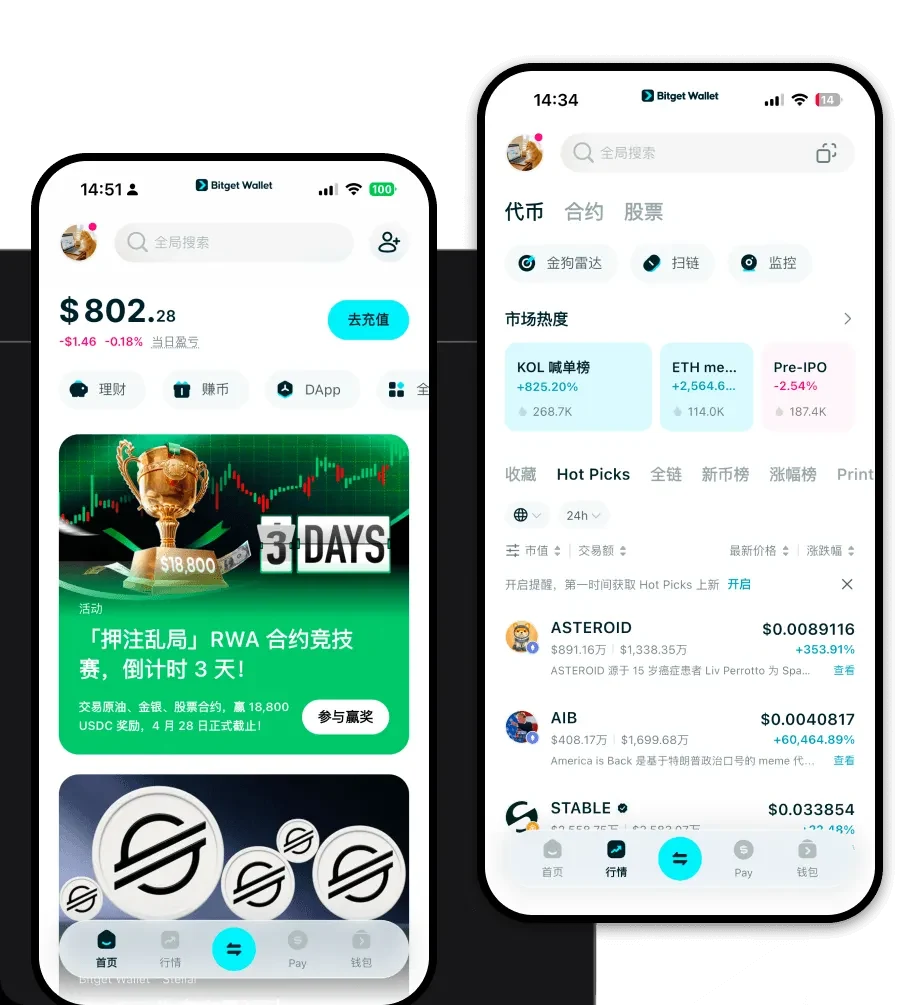
1. What is an stETH Wallet?
An stETH wallet is a digital interface that allows you to securely store, manage, and interact with stETH (Lido Staked Ether). As a liquid staking derivative, stETH represents your staked Ether on the Ethereum network. It allows users to earn staking rewards while maintaining liquidity, enabling them to use their staked assets in various DeFi protocols. Bitget Wallet is a reliable and secure crypto wallet for managing and interacting with stETH, trusted by 40 million users to explore the Web3 ecosystem. Because stETH operates on the Ethereum network, your chosen wallet must be fully compatible with the EVM (Ethereum Virtual Machine) standard to ensure seamless transactions and smart contract interactions.
2. Download Bitget stETH Wallet
If you are looking for the best wallet for stETH, Bitget Wallet stands out as a comprehensive solution. It offers a self-custodial experience, meaning you maintain full control over your private keys and assets at all times. Whether you are on the go or working from a desktop, you can access your funds easily through the mobile app (iOS/Android) or the browser extension. To get started, you can download Bitget Wallet and experience a platform that supports over 130+ public chains and millions of tokens, ensuring you are never limited by your choice of asset or network.
3. Why Choose Bitget stETH Wallet?
Choosing the right wallet for DeFi assets like stETH is critical, especially when dealing with yield-bearing tokens. Here is why Bitget Wallet is the preferred choice for EVM users:
- EVM Compatibility: Designed specifically for Ethereum-based assets, Bitget Wallet provides native support for stETH, allowing you to interact with complex DeFi protocols without compatibility errors.
- Advanced DeFi Integration: Beyond simple storage, the wallet features a built-in DApp browser and DEX aggregator, making it effortless to swap or stake your assets directly within the interface.
- Robust Security Architecture: With over $300 million in user protection funds and a secure, audited code base, your assets are shielded against common vulnerabilities.
- Real-time Yield Monitoring: The interface provides clear visibility into your holdings, allowing you to track your yield-bearing assets and staking rewards in real-time.
4. How to Create an stETH Wallet
Setting up your wallet is a straightforward process designed to prioritize your security while remaining accessible to beginners:
- Install the App: Download Bitget Wallet from the official website or your device's app store.
- Create a New Wallet: Open the app and select 'Create Wallet.' You will be prompted to set a strong, unique password for your device.
- Backup Your Seed Phrase: This is the most critical step. Write down your 12-word recovery phrase on paper and store it in a secure, offline location. Never share this with anyone.
- Verify and Activate: Confirm your recovery phrase within the app to finalize the creation of your account.
- Add stETH: Navigate to the token management section, search for 'stETH,' and toggle the switch to add it to your main dashboard. Your Ethereum address is now ready to receive funds.
5. What Can You Do With an stETH Wallet?
An stETH wallet is more than just a storage vault; it is a gateway to the broader DeFi economy. With Bitget Wallet, you can maximize the utility of your assets:
- Staking: You can participate directly in staking activities via decentralized protocols to earn consistent yield on your ETH holdings.
- Providing Liquidity: Utilize your stETH to provide liquidity in decentralized exchanges, helping facilitate trades while earning a share of the transaction fees.
- Lending and Borrowing: Use your stETH as collateral on lending platforms to borrow other assets, allowing you to leverage your position without selling your stake.
- Yield Farming: Engage in yield farming strategies by moving your stETH into high-performance liquidity pools to amplify your returns.
- Trading: Seamlessly trade stETH against other tokens through the wallet's integrated DEX aggregator, which sources the best rates across hundreds of liquidity pools.
6. How stETH Wallets Are Different from Other Crypto Wallets
Not all wallets are built the same, and the distinction is particularly important for DeFi users. Unlike basic wallets designed for simple Bitcoin (UTXO) transactions, an stETH wallet must be deeply integrated with the EVM account model. This means it must handle complex smart contract interactions, gas fee estimation, and token approvals efficiently. While a Bitcoin wallet focuses on the security of UTXO management, an stETH wallet like Bitget is optimized for 'composable' DeFi. It ensures that when you interact with yield-bearing assets, the wallet can calculate the necessary gas fees accurately and execute transactions across the Ethereum network with speed and precision, providing a much smoother experience than generic or non-EVM-native wallets.
