





What is an APED Wallet?
An APED wallet is a digital tool designed to store, manage, and interact with the APED cryptocurrency. Operating primarily on the EVM (Ethereum Virtual Machine) blockchain, APED exists as a digital asset within a vibrant, decentralized ecosystem. As part of the broader Web3 ecosystem, users utilize the Bitget Wallet to interact with tokens like APED, benefiting from features trusted by millions of users for exploring decentralized finance and digital assets. APED is a cryptocurrency asset that can be securely stored and managed using the Bitget Wallet.
Download Bitget APED Wallet
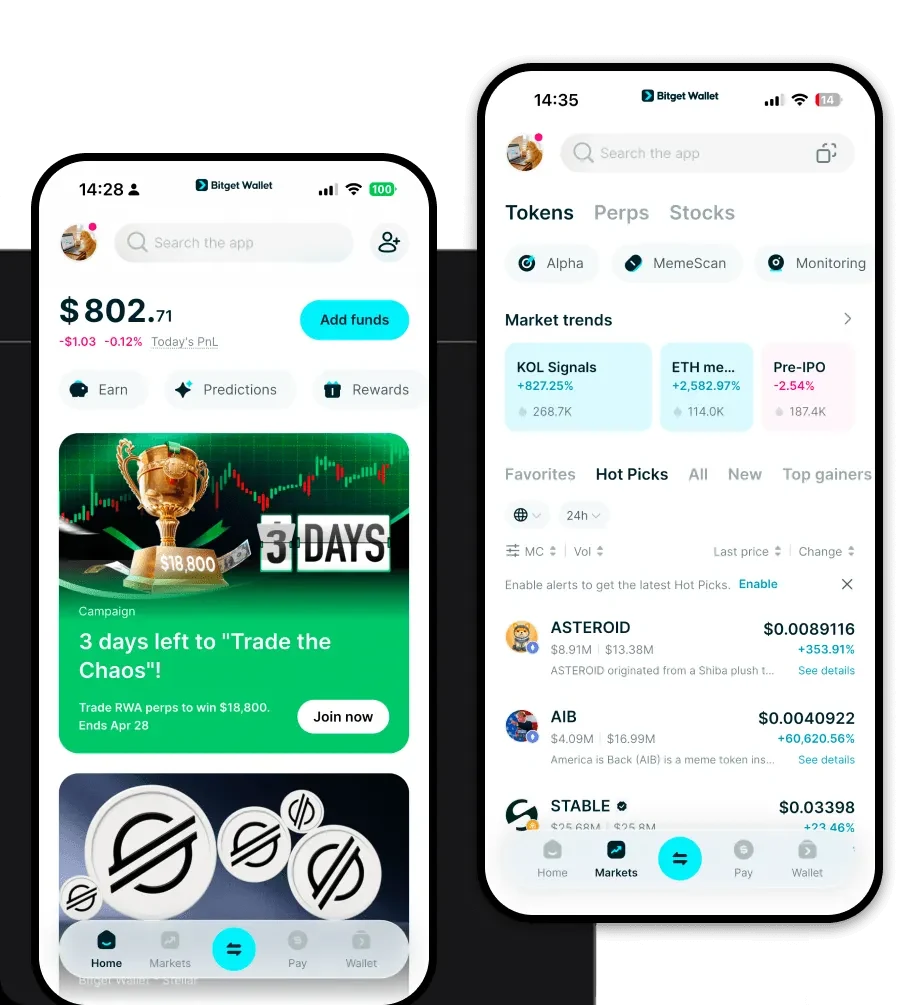
Getting started with your digital assets requires a reliable interface. To access your APED tokens, you need a wallet that balances user-friendly design with robust security. Bitget Wallet provides a seamless experience, offering full self-custody over your private keys, which ensures you remain the sole owner of your assets. Whether you prefer managing your portfolio on the go or from your desktop, Bitget Wallet is available as an iOS / Android app and a browser extension. Its multi-chain support means you can manage your APED holdings alongside hundreds of other tokens without switching interfaces.
Why Choose Bitget APED Wallet?
Choosing the right wallet is critical when dealing with highly volatile assets like Meme tokens. Bitget Wallet is optimized for the EVM ecosystem, providing specific advantages for APED holders:
- Seamless EVM Compatibility: Bitget Wallet integrates perfectly with EVM-based chains, allowing you to connect to decentralized applications (dApps) and interact with smart contracts without compatibility issues.
- Advanced Decentralized Trading: With built-in DEX aggregation, you can find the best market rates for APED, ensuring your trades are executed efficiently across various liquidity pools.
- Robust Security Architecture: Beyond standard encryption, the platform is backed by a $300 million user protection fund, providing an extra layer of defense against potential threats.
- Real-time Market Insight: Monitor high volatility assets like APED with live charts and market data directly within the wallet interface, helping you make informed decisions.
- Community-Driven Ecosystem Access: Easily navigate the decentralized landscape where community-driven projects thrive, with streamlined access to trending tokens and new protocol launches.
How to Create an APED Wallet
Setting up your wallet is a straightforward process designed to get you into the Web3 space quickly:
- Download and install the Bitget Wallet application or browser extension from the official website.
- Select 'Create a New Wallet' and ensure you carefully back up your 12-word mnemonic phrase; store this offline in a secure location.
- Set a strong, unique password to protect your local wallet access.
- Once inside the dashboard, navigate to the 'Add Token' feature and search for the APED contract address to import it to your main screen.
- Your wallet address is now active on the EVM network, ready to receive and manage your APED tokens.
What Can You Do With an APED Wallet?
Using your APED wallet extends far beyond simple storage. Because APED operates within a dynamic Web3 environment, you can utilize it for several strategic purposes:
- Trading: You can execute swift buy and sell orders for APED directly within the Bitget Wallet’s built-in swap feature, taking advantage of aggregated liquidity.
- Speculative Investment: Many users hold APED as part of a speculative investment strategy, monitoring market fluctuations and timing their entry or exit points based on community sentiment.
- Liquidity Provision: You can contribute your APED tokens to decentralized liquidity pools, helping facilitate trades for others while potentially earning a share of transaction fees.
- Holding: Securely store your APED for the long term in a non-custodial environment, ensuring that your digital assets remain under your full control until you decide to move or trade them.
How APED Wallets Are Different from Other Crypto Wallets
When dealing with an EVM-based token like APED, the wallet choice matters significantly. Unlike older wallets that might struggle with complex smart contract interactions, a specialized EVM wallet like Bitget is designed to handle the nuances of the Ethereum Virtual Machine. While Bitcoin wallets focus on the UTXO (Unspent Transaction Output) model and basic transfers, an EVM wallet focuses on account-based logic, which is necessary for executing trades on DEXs and interacting with dApps. Furthermore, Bitget Wallet optimizes for gas fee transparency, allowing users to adjust transaction speeds and costs in real-time—a crucial feature when trading high-volatility assets where timing is everything.
