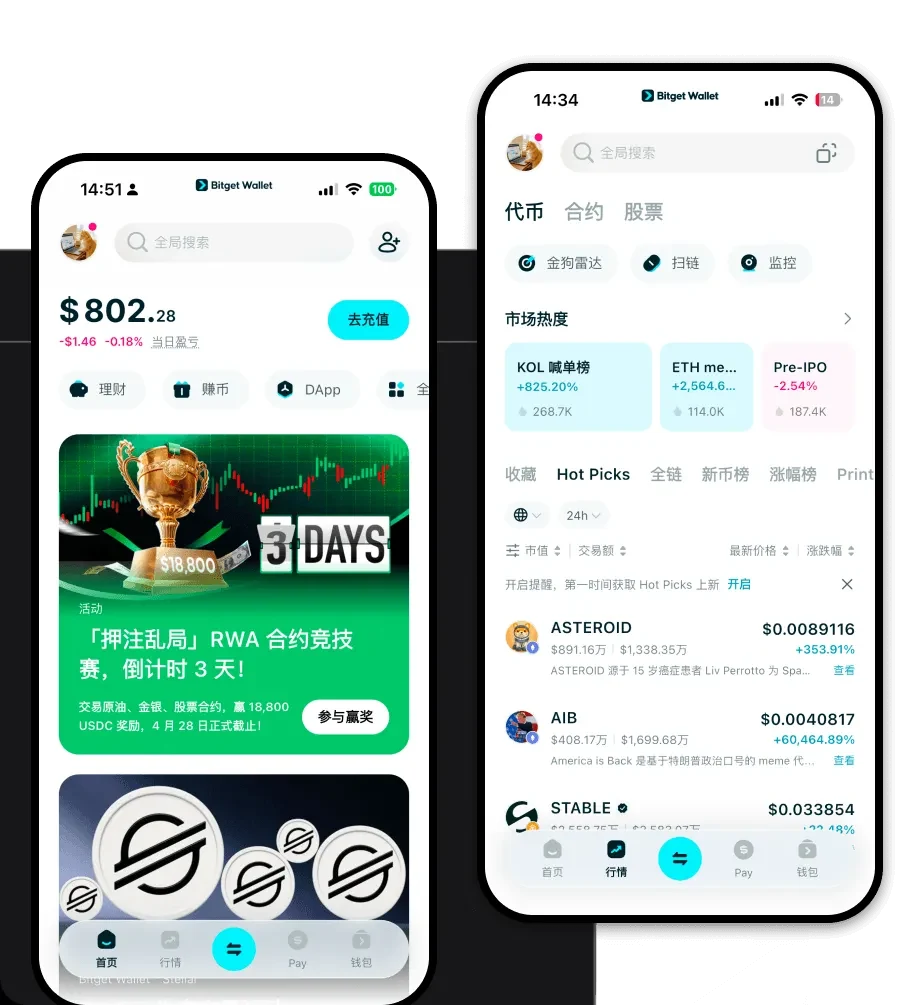
What is a runway Wallet?
A runway wallet is a specialized digital interface designed to interact with the runway token, a project operating on the EVM blockchain. Since runway is built on EVM infrastructure, it requires a wallet that fully supports the Ethereum Virtual Machine standard to ensure seamless compatibility with smart contracts and decentralized applications. Runway is a project integrated with the Bitget Wallet ecosystem, allowing users to manage their assets securely. It is designed to be accessible for Web3 exploration, leveraging Bitget Wallet's infrastructure trusted by 40 million users.
Download Bitget runway Wallet
To begin managing your tokens, you need a reliable gateway to the blockchain. Bitget Wallet stands out as a top-tier choice for runway holders, offering a unified experience across mobile and desktop environments. Whether you prefer the convenience of iOS and Android apps or the utility of a browser extension, the wallet ensures your private keys remain under your sole control through self-custody protocols.
You can easily download Bitget Wallet to get started. It provides comprehensive multi-chain support, allowing you to view and manage your runway assets alongside other tokens in a single, streamlined interface.
Why Choose Bitget runway Wallet?
- Native EVM Compatibility: Designed specifically for the EVM ecosystem, ensuring smooth interaction with smart contracts and decentralized protocols without configuration hurdles.
- Robust Security Architecture: Backed by a $300 million user protection fund, Bitget Wallet provides institutional-grade security for your digital assets.
- Seamless DeFi Access: Experience frictionless participation in liquidity pools and yield farming, optimized for the high-speed nature of EVM chains.
- Intuitive Multi-Chain Management: Effortlessly switch between runway and other supported chains, with automated gas fee estimations to optimize your transaction costs.
- Industry-Leading Ecosystem Integration: Enjoy direct connectivity to decentralized exchanges and cross-chain bridges, simplifying your trading workflow.
How to Create a runway Wallet
1. Download and Install: Visit the official Bitget Wallet download page and install the application on your preferred device (mobile or browser).
2. Create a New Identity: Open the app and select 'Create Wallet'. You will be prompted to set a strong password to protect your local access.
3. Secure Your Recovery Phrase: The app will generate a 12 or 24-word seed phrase. Write this down on paper and store it offline; this is the master key to your runway assets.
4. Verify and Confirm: Enter the recovery phrase as prompted to confirm you have backed it up correctly.
5. Import or Receive: Once your wallet is active, you can import existing holdings or copy your public address to receive runway tokens directly into your account.
What Can You Do With a runway Wallet?
Asset Storage: You can safely store your runway tokens in a self-custodial environment where you maintain total ownership of your private keys.
Token Swapping: Utilize the built-in DEX aggregator to swap runway for other tokens directly within the wallet, taking advantage of optimized gas fees and liquidity.
dApp Interaction: Connect your wallet to various Web3 decentralized applications to explore the broader utility of the runway infrastructure.
Portfolio Management: Monitor your total asset balance in real-time and track performance across different chains within a single, unified dashboard.
How runway Wallets Are Different from Other Crypto Wallets
Unlike wallets designed for non-EVM chains, a Bitget runway wallet is built specifically to handle the complexities of the Ethereum Virtual Machine. While Bitcoin wallets focus on UTXO-based transaction models, the Bitget runway wallet utilizes an account-based model, which is essential for executing smart contracts. Furthermore, while some wallets struggle with the intricacies of gas estimation, the Bitget infrastructure provides real-time fee adjustments, ensuring that your transactions are processed efficiently without overpaying. This distinction is critical for users who need to interact with DeFi protocols, where speed and accurate gas management are the difference between a successful trade and a failed one.