





What is a POL Wallet?
A POL wallet is a digital interface that allows you to interact with the Polygon network, specifically designed to store, manage, and transfer the POL token. As the native asset of the Polygon network, POL serves as the core utility and governance token for the Polygon 2.0 ecosystem. Because Polygon operates on an EVM (Ethereum Virtual Machine) compatible architecture, your POL wallet acts as your gateway to decentralized applications, smart contracts, and the broader Layer 2 scaling landscape. POL is the upgraded native token of the Polygon network, serving as a core asset for the Polygon 2.0 ecosystem. It is designed to power a vast ecosystem of ZK-based Layer 2 chains, enabling community governance, staking for network security, and facilitating seamless transactions across the Polygon network.
Download Bitget POL Wallet
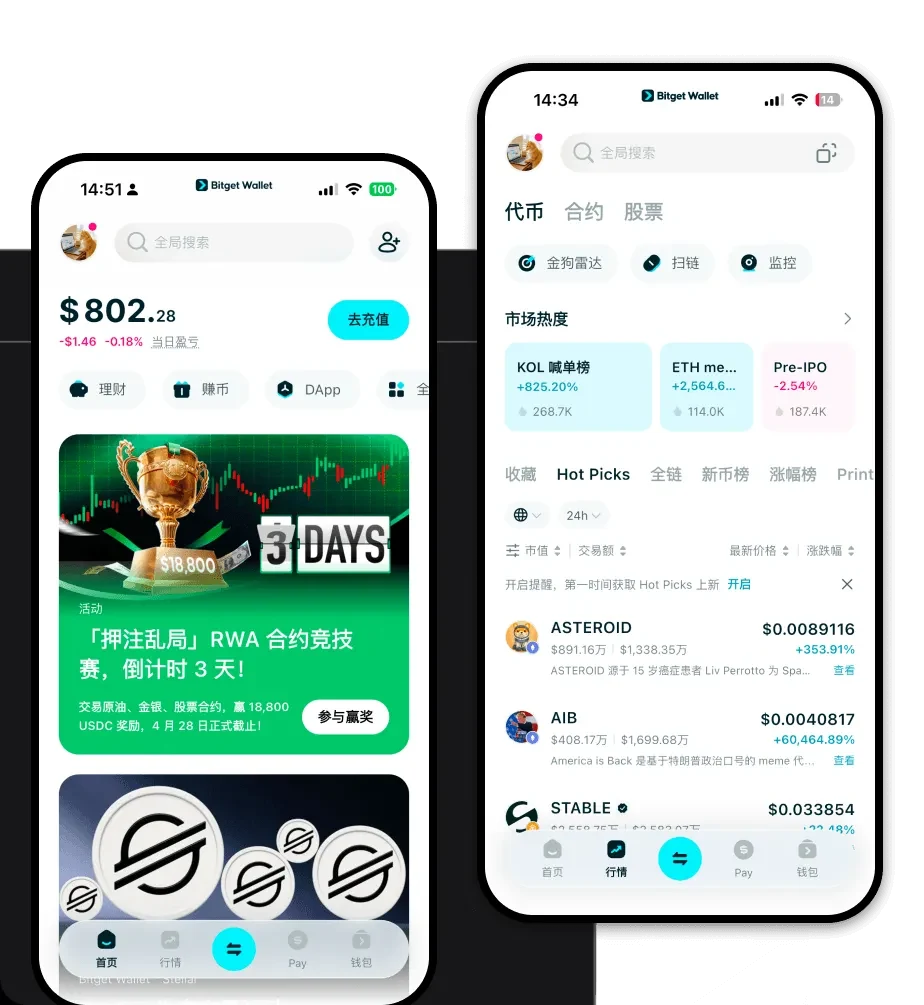
To experience the full potential of your POL tokens, you need a wallet that combines security with versatility. We recommend you download Bitget Wallet to gain access to a platform that supports over 130 mainnets and millions of assets. Whether you are on the move or at your desk, Bitget Wallet offers a seamless experience across iOS, Android, and browser extensions. By choosing a self-custodial solution, you retain full control over your private keys, ensuring that you—and only you—have authority over your POL holdings. Its multi-chain architecture allows you to manage assets across Polygon and other EVM-compatible chains in one unified interface, simplifying your Web3 journey.
Why Choose Bitget POL Wallet?
- EVM Seamless Integration: As a dedicated EVM-compatible wallet, Bitget ensures that interacting with Polygon dApps is frictionless, automatically detecting network settings for smooth transactions.
- ZK-Proof Ecosystem Support: The wallet is architected to handle the complexities of Zero-Knowledge proofs, ensuring you can interact with advanced Layer 2 scaling solutions without manual configuration.
- Robust Security Architecture: With over $300 million in user protection funds and advanced encryption, your POL assets are shielded against common vulnerabilities.
- Advanced DeFi Aggregation: Bitget Wallet aggregates hundreds of DEXs and cross-chain bridges, guaranteeing you get the best swap rates when trading your POL tokens.
How to Create a POL Wallet
Getting started with your POL wallet is straightforward. Follow these steps to set up your secure account:
- Download and Install: Visit the official Bitget Wallet website to download Bitget Wallet on your preferred device.
- Initialize Your Wallet: Open the app and select 'Create a New Wallet' to generate your unique seed phrase.
- Secure Your Recovery Phrase: Write down your 12-word recovery phrase on paper and store it offline; never share this with anyone.
- Add Polygon Network: While Bitget Wallet supports Polygon by default, ensure the network is toggled on in your asset list to view your POL balance.
- Receive POL: Click the 'Receive' button, select POL, and copy your unique wallet address to transfer tokens from an exchange or another wallet.
What Can You Do With a POL Wallet?
Your POL wallet is more than just a storage tool; it is your command center for the Polygon ecosystem. Here is how you can utilize your tokens:
- Staking for Validator Rewards: You can lock your POL tokens to support network validators, earning passive yield in return for helping secure the Polygon blockchain.
- Paying Network Gas Fees: Use your POL tokens to cover the transaction costs required to execute smart contracts and transfer assets on the Polygon network.
- Participating in DAO Governance: By holding POL in your wallet, you gain the ability to vote on key proposals that shape the future and development of the Polygon 2.0 ecosystem.
- Providing Liquidity in DeFi Protocols: Deposit your POL into decentralized liquidity pools to earn trading fees and incentives within Polygon-based DeFi applications.
- Cross-Chain Asset Bridging: Use your wallet to interact with cross-chain bridges, allowing you to move your POL or other tokens between Polygon and other EVM-compatible chains efficiently.
How POL Wallets Are Different from Other Crypto Wallets
Unlike wallets designed for UTXO-based chains like Bitcoin, a POL wallet is built on the account-based model, which is essential for EVM compatibility. While Bitcoin wallets track unspent transaction outputs, your POL wallet tracks a balance associated with a specific address, allowing for complex smart contract execution. Furthermore, unlike chains that rely on specific resource models (like EOS), the POL wallet optimizes for the Ethereum-style gas fee model. This means you do not need to manage CPU or NET resources; instead, you simply ensure you have enough POL to cover the gas fees for your transactions, making the user experience significantly more intuitive for DeFi participants.
