




What is an AMD Wallet?
An AMD wallet is a digital interface designed to interact with the AMD·Robinhood Token, a digital asset built on the EVM (Ethereum Virtual Machine) blockchain. The AMD·Robinhood Token originated as a derivative experiment based on the needs of trading platform communities, positioned as an independent community governance and payment token. The team is composed of a mix of public and anonymous developers, focusing on on-chain payments, decentralized governance, and user incentives. The target audience includes active traders, community contributors, and related application developers. Because AMD operates on EVM-compatible networks, your wallet acts as the bridge between your assets and the vast ecosystem of decentralized applications (dApps) that power the token's utility.
Download Bitget AMD Wallet
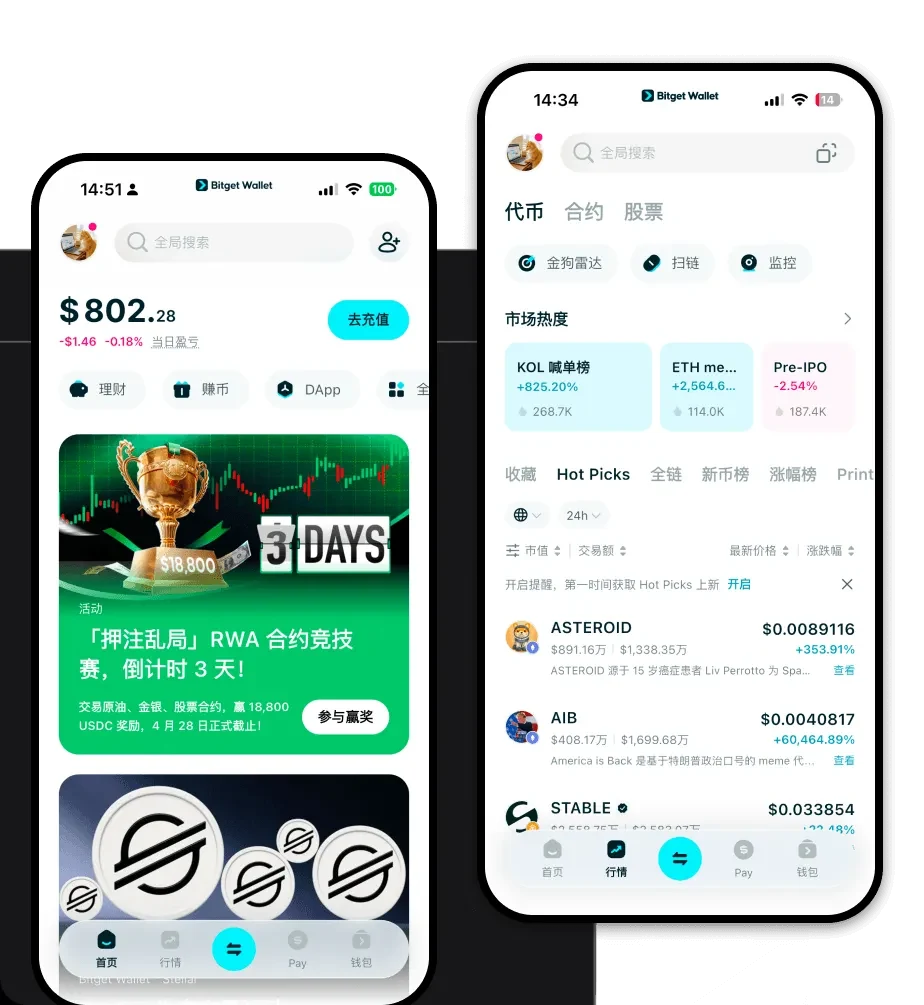
For those looking for a seamless experience, the Bitget Wallet stands out as the optimal choice. It offers comprehensive multi-chain support, ensuring that your AMD tokens are managed alongside your other digital assets without friction. With full self-custody features, you retain complete control over your private keys, providing peace of mind in the decentralized world. Whether you are on mobile or desktop, you can easily download Bitget Wallet for iOS, Android, or as a browser extension to start managing your assets securely.
Why Choose Bitget AMD Wallet?
Choosing the right wallet for a meme-category token like AMD requires a balance of speed, security, and ecosystem access. Here is why the Bitget Wallet is preferred by the community:
- EVM Compatibility: As an EVM-based token, AMD requires a wallet that natively understands the Ethereum account model, and Bitget Wallet offers flawless integration for smooth transactions.
- DEX Aggregation: Bitget Wallet aggregates liquidity from hundreds of decentralized exchanges, ensuring you get the best market rates when trading AMD.
- Robust Security: With a 300 million USD user protection fund, Bitget provides an institutional-grade safety net for your assets that most standard wallets lack.
- Intuitive Interface: Designed for both beginners and active traders, the app simplifies the complex process of managing smart contract interactions and token approvals.
How to Create an AMD Wallet
Getting started with your own AMD wallet address is a straightforward process. Follow these steps to set up your Bitget Wallet:
- Download the Bitget Wallet app from the official website or your device's app store.
- Open the app and select 'Create a New Wallet' to generate a new set of keys, or 'Import' if you already have a seed phrase.
- Securely back up your mnemonic phrase (seed phrase) in an offline location; never share this with anyone.
- Ensure you have switched your network settings to the correct EVM chain where AMD resides.
- Click the 'Receive' button to display your public AMD wallet address, which you can now use to deposit tokens.
What Can You Do With an AMD Wallet?
Owning an AMD wallet is about more than just storage; it is about active participation in the ecosystem. Here is how you can utilize your tokens:
- Governance Voting: Users can participate in decentralized decision-making processes by staking their AMD tokens to vote on critical protocol proposals directly through the wallet interface.
- On-chain Payments: Holders can utilize AMD for seamless peer-to-peer transfers and merchant payments, leveraging the high-speed efficiency of the underlying EVM architecture.
- Community Trading: The token facilitates active participation in community-driven liquidity pools, allowing traders to swap efficiently across various decentralized exchanges.
- Incentive Claiming: Users can interact with specific smart contracts via the wallet to claim rewards and incentives distributed to active community members and contributors.
How AMD Wallets Are Different from Other Crypto Wallets
When dealing with an EVM-based token like AMD, the wallet's architecture matters. Unlike wallets designed for the Bitcoin (UTXO) model, an AMD wallet is built on the account-based model. In the UTXO model, you manage a series of unspent outputs, which can be complex for smart contract interactions. In contrast, the EVM account-based model allows for a balance-centric view, where your address holds a specific amount of tokens and interacts directly with contract states. This makes executing complex DeFi actions, such as participating in governance or claiming incentives, significantly faster and more intuitive. Furthermore, because AMD operates on EVM, you are dealing with gas fees—the cost of computation—which requires a wallet that efficiently estimates gas prices to ensure your transactions are neither overpriced nor stuck in the mempool.
