





What is a WPLS Wallet?
A WPLS wallet is a specialized digital interface designed to securely hold, manage, and interact with WPLS (Wrapped Pulse) tokens. Because WPLS is an ERC-20 token built on the Ethereum network, it functions within the standard Ethereum account-based architecture. This means your wallet must be fully compatible with EVM-based assets to ensure seamless transactions.
As defined by the protocol, WPLS (Wrapped Pulse) is an ERC-20 token on the Ethereum network that represents PulseChain's native token, PLS, in a wrapped format. It serves as a vital bridge asset, allowing users to purchase exposure to the PulseChain ecosystem on Ethereum and seamlessly bridge assets to PulseChain, thereby facilitating cross-chain liquidity and ecosystem interoperability.
Download Bitget WPLS Wallet
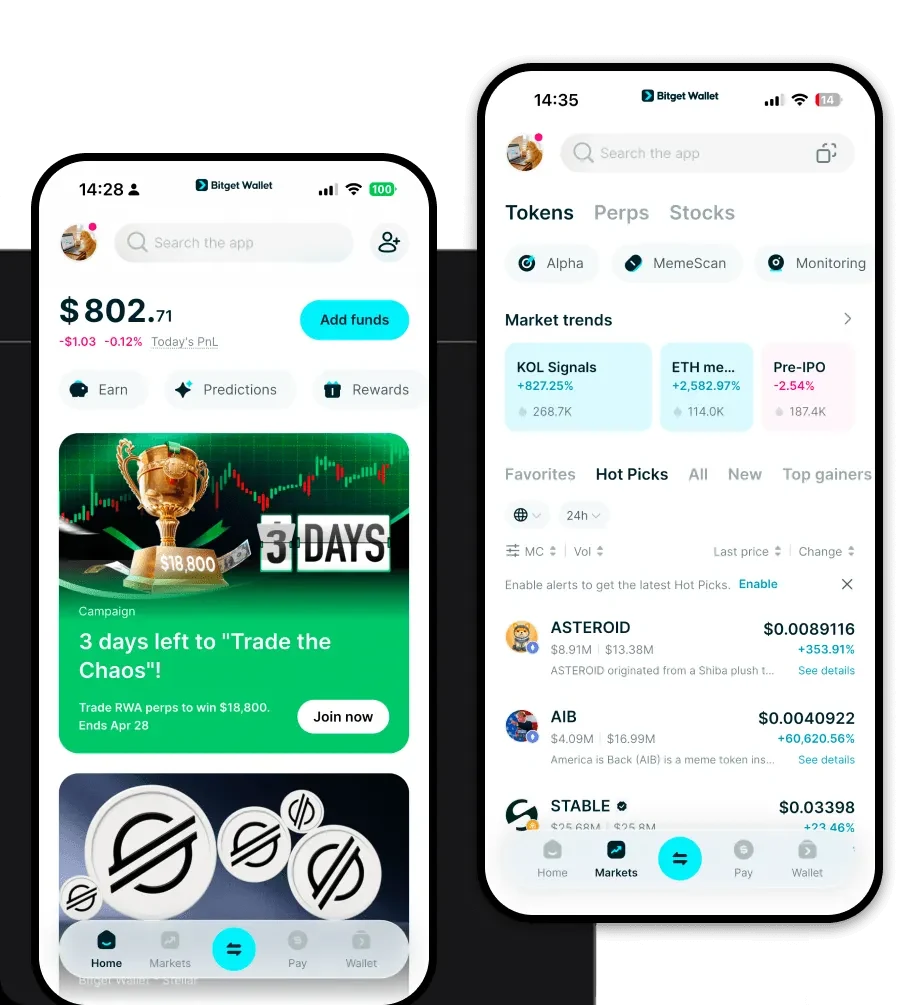
To start managing your WPLS assets effectively, you need a robust, multi-chain gateway. Bitget Wallet stands out as a premier choice for both beginners and advanced users who require high-performance asset management. It offers a unified experience across iOS, Android, and browser extensions, ensuring you have access to your portfolio wherever you are.
When you download Bitget Wallet, you are not just getting a storage tool; you are gaining a self-custodial solution that puts you in complete control of your private keys. With support for over 130 mainstream public chains, Bitget Wallet simplifies the complexity of the multi-chain world, allowing you to manage your Ethereum-based WPLS alongside assets on PulseChain and other EVM networks within a single, intuitive interface.
Why Choose Bitget WPLS Wallet?
Choosing the right infrastructure for WPLS requires an understanding of EVM compatibility and liquidity management. Here is why Bitget Wallet is the optimal choice for WPLS holders:
- Seamless EVM Integration: Built with native support for the Ethereum Virtual Machine, Bitget Wallet handles ERC-20 tokens like WPLS with perfect precision, ensuring that gas fee estimations and transaction broadcasts are optimized for the Ethereum network.
- Robust Cross-Chain Infrastructure: As a piece of critical infrastructure, Bitget Wallet aggregates hundreds of DEXs and cross-chain bridges, facilitating the liquidity bridging required to move assets between Ethereum and PulseChain without friction.
- Enterprise-Grade Security: With a $300 million user protection fund, Bitget Wallet provides an extra layer of security, safeguarding your assets against potential on-chain vulnerabilities.
- Advanced DApp Browser: Easily access the broader PulseChain and Ethereum ecosystems directly within the app, allowing you to interact with DeFi protocols and liquidity pools without leaving your wallet.
How to Create a WPLS Wallet
Setting up your WPLS wallet is a straightforward process designed to prioritize both security and accessibility:
- Download and Install: Visit the official website to download Bitget Wallet for your specific device (iOS, Android, or Browser Extension).
- Create a New Wallet: Open the app and select 'Create Wallet.' You will be prompted to set a strong password for your local device access.
- Secure Your Seed Phrase: The app will generate a 12-word recovery phrase. Write this down on paper and store it offline—never share it with anyone, as this is the only way to recover your wallet if your device is lost.
- Verify Your Setup: Follow the on-screen prompts to confirm your recovery phrase, ensuring you have backed it up correctly.
- Add WPLS: Since WPLS is an ERC-20 token, you can simply search for 'WPLS' in the asset management section of your wallet to add it to your visible token list.
What Can You Do With a WPLS Wallet?
A WPLS wallet is more than just a storage vessel; it is a tool for active participation in the digital asset economy. Key use cases include:
- Bridging assets between Ethereum and PulseChain: Utilize the wallet’s integrated bridge interfaces to move your tokens securely across chains, maintaining liquidity as you transition between networks.
- Providing cross-chain liquidity: Connect your wallet to supported decentralized liquidity pools to earn yields while facilitating the movement of assets for other users in the ecosystem.
- Trading wrapped tokens on decentralized exchanges: Leverage the wallet's built-in DApp browser to access major DEXs, where you can swap WPLS for other ERC-20 assets with ease.
- Accessing PulseChain ecosystem assets via Ethereum: Use your WPLS holdings as a gateway to interact with various protocols within the PulseChain ecosystem, all while managing your positions from your Ethereum-based wallet environment.
How WPLS Wallets Are Different from Other Crypto Wallets
Not all wallets are built the same, especially when dealing with infrastructure tokens like WPLS. Because WPLS operates on an EVM-compatible chain, its wallet requirements differ significantly from non-EVM chains:
Unlike wallets designed for UTXO-based chains (like Bitcoin), which require complex address management and script handling, a WPLS wallet utilizes the account-based model common to Ethereum. This means transactions are processed based on account balances rather than unspent transaction outputs. Furthermore, while Solana-based wallets are optimized for high-throughput, low-latency consensus models, a WPLS wallet focuses on gas-efficiency and compatibility with the Ethereum Virtual Machine. This ensures that when you interact with smart contracts or perform bridging operations, your wallet communicates seamlessly with the Ethereum network's fee structures and state-transition logic, providing a more stable and predictable user experience.
