





What is an RPL Wallet?
RPL, or Rocket Pool, is a decentralized Ethereum liquid staking protocol designed to lower the barriers to entry for staking. It enables users to stake ETH with as little as 0.01 ETH, while node operators use RPL tokens as collateral to secure the network, earning rewards in both ETH and RPL. The protocol utilizes rETH, a liquid staking token that accrues value over time. Because Rocket Pool operates on the Ethereum blockchain, an RPL wallet is essentially an Ethereum-compatible digital wallet that allows you to manage ERC-20 tokens, interact with smart contracts, and oversee your staking positions directly from your own interface.
Download Bitget RPL Wallet
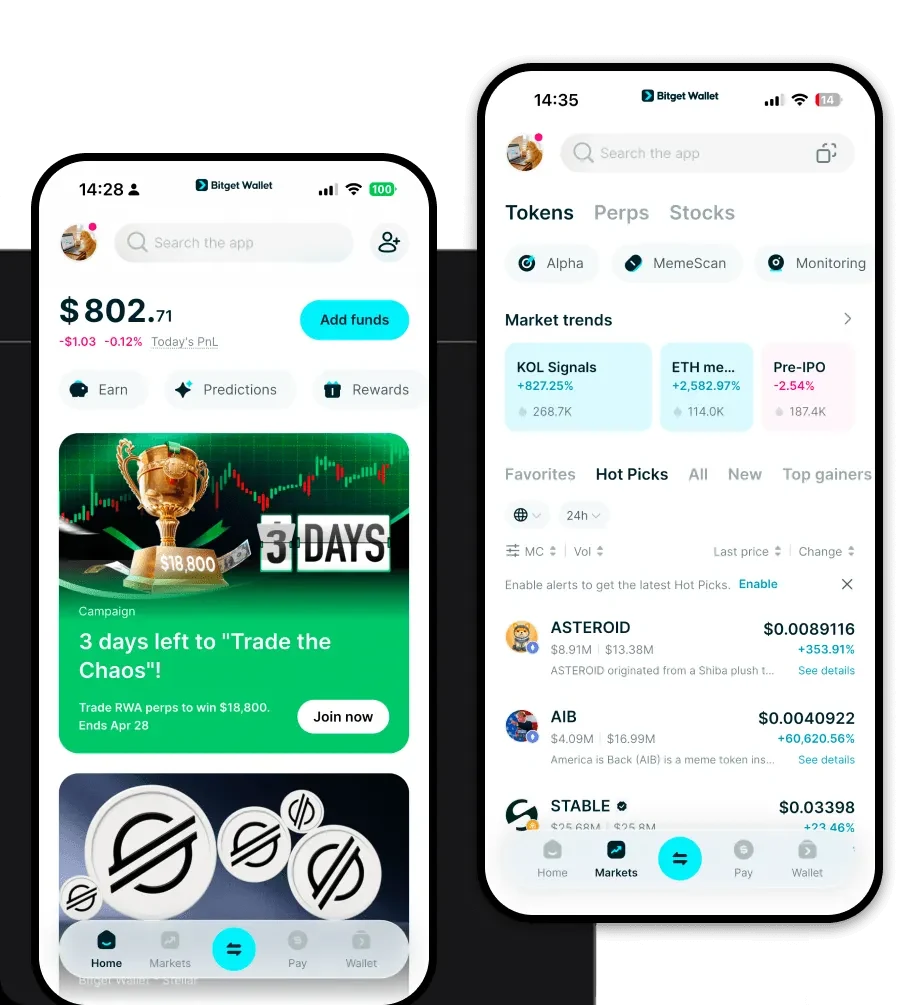
To start managing your assets, you need a robust interface that bridges the gap between complex DeFi protocols and user-friendly navigation. You can download Bitget Wallet to access a comprehensive, non-custodial solution that puts you in full control of your private keys. Whether you are using an iOS device, an Android smartphone, or prefer the convenience of a browser extension for desktop interactions, Bitget Wallet provides a seamless experience. Its multi-chain support ensures that you are not limited to just Ethereum; you can manage assets across 130+ mainstream blockchains, making it an excellent choice for a diverse portfolio that includes RPL and other ecosystem tokens.
Why Choose Bitget RPL Wallet?
When dealing with DeFi protocols like Rocket Pool, the wallet you choose serves as your primary security and operational layer. Bitget Wallet stands out for several key reasons:
- EVM Compatibility & Smart Contract Interaction: As a fully EVM-compatible wallet, Bitget ensures that your interactions with Rocket Pool's complex staking contracts are gas-optimized and reliable, providing clear transaction previews before you sign.
- Advanced Asset Management: Unlike basic wallets, Bitget allows for granular control over gas fees, which is critical when network congestion spikes during high-activity periods on the Ethereum mainnet.
- Integrated DeFi Hub: You can access Rocket Pool and other major DeFi platforms directly through the built-in DApp browser, eliminating the need to connect your wallet to external, potentially insecure sites manually.
- Robust Security Architecture: With a $300 million user protection fund and support for hardware wallet integration, Bitget provides an extra layer of defense against unauthorized access to your staked ETH or RPL.
- Liquid Staking Optimization: The interface is designed to make the transition between ETH and rETH smooth, allowing users to track their staking rewards and protocol participation without leaving the app.
How to Create an RPL Wallet
Creating your secure gateway to the Rocket Pool ecosystem is a straightforward process:
- Download and Install: Visit the official Bitget Wallet website and download the application for your preferred platform (iOS, Android, or Chrome extension).
- Create a New Wallet: Open the app and select 'Create a Wallet.' You will be prompted to set a strong, unique password for your local device access.
- Secure Your Seed Phrase: The app will generate a 12-word recovery phrase. Write this down on physical paper and store it in a secure location. Never share this with anyone, as it is the only way to recover your assets.
- Verify Your Setup: Follow the on-screen prompts to re-enter your seed phrase to confirm that you have saved it correctly.
- Add RPL to Your Dashboard: Once your wallet is active, go to the 'Add Token' section and search for 'RPL' to ensure it appears on your main screen. Your Ethereum wallet address is now ready to receive RPL tokens.
What Can You Do With an RPL Wallet?
Holding RPL in a non-custodial wallet unlocks the full potential of decentralized finance. With Bitget Wallet, you can engage in the following activities:
- Liquid Staking ETH for rETH: You can use your wallet to interact with the Rocket Pool protocol, depositing ETH to receive rETH, which allows you to maintain liquidity while earning staking rewards.
- Running Ethereum Validator Nodes: For those looking to support the network, you can use your wallet to deposit the necessary collateral to become a node operator, contributing to the decentralization of Ethereum.
- Staking RPL as Collateral for Operators: If you are running a node, your wallet acts as the secure vault where you stake your RPL tokens to fulfill the collateral requirements and secure the network.
- Participating in Protocol Governance: By holding RPL, you gain voting rights. You can use your Bitget Wallet to connect to the Rocket Pool DAO governance portal and vote on protocol upgrades and parameter changes.
- Providing Liquidity on DEXs: You can use your RPL tokens to provide liquidity on decentralized exchanges like Uniswap or Balancer, earning trading fees in addition to your protocol rewards.
How RPL Wallets Are Different from Other Crypto Wallets
Managing a token like RPL requires a wallet that understands the nuances of the Ethereum virtual machine (EVM). Unlike Bitcoin wallets, which rely on the UTXO model to track unspent outputs, an RPL wallet must handle the account-based model used by Ethereum. This means your wallet manages 'states'—your balance, your smart contract interactions, and your pending approvals. Furthermore, while some wallets are optimized for low-cost, high-speed chains (like Solana), an RPL wallet must be specifically optimized for the Ethereum gas fee market. Bitget Wallet excels here by offering 'gas-less' or 'gas-optimized' transaction features, ensuring that when you interact with Rocket Pool, you are spending your ETH efficiently, rather than losing it to unnecessary network overhead.
