




What is an mfer Wallet?
An mfer wallet is a digital gateway designed to interact with the $mfer (mfercoin) ecosystem. Because $mfer is built on the EVM (Ethereum Virtual Machine) blockchain, you need a wallet that supports Ethereum-based tokens to hold, transfer, and interact with the project's smart contracts. The $MFER (mfercoin) is a community-driven project rooted in the iconic mfers NFT culture. It positions itself as a 'peer-to-peer electronic mfer system,' leveraging Web3 principles and EVM compatibility to foster a decentralized digital economy built on meme culture and community engagement.
Download Bitget mfer Wallet
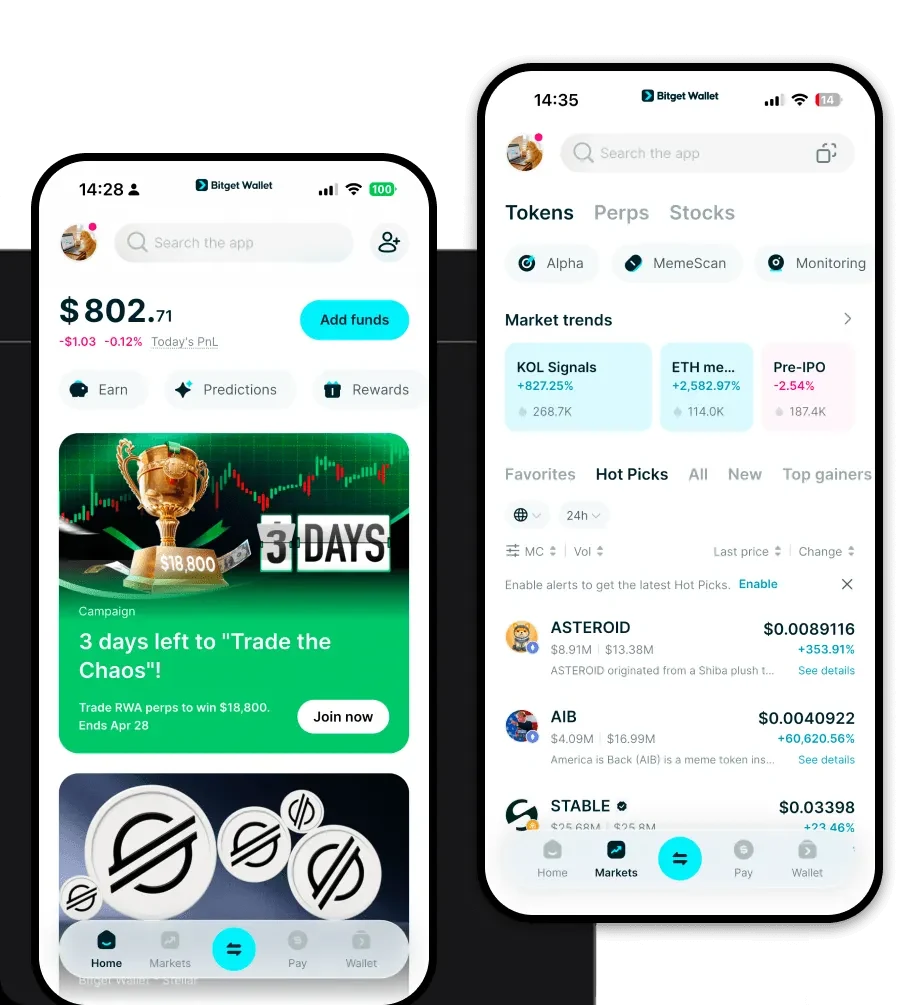
To start your journey with mfercoin, you need a robust, reliable, and user-friendly interface. Bitget Wallet provides a seamless experience for managing your meme assets across multiple chains. It offers full private key self-custody, ensuring you remain the sole owner of your assets. Whether you are on the move or at your desk, Bitget Wallet is available as an iOS app, Android app, and a browser extension. You can download Bitget Wallet today to experience high-speed transactions and comprehensive support for over 130 mainnets.
Why Choose Bitget mfer Wallet?
Choosing the right wallet for a meme-heavy, community-driven token like mfer is crucial. Bitget Wallet stands out for several reasons tailored to the EVM ecosystem:
- EVM Ecosystem Integration: Bitget Wallet offers native support for EVM chains, making it the best wallet for mfer because it ensures smooth interaction with decentralized exchanges and dApps without configuration headaches.
- Advanced Security Infrastructure: With a $300 million user protection fund, Bitget Wallet provides a massive safety net that goes beyond standard self-custody, giving you peace of mind while exploring meme markets.
- Smart Money Tracking & Market Insights: As a community-driven project, staying ahead of trends is key. Bitget Wallet integrates real-time market data, allowing you to track $mfer price movements and liquidity directly within your dashboard.
- Optimized Gas Management: Transaction fees can fluctuate wildly in the EVM space. Bitget Wallet helps you navigate these costs by optimizing transaction paths, ensuring you get the most out of your capital.
How to Create an mfer Wallet
Setting up your wallet to hold $mfer is a straightforward process designed for both beginners and veterans:
- Download and Install: Visit the official Bitget Wallet website and download the application for your preferred device (iOS, Android, or Browser Extension).
- Create a New Wallet: Open the app and select 'Create Wallet.' Follow the prompts to generate your unique recovery phrase.
- Secure Your Seed Phrase: Back up your recovery phrase offline—never store it digitally. This is the only way to recover your funds if you lose access to your device.
- Verify EVM Network: Since $mfer is an EVM token, ensure your wallet is set to the correct network (usually Ethereum or relevant Layer 2s). Bitget Wallet detects this automatically for most tokens.
- Add $mfer Token: Click on the 'Add Token' button, paste the official $mfer contract address, and your balance will appear once you have acquired tokens.
What Can You Do With an mfer Wallet?
Holding $mfer in a secure, feature-rich wallet like Bitget unlocks several specific use cases:
- Trading: You can execute rapid swaps of $mfer for other tokens via aggregated DEXs directly within the wallet interface, bypassing the need for external platforms.
- Holding for Community Participation: As a holder, you can participate in the broader mfer ecosystem, gaining access to community-exclusive initiatives and governance proposals that shape the project's future.
- Speculative Asset Investment: Use your wallet to manage $mfer as part of a wider portfolio, utilizing the wallet's built-in charts to monitor your investment performance over time.
- Social Signaling within NFT Ecosystem: Connect your wallet to dApps to display your $mfer holdings, acting as a social signal of your involvement in the iconic mfers culture and community.
How mfer Wallets Are Different from Other Crypto Wallets
The distinction between a standard wallet and one optimized for tokens like $mfer lies in its architecture. Because $mfer runs on the EVM, your wallet must handle the complexities of the Account Model rather than the UTXO model found in Bitcoin. Unlike UTXO wallets that track unspent outputs, an EVM-compatible wallet like Bitget manages balances based on account addresses and smart contract interactions. This allows for the 'peer-to-peer electronic mfer system' to function dynamically. Furthermore, because you are dealing with meme assets, speed is vital; Bitget Wallet's infrastructure is built to handle the high-throughput requirements of the EVM, minimizing the impact of gas fee spikes during high-volatility events.
