What is a HRD Wallet?
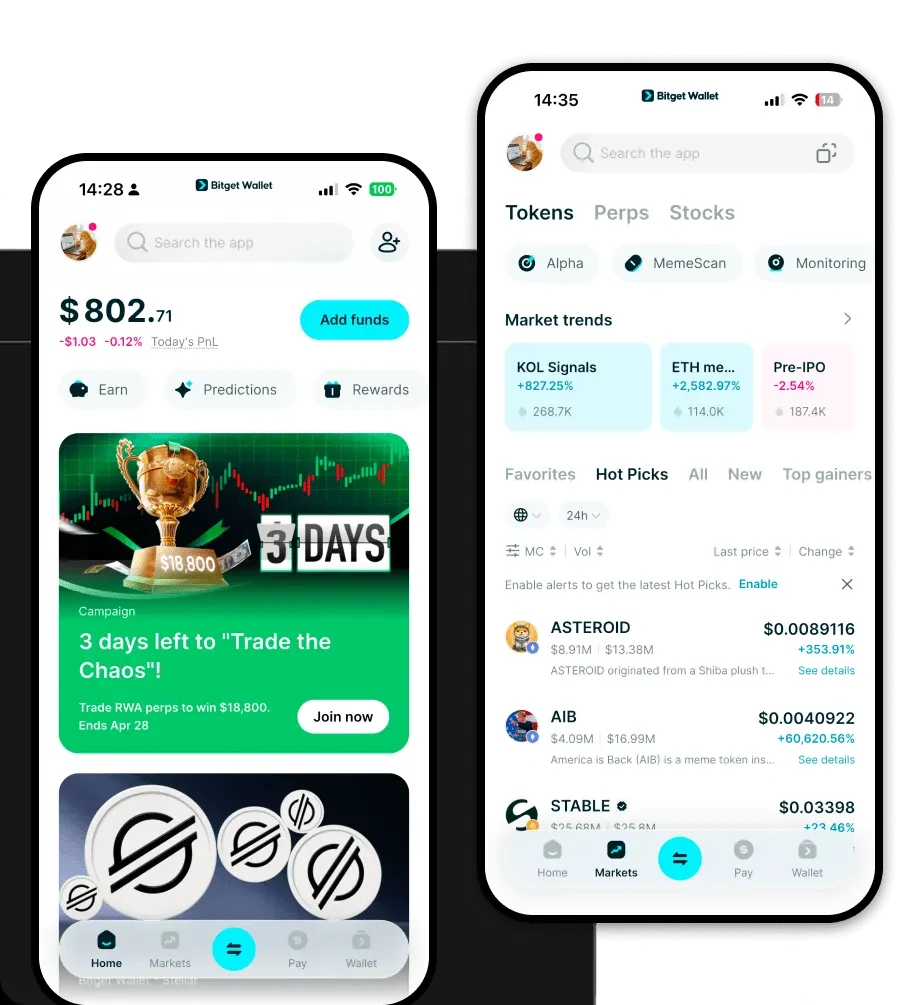
A HRD wallet is a digital interface that allows you to manage your Hard Protocol (HRD) tokens, which operate within the Kava ecosystem. Because HRD is fundamentally tied to the Kava EVM Co-Chain, it requires a wallet that is fully EVM-compatible to ensure seamless interaction with DeFi protocols and decentralized applications. Are you looking for a reliable and secure crypto wallet for your HRD? Bitget Wallet will be your best choice. Trusted by 40 million users, you can freely explore Web3 on Bitget Wallet. Start your journey now!
Download Bitget HRD Wallet
Getting started with your HRD portfolio is simple. You can easily download Bitget Wallet across various platforms, including iOS, Android, and as a browser extension. Unlike centralized exchanges, Bitget Wallet provides true self-custody, giving you complete control over your private keys and seed phrases. With its extensive multi-chain architecture, you are not limited to just one ecosystem; you can manage your HRD alongside thousands of other tokens across 130+ blockchains, all within a single, unified interface.
Why Choose Bitget HRD Wallet?
Bitget Wallet is uniquely positioned to handle the specific needs of DeFi users interacting with EVM-based protocols like Hard Protocol. Here is why it stands out:
- EVM Compatibility: Designed specifically for the Ethereum Virtual Machine, ensuring that your HRD transactions are processed with the same standard as ETH or BNB, minimizing compatibility issues.
- Capital Efficiency: The wallet interface is optimized to help you track your DeFi positions, allowing you to maximize your capital efficiency when engaging with lending and borrowing protocols.
- Decentralized Lending Support: Bitget Wallet integrates directly with major DeFi platforms, making it easier to interact with decentralized lending markets without leaving your wallet app.
- Algorithmic Interest Rate Transparency: The wallet’s DApp browser allows you to view algorithmic interest rates in real-time, helping you make informed decisions about where to deploy your capital.
- Cross-Chain Interoperability: As HRD relies on cross-chain functionality, Bitget Wallet’s built-in bridge features allow you to move assets fluidly between chains without relying on third-party dApps.
How to Create a HRD Wallet
Creating your secure gateway to the Hard Protocol ecosystem is straightforward:
1. Install the App: Visit the official Bitget Wallet website and download the application for your preferred device (mobile or desktop browser).
2. Create a New Wallet: Open the app and select 'Create Wallet'. Ensure you are in a private environment.
3. Backup Your Seed Phrase: You will be given a 12-word seed phrase. Write this down on paper and store it securely offline; never take a screenshot or store it digitally.
4. Add the Network: Since HRD runs on the Kava EVM, ensure the Kava network is enabled in your wallet settings to view your token balances correctly.
5. Import or Receive HRD: Once set up, you can copy your public address to receive HRD tokens or import an existing wallet using your private key.
What Can You Do With a HRD Wallet?
Once your wallet is funded, you can leverage the full power of the Hard Protocol DeFi ecosystem:
- Staking: You can lock your tokens into staking contracts to earn rewards over time, contributing to the network's security.
- Lending and Borrowing: Utilize your HRD to provide liquidity to the money market, or use it as collateral to borrow other assets, directly through the wallet's DApp browser.
- Governance Voting: Participate in the decision-making process of the protocol by casting your votes on governance proposals, directly influencing the future of Hard Protocol.
- Liquidity Provision: By adding your HRD to liquidity pools, you help maintain market stability and earn a share of the transaction fees generated by the protocol.
- Yield Farming: Optimize your portfolio by moving your tokens into various yield farming strategies, aiming to maximize your returns through the protocol's algorithmic incentives.
How HRD Wallets Are Different from Other Crypto Wallets
Managing HRD requires a wallet that understands the nuances of the EVM account model. Unlike Bitcoin wallets, which rely on the UTXO (Unspent Transaction Output) model, a HRD wallet utilizes an account-based model. This means that every transaction is processed sequentially, which is essential for interacting with complex DeFi smart contracts. Furthermore, while some older wallet models require managing network resources manually, Bitget Wallet optimizes gas fee estimation for EVM chains, ensuring your transactions are fast and cost-effective. This architectural difference allows for the intricate DeFi interactions—like lending and governance—that are simply not possible on non-EVM-compatible, UTXO-based wallets.