



What is a HOJAK Wallet?
A HOJAK wallet is a digital interface that allows you to interact with the Robinhood Chain ecosystem, specifically designed to store, send, and manage your HOJAK tokens. HOJAK (Wojak in Hood) is a community-derived, experimental token that leverages the iconic Wojak meme to create a unique presence on the blockchain. Built on the EVM-compatible Robinhood Chain, the project emphasizes a 'built by nobody' decentralized ethos, featuring a renounced contract and burned liquidity. Because HOJAK operates within the EVM framework, your wallet acts as a gateway to this community-driven experiment, ensuring you can manage your assets while engaging with the project's cultural expression and on-chain social activities.
Download Bitget HOJAK Wallet
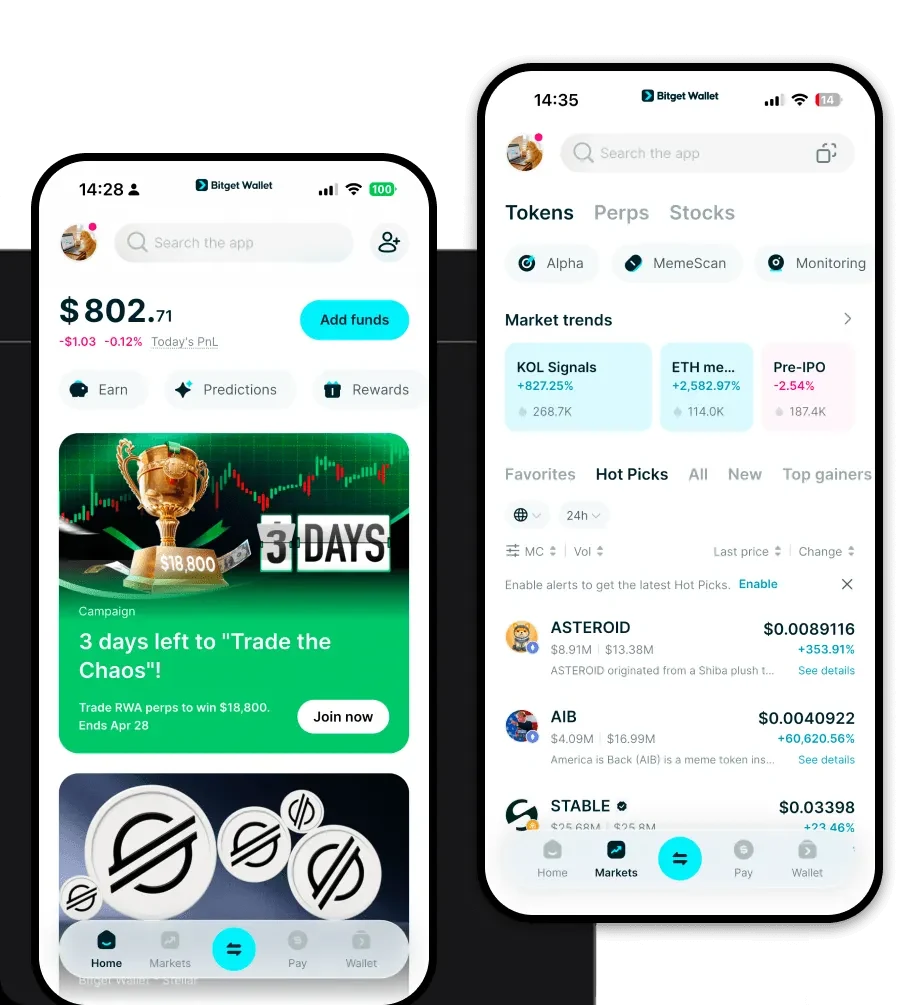
To fully experience the potential of the Robinhood Chain and manage your HOJAK assets, you need a robust, user-friendly interface. Bitget Wallet provides exactly that—a comprehensive, non-custodial solution that puts you in full control of your private keys. Whether you prefer trading on the go or analyzing charts on your desktop, you can download Bitget Wallet to access a seamless multi-chain experience. It is available as a mobile app for both iOS and Android, as well as a browser extension, ensuring that your HOJAK tokens are always accessible whenever you need to participate in the market.
Why Choose Bitget HOJAK Wallet?
Choosing the right wallet for an EVM-based meme token is critical for security and speed. Bitget Wallet offers distinct advantages for HOJAK holders:
- Native EVM Integration: Fully compatible with the Robinhood Chain, allowing for smooth interactions with decentralized applications and smart contracts without configuration hurdles.
- Smart Gas Management: As an EVM-based token, HOJAK transactions require gas fees; Bitget Wallet optimizes these costs, helping you execute trades more efficiently during high network congestion.
- Advanced Security Infrastructure: With a $300 million user protection fund and robust local encryption, your HOJAK holdings are shielded from unauthorized access.
- Seamless DEX Aggregation: Access hundreds of decentralized exchanges directly within the app, making it easier to swap other assets for HOJAK without leaving your secure environment.
How to Create a HOJAK Wallet
Setting up your wallet is a straightforward process designed for both beginners and experienced traders:
- Download and Install: Visit the official store or the Bitget website to download Bitget Wallet on your preferred device.
- Create a New Wallet: Open the app and select 'Create a Wallet'. Ensure you are on the main interface that supports EVM chains.
- Secure Your Backup: You will be given a recovery phrase (seed phrase). Write this down on paper and store it in a secure location offline. Do not take screenshots.
- Configure Network: Since HOJAK is on the Robinhood Chain, ensure the chain is enabled in your wallet settings. Bitget Wallet usually auto-detects EVM chains, making this step almost instantaneous.
- Receive HOJAK: Copy your wallet address from the main screen and use it to deposit your HOJAK tokens from an exchange or another wallet.
What Can You Do With a HOJAK Wallet?
Having a dedicated wallet for HOJAK opens up several avenues for engagement within the ecosystem:
- Speculative Trading: Use your wallet to actively trade HOJAK on decentralized exchanges, taking advantage of market volatility within the Robinhood Chain ecosystem.
- Community Participation: Engage directly with the project's decentralized governance mechanisms by holding tokens in your self-custodial wallet, proving your stake in the community.
- Cultural Meme Expression: Use your wallet to transfer and showcase your HOJAK tokens, which serve as a digital badge of participation in the 'Wojak in Hood' movement.
- On-chain Social Experimentation: Participate in experimental on-chain activities launched by the project, using your wallet as your digital identity on the Robinhood Chain.
How HOJAK Wallets Are Different from Other Crypto Wallets
When dealing with HOJAK, you are interacting with an EVM-based architecture, which differs significantly from non-EVM chains. Unlike UTXO-based chains (like Bitcoin), which focus on unspent transaction outputs, your HOJAK wallet operates on an account-based model. This means your balance is tracked as a state, similar to a bank account balance, which simplifies interaction with complex smart contracts. Furthermore, while some chains use resource models (like EOS) that require staking for CPU/NET, HOJAK wallets rely on gas fees paid in the native chain currency. This distinction makes the user experience more predictable, as you simply need to ensure you have enough native coin to cover transaction costs, rather than managing network resources.
