





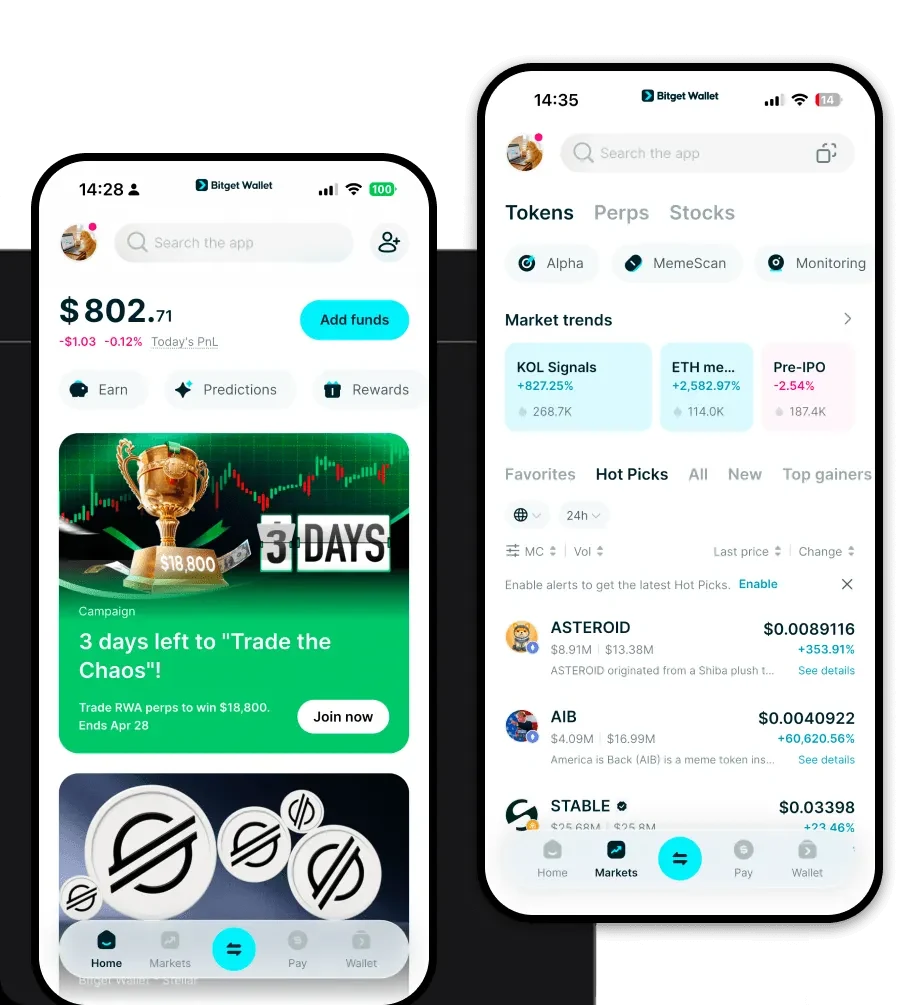
What is a HIT Wallet?
A HIT wallet is a digital interface designed to interact with the HIT token on the EVM (Ethereum Virtual Machine) blockchain. Since HIT operates within an EVM-compatible environment, you need a wallet that understands smart contracts and the specific technical standards required for transactions on these networks. Bitget Wallet serves as this gateway, providing a secure and intuitive environment for users to manage their holdings.
Bitget Wallet is a reliable and secure crypto wallet trusted by 40 million users, allowing users to freely explore Web3, manage digital assets, and interact with various decentralized applications.
Download Bitget HIT Wallet
To start your journey, you need a robust interface that bridges the gap between complex blockchain protocols and user-friendly experience. Bitget Wallet offers a comprehensive solution for managing your HIT tokens, providing full control over your private keys through a non-custodial architecture. Whether you prefer managing assets on the go via iOS and Android or need the precision of a desktop browser extension, the platform is designed to scale with your needs.
The wallet supports extensive multi-chain functionality, allowing you to view and interact with HIT alongside other assets seamlessly. You can download Bitget Wallet directly from their official site to ensure you are receiving the authentic, secure version of the software for your mobile or desktop device.
Why Choose Bitget HIT Wallet?
- Native EVM Compatibility: Designed specifically for EVM-based chains, the wallet ensures that interacting with HIT smart contracts is smooth, minimizing transaction errors and optimizing gas fee estimation.
- Non-Custodial Security: You retain full ownership of your private keys and seed phrases, ensuring that your HIT assets remain in your control at all times, independent of any third-party exchange.
- Integrated dApp Browser: Access the vast DeFi ecosystem directly within the app, allowing you to connect your wallet to decentralized exchanges and yield farms without leaving the secure Bitget environment.
- Advanced Cross-Chain Interoperability: Easily bridge assets between various EVM networks, ensuring your HIT tokens can move where they are needed most without high latency.
How to Create a HIT Wallet
- Download the Bitget Wallet application from the official website or your device's app store.
- Open the app and select 'Create a New Wallet' to generate a unique recovery phrase; store this phrase offline in a secure location.
- Verify your recovery phrase to finalize the initialization of your non-custodial wallet instance.
- Navigate to the token list and use the search function to locate HIT, or manually add the contract address if necessary to enable visibility.
- Your wallet address is now ready; you can copy this public key to receive HIT tokens from exchanges or other wallets.
What Can You Do With a HIT Wallet?
Using a Bitget wallet for your HIT tokens unlocks the full potential of your assets through several key use cases:
- Asset Storage and Management: Securely hold your HIT tokens in a non-custodial environment, allowing you to view balances and transaction history in real-time.
- Token Swapping: Utilize the built-in DEX aggregator to swap HIT for other EVM-compatible tokens instantly with optimized slippage and gas fees.
- dApp Interaction: Connect your wallet to decentralized finance platforms to participate in governance or liquidity provision directly through the integrated browser.
- NFT Portfolio Tracking: Monitor your NFT collection alongside your HIT holdings, as the wallet automatically detects and displays your digital collectibles.
- Staking Participation: Lock your HIT tokens into supported staking protocols to earn rewards, all while maintaining full custody of your assets.
How HIT Wallets Are Different from Other Crypto Wallets
When dealing with an EVM-based token like HIT, the underlying architecture of your wallet matters significantly compared to non-EVM chains. Unlike UTXO-based wallets (such as those for Bitcoin) which focus on output management and unspent inputs, the HIT wallet utilizes an account-based model. This means your balance is tracked as a state variable in the blockchain ledger, which is more efficient for the complex smart contract interactions common in DeFi.
Furthermore, because HIT operates on EVM networks, the wallet must handle gas fees—the 'fuel' required to execute transactions. Bitget Wallet excels here by providing real-time gas price monitoring, ensuring you never overpay for execution. This differs drastically from chains that use resource-based models (like EOS), where you must stake tokens to buy CPU or RAM. The HIT wallet streamlines this process, focusing on a balance of security and transaction speed suitable for the highly active DeFi environment.
