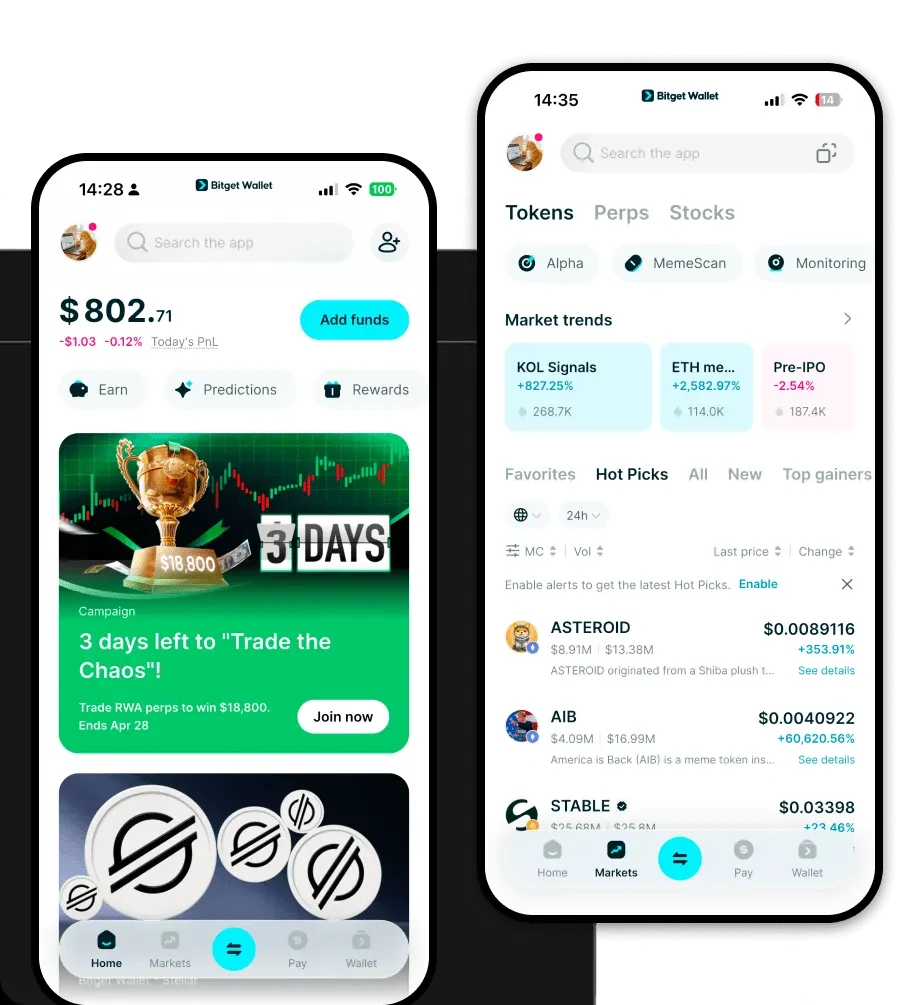
What is a fpc Wallet?
A fpc wallet is a specialized digital interface that allows you to interact with the fpc asset, which operates on the EVM blockchain. Because fpc is built on an EVM-compatible architecture, it requires a wallet that understands the nuances of smart contract interactions and decentralized finance (DeFi) protocols. FPC is a digital asset that can be securely stored and managed using Bitget Wallet. As a supported asset within the Bitget ecosystem, users can leverage the wallet's infrastructure to interact with Web3 services, ensuring reliable asset management for FPC holders.
Download Bitget fpc Wallet
Getting started with your fpc journey requires a reliable gateway. Bitget Wallet serves as a robust, non-custodial solution that puts you in total control of your private keys. Unlike centralized exchanges, Bitget Wallet ensures that only you hold the keys to your assets, providing an essential layer of security for your fpc holdings.
Whether you are on the move or working from a desktop, Bitget Wallet provides seamless access across devices. You can download Bitget Wallet as a mobile app for iOS and Android, or install the browser extension for a more integrated desktop Web3 experience. With its comprehensive multi-chain support, you aren't limited to just one ecosystem; you can manage fpc alongside various other digital assets in a single, intuitive interface.
Why Choose Bitget fpc Wallet?
Selecting the right wallet for an EVM-based token like fpc is critical, especially when interacting with DeFi protocols. Here is why Bitget Wallet stands out:
- Native EVM Compatibility: Bitget Wallet is architected for the EVM environment, ensuring that your fpc transactions interact seamlessly with smart contracts without compatibility errors.
- Advanced Liquidity Aggregation: By integrating hundreds of DEXs and cross-chain bridges, the wallet ensures you always get the best rates and deep liquidity when swapping or trading fpc.
- Decentralized Ecosystem Integration: Enjoy direct access to the vast landscape of dApps, allowing you to engage with DeFi platforms without leaving your wallet's secure environment.
- Institutional-Grade Security: With a $300 million protection fund, Bitget Wallet adds an extra layer of safety, providing peace of mind while you manage your fpc assets.
- Cross-Platform Accessibility: Your portfolio remains synchronized across mobile and web, offering a consistent experience whether you are staking, trading, or simply checking your balance.
How to Create a fpc Wallet
Setting up your wallet is a straightforward process designed to prioritize your security. Follow these steps to get started:
- Download and Install: Visit the official Bitget Wallet website and download the application for your specific device (iOS, Android, or Browser Extension).
- Create a New Wallet: Open the app and select the option to create a new wallet. You will be prompted to set a strong, unique password for local app access.
- Secure Your Recovery Phrase: This is the most critical step. The app will generate a 12-24 word recovery phrase. Write this down on paper and store it in a secure, offline location. Never share this with anyone.
- Verify Your Phrase: The app will ask you to re-enter the recovery words to ensure you have backed them up correctly.
- Add fpc Asset: Once your wallet is active, use the search function to locate fpc and add it to your dashboard so you can begin sending, receiving, and managing your holdings.
What Can You Do With a fpc Wallet?
Holding fpc in a non-custodial wallet opens up a world of DeFi opportunities. Here is how you can utilize your assets:
- Trading on decentralized exchanges: You can swap fpc for other tokens directly within the wallet by tapping into aggregated liquidity across multiple DEXs.
- Staking for rewards: Participate in network security or protocol governance by staking your fpc tokens to earn yield or additional incentives.
- Providing liquidity in pools: You can deposit fpc into various liquidity pools to earn trading fees, becoming an active participant in the DeFi ecosystem.
- Asset management in non-custodial wallets: Maintain full sovereignty over your fpc, ensuring your assets are not subject to the risks associated with centralized custodial services.
- Cross-chain transfers: Move your fpc seamlessly across different blockchain networks using the wallet’s integrated bridge technology, expanding your utility beyond the native chain.
How fpc Wallets Are Different from Other Crypto Wallets
When managing an EVM-based token, the choice of wallet fundamentally changes your experience. Unlike BTC-based wallets that rely on the UTXO (Unspent Transaction Output) model, Bitget Wallet uses an account-based model designed for the EVM. This architecture is purpose-built for smart contract execution, which is essential for DeFi functions like yield farming or liquidity providing.
Furthermore, while some wallets struggle with the complexities of gas fees and network congestion, Bitget Wallet optimizes the transaction process. It provides real-time gas fee estimations and allows for manual adjustments, ensuring your fpc transactions are processed at the speed and cost you prefer. This is a significant advantage over legacy wallets that offer limited control over network resources, making Bitget Wallet the superior choice for active DeFi participants.