





What is an Ethereum Wallet?
An Ethereum wallet is a digital interface that allows you to interact with the Ethereum blockchain, manage your Ether (ETH), and engage with decentralized applications (dApps). Ethereum is a decentralized, open-source blockchain system that features its own cryptocurrency, Ether. It works as a platform for numerous other cryptocurrencies, as well as for the execution of decentralized smart contracts, making it the foundational layer for the Web3 ecosystem, DeFi, and NFT markets.
Because Ethereum operates on the EVM (Ethereum Virtual Machine) standard, your wallet acts as your gateway to this entire ecosystem, enabling you to sign transactions, interact with smart contracts, and manage your digital assets securely.
Download Bitget Ethereum Wallet
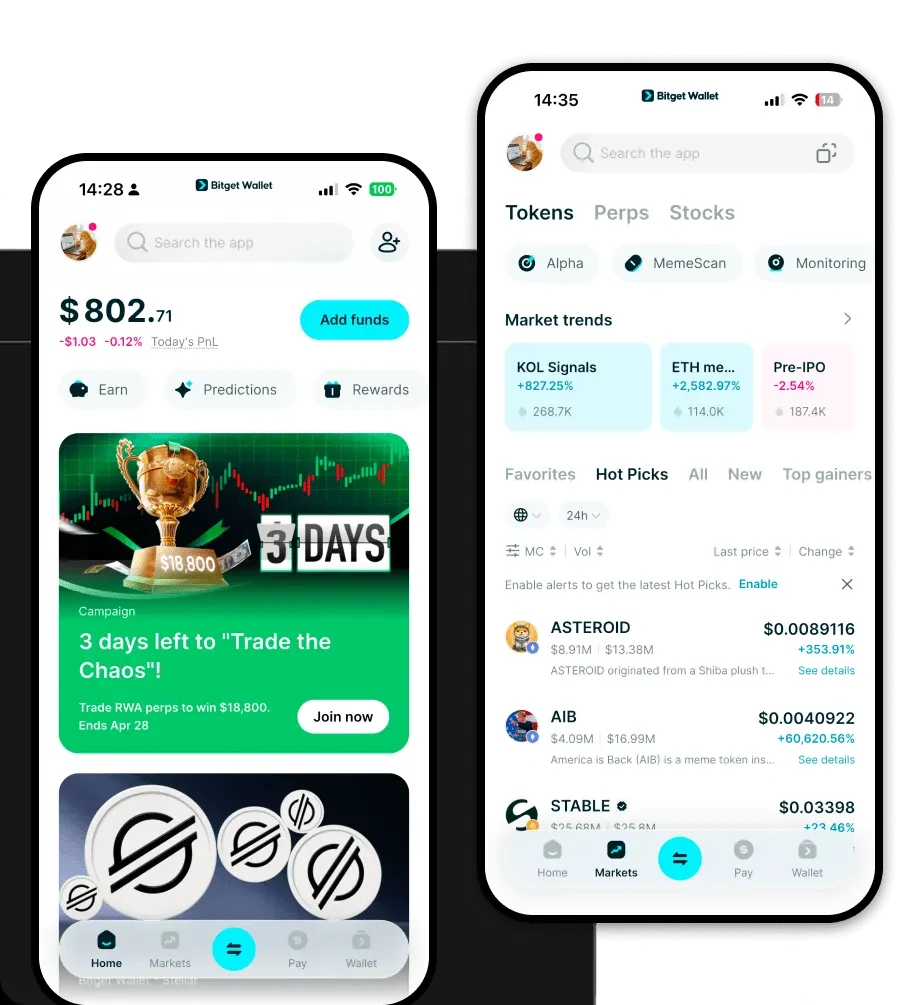
If you are looking for the best wallet for Ethereum, Bitget Wallet offers a comprehensive solution designed for both newcomers and advanced users. It provides a seamless experience for managing your ETH and interacting with the broader EVM ecosystem. With Bitget Wallet, you retain full control over your assets through private key self-custody, ensuring that you are the sole owner of your funds. The platform is incredibly versatile, offering native applications for iOS and Android, as well as a powerful browser extension for desktop users who frequently interact with dApps.
You can download Bitget Wallet today to experience industry-leading multi-chain support. Whether you are managing ETH, ERC-20 tokens, or NFTs, this wallet streamlines the process, allowing you to switch between networks effortlessly without compromising on security or performance.
Why Choose Bitget Ethereum Wallet?
- Native EVM Compatibility: Bitget Wallet is built with deep EVM integration, ensuring that you can connect to any Ethereum-based dApp, DeFi protocol, or NFT marketplace without compatibility issues.
- Advanced Smart Contract Management: The wallet provides intuitive tools to view and manage smart contract interactions, making it easier to track your DeFi positions and token approvals.
- Robust Security Architecture: With a 300 million USD user protection fund and advanced encryption, Bitget Wallet ensures your assets are shielded against potential threats while maintaining a user-friendly interface.
- Seamless Gas Fee Optimization: Bitget Wallet offers smart gas fee estimation, helping you execute transactions efficiently even during periods of high network congestion.
- Vast Ecosystem Access: Beyond just Ethereum, the wallet aggregates hundreds of DEXs and cross-chain bridges, enabling you to swap assets with minimal slippage and maximum liquidity.
How to Create an Ethereum Wallet
- Download and Install: Visit the official Bitget Wallet website or your app store to download the application on your mobile device or browser extension.
- Create a New Wallet: Open the app and select 'Create a Wallet'. You will be prompted to set a strong password for your local device access.
- Backup Your Seed Phrase: The app will generate a 12-word recovery phrase. Write this down on physical paper and store it in a secure, offline location. Never share this with anyone.
- Verify Your Phrase: Follow the on-screen instructions to confirm your recovery phrase to ensure you have backed it up correctly.
- Access Your Address: Once verified, your Ethereum wallet is ready. You can now view your unique Ethereum wallet address on the home screen to receive funds.
What Can You Do With an Ethereum Wallet?
Your Ethereum wallet is more than just a storage tool; it is your portal to the decentralized web. Here is how you can utilize it:
- Staking: Participate in network security by staking your ETH directly through integrated protocols to earn yield on your holdings.
- Trading: Use the built-in DEX aggregator to swap ETH for thousands of other tokens with the best available market rates.
- Minting NFTs: Connect your wallet to NFT platforms to mint, buy, or sell unique digital collectibles directly on the Ethereum blockchain.
- Providing Liquidity: Deposit your ETH and other tokens into decentralized liquidity pools to earn trading fees from protocol users.
- Paying Transaction Fees (Gas): Use your ETH to pay for the computation power required to execute smart contracts and transfer assets across the network.
How Ethereum Wallets Are Different from Other Crypto Wallets
Unlike wallets designed for UTXO-based chains like Bitcoin, an Ethereum wallet utilizes an 'account-based' model. In the Ethereum ecosystem, your wallet acts more like a bank account balance that tracks your total ETH, rather than a collection of unspent transaction outputs. Because Ethereum is the home of smart contracts, your wallet must be able to parse and interact with complex programmable logic, whereas a Bitcoin wallet is primarily focused on simple peer-to-peer value transfers. Furthermore, when using an Ethereum wallet, you must account for 'gas'—the fee paid to validators for processing your transactions—which is a distinct mechanism compared to the fee models found on other chains like Solana or EOS. Bitget Wallet simplifies this complexity, abstracting the technical hurdles of EVM interactions into a smooth, intuitive user experience.
