





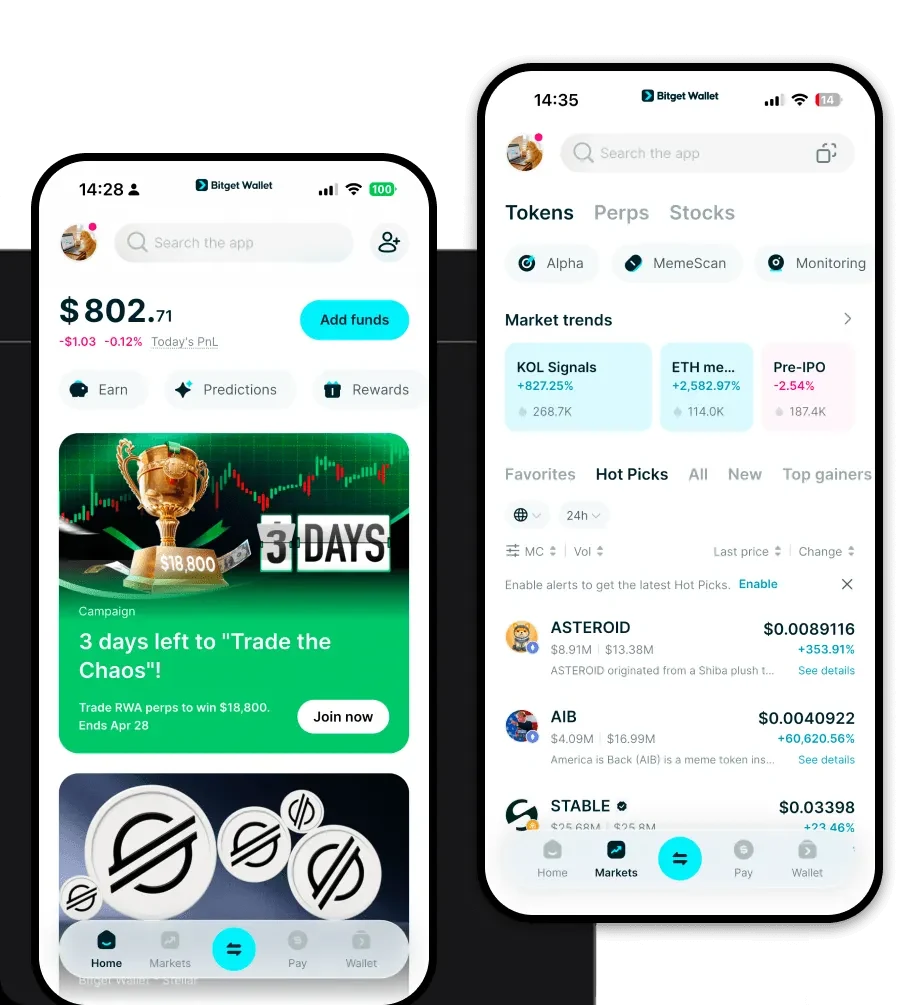
What is a datahouse Wallet?
A datahouse wallet is a digital interface designed to interact with the datahouse token, an asset primarily operating on the EVM (Ethereum Virtual Machine) blockchain. Understanding the origins of this token is crucial for any holder: Data House originated from a social media trigger post by user ChillFindooor. The community derived it into an experimental/derivative token; it is maintained by an anonymous or community-driven team, focusing on on-chain data assets, access governance, and decentralized data exchange, building a composable governance and incentive framework for developers and data providers. Because it operates within the EVM ecosystem, a datahouse wallet acts as a bridge, allowing you to sign transactions, manage smart contract interactions, and hold your tokens securely in a decentralized environment.
Download Bitget datahouse Wallet
If you are looking for the best wallet for datahouse, Bitget Wallet offers a comprehensive solution that combines security with user-friendly accessibility. As a multi-chain wallet, it supports a vast array of tokens across 130+ chains, making it an ideal choice for managing EVM-based assets. It provides full private key self-custody, ensuring that you remain the sole owner of your assets. Whether you are on the move or at your desktop, you can easily download Bitget Wallet for iOS, Android, or as a browser extension. This flexibility ensures that you can access your datahouse wallet app whenever and wherever you need to interact with the blockchain.
Why Choose Bitget datahouse Wallet?
- MetaMask Compatibility: As an EVM-native wallet, Bitget Wallet allows you to import existing addresses and interact seamlessly with decentralized applications (DApps) just as you would with MetaMask.
- Robust Security Architecture: With a $300 million user protection fund, Bitget Wallet provides an extra layer of peace of mind, mitigating risks associated with on-chain assets.
- Efficient Gas Management: The wallet offers intelligent gas fee estimation, helping you optimize transaction costs when trading datahouse on the EVM network.
- Seamless DApp Integration: Access the experimental data exchange and governance platforms directly through the built-in DApp browser, eliminating the need to leave your wallet environment.
How to Create a datahouse Wallet
Getting started is straightforward. Follow these steps to secure your datahouse wallet address:
- Download and Install: Visit the official site to download Bitget Wallet for your preferred device.
- Create a New Wallet: Open the app and select 'Create a Wallet.' Ensure you back up your mnemonic phrase in a secure, offline location.
- Configure EVM Settings: Since datahouse operates on the EVM, ensure your wallet is set to the correct network (typically Ethereum or a compatible L2).
- Add datahouse Token: Use the contract address of the datahouse token to add it manually to your asset list if it does not appear automatically.
- Receive Tokens: Click on your datahouse wallet address to reveal your public key, which you can share to receive tokens.
What Can You Do With a datahouse Wallet?
Your datahouse wallet is more than just a storage tool; it is your gateway to the ecosystem's utility:
- Governance Voting: You can use your datahouse holdings to participate in decentralized access governance, casting votes on proposals that shape the future of the project.
- Speculative Trading: The wallet allows you to engage in speculative trading by connecting to various decentralized exchanges (DEXs) to swap datahouse against other assets.
- Liquidity Provision: You can contribute to the ecosystem by locking your tokens into liquidity pools, which helps facilitate decentralized data exchange and earns you potential incentives.
- Data Exchange Participation: Utilize your wallet to interact directly with the framework, enabling you to access, share, or monetize on-chain data assets as defined by the community.
How datahouse Wallets Are Different from Other Crypto Wallets
When comparing the datahouse wallet experience on the EVM to other chains like Bitcoin or Solana, the differences are significant. EVM wallets operate on an 'account model,' which is specifically designed for complex smart contract interactions. Unlike the UTXO (Unspent Transaction Output) model used by Bitcoin, which focuses on the movement of distinct transaction outputs, the EVM account model tracks the state of balances and contract data, making it far superior for the composable governance and incentive frameworks that define the datahouse project. Furthermore, while Solana prioritizes high-speed throughput, the EVM ecosystem provides a more mature developer environment for decentralized data exchange, allowing your datahouse wallet to interact with a broader range of DeFi primitives and governance protocols.
