





What is a Brain Wallet?
A Brain wallet is a secure digital interface designed to manage the Brain token, an experimental, community-driven derivative project operating on the EVM (Ethereum Virtual Machine) blockchain. Brain is positioned as an AI×blockchain experimental platform that functions independently of its parent project. The core team, comprised primarily of anonymous developers and AI researchers, focuses on the technical implementation of decentralized model training, data incentives, and on-chain governance. Because Brain operates on the EVM, it requires a wallet that is compatible with Ethereum-based standards, ensuring seamless interaction with smart contracts and decentralized applications. The token itself is utilized to incentivize data provision, computing power contribution, and community decision-making, with a primary vision of building a governable on-chain intelligent infrastructure for researchers, data providers, and developers.
Download Bitget Brain Wallet
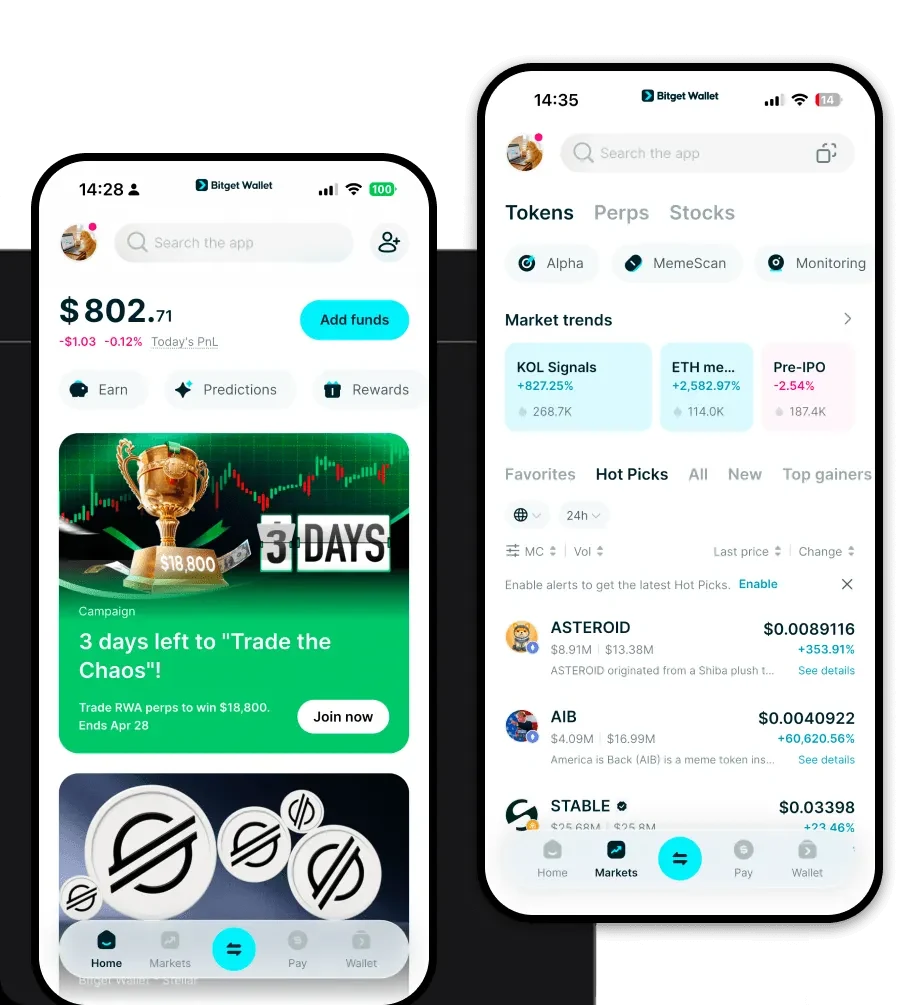
To interact effectively with the Brain ecosystem, you need a robust, multi-chain gateway. We recommend you download Bitget Wallet to manage your assets. Bitget Wallet offers a comprehensive solution for both beginners and advanced users, featuring full support for the EVM network. It provides true self-custody, meaning you hold your private keys, ensuring that you remain the sole owner of your Brain tokens. Whether you are using an iOS device, an Android smartphone, or prefer the convenience of a browser extension, Bitget Wallet delivers a smooth, intuitive experience across all platforms.
Why Choose Bitget Brain Wallet?
- EVM Compatibility: As an EVM-based token, Brain requires a wallet that perfectly integrates with Ethereum-based dApps; Bitget Wallet provides native support for these protocols.
- Advanced Security Infrastructure: With a dedicated $300 million user protection fund, your Brain assets are shielded against potential on-chain vulnerabilities.
- Seamless DApp Integration: Easily access decentralized AI platforms and governance portals directly through the built-in DApp browser.
- Optimized Gas Management: Bitget Wallet simplifies the process of tracking and paying gas fees, which is critical for frequent transactions on the EVM network.
How to Create a Brain Wallet
Setting up your wallet is straightforward:
- Download the App: Visit the official website and download Bitget Wallet.
- Create a New Wallet: Open the app and select 'Create a New Wallet.'
- Secure Your Seed Phrase: Carefully write down your 12-24 word recovery phrase and store it in a secure, offline location. Never share this with anyone.
- Add Brain Token: Navigate to the 'Assets' section, click the plus icon, and add the Brain token by searching for its contract address on the EVM network.
- Start Interacting: Once added, your Brain wallet address is ready to receive, send, and stake tokens.
What Can You Do With a Brain Wallet?
Owning a Brain wallet opens doors to the experimental AI-blockchain economy:
- Staking for Data Validation: You can use your wallet to stake Brain tokens, directly contributing to the validation of decentralized data sets.
- Governance Voting: Participate in on-chain governance by casting your votes on proposals that shape the future of the Brain protocol.
- Contributing Computing Power: Use your wallet interface to connect and contribute your computational resources to the decentralized model training network.
- Trading on Decentralized Exchanges: Seamlessly swap Brain tokens on major DEXs integrated within your wallet's ecosystem.
How Brain Wallets Are Different from Other Crypto Wallets
Unlike wallets designed for UTXO-based chains like Bitcoin, a Brain wallet is built specifically for the account-based model of the EVM. This means it manages smart contract states rather than unspent transaction outputs, allowing for complex interactions like AI data staking. While Bitcoin wallets prioritize simple value transfer and security, a Brain wallet on the EVM is optimized for high-frequency interaction with smart contracts. It balances the need for gas fee precision—essential for AI model training transactions—with the speed required to participate in real-time governance, providing a much more dynamic environment than traditional static storage wallets.
