





What is a bcard Wallet?
A bcard wallet is a digital interface that allows you to store, send, and interact with bcard (bStocks Card) tokens securely on the blockchain. bCard (bStocks Card) is a community-driven experimental derivative token leveraging the visual and brand context of 'bStocks/Binance.' It operates as a micro-cap project with approximately 120 on-chain holders, focusing on exploring tokenized synthetic assets, community-led governance mechanisms, and iterative ecosystem development for active crypto traders. Because bcard is built on the EVM (Ethereum Virtual Machine) blockchain, your wallet must be fully compatible with ERC-20 token standards to function correctly.
Download Bitget bcard Wallet
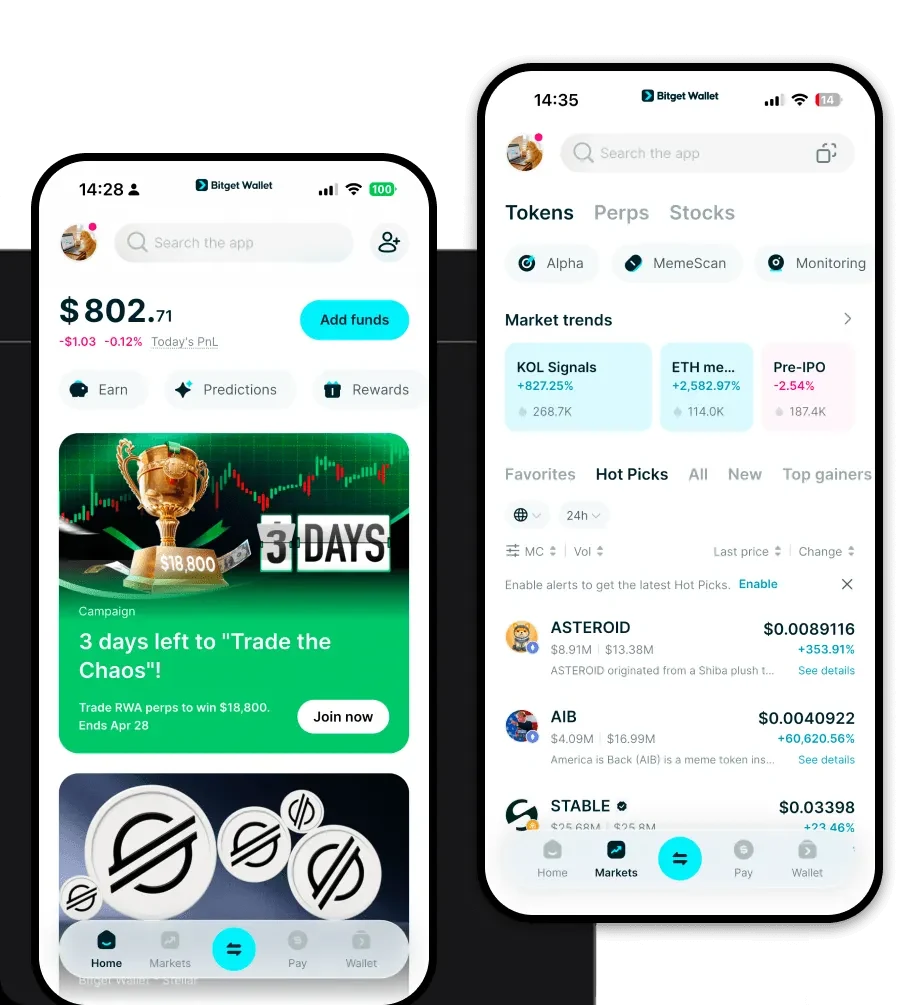
To start managing your tokens, you need a robust, non-custodial solution. Bitget Wallet provides a seamless experience, allowing you to maintain full control over your private keys while accessing the broader DeFi ecosystem. Whether you are on mobile or desktop, the app is designed to be user-friendly for both beginners and veterans.
Bitget Wallet offers comprehensive multi-chain support, ensuring that your EVM-based assets are always accessible. You can easily download Bitget Wallet for iOS, Android, or as a browser extension to begin your journey. By choosing this non-custodial approach, you ensure that you—and only you—hold the keys to your bcard assets, keeping them safe from centralized platform risks.
Why Choose Bitget bcard Wallet?
- Full EVM Compatibility: Designed specifically for the Ethereum Virtual Machine, ensuring that niche micro-cap tokens like bcard are displayed and transacted without compatibility errors.
- Seamless DeFi Integration: Since bcard operates within an experimental ecosystem, Bitget Wallet allows you to connect instantly to major DEXs to manage liquidity without leaving the app.
- User-Protection Fund: With over $300 million in the Bitget user protection fund, you gain an extra layer of security that standard software wallets often lack.
- Advanced Market Insights: Access real-time data and market trends directly within the wallet interface, which is crucial for tracking the volatility of micro-cap tokens.
- Intuitive Asset Management: Easily add custom tokens by contract address, allowing you to view and track your bcard holdings even before they are listed on major exchanges.
How to Create a bcard Wallet
Setting up your wallet is a straightforward process designed to prioritize your security:
1. Download and Install: Visit the official website to download Bitget Wallet for your preferred device (iOS, Android, or Browser Extension).
2. Create a New Wallet: Open the app and select 'Create a New Wallet.' Ensure you are in a private space where no one can see your screen.
3. Backup Your Seed Phrase: This is the most critical step. Write down your 12-word recovery phrase on paper and store it in a secure, offline location. Never share this with anyone.
4. Verify Your Phrase: The app will prompt you to confirm the sequence of your seed phrase to ensure you have recorded it correctly.
5. Import or Add bcard: Once your wallet is active, use the 'Add Token' feature and paste the official bcard contract address to see your balance and manage your assets.
What Can You Do With a bcard Wallet?
Owning a bcard wallet opens up a variety of possibilities within the experimental crypto space:
- Speculative Trading: Use your wallet to participate in the high-volatility market of micro-cap tokens, allowing you to swap bcard for other assets on decentralized exchanges.
- Community Governance Voting: Leverage your holdings to participate in decentralized governance mechanisms, where you can help vote on the future direction of the bcard ecosystem.
- Participating in Experimental Asset Ecosystems: Engage directly with the project’s iterative development by interacting with new protocols or platforms that support synthetic asset models.
- Liquidity Provision on DEXs: Connect your wallet to liquidity pools to provide trading depth for bcard, potentially earning rewards in return for your contribution to the market.
How bcard Wallets Are Different from Other Crypto Wallets
Managing a token like bcard requires a wallet that understands the nuances of the EVM ecosystem. Unlike Bitcoin-based wallets that utilize the UTXO (Unspent Transaction Output) model, a bcard wallet operates on an account-based model. This means your balance is tracked as a state variable in a smart contract rather than a collection of transaction outputs.
Furthermore, because bcard lives on an EVM chain, you must be aware of gas fees—the transactional cost paid to network validators. Unlike chains with resource-based models (like EOS), your bcard wallet must always maintain a small balance of the network’s native token to pay for gas. Bitget Wallet simplifies this by providing built-in gas trackers and smart fee estimation, ensuring your transactions are processed efficiently without overpaying.
