





What is a Yieldex Wallet?
A Yieldex wallet is a digital interface that allows you to interact with the Yieldex token, a DeFi-native asset operating within the Ethereum Virtual Machine (EVM) ecosystem. Because Yieldex is built on EVM-compatible infrastructure, it relies on the robust, smart-contract-driven architecture that powers decentralized finance. Understanding your wallet is the first step in managing your assets securely.
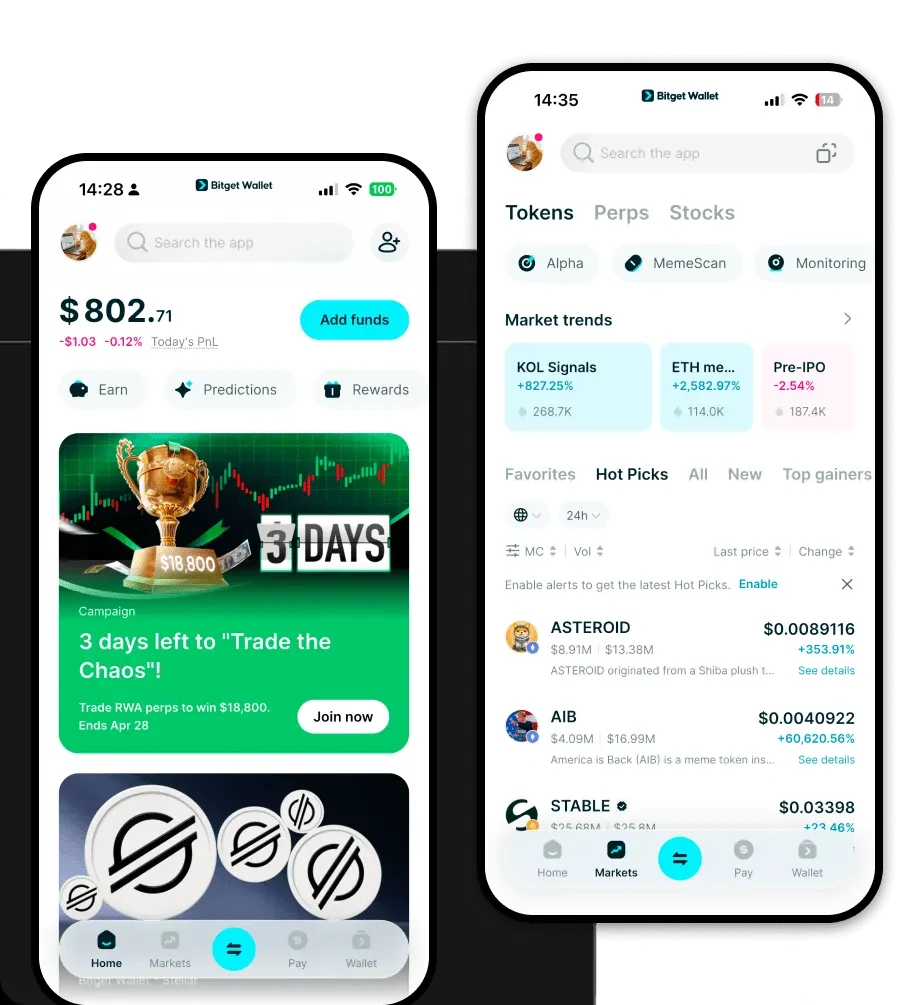
Are you looking for a reliable and secure crypto wallet for your YIELDEX? Bitget Wallet will be your best choice. Trusted by 40 million users, you can freely explore Web3 on Bitget Wallet. Start your journey now!
As an EVM-based token, Yieldex requires a wallet that can interpret smart contract interactions, handle gas fee estimations effectively, and display token balances across various decentralized protocols. A Yieldex wallet acts as your gateway to these complex financial tools, ensuring you maintain full control over your private keys while participating in the broader DeFi landscape.
Download Bitget Yieldex Wallet
To begin your journey with Yieldex, you need a secure and versatile platform. Bitget Wallet provides a comprehensive solution for managing your EVM assets. It is designed for both seasoned DeFi power users and those just beginning their crypto journey. Whether you are using a desktop browser or a mobile device, the experience remains consistent and intuitive.
Bitget Wallet offers full self-custody, meaning you are the sole owner of your private keys. It provides native support for iOS, Android, and browser extensions, ensuring you can manage your Yieldex portfolio anytime, anywhere. You can download Bitget Wallet to experience a seamless interface that aggregates liquidity from hundreds of decentralized exchanges and cross-chain bridges, making it the ideal companion for your Yieldex assets.
Why Choose Bitget Yieldex Wallet?
Choosing the right wallet for your EVM-based assets is critical, especially when dealing with DeFi tokens. Bitget Wallet is optimized for the specific challenges of the EVM ecosystem:
- EVM Compatibility: Seamlessly import your existing wallets and interact with any dApp within the Ethereum, BNB Chain, or Polygon networks without friction.
- Smart Contract Security: The wallet features advanced pre-transaction detection, which helps you identify potentially malicious smart contracts before you commit your Yieldex to a transaction.
- Gas Fee Optimization: With real-time gas tracking, you can adjust your transaction fees to ensure your trades are processed efficiently without overpaying during network congestion.
- Integrated DeFi Dashboard: View your Yieldex holdings, yield farming positions, and liquidity stakes all in one place, eliminating the need to visit multiple websites to track your portfolio.
- Multi-Chain Asset Management: Beyond just Yieldex, you can manage assets across 130+ public chains, making it a truly universal tool for your crypto life.
How to Create a Yieldex Wallet
Creating your secure storage for Yieldex is a straightforward process. Follow these five steps to get started:
Step 1: Visit the official website and download the Bitget Wallet application for your preferred device (iOS, Android, or Browser Extension).
Step 2: Open the app and select 'Create a New Wallet'. You will be prompted to set a strong, unique password to protect the local application data.
Step 3: The system will generate a recovery phrase (seed phrase). This is the most critical step—write this phrase down on paper and store it in a secure, offline location. Never share this with anyone.
Step 4: Verify your recovery phrase by entering the words in the correct order as prompted by the app. This confirms that you have safely recorded your backup.
Step 5: Once verified, your wallet is ready. You can now import your Yieldex by copying your public address or by using the built-in 'Receive' function to display your QR code.
What Can You Do With a Yieldex Wallet?
Holding Yieldex in a capable wallet like Bitget unlocks a variety of DeFi strategies. Because the wallet is designed for the EVM ecosystem, you can utilize your tokens in the following ways:
- Staking for yield generation: You can lock your Yieldex tokens into designated smart contracts to earn passive interest, effectively growing your holdings over time.
- Providing liquidity to DEX pools: By pairing Yieldex with other assets in decentralized exchange pools, you provide the necessary market depth for traders and earn a portion of the transaction fees in return.
- Yield farming: You can deposit your LP tokens into yield farming protocols, allowing you to optimize your returns through automated reward mechanisms.
- Token swapping: Utilize the integrated DEX aggregator within your wallet to instantly convert Yieldex into other EVM-compatible assets like ETH, USDT, or USDC with minimal slippage.
- Governance voting: If Yieldex includes DAO functionality, you can use your wallet to sign transactions that cast your vote on community proposals, directly influencing the future of the protocol.
How Yieldex Wallets Are Different from Other Crypto Wallets
Not all wallets are created equal, and the distinction often lies in the underlying blockchain architecture. Unlike Bitcoin wallets which operate on a UTXO (Unspent Transaction Output) model, a Yieldex wallet on the EVM ecosystem utilizes an 'Account-based' model. This means your wallet tracks a balance rather than a collection of transaction outputs, which simplifies the experience when interacting with complex DeFi protocols.
Furthermore, because Yieldex is an EVM asset, your wallet must manage 'Gas'—the fee paid to validators to process your transactions. A specialized EVM wallet like Bitget is designed to handle this dynamic fee environment, allowing you to speed up or cancel pending transactions—a feature often missing in simpler, non-DeFi wallets. While a standard wallet might just hold coins, a dedicated Yieldex wallet serves as an active control center for your financial operations, providing the speed and flexibility required for high-frequency DeFi activities.
