





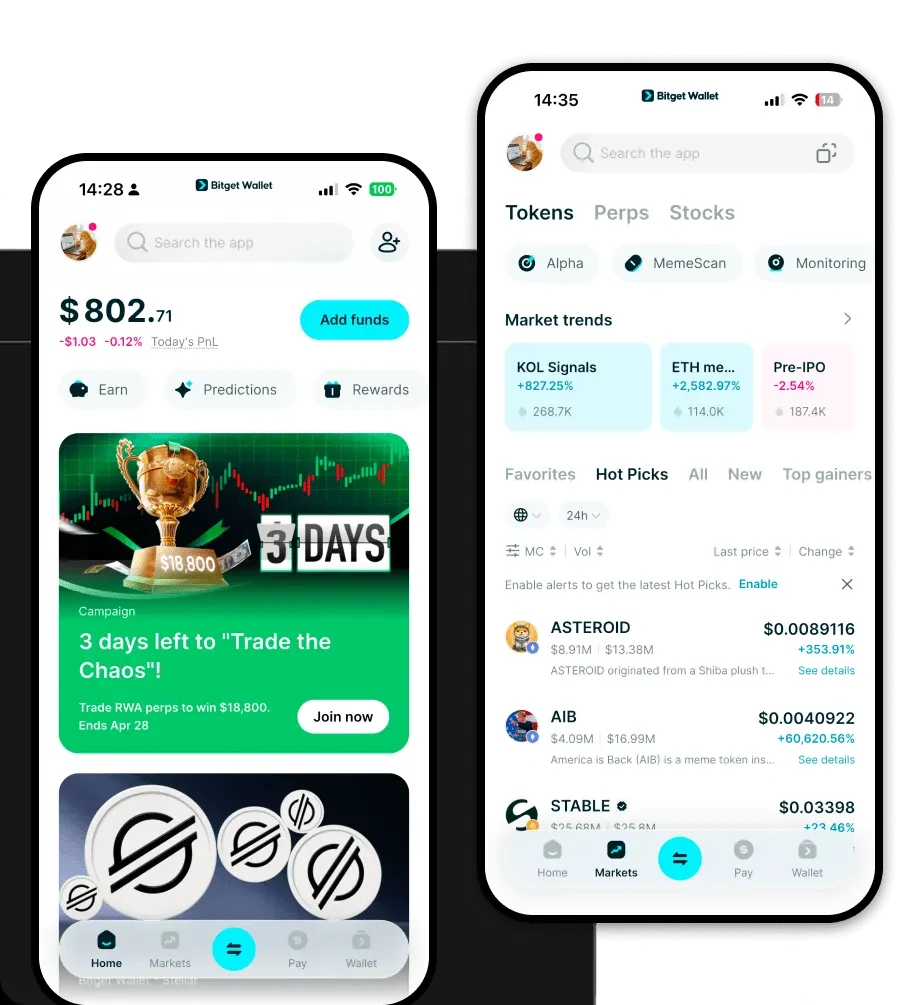
1. What is a librai Wallet?
A librai wallet is a specialized digital interface designed to securely manage your librai assets while interacting with the broader blockchain ecosystem. Librai is a crypto project focused on building a secure and accessible ecosystem for its users, often integrated with leading wallet providers like Bitget Wallet to facilitate seamless Web3 exploration. Because librai operates on the EVM (Ethereum Virtual Machine) chain, your wallet acts as your personal gateway to decentralized finance, smart contract interactions, and cross-chain operations. By utilizing an EVM-compatible wallet, you ensure that your assets are not only stored safely but are also instantly ready for any dApp integration that supports the Ethereum standard.
2. Download Bitget librai Wallet
Getting started with your librai assets requires a reliable and versatile tool. Bitget Wallet stands out as a premier choice for managing your tokens, offering a user-centric experience that balances high-grade security with intuitive design. Whether you are a beginner or a seasoned Web3 user, the interface is built to handle the complexities of EVM chain management effortlessly. You can access your assets anywhere, as Bitget Wallet is available as a mobile app for iOS and Android, as well as a robust browser extension for desktop users. Because it supports private key self-custody, you maintain full control over your digital identity and assets at all times. To begin your journey, you can download Bitget Wallet and instantly sync your librai portfolio across all your devices.
3. Why Choose Bitget librai Wallet?
Selecting the right wallet is crucial for infrastructure-heavy projects like librai. Bitget Wallet provides specific advantages for EVM-based assets:
- Native EVM Compatibility: Bitget Wallet is built to handle EVM architecture seamlessly, ensuring that your librai transactions interact perfectly with smart contracts and decentralized applications without compatibility errors.
- Advanced DeFi Aggregation: As an infrastructure-focused asset, librai benefits from Bitget Wallet’s built-in DEX aggregator, which sources the best liquidity and lowest slippage across hundreds of decentralized exchanges.
- Comprehensive Security Infrastructure: With over $300 million in user protection funds, Bitget Wallet provides an extra layer of defense against potential vulnerabilities, keeping your librai holdings shielded.
- Seamless Cross-Chain Capabilities: Since the EVM ecosystem is vast, the wallet’s integrated cross-chain bridge allows you to move your assets or swap them for other tokens across different networks with minimal friction.
- Gas Fee Optimization: The wallet provides real-time gas fee insights and smart transaction acceleration, ensuring your transactions are processed efficiently even during periods of high network congestion.
4. How to Create a librai Wallet
Setting up your wallet is a straightforward process designed to get you into the ecosystem quickly:
Step 1: Download the Bitget Wallet app from the official website or your device's app store and open the application.
Step 2: Select the 'Create Wallet' option. You will be prompted to set a strong, unique password to encrypt your local app data.
Step 3: Carefully back up your mnemonic phrase (seed phrase). Write it down on paper and store it offline; this is the only way to recover your wallet if your device is lost.
Step 4: Once your wallet is created, navigate to the asset management section and select 'Add Token.' Search for librai or paste the official contract address to import the token into your interface.
Step 5: Your wallet is now ready. You can now use your unique EVM address to receive librai tokens from exchanges or other users.
5. What Can You Do With a librai Wallet?
Once your librai wallet is active, you can leverage it for a wide range of activities within the Web3 space:
- Asset Storage: You can securely hold your librai tokens in a self-custodial environment where you are the sole owner of the private keys, protecting you from exchange-related risks.
- Web3 dApp Interaction: You can connect your wallet to decentralized applications, allowing you to participate in governance, yield farming, or liquidity provision protocols directly on the EVM chain.
- Token Trading: You can execute instant token swaps within the wallet interface, allowing you to exchange librai for other assets like ETH or stablecoins without ever needing to deposit funds into a centralized exchange.
- Portfolio Management: You can track the real-time value and performance of your librai holdings, along with other assets, using the built-in analytics dashboard that provides a clear overview of your total net worth.
6. How librai Wallets Are Different from Other Crypto Wallets
While many wallets may look similar, the distinction lies in the underlying architecture and user experience. Unlike wallets designed for the UTXO model (like Bitcoin), which focus primarily on transaction chains and simple value transfers, a librai wallet is built for the EVM's account-based model. This means your wallet functions more like a bank account with a balance, allowing for complex smart contract interactions rather than just moving coins. Furthermore, while some wallets struggle with managing network resources, Bitget Wallet is optimized for the EVM environment, providing a smoother experience for gas fee estimation and dApp connectivity. This creates a distinct advantage in terms of transaction speed and reliability when interacting with the infrastructure-heavy protocols that librai is designed to support.
