





What is an HTCM Wallet?
An HTCM wallet is a digital interface that allows you to interact with the HTCM token and the broader EVM (Ethereum Virtual Machine) ecosystem. Because HTCM operates on EVM-compatible networks, it requires a wallet that can interpret smart contracts, sign transactions, and manage private keys securely. Think of your wallet not just as a storage vault, but as your personal gateway to decentralized finance and Web3 applications.
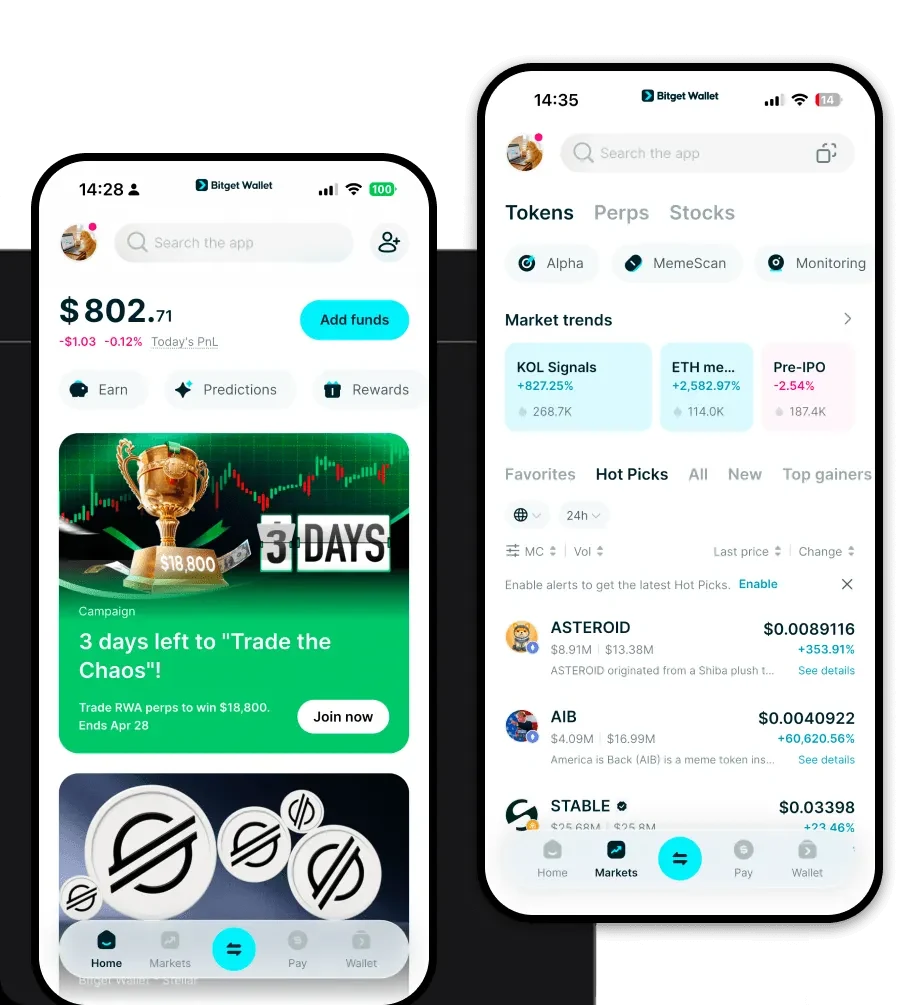
Are you looking for a reliable and secure crypto wallet for your HTCM? Bitget Wallet will be your best choice. Trusted by 40 million users, you can freely explore Web3 on Bitget Wallet. Start your journey now!
Download Bitget HTCM Wallet
Getting started with your digital asset management should be intuitive and seamless. Bitget Wallet provides a unified experience across mobile and desktop environments, ensuring you have full control over your assets wherever you go. Whether you are using an iPhone, an Android device, or prefer a browser extension for desktop interaction, the platform is designed to be your primary hub for all things Web3.
The platform prioritizes self-custody, meaning you hold the private keys and have complete autonomy over your funds. With support for over 130 public chains and millions of tokens, it acts as a comprehensive multi-chain aggregator. To begin your journey, download Bitget Wallet today to experience a secure, non-custodial environment built for the modern crypto user.
Why Choose Bitget HTCM Wallet?
When dealing with EVM-based tokens like HTCM, the infrastructure of your wallet matters significantly. Bitget Wallet is engineered to handle the complexities of decentralized finance with precision:
- EVM Compatibility: Seamlessly integrate with any dApp on the Ethereum Virtual Machine, ensuring you can interact with HTCM-related protocols without technical friction.
- Scalable Architecture: The wallet is built to handle high transaction volumes, ensuring that your portfolio management remains fluid even during peak network congestion.
- Cross-Chain Interoperability: Easily bridge your assets across different networks, allowing you to move HTCM and other tokens between chains without leaving the interface.
- Secure Asset Management: Benefit from a robust security framework, including a $300 million user protection fund, which provides an extra layer of safety for your digital assets.
How to Create an HTCM Wallet
Setting up your wallet is a straightforward process designed to prioritize your security from the very first step:
1. Install the App: Download the official Bitget Wallet application from the App Store, Google Play, or the official website extension page.
2. Create New Wallet: Upon opening the app, select 'Create Wallet'. You will be asked to set a strong, unique password to protect your local device access.
3. Backup Your Seed Phrase: The application will generate a 12- or 24-word recovery phrase. Write this down on paper and store it offline—never share this with anyone, as it is the only way to recover your wallet.
4. Verify the Phrase: Re-enter your seed phrase to confirm that you have recorded it correctly.
5. Add HTCM: Once your wallet is active, use the 'Add Token' feature. Search for the HTCM contract address to import it, allowing the token to appear in your dashboard.
What Can You Do With an HTCM Wallet?
An HTCM wallet serves as your command center for managing and growing your assets. Here is how you can utilize your wallet effectively:
- Trading on decentralized exchanges: Use the built-in swap features to exchange HTCM for other tokens instantly, leveraging deep liquidity pools directly within the wallet interface.
- Staking for rewards: Participate in network consensus or specific protocol governance by staking your HTCM, allowing you to earn passive yields directly from your holdings.
- Providing liquidity: Contribute your HTCM to automated market maker (AMM) pools, which helps facilitate decentralized trading while you earn a portion of the transaction fees generated by the pool.
- Cross-chain asset transfers: Utilize the wallet's integrated bridges to move HTCM across different EVM-compatible chains, ensuring your capital is positioned exactly where you need it to be.
How HTCM Wallets Are Different from Other Crypto Wallets
Not all wallets are created equal, especially when handling EVM-based tokens like HTCM. Unlike wallets designed for UTXO-based chains (like Bitcoin), which focus on discrete input/output tracking, an HTCM wallet is built for the account-based model used by EVM chains. This means your wallet manages balances and smart contract interactions rather than unspent transaction outputs.
Furthermore, because HTCM interacts with the EVM ecosystem, your wallet must efficiently manage gas fees—the costs paid to network validators. Bitget Wallet optimizes this by providing real-time gas estimates and smart transaction routing, ensuring you don't overpay for network operations. While some basic wallets are static, an infrastructure-focused wallet like Bitget allows you to engage with complex DeFi protocols, offering a higher level of functionality, faster transaction processing, and a more intuitive user experience for frequent traders.
