



What is a GHBL Wallet?
A GHBL wallet is a specialized digital tool designed to store, manage, and interact with your GHBL tokens securely. Because GHBL operates on the EVM (Ethereum Virtual Machine) chain, it requires a wallet that fully supports the Ethereum-based standard, allowing for seamless interaction with decentralized applications. Are you looking for a reliable and secure crypto wallet for your GHBL? Bitget Wallet will be your best choice. Trusted by 40 million users, you can freely explore Web3 on Bitget Wallet. Start your journey now!
Download Bitget GHBL Wallet
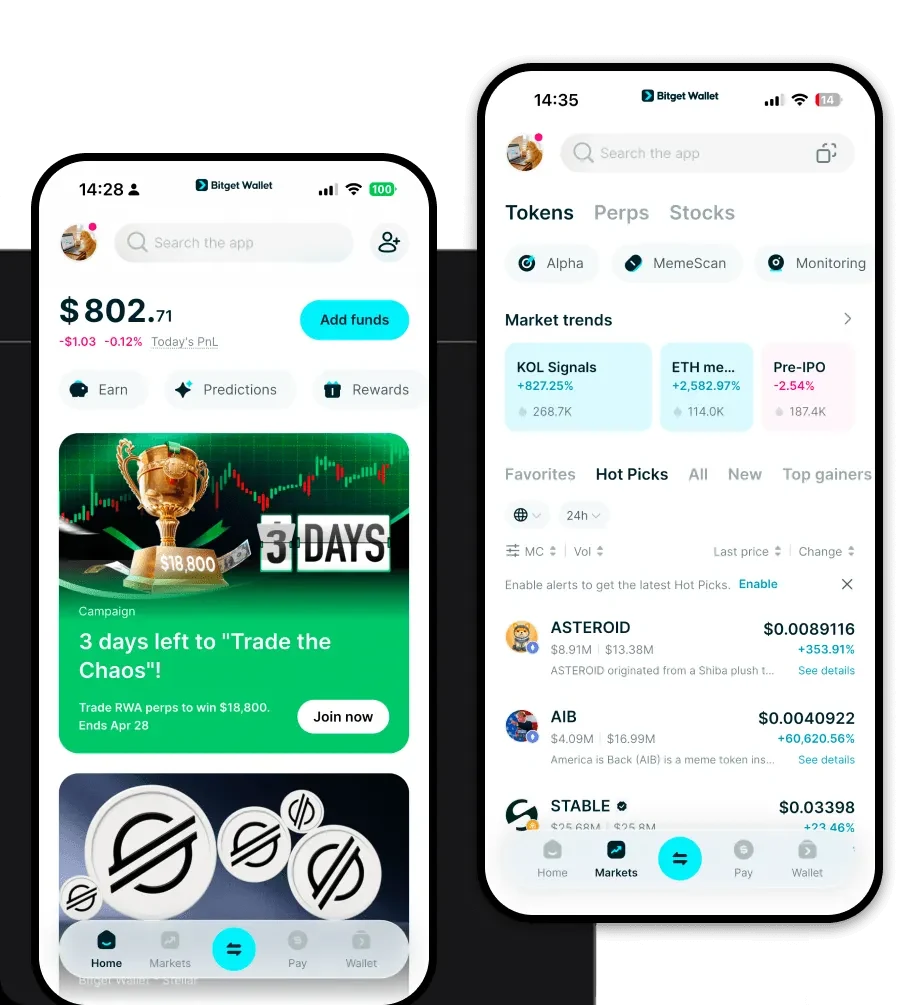
Getting started with your digital assets requires a gateway that balances security with ease of use. You can easily download Bitget Wallet to access a comprehensive ecosystem designed for modern crypto users. Whether you are on the move with your smartphone or managing complex DeFi portfolios from your desktop, Bitget Wallet provides a unified experience. It offers robust multi-chain support, ensuring that you are not limited to a single network, while maintaining complete private key self-custody so you remain the sole owner of your assets. The application is fully optimized for iOS and Android, and includes a browser extension for seamless desktop integration, giving you the flexibility to manage your GHBL wherever you are.
Why Choose Bitget GHBL Wallet?
- EVM Ecosystem Mastery: Built with native EVM compatibility, the wallet ensures that GHBL tokens and related smart contracts are recognized immediately without complex configuration.
- Advanced Smart Contract Integration: Engage directly with decentralized protocols through a smooth interface, allowing you to execute complex transactions securely.
- Robust Decentralized Ecosystem: Benefit from a platform that aggregates hundreds of DEXs and cross-chain bridges, ensuring you always get the best liquidity for your GHBL.
- Institutional-Grade Security: With a $300 million user protection fund, Bitget Wallet provides a safety net that goes beyond standard wallet security measures.
- Seamless Cross-Platform Interoperability: Whether you switch between mobile and browser extension, your portfolio state and history remain synced and accessible.
How to Create a GHBL Wallet
Setting up your wallet is a straightforward process designed to prioritize your security:
- Download and Install: Visit the official website to download Bitget Wallet for your preferred device (iOS, Android, or Browser Extension).
- Create a New Wallet: Open the app and select 'Create a Wallet'. You will be prompted to set a strong password for local device protection.
- Backup Your Seed Phrase: The app will generate a 12-word mnemonic phrase. Write this down on physical paper—never take a screenshot—and store it in a secure location.
- Verify the Backup: The app will ask you to confirm specific words from your phrase to ensure you have recorded them correctly.
- Import or Add GHBL: Once in the main dashboard, use the 'Add Token' feature. Since GHBL is an EVM token, you can simply search for the contract address or the token ticker to add it to your visible asset list.
What Can You Do With a GHBL Wallet?
Holding GHBL in a powerful wallet like Bitget unlocks various DeFi capabilities:
- Trading: Execute instant swaps for GHBL against other tokens using the built-in DEX aggregator for optimal pricing and minimal slippage.
- Staking: Participate in network security or protocol governance by locking your GHBL in verified staking pools directly through the DApp browser.
- Liquidity Provision: Add your GHBL to decentralized liquidity pools to earn trading fees and yield rewards from protocol activity.
- Yield Farming: Optimize your capital efficiency by moving your GHBL into diverse yield farming strategies to maximize your passive income.
- Portfolio Management: Track your total net worth, historical transactions, and asset performance across the entire EVM chain in one unified interface.
How GHBL Wallets Are Different from Other Crypto Wallets
Choosing the right wallet for GHBL involves understanding the underlying mechanics of the EVM chain. Unlike wallets designed for UTXO-based chains (like Bitcoin), an EVM-compatible wallet like Bitget is built specifically for the 'Account Model.' This means it handles smart contract interactions, gas fees, and token approvals differently. While UTXO wallets focus on transaction inputs and outputs, Bitget Wallet excels at managing state transitions required by DeFi protocols. Furthermore, because Bitget aggregates cross-chain bridges and liquidity, it allows you to interact with GHBL in ways that simpler wallets cannot, offering faster transaction routing and more transparent fee estimation for gas-heavy operations.
