





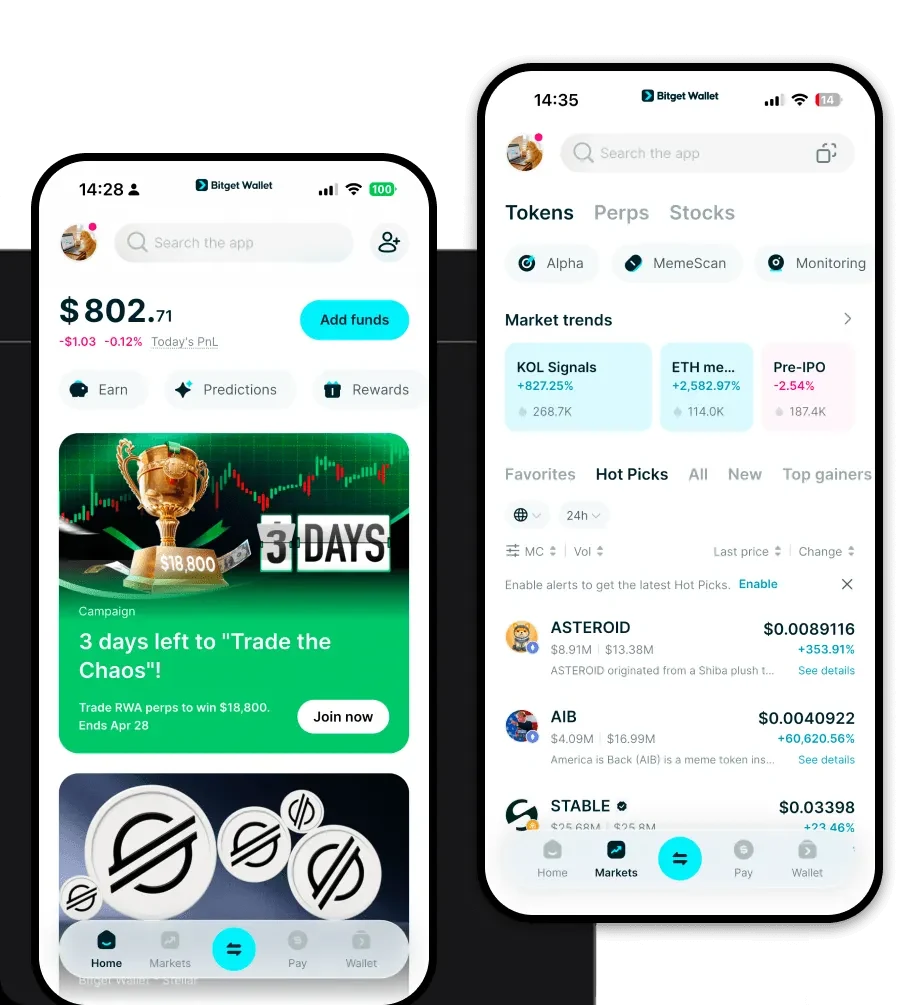
What is a BTCH Wallet?
A BTCH wallet is a digital interface that allows you to interact with the BTCH token, which operates on the EVM (Ethereum Virtual Machine) blockchain. Because BTCH is built on an EVM-compatible chain, it requires a wallet that supports the specific technical standards of this network—essentially acting as your gateway to the decentralized finance (DeFi) world. Are you looking for a reliable and secure crypto wallet for your BTCH? Bitget Wallet will be your best choice. Trusted by 40 million users, you can freely explore Web3 on Bitget Wallet. Start your journey now!
Download Bitget BTCH Wallet
Managing your digital assets shouldn't be a complex task, and that is where Bitget Wallet shines. Whether you are an experienced DeFi degen or just starting your crypto journey, you can download Bitget Wallet to get started. The platform offers a unified experience across mobile and desktop, featuring full support for iOS, Android, and browser extensions. By choosing Bitget, you are opting for a non-custodial solution, meaning you maintain complete control over your private keys and seed phrases at all times. With support for over 130 public chains, it serves as a powerful hub for your entire portfolio, not just your BTCH holdings.
Why Choose Bitget BTCH Wallet?
As an EVM-based token, BTCH requires a wallet that understands the nuances of Ethereum-compatible environments. Bitget Wallet is engineered specifically to handle these requirements efficiently:
- EVM Compatibility: Seamlessly interact with any dApp or smart contract on the EVM network without compatibility errors.
- Low Transaction Fees: Optimized routing paths ensure you spend less on gas fees compared to standard wallet interfaces.
- High Liquidity Access: Integrated with hundreds of DEXs, the wallet ensures you always get the best price when swapping your BTCH.
- Integrated Web3 Ecosystem: Access DeFi protocols, NFT marketplaces, and DApps directly from the browser within the app.
- Cross-Chain Interoperability: Easily bridge your BTCH to other chains or swap between different assets across supported networks without leaving the interface.
How to Create a BTCH Wallet
Getting started with your BTCH wallet is a straightforward process designed for security and speed. Follow these steps:
- Download and Install: Visit the official website or your app store to download Bitget Wallet.
- Create a New Wallet: Open the app and select 'Create a New Wallet.' Set a strong password for your local device access.
- Backup Your Seed Phrase: The app will generate a 12-word recovery phrase. Write this down on paper and store it offline—never share it with anyone.
- Verify Setup: Enter the recovery phrase as prompted to confirm you have backed it up correctly.
- Access Your BTCH: Your wallet is now ready. You can import your existing tokens or copy your wallet address to receive BTCH from exchanges.
What Can You Do With a BTCH Wallet?
Owning a BTCH wallet opens the door to the full spectrum of DeFi activities. Because the wallet is designed for active participants, you can do much more than just hold your tokens:
- Staking: Participate in network security or protocol governance by staking your BTCH directly through the wallet's integrated staking interface.
- Trading: Execute high-frequency trades on decentralized exchanges with real-time price tracking and low slippage.
- Yield Farming: Provide your BTCH to liquidity pools to earn competitive APY and rewards from DeFi platforms.
- Providing Liquidity: Become a market maker by depositing BTCH and paired assets into pools, earning a portion of the transaction fees generated by other users.
- Cross-Chain Swapping: Utilize the built-in bridge features to swap your BTCH for assets on other chains, ensuring your capital is always working where it is most efficient.
How BTCH Wallets Are Different from Other Crypto Wallets
Not all wallets are created equal, especially when dealing with EVM-based tokens like BTCH. Unlike wallets designed for Bitcoin's UTXO model, which focuses on simple transaction inputs and outputs, a BTCH wallet is built for the account-based model used by EVM chains. This means the wallet is optimized for smart contract interactions, allowing you to approve permissions, engage with DeFi protocols, and manage complex gas settings. While BTC wallets prioritize cold storage and simple balance checks, a Bitget BTCH wallet prioritizes the dynamic needs of the DeFi user—offering faster transaction simulation, better gas estimation, and a seamless browser-like experience for interacting with decentralized applications.
