





¿Qué es una billetera PAI?
Una billetera PAI es una herramienta digital especializada diseñada para almacenar, enviar y recibir tokens PAI de forma segura. PAI es una moneda estable vinculada al dólar estadounidense, diseñada para mantener una relación de valor de 1:1. Es parte del ecosistema de Project PAI, que se centra en la tecnología de IA descentralizada y activos digitales. Proporciona un medio de intercambio estable dentro de su red blockchain específica. A diferencia de las criptomonedas volátiles, una billetera PAI le permite mantener un activo que refleja la moneda fiduciaria mientras interactúa con una arquitectura blockchain única dedicada a la integración de IA.
Descargar la billetera PAI de Bitget
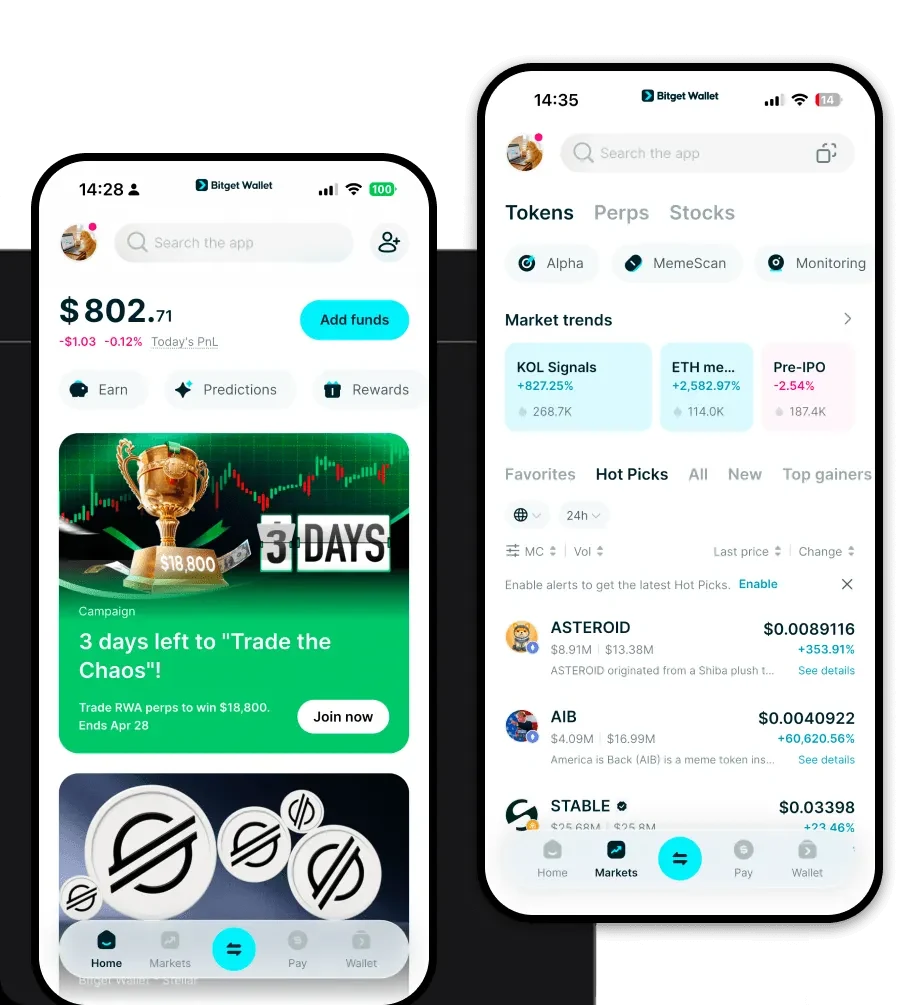
Si está buscando la mejor billetera para PAI, Bitget Wallet destaca como una solución integral para la gestión de sus activos digitales. Tanto si es un inversor experimentado como si acaba de empezar, nuestra plataforma proporciona una interfaz fluida para sus transacciones de PAI. Con un sólido soporte para más de 130 cadenas públicas, Bitget Wallet garantiza que sus activos estén siempre accesibles y seguros. Usted mantiene la propiedad total a través de la autocustodia de claves privadas, lo que le otorga un control completo sobre sus fondos sin depender de intermediarios centralizados. Para comenzar, puede descargar Bitget Wallet directamente a través de nuestro sitio web oficial para iOS, Android o como extensión de navegador, garantizando una experiencia consistente en todos sus dispositivos.
¿Por qué elegir la billetera PAI de Bitget?
- Optimizada para stablecoins: Diseñada para manejar el mecanismo único de vinculación 1:1 con el USD de PAI, garantizando que su gestión de stablecoins sea eficiente e intuitiva.
- Protocolos de seguridad avanzados: Benefíciese de un fondo de protección al usuario dedicado de 300 millones de dólares, que proporciona una capa adicional de seguridad para sus activos digitales.
- Integración fluida en el ecosistema: Acceda a las funciones de la red PAI descentralizada junto con cientos de otros DEX y puentes entre cadenas dentro de una sola aplicación.
- Rendimiento de baja latencia: Experimente velocidades de transacción rápidas que se alinean con la baja latencia de transacciones de PAI, asegurando que sus pagos se procesen casi al instante.
- Consistencia multiplataforma: Ya sea en dispositivos móviles o de escritorio, su dirección de billetera PAI permanece sincronizada, proporcionando una experiencia unificada.
Cómo crear una billetera PAI
Configurar su billetera es un proceso sencillo diseñado para obtener la máxima seguridad:
- Descargar e instalar: Visite la página oficial de Bitget Wallet y descargue la aplicación para su dispositivo preferido.
- Crear una nueva billetera: Abra la aplicación y seleccione 'Crear billetera'. Se le pedirá que establezca una contraseña única y segura para su dispositivo.
- Asegure su frase semilla: La aplicación generará una frase de recuperación de 12 palabras. Escríbala en papel y guárdela en un lugar seguro y fuera de línea. Nunca comparta esto con nadie.
- Verificar la copia de seguridad: Ingrese su frase de recuperación como se le solicite para confirmar que la ha respaldado correctamente.
- Acceder a su dirección: Una vez inicializada, su billetera estará lista. Ahora puede ver su dirección de billetera PAI y comenzar a recibir tokens.
¿Qué puede hacer con una billetera PAI?
Gestionar PAI a través de una billetera dedicada abre varias oportunidades financieras prácticas:
- Almacenamiento de valor: Utilice su billetera para mantener PAI de forma segura, preservando su poder adquisitivo como un activo digital estable.
- Pagos transfronterizos: Aproveche la billetera para enviar PAI a nivel mundial, facilitando pagos transfronterizos rápidos y rentables sin las demoras bancarias tradicionales.
- Moneda base de pares comerciales: Utilice PAI dentro de la billetera como moneda base estable para pares comerciales, lo que le permite entrar y salir de posiciones de mercado fácilmente.
- Cobertura contra la volatilidad del mercado: Cuando el mercado de criptomonedas en general experimenta oscilaciones, mueva sus activos a PAI para cubrirse contra la volatilidad del mercado y proteger el valor de su cartera.
¿En qué se diferencian las billeteras PAI de otras billeteras de criptomonedas?
Las billeteras PAI operan de manera diferente a las billeteras estándar de Ethereum o Bitcoin debido a la naturaleza única del ecosistema de Project PAI. Mientras que muchas billeteras se centran únicamente en tokens compatibles con EVM, donde las tarifas de gas fluctúan según la congestión de la red, una billetera optimizada para PAI a menudo se enfoca en los requisitos específicos de su blockchain nativa. Esto incluye el manejo de mecanismos de consenso únicos y el mantenimiento de la velocidad a pesar de la carga de la red. A diferencia de las billeteras diseñadas para activos basados en UTXO como Bitcoin, que priorizan el seguimiento estricto de entradas/salidas de transacciones, una billetera compatible con PAI está diseñada para respaldar los requisitos de alta frecuencia de una moneda estable, asegurando que la latencia de la transacción siga siendo baja y que la vinculación 1:1 se respete durante todas las transferencias.
