





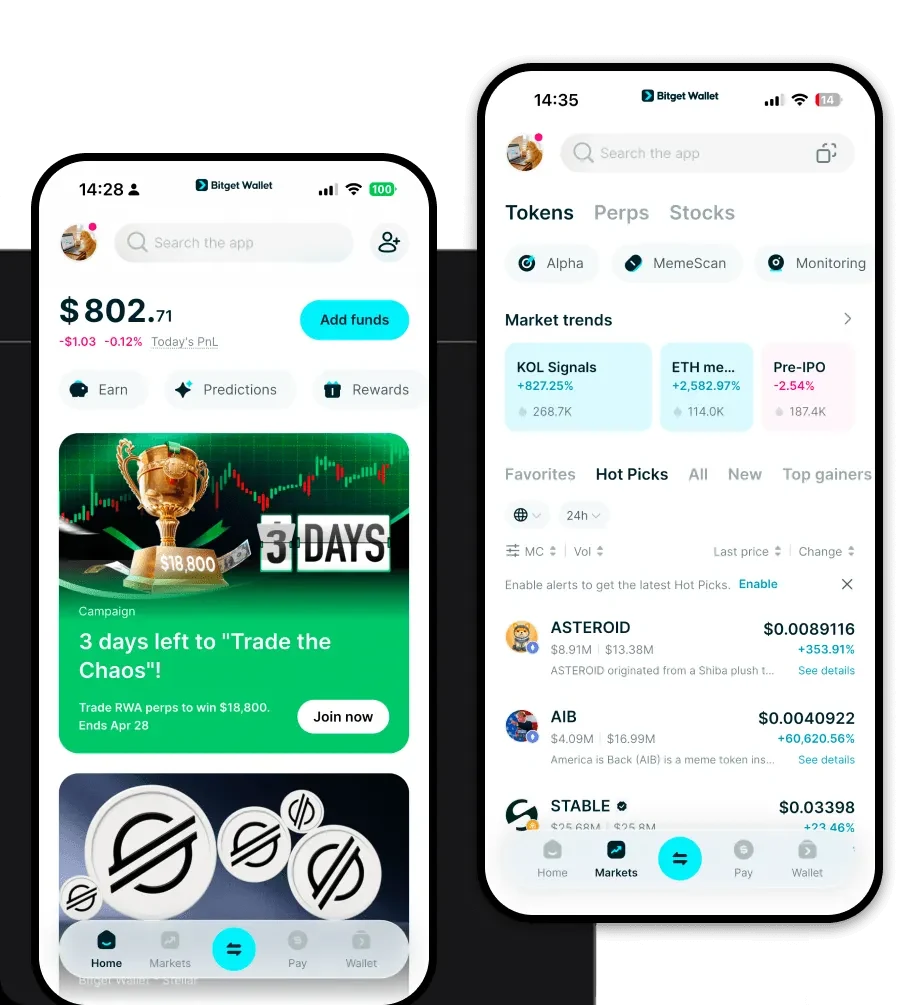
1. What is an H1 Wallet?
In the rapidly evolving landscape of decentralized finance, H1 stands out as a critical asset built on the EVM (Ethereum Virtual Machine) ecosystem. As an infrastructure-focused token, H1 requires a wallet that does more than just hold keys; it needs to interface seamlessly with smart contracts, decentralized applications (dApps), and complex cross-chain protocols. An H1 wallet is essentially your gateway to this ecosystem, providing the interface necessary to interact with the H1 token, manage your balance, and execute transactions on the blockchain.
Are you looking for a reliable and secure crypto wallet for your H1? Bitget Wallet will be your best choice. Trusted by 40 million users, you can freely explore Web3 on Bitget Wallet. Start your journey now!
2. Download Bitget H1 Wallet
Finding the right tool to manage your digital assets is the first step toward financial sovereignty. To start your journey, you need a platform that is not only robust but also accessible across all your devices. Whether you are an iOS user, an Android enthusiast, or someone who prefers managing assets via a browser extension, Bitget Wallet provides a unified experience.
You can download Bitget Wallet to gain immediate access to a self-custodial environment. Unlike centralized exchanges, Bitget Wallet ensures that you remain the sole owner of your private keys. This means your H1 tokens are truly yours, stored securely on your device, and accessible whenever you need them. The wallet supports a vast array of chains, ensuring that your H1 management is never siloed. By choosing this h1 wallet app, you are opting for a seamless, secure, and user-friendly interface designed for the modern Web3 explorer.
3. Why Choose Bitget H1 Wallet?
When selecting the best wallet for H1, you must look for features that specifically cater to the EVM architecture. Bitget Wallet excels here by optimizing for the specific needs of infrastructure tokens. Here is why it stands out:
- Native EVM Compatibility: Bitget Wallet is designed to mirror the functionality of top-tier EVM wallets, ensuring that you can interact with any dApp, DeFi protocol, or NFT marketplace built on EVM chains without compatibility issues.
- Scalable Architecture: Built to grow with the blockchain, the wallet handles high-frequency interactions and complex smart contract calls with ease, ensuring your H1 transactions are processed smoothly.
- High Transaction Throughput: The wallet interface is optimized to broadcast transactions efficiently, reducing the risk of stuck transactions during periods of high network congestion.
- Cross-Chain Interoperability: As an infra-centric wallet, it allows you to move H1 assets across different chains, bridging the gap between isolated ecosystems effortlessly.
- Decentralized Ecosystem Security: With a dedicated $300 million protection fund and rigorous code audits, Bitget Wallet ensures that your H1 holdings are shielded from common Web3 vulnerabilities.
4. How to Create an H1 Wallet
Getting started with your new H1 wallet address is a straightforward process designed to prioritize your security. Follow these five steps to set up your account:
- Install the App: Visit the official website or your device's app store to download Bitget Wallet. Avoid third-party sources to ensure you are using the authentic version.
- Initialize Your Wallet: Open the application and select 'Create a New Wallet'. You will be prompted to set a strong, unique password for the app itself.
- Backup Your Seed Phrase: This is the most crucial step. The app will generate a 12 or 24-word recovery phrase. Write this down on paper and store it in a secure, offline location. Never take a screenshot of this phrase.
- Verify Your Identity: Follow the on-screen instructions to confirm your recovery phrase, ensuring you have recorded it correctly.
- Access Your H1 Wallet Address: Once set up, navigate to the asset dashboard. You will see your H1 wallet address, which you can now use to receive tokens or connect to dApps.
5. What Can You Do With an H1 Wallet?
An H1 wallet is not just a storage vessel; it is an active tool for participating in the decentralized economy. Here is how you can utilize your H1 assets:
- Trading: You can engage in high-speed trading directly within the wallet, swapping H1 for other assets through integrated decentralized exchange aggregators without ever leaving the app.
- Staking: By participating in staking protocols, you can lock your H1 tokens to contribute to network security and earn yield rewards directly from your wallet interface.
- Cross-Chain Bridging: Use the built-in bridging functionality to move your H1 assets across different EVM-compatible chains, maximizing your liquidity and utility across the broader crypto landscape.
- Asset Management: The wallet provides a comprehensive dashboard to track your H1 portfolio performance, viewing real-time price changes and historical transaction data in one place.
- Liquidity Provision: You can act as a liquidity provider by depositing H1 into decentralized pools, earning a share of the trading fees generated by the platform.
6. How H1 Wallets Are Different from Other Crypto Wallets
Managing H1 on an EVM-based wallet differs significantly from managing assets on UTXO-based chains like Bitcoin. In the EVM model, your wallet uses an 'Account-Based' system, which relies on smart contracts to track balances and execute logic. Unlike Bitcoin wallets that manage unspent transaction outputs (UTXO), your H1 wallet interacts with the Ethereum Virtual Machine to process complex operations like token approvals, staking contracts, and liquidity pool deposits.
Furthermore, because H1 operates on the EVM, you are dealing with 'Gas' fees. Bitget Wallet distinguishes itself by providing real-time gas fee estimations and 'Gas-Free' or 'Gas-Optimized' transaction features, allowing you to pay fees in stablecoins or other tokens, which is a major departure from legacy wallet designs. This makes the H1 experience far more intuitive and cost-effective compared to older, less flexible wallet architectures.
