





1. What is a VIA Wallet?
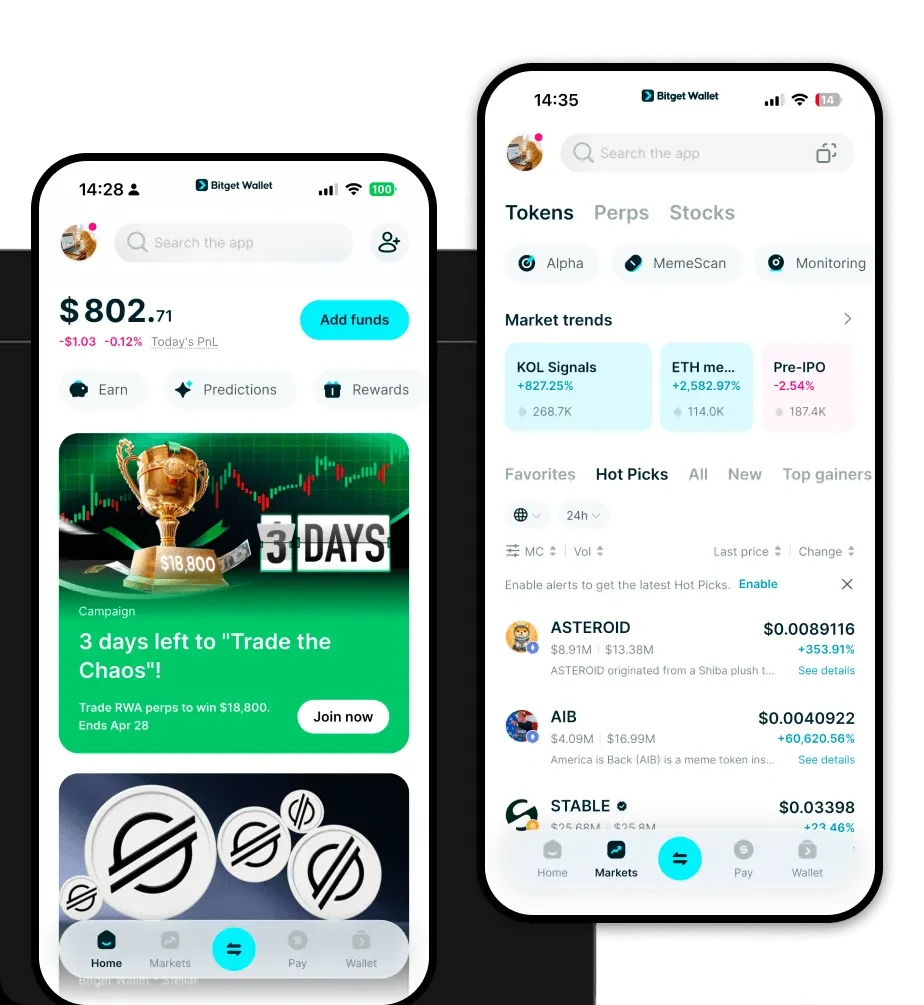
A VIA wallet is a digital interface designed to manage, store, and interact with the VIA token, which operates within the EVM (Ethereum Virtual Machine) ecosystem. Because VIA is built on EVM-compatible infrastructure, it requires a wallet capable of supporting ERC-20 standards and complex smart contract interactions. This ensures that you can securely hold your assets while maintaining full control over your private keys. Are you looking for a reliable and secure crypto wallet for your via? Bitget Wallet will be your best choice. Trusted by 40 million users, you can freely explore Web3 on Bitget Wallet. Start your journey now!
2. Download Bitget VIA Wallet
Getting started with your VIA journey requires a robust tool that balances security with accessibility. Bitget Wallet provides a seamless entry point into the Web3 world, offering a non-custodial solution where you remain the sole owner of your assets. Whether you are managing your portfolio on the go or analyzing market trends from your desktop, the platform provides a unified experience across mobile and browser environments.
You can access your assets through a user-friendly mobile app available on iOS and Android, or via a powerful browser extension that integrates directly with dApps. To begin, simply download Bitget Wallet and follow the setup prompts to create your personal gateway to the EVM ecosystem.
3. Why Choose Bitget VIA Wallet?
As a piece of critical infrastructure for the EVM network, Bitget Wallet is engineered to handle the complexities of decentralized finance. Here is why it stands out for VIA holders:
- Native EVM Compatibility: Designed specifically for EVM-based assets, the wallet ensures instant recognition of tokens and seamless interaction with smart contracts without configuration errors.
- Advanced Cross-Chain Interoperability: Bitget Wallet goes beyond simple storage by enabling frictionless movement of assets across different chains, ensuring your VIA is never "locked" in one ecosystem.
- Integrated Liquidity Aggregation: By pooling liquidity from hundreds of decentralized exchanges (DEXs), the wallet ensures you always get the best price and lowest slippage when swapping your VIA.
- Decentralized Routing Protocols: The wallet utilizes smart routing algorithms to find the most efficient path for your transactions, reducing gas fees and execution time significantly.
- Robust Security Architecture: With an integrated 300 million USD user protection fund, the wallet provides a safety net that protects users against unforeseen platform vulnerabilities.
4. How to Create a VIA Wallet
Setting up your wallet is a straightforward process designed to prioritize your security. Follow these steps:
- Install the App: Download the official Bitget Wallet app from the website or your device's app store.
- Create New Wallet: Open the app and select 'Create a Wallet'. This will generate a new set of private keys.
- Backup Your Seed Phrase: You will be presented with a 12-word recovery phrase. Write this down on paper and store it in a secure location offline; never share this with anyone.
- Verify Credentials: Re-enter your seed phrase as prompted to ensure you have backed it up correctly.
- Access Your Address: Once the wallet is initialized, navigate to the asset list and select 'Receive' under VIA to view your unique EVM wallet address for incoming transfers.
5. What Can You Do With a VIA Wallet?
Bitget Wallet transforms your VIA tokens from idle assets into active tools for navigating the DeFi landscape. Here are the primary use cases:
- Cross-chain Swapping: You can utilize the wallet’s bridge features to seamlessly move your VIA or its liquidity pairs across different EVM-compatible chains without relying on centralized exchanges.
- Liquidity Provision: By connecting your wallet to decentralized protocols, you can deposit your VIA into liquidity pools to earn yield, contributing to the health of the ecosystem.
- Token Bridging: The wallet facilitates the rapid transfer of VIA across various networks, ensuring that you can participate in different DeFi protocols regardless of their native chain.
- Arbitrage Trading: With the wallet’s fast execution and liquidity aggregation, you can monitor price discrepancies across different DEXs and execute arbitrage trades in real-time.
6. How VIA Wallets Are Different from Other Crypto Wallets
Not all wallets are created equal, especially when dealing with EVM-based infrastructure. Unlike legacy wallets that might struggle with the nuances of modern DeFi, Bitget Wallet is purpose-built for the current landscape.
Traditional wallets often focus solely on storage, whereas a modern VIA-compatible wallet focuses on interaction. Because we are dealing with an account-based model (EVM), your wallet must efficiently manage nonce increments and gas estimations. Bitget Wallet optimizes these technical hurdles automatically. While a basic wallet might require you to manually adjust gas settings to avoid transaction failure, Bitget Wallet uses decentralized routing to ensure your transaction is processed optimally, balancing speed and cost. Furthermore, it avoids the limitations of older UTXO-based wallets by providing a clean, intuitive interface for complex smart contract interactions, making high-frequency DeFi activities accessible to everyone.
