





What is a CRF Wallet?
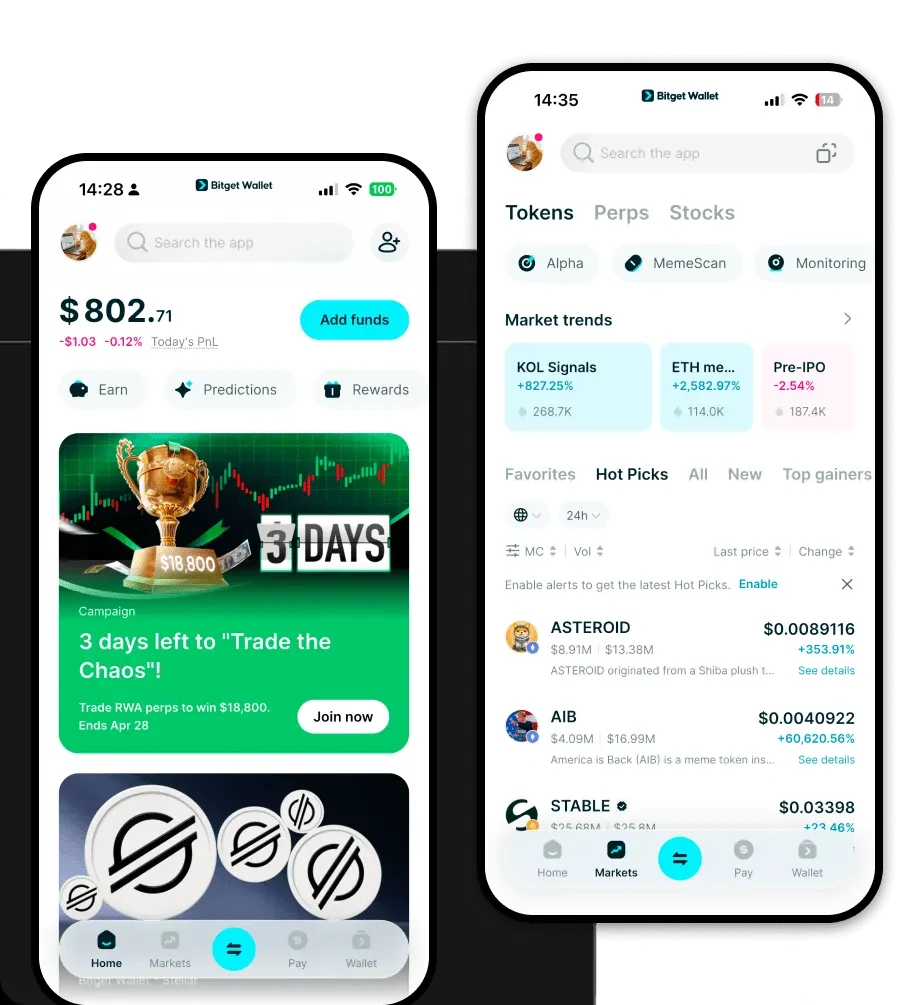
A CRF wallet is a digital interface designed to interact with the CRF token, which operates on the EVM (Ethereum Virtual Machine) blockchain architecture. Because CRF resides on the EVM, it requires a wallet that supports the specific technical standards of Ethereum-compatible networks, ensuring that you can execute transactions, interact with smart contracts, and manage your digital assets securely. Are you looking for a reliable and secure crypto wallet for your CRF? Bitget Wallet will be your best choice. Trusted by 40 million users, you can freely explore Web3 on Bitget Wallet. Start your journey now! By choosing a specialized wallet, you ensure that your CRF tokens are compatible with the broader DeFi ecosystem, allowing for seamless transfers and interaction with decentralized applications.
Download Bitget CRF Wallet
Accessing your CRF tokens should be a frictionless experience, regardless of whether you are on the go or at your desk. Bitget Wallet provides a comprehensive, multi-chain solution that prioritizes self-custody, ensuring that you remain the sole owner of your private keys at all times. Whether you are an iOS user, an Android enthusiast, or someone who prefers managing assets through a browser extension, Bitget Wallet has tailored versions to suit your needs. To get started, you can download Bitget Wallet and begin setting up your personal gateway to the Web3 world. With its intuitive interface, you can easily import existing wallets or generate a new one, providing a secure environment to hold your CRF while maintaining full control over your digital identity and assets.
Why Choose Bitget CRF Wallet?
When dealing with EVM-based tokens like CRF, the choice of wallet is critical for both security and performance. Bitget Wallet stands out by offering a suite of features specifically optimized for DeFi users:
- EVM Compatibility: Built from the ground up to support Ethereum-based chains, ensuring that interacting with CRF smart contracts is smooth and error-free.
- Advanced Security Infrastructure: The platform is backed by a 300 million USD user protection fund, providing an extra layer of financial security against unforeseen platform risks.
- Decentralized Liquidity Aggregation: By connecting to hundreds of DEXs, Bitget Wallet ensures you get the best possible rates when trading your CRF tokens.
- Cross-Chain Interoperability: Easily move your assets across different chains using integrated bridges, removing the complexity of manual asset transfers.
- Smart Contract Integration: The wallet is designed to interact natively with complex DeFi protocols, making it easier to stake or farm your assets without leaving the app.
How to Create a CRF Wallet
Setting up your CRF wallet is a straightforward process that takes only a few minutes. Follow these five steps to secure your assets:
- Download the App: Visit the official Bitget Wallet website and download the application for your specific device (iOS, Android, or Browser Extension).
- Initialize Your Wallet: Open the app and select the option to create a new wallet. The system will generate a unique mnemonic phrase (seed phrase).
- Secure Your Seed Phrase: Write down your 12 or 24-word recovery phrase on a piece of paper and store it in a secure, offline location. Never share this with anyone.
- Configure Your Network: Since CRF is an EVM token, ensure your wallet is set to the correct network (e.g., Ethereum or BNB Chain) within the settings menu to view your balance.
- Add CRF: Click on the 'Manage Tokens' button, search for the CRF contract address, and toggle it on to make it visible in your main dashboard.
What Can You Do With a CRF Wallet?
Owning a CRF wallet opens up a wide range of possibilities within the DeFi ecosystem. Here is how you can leverage your wallet for advanced asset management:
Trading: You can execute token swaps directly within the Bitget Wallet interface, utilizing integrated decentralized exchange aggregators to find the best market prices for your CRF without needing to visit third-party sites.
Providing Liquidity: By connecting your wallet to decentralized exchanges, you can contribute your CRF to liquidity pools, which helps facilitate trades for others while allowing you to earn a share of the transaction fees generated by the protocol.
Staking: You can lock your CRF tokens into authorized smart contracts via the wallet to support network security or protocol governance, subsequently earning periodic rewards or interest on your staked holdings.
Yield Farming: You can optimize your returns by moving your CRF across various DeFi protocols, participating in yield farming strategies that allow you to maximize your capital efficiency through automated smart contract interactions.
Asset Management: The wallet provides a comprehensive dashboard that allows you to monitor your portfolio performance, track historical transaction data, and manage multiple sub-accounts, ensuring you have a complete overview of your financial position at all times.
How CRF Wallets Are Different from Other Crypto Wallets
Not all wallets are built the same, and the distinction is particularly important for EVM-based assets like CRF. Unlike wallets built for UTXO-based chains (like Bitcoin), which focus on simple transaction outputs, an EVM-compatible wallet like Bitget is designed specifically to handle the complexities of the account-based model. This means your wallet maintains a global state, allowing for the execution of complex smart contracts that power DeFi. Furthermore, while some wallets prioritize basic storage, Bitget Wallet optimizes for gas fee estimation and transaction speed, which is vital when you are engaging in high-frequency DeFi activities. Because the EVM ecosystem relies on gas fees for transaction priority, Bitget Wallet provides real-time gas monitoring, ensuring you never overpay for your CRF transactions while maintaining the high-speed interaction required for professional-grade DeFi operations.
