


What Is Stablecoin Sandwich: A Smarter Way to Move Money Across Borders in 2026
What Is Stablecoin Sandwich refers to a payment model in which value moves from fiat to stablecoin, across a blockchain network, and back into fiat at the destination. It is not a speculative crypto trade. It is an infrastructure model that uses stablecoins as a settlement bridge, often without requiring the end user to interact with crypto directly.
Traditional cross-border payments are often slow, expensive, and opaque, especially outside major banking corridors. Stablecoin sandwich models aim to reduce that friction without replacing fiat itself, which is why they are increasingly relevant for businesses, remittances, and treasury operations.
In this article, we’ll explain what it is, how it works, why it matters, and where it is being used.
Key Takeaways
- What Is Stablecoin Sandwich is a fiat-to-stablecoin-to-fiat payment flow that improves cross-border settlement without changing the user-facing fiat experience.
- stablecoin sandwich cross-border payments can reduce delays, lower costs, and improve visibility compared with older banking routes.
- Stablecoin sandwich is gaining traction because it fits real business, remittance, and treasury needs while keeping fiat, compliance, and local payment rails in the loop.
What Is Stablecoin Sandwich?
A stablecoin sandwich is a cross-border payment flow where value starts in fiat, moves through stablecoins on blockchain rails, and ends in fiat again. In simple terms, the stablecoin layer sits in the middle as the settlement bridge. That makes it a practical response to real inefficiencies in global money movement rather than a theory about replacing money itself.
Source: dynamic.xyz
What does stablecoin sandwich actually mean?
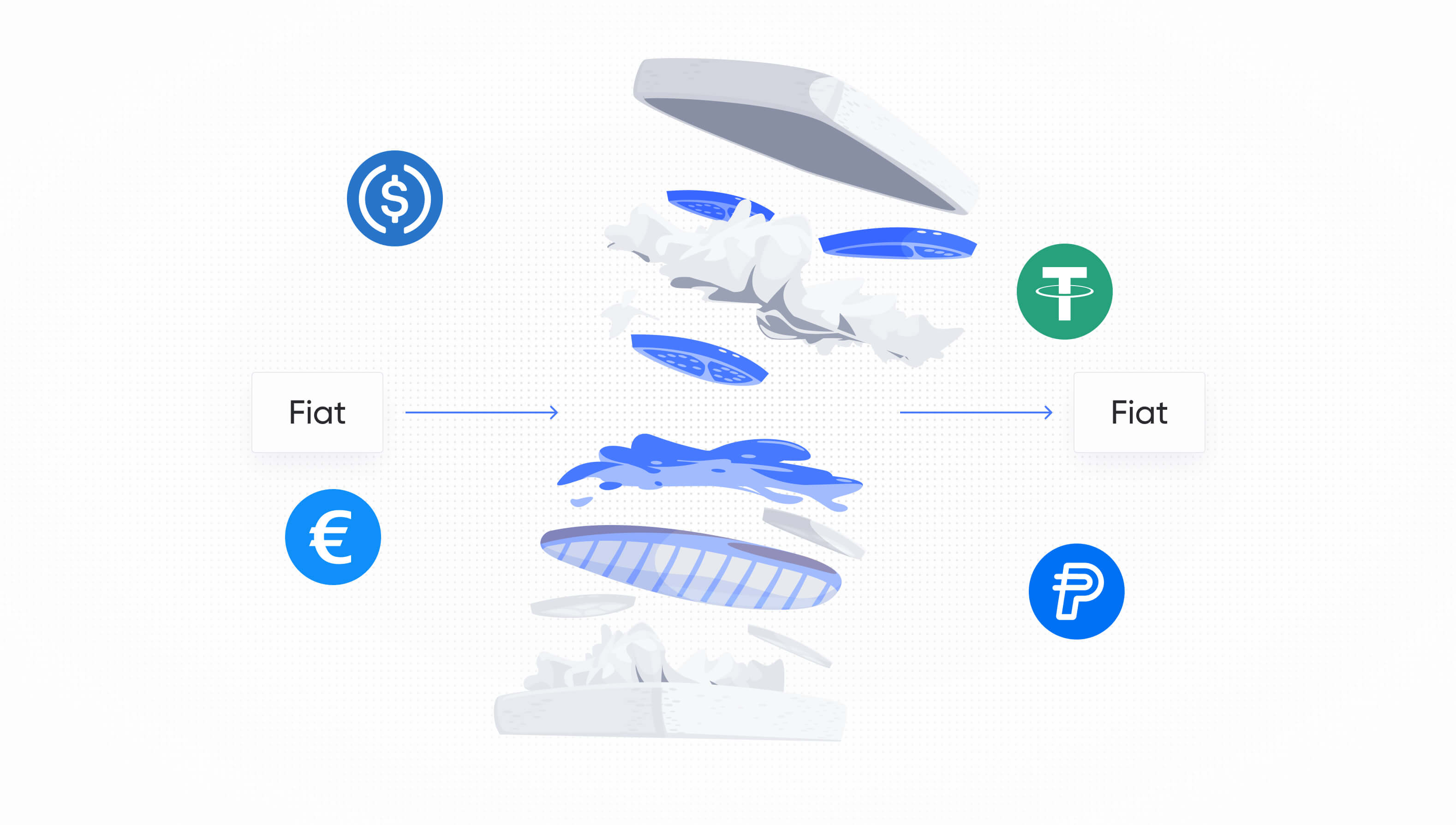
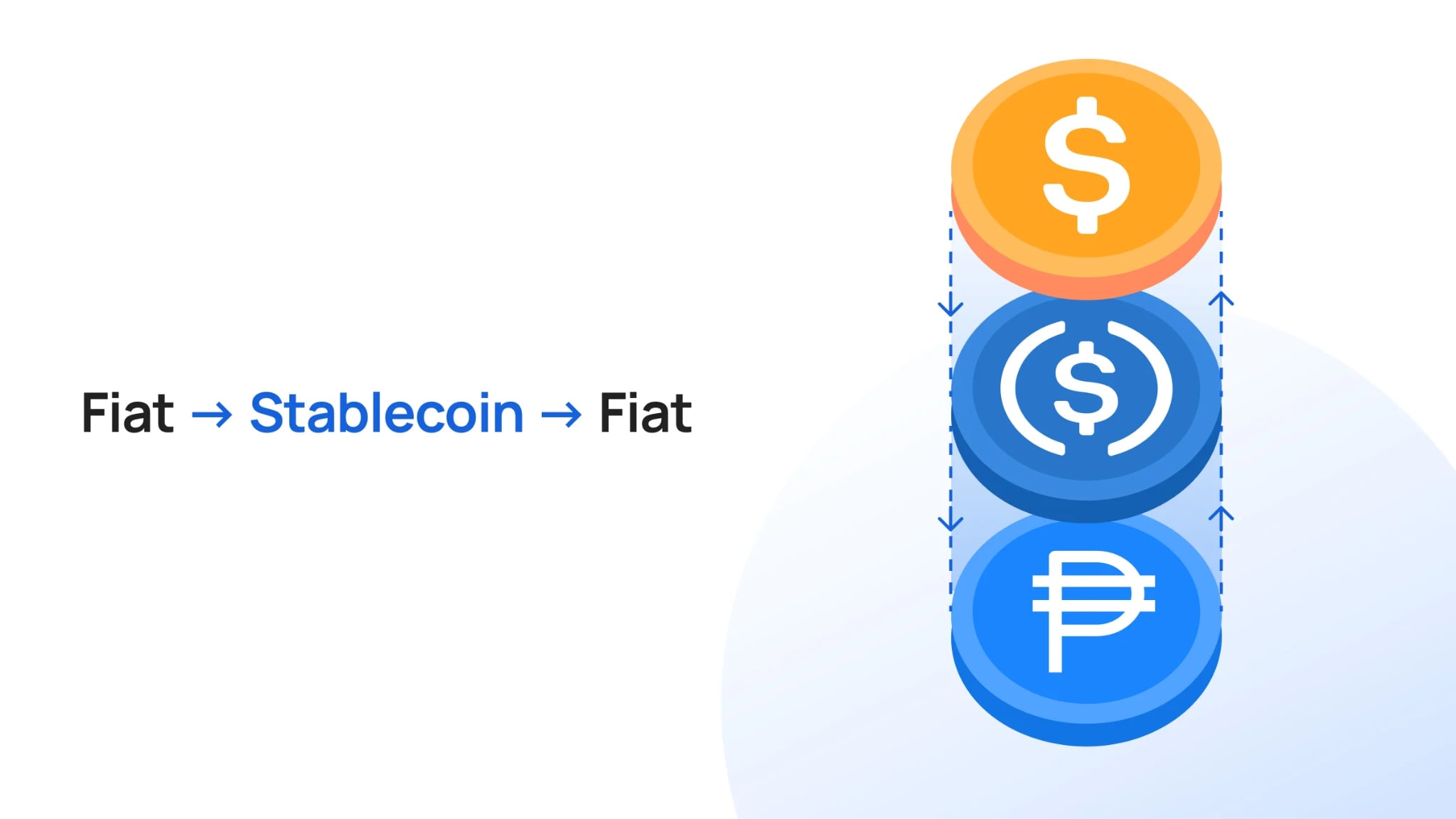
What Is Stablecoin Sandwich in practical terms? It means a sender pays in local fiat, the value is converted into stablecoins for transfer, and the recipient receives local fiat on the other side. The “sandwich” structure describes how traditional currencies sit on both ends while the stablecoin layer does the work in the middle.
- Fiat on one side: the sender begins with local currency through a bank, payment provider, or licensed partner.
- Stablecoin in the middle: the value moves through blockchain rails as a digital settlement layer.
- Fiat on the other side: the recipient receives local currency through local rails or a bank deposit.
In many stablecoin cross-border payments, that middle layer is largely invisible. The user may only see fiat in and fiat out, while the stablecoin settlement happens behind the scenes.
Why is stablecoin sandwich getting more attention?
Stablecoin sandwich is getting more attention because cross-border payments still carry too much friction in many regions. Businesses want faster settlement, lower cost pressure, and more predictable execution. That is where stablecoin sandwich cross-border payments stand out.
- Faster settlement: funds can move much faster than traditional correspondent banking chains.
- Lower cost pressure: fewer intermediaries can reduce aggregate transfer costs.
- Better efficiency: companies gain a more flexible way to handle global payments, payouts, and liquidity.
This is also why What Is Stablecoin Sandwich has become more important as a search topic in 2026. It sits at the intersection of fintech, payment infrastructure, and blockchain cross-border payments.
How Does Stablecoin Sandwich Work?
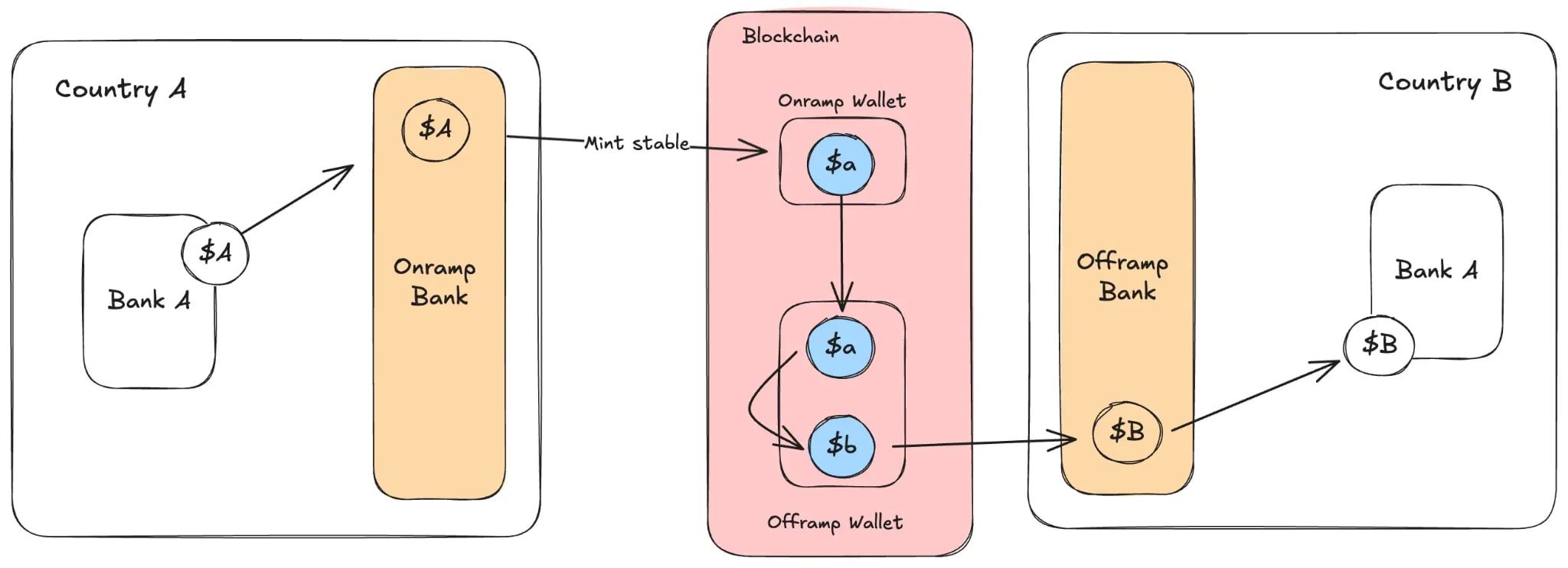
The stablecoin sandwich cross-border settlement process usually follows a simple three-step structure. The goal is to reduce settlement delays, improve pricing efficiency, and minimize the time value spends moving through fragmented systems.
Source: transak.com
Step 1: On-ramp convert fiat into stablecoins
The process begins when the sender starts with local fiat. A provider, exchange, or payment partner converts that fiat into stablecoins.
- Local fiat input: the sender funds the transaction in their domestic currency.
- Conversion partner: a licensed provider or exchange handles the on-ramp into stablecoins.
- Liquidity matters: deeper local liquidity can improve pricing and reduce friction at the first step.
This is the point where pricing efficiency begins, which is why local market depth matters in how stablecoin sandwich works.
Step 2: Stablecoins transferred across blockchain networks
Next, blockchain handles the settlement layer. This is the part that makes blockchain cross-border payments attractive for speed and operational flexibility.
- 24/7 transfer rails: blockchain networks do not depend on banking hours.
- Faster settlement: transfers may settle in seconds, minutes, or in some cases hours depending on the provider and network structure.
- Fewer intermediaries: the payment does not need to move through the same chain of correspondent banks.
This is the core of what is a stablecoin sandwich and how does it work: the stablecoin layer carries value across borders more efficiently than traditional payment chains.
Step 3: Off-ramp turn stablecoins back into local fiat
On the receiving side, the provider converts the stablecoins into destination fiat and pays out through local rails.
- Destination conversion: stablecoins are sold or redeemed into local currency.
- Local payout: the recipient receives funds through a bank deposit or domestic payment rail.
- Fiat experience: from the user perspective, the flow can still feel like a normal fiat transfer.
That is why stablecoin payment infrastructure can be powerful without changing the end-user experience. The upgrade happens in the backend.
Stablecoin Sandwich vs Traditional Cross-Border Banking: Which Is Better?
The model matters because it can improve settlement speed, cost transparency, and operational flexibility compared with older correspondent banking routes. The strongest contrast in stablecoin sandwich vs traditional banking is not ideology. It is efficiency.
| Factor | Traditional Cross-Border Banking | Stablecoin Sandwich |
| Settlement speed | Often days | Faster, often minutes to hours |
| Availability | Limited by banking hours | 24/7 blockchain rails |
| Intermediaries | Multiple correspondent banks | Fewer transfer layers |
| Transparency | Fragmented visibility | Better on-chain traceability |
| Cost structure | Layered fees and FX spread | On/off-ramp fees plus network costs |
1. Faster settlement speed
Traditional transfers may take several business days, especially across weaker corridors. Stablecoin-based settlement is usually much faster because the transfer layer runs continuously.
- 24/7 availability: blockchain rails operate outside bank hours.
- Fewer handoffs: fewer intermediaries reduce waiting between systems.
- More responsive movement: treasury and payout operations can move faster.
2. Lower fees
Stablecoin sandwich benefits for businesses often begin with cost efficiency. The model can reduce reliance on correspondent banks and improve how local liquidity is used on each side of a payment.
- Fewer banking intermediaries: fewer institutions taking a cut.
- Better local conversion logic: pricing can improve with stronger local liquidity.
- Lower aggregate cost potential: although costs still exist, the total can be lower.
That said, on-ramp fees, off-ramp fees, and network gas costs still apply. Stablecoin sandwich vs traditional banking is not cost-free versus expensive. It is often about a more efficient cost structure.
3. Improved transparency
On-chain movement is easier to track than fragmented traditional wire routes. That helps payment providers and treasury teams monitor where funds are in transit.
- Real-time visibility: blockchain movement can be followed more directly.
- Operational traceability: status is clearer during settlement.
- Better audit logic: some teams gain better payment visibility.
Still, on-chain transparency does not fully remove off-chain limitations. Once funds move back into fiat systems, visibility depends on local providers and rails.
4. Stronger efficiency
Efficiency gains are often strongest outside the most optimized currency routes. In emerging markets, weaker payment infrastructure and more manual processes make the benefits more visible.
- Higher friction markets: greater need for better settlement tools.
- Less mature corridors: more room for improvement in cost and speed.
- Broader operational gains: faster working capital movement and less trapped liquidity.
This is one reason why stablecoin sandwich real-world use cases often appear first in markets where traditional systems are least efficient.
Is Stablecoin Sandwich Credible?
Stablecoin sandwich is gaining attention not because it is a crypto buzzword, but because it addresses measurable inefficiencies in cross-border payments. Its credibility comes from business relevance, institutional interest, and the logic of hybrid infrastructure.
- Institutional interest: larger financial players and payment networks are paying attention to stablecoin-enabled settlement models.
- Operational efficiency: the appeal is practical, not ideological.
- Hybrid financial model: fiat, licensed entities, and blockchain rails work together rather than compete.
- Compliance and licensing: serious adoption depends on regulated on-ramp and off-ramp layers.
- Stablecoin payment infrastructure: the model relies on bridges between local rails and blockchain settlement.
- Invisible infrastructure: users may not even realize stablecoins were part of the transfer.
- Adoption logic: the model becomes more attractive where payments are slow, fragmented, and costly.
- Strategic relevance: this helps explain why stablecoin sandwich is important in 2026 without making the article feel news-led.
In that sense, What Is Stablecoin Sandwich is best understood as an infrastructure upgrade. It does not replace fiat. It tries to improve how fiat moves.
What Are the Risks of a Stablecoin Sandwich?
The model offers clear efficiency benefits, but trust depends on liquidity, compliance, interoperability, and reserve confidence. That is why stablecoin sandwich payment infrastructure explained properly should always include risks as well as advantages.
Source: bedlamresear.ch
1. Cross-chain infrastructure dependency
Stablecoin settlement may rely on multiple blockchain networks, pricing inputs, and interoperability layers.
- Blockchain settlement dependency: performance depends on the network and provider setup.
- Cross-chain transfer needs: some flows may require movement across different chains.
- Exchange rate data reliance: accurate conversion depends on reliable pricing.
2. Liquidity depth constraint
Low liquidity can make execution worse, especially in smaller corridors or less liquid currency pairs.
- Slippage risk: poor market depth can worsen conversion pricing.
- Weak corridor depth: some routes may not support institutional-scale efficiency.
- Execution limits: pricing can be less stable in less liquid markets.
3. Regulatory compliance exposure
The fiat-to-crypto-to-fiat structure attracts scrutiny from regulators and compliance teams.
- KYC at on-ramp: identity checks are often required before conversion.
- AML at off-ramp: payment flows must pass compliance review at payout.
- Higher scrutiny: regulators care about layered money movement across systems.
4. Stablecoin reserve reliability
The stablecoin itself must maintain value during the transfer. Reserve confidence matters.
- Peg stability: the transfer works best when the stablecoin remains stable.
- Reserve backing: trust depends on collateral transparency and confidence.
- Practical risk: weak reserve confidence undermines the whole process.
What Are the Use Cases of Stablecoin Sandwich?
The model is most useful where payment delays, fragmented settlement, or multi-currency operations create measurable costs. That is why stablecoin sandwich real-world use cases keep expanding beyond a single niche.
1. B2B supplier settlements and commercial payments
Businesses can use the model to improve cross-border commercial payments and supplier settlement speed.
- Supplier settlements: reduce delays in paying overseas vendors.
- Commercial payments: support faster global transaction cycles.
- Working capital efficiency: improve how capital moves across borders.
2. Remittances and global payout flows
This is one of the clearest use cases because smaller transfers are often highly fee-sensitive.
- Migrant remittances: more value can reach the recipient.
- Freelancer and contractor payments: global payouts become faster.
- Small-value transfers: efficiency matters even more when margins are tight.
3. Corporate treasury and liquidity management
Treasury teams can use stablecoin cross-border payments to rebalance funds more dynamically.
- Treasury rebalancing: move value across geographies more efficiently.
- Reduced pre-funding reliance: lower the need to hold idle cash abroad.
- Flexible fiat positioning: optimize movement between currency positions.
4. Corridor-based expansion and localized payment optimization
Adoption often begins in high-friction markets and then expands corridor by corridor.
- High-friction markets first: inefficiency creates the strongest business case.
- Local differences matter: regulation, liquidity, and payout structure vary by market.
- Gradual expansion: payment networks tend to scale locally before globally.
Bitget Wallet: The Best Way to Manage Stablecoins More Efficiently Across Chains
After understanding What Is Stablecoin Sandwich and how stablecoins function as a settlement layer in cross-border payments, the next step is using them efficiently in practice—this is where Bitget Wallet comes in, combining storage, swaps, and yield tools in one place to help users manage stablecoins seamlessly across chains.

Key features of Bitget Wallet
For users who want more than passive holding, Bitget Wallet offers Stablecoin Earn Plus, allowing eligible users to earn up to 10% APY on USDC (Base network) for the first $5,000 in the first 30 days, with ongoing yields based on real-time Aave rates.
This makes it a practical way to turn stablecoins into productive assets while maintaining flexibility and full control!
- Cross-chain stablecoin management: Store, move, and swap stablecoins across supported networks in one wallet.
- Non-custodial control: Users keep full control of their assets instead of relying on a custodial platform.
- Stablecoin Earn Plus: Eligible users can subscribe to USDC on Base and access up to 10% APY under the product’s promotional structure.
- Flexible access: Users can track holdings, view earnings, and redeem funds directly in the wallet.
Join Bitget Wallet now to manage your stablecoins more efficiently and earn up to 10% APY while staying in full control of your assets across chains.
Related Reading on USDC Earn
If you're exploring USDC earn opportunities — from understanding APY mechanics to evaluating liquidity and smart contract exposure — these guides will help you assess yield potential and risks more clearly.
🔹 Understanding USDC & Stablecoin Basics
🔹 USDC Earn Explained
- USDC Earn Explained: A Complete Guide to Yield, APY, and Risk
- USDC Earn Returns: How to Evaluate APY, Liquidity, and Smart Contract Exposure
- USDC Yield: How to Earn Yield on USDC Safely in 2026?
- Best USDC Yield Strategies: How to Earn Stablecoin Interest?
- USDC Yield and Passive Income: How Much Capital Do You Need?
- USDC Yield vs Traditional Savings: How Stablecoin Earn Plus Structures Passive Income?
🔹 Stablecoin Earn Plus & Yield Options
- Stablecoin Earn Plus: What USDC Earn Is and How to Start Generating Yield
- Stablecoin Earn Plus: Earn Up to 10% APY with Flexible Withdrawal
Conclusion
What Is Stablecoin Sandwich is best understood as a practical cross-border payment model that uses stablecoins as a settlement bridge between two fiat endpoints. It can improve speed, cost efficiency, and payment visibility in the right use cases, especially where traditional systems remain slow or fragmented. More importantly, it works as an infrastructure upgrade rather than a replacement for fiat.
For users who want to explore stablecoin utility more practically, Bitget Wallet provides a more efficient way to manage stablecoins across chains, move assets with greater flexibility, and access extra utility through Stablecoin Earn Plus. For eligible new subscribers, the product can offer up to 10% APY on USDC on Base, while keeping earnings, holdings, and redemptions visible inside one wallet experience. That makes Bitget Wallet a useful option for users who want more control, more flexibility, and a clearer way to put stablecoins to work.
Sign up Bitget Wallet now - grab your $2 bonus!
FAQs
1. What is Stablecoin Sandwich?
Stablecoin Sandwich is a fiat-to-stablecoin-to-fiat payment model where stablecoins act as the settlement bridge in the middle of a cross-border transaction.
2. How does stablecoin sandwich work?
Stablecoin Sandwich work usually follows three steps: convert fiat into stablecoins, transfer them across blockchain rails, and convert them back into local fiat at the destination.
3. Why is stablecoin sandwich faster than traditional banking?
Stablecoin sandwich can be faster because it relies on 24/7 blockchain settlement and fewer intermediaries than traditional correspondent banking chains.
4. What are the main risks of stablecoin sandwich?
The main risks of stablecoin sandwich include liquidity depth, compliance exposure, cross-chain infrastructure dependency, and confidence in stablecoin reserve backing.
5. How can Bitget Wallet help users manage stablecoins?
Bitget Wallet can help users store and move stablecoins across chains more easily, and it also offers utilities such as Stablecoin Earn Plus (10% APY)on supported assets.
Risk Disclosure
Please be aware that cryptocurrency trading involves high market risk. Bitget Wallet is not responsible for any trading losses incurred. Always perform your own research and trade responsibly.

 What Is a Crypto Wallet Address? Examples and How to Find It2026-08-12 | 3 mins
- What Is a Cold Wallet? A Beginner's Guide to Offline Crypto Storage2026-09-25 | 3 mins
- Fintech Wallets vs. Crypto Wallets: What’s the Difference? (2026 Guide)2026-07-24 | 5 mins



