


How to Buy BERA in 2026: A Beginner’s Step-by-Step Guide to Berachain
How to buy BERA is becoming a trending search as Berachain (BERA) gains attention through Binance Launchpool exposure and early trading momentum. As a newly launched ecosystem token, BERA’s initial price behavior is driven more by listing dynamics, liquidity inflows, and trader positioning than long-term fundamentals.
For users evaluating early access opportunities, understanding how to buy BERA safely, where to buy BERA, and how Launchpool mechanics work is critical. In this article, we break down Binance Launchpool strategy, day-one price ranges, and how to buy BERA using Bitget Wallet (BGW) step by step.
Key Takeaways
- BERA is a newly launched ecosystem token tied to Berachain, with early price driven by liquidity and listings. Its valuation is primarily shaped by market participation, exchange exposure, and short-term trading activity rather than mature fundamentals.
- Binance Launchpool creates pre-listing accumulation opportunities and trading strategies. Users can earn BERA before trading opens, but price behavior on day one is often volatile due to profit-taking and liquidity shifts.
- Users can buy BERA via Binance (custodial) or Bitget Wallet (non-custodial on-chain access). The choice depends on whether users prefer convenience and simplicity or full asset control and early access to on-chain liquidity.
What Is Berachain (BERA)?
Berachain (BERA) is the native token of the Berachain ecosystem, a blockchain built around a liquidity-first design and Proof-of-Liquidity (PoL) consensus model. Within this system, BERA functions as the gas token and core economic asset, supporting network activity, validator incentives, and ecosystem participation.
Rather than being a standalone utility token, BERA is part of a multi-token economic structure (including BGT and HONEY), where value flows are tied to liquidity provisioning, staking behavior, and on-chain activity. This means its early valuation is influenced not only by usage, but also by capital allocation and liquidity incentives within the ecosystem.
What makes Berachain (BERA) different from utility tokens?
- Narrative vs utility: BERA is not a simple utility token—it operates within a Proof-of-Liquidity system, where liquidity provision directly impacts network security and rewards. This creates a hybrid model combining infrastructure token + liquidity incentive layer, rather than pure narrative.
- Price driver: Early price dynamics are shaped by Binance Launchpool participation, exchange listings, and liquidity inflows, alongside ecosystem demand. Short-term valuation is therefore heavily influenced by market structure and token distribution, not just usage.
- Where it trades: BERA typically enters the market via Binance Launchpool (pre-listing distribution), followed by CEX spot listings and emerging on-chain liquidity pools within or connected to the Berachain ecosystem.

Source: X
Is Berachain (BERA) a scam or just high-risk?
BERA is not automatically a scam, but it is still a high-risk crypto asset, especially for users trading it during early-market or low-information phases. Berachain’s own docs describe $BERA as the native gas and staking token of the Berachain network, and Binance lists it as a live, tradable asset; that supports treating BERA as a legitimate ecosystem token rather than an obvious fake.
What users should do before buying BERA:
- Verify the asset through official sources. Berachain’s docs identify BERA as the network’s native token and explain how to obtain it through official routes such as bridging, buying, or earning. Because BERA is the native network token, users should be careful not to assume there is a single standard token contract in the same way as a normal ERC-20 on another chain.
- Avoid unofficial links and lookalike tokens. This matters even more when users search for BERA on wallets, DEX interfaces, or social media, where fake wrapped or impersonation versions can appear before users verify the source. Official Berachain documentation points users to the Berachain network and official acquisition paths, which is safer than relying on random third-party links.
- Watch liquidity and holder concentration. Early-stage or volatile tokens can move sharply when order books are thin or when a relatively small group of holders controls a large share of supply. Current market pages show BERA remains actively traded, but recent declines and ongoing volume indicate that sentiment and positioning still matter a lot.
Berachain documentation consistently identifies BERA as the network’s native gas and staking asset within its Proof-of-Liquidity (PoL) model, which supports its role as a functional ecosystem token rather than a purely speculative asset. However, current trading behavior still reflects early-stage market dynamics, where liquidity distribution, exchange activity, and user participation drive price volatility more than established fundamentals.
Where to Buy BERA?
When users ask “where to buy BERA,” they usually mean the best mix of convenience, safety, and execution quality. The real decision is custody model: custodial platforms hold assets for you, while on-chain swaps let you trade directly from your own wallet.
BERA is primarily available through Binance Launchpool and centralized exchange listings, where users can farm or trade the token once spot markets open. This route offers strong liquidity and simple execution, but it also means assets are held under custodial control by the platform.
Comparison of BERA Buying Methods
| Buying Method | Custody Model | Execution | Control | Recommended For | Main Risks |
| On-chain Swap (DEX via Wallet) | Non-custodial | User-controlled, on-chain | High | Self-custody, DeFi users | • Contract impersonation • Price slippage • Gas fee volatility |
| On-chain UEX (via Exchange) | Custodial | Platform-managed, on-chain | Medium | Users who want on-chain exposure without wallet management | • Custodial exposure • Withdrawal limits • Platform dependency |
| Centralized exchange (CEX) | Custodial | Platform-managed | Low | Beginners, high-liquidity traders, fiat on-ramps | • Custodial risk • Withdrawal delays • Regional or national regulatory restrictions |
Why Many Users Buy BERA With Bitget Wallet?
If Berachain (BERA) liquidity is mainly on-chain, a non-custodial wallet helps you swap while keeping control of assets. Bitget Wallet also supports cross-chain access and helps reduce common beginner mistakes like interacting with impersonation tokens.
What Bitget Wallet Helps With?
✅ Self-custody and asset control Users retain full ownership of private keys and funds, reducing exposure to custodial and platform-related risks.
✅ On-chain swaps with transparent execution Explore over 1M tokens with real-time in-app rankings—discover trending assets early and stay ahead of the market.
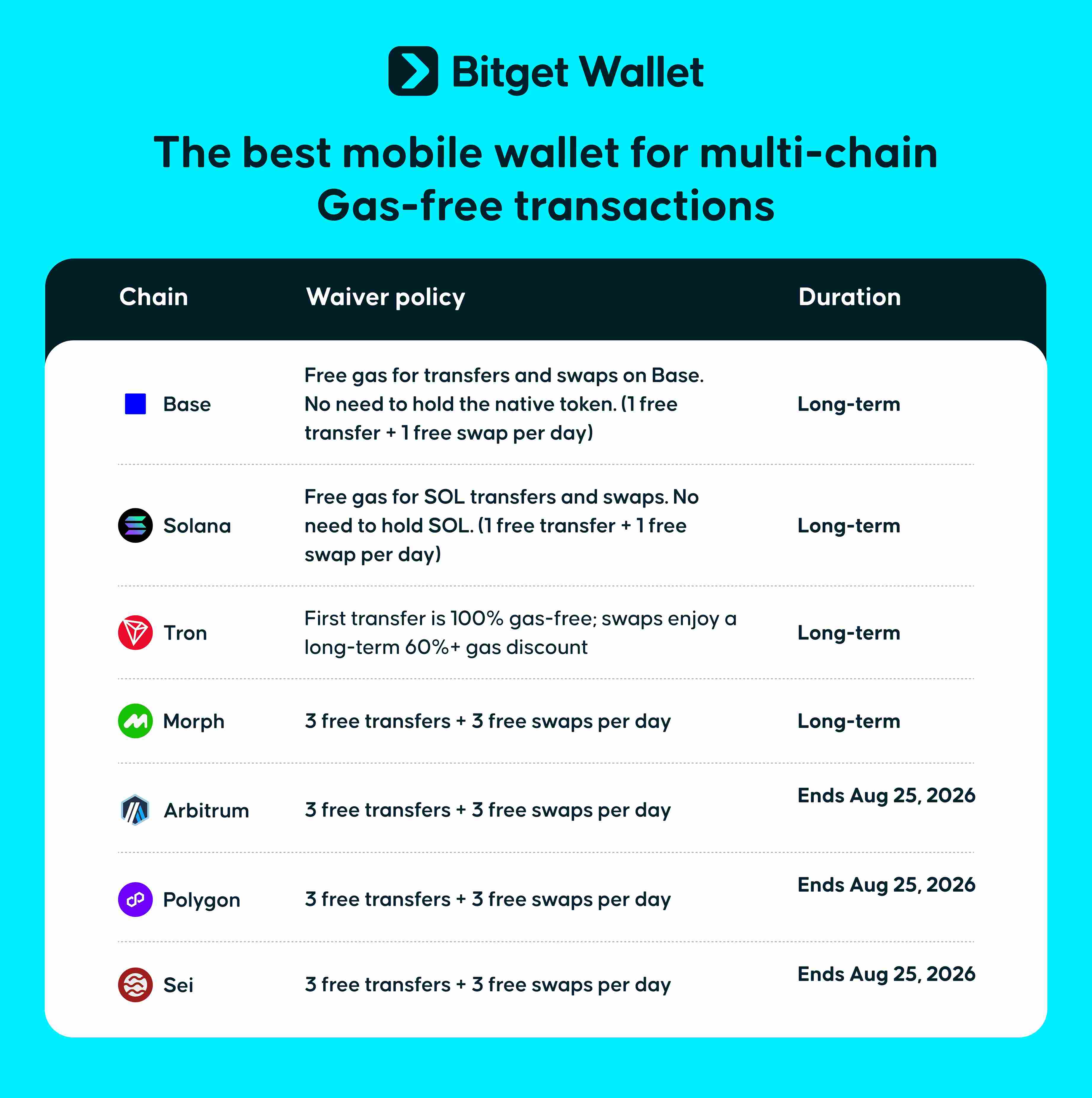
✅ Multi-chain access with cost-efficient execution Bitget Wallet supports 130+ blockchains, including 7 major networks such as Solana, Base, Arbitrum, Polygon, Tron, and more. This allows users to buy, hold, and manage BERA across different ecosystems without being locked into a single chain environment.
On supported networks, users can also benefit from gas-free transactions or long-term gas discounts, helping reduce execution costs when swapping, transferring, or managing assets across chains—an advantage for users who trade frequently or operate across multiple ecosystems.
✅ Flexible post-purchase asset management After buying BERA, users can hold, transfer, or manage assets freely across supported chains without withdrawal limits or third-party restrictions, making it easier to adapt to changing liquidity or market conditions.
Sign up Bitget Wallet now - grab your $2 bonus!
Binance Launchpool BERA/PUFFER Opening Trading Strategy
The Binance Launchpool BERA/PUFFER strategy revolves around understanding farming cost vs listing price, early liquidity imbalance, and trader behavior in the first 24 hours. Most price movements during this phase are not fundamentals-driven, but instead shaped by profit-taking, order book depth, and short-term market sentiment.
Break-even lines
Understanding break-even levels is critical because it defines when Launchpool participants shift from holding to selling. This threshold often determines the first wave of market pressure after listing.
- Launchpool participants typically calculate break-even = total farming yield value vs spot listing price of BERA
- If the listing price is above the implied farming cost, participants enter a profit zone, often triggering early sell pressure
- If the price drops below farming-equivalent value, selling slows while opportunistic buyers may create short-term support
Day 1 order price ranges (historical pattern)
Day-one price behavior typically follows a repeatable pattern driven by liquidity imbalance and aggressive early trading. These ranges help traders avoid chasing unsustainable spikes.
- Initial spike range: typically 2x–4x of implied farming valuation during early trading
- Correction zone: often 30% to -55% after the first wave of profit-taking
- Stabilization phase: begins once liquidity deepens and arbitrage balances price across markets
Historical Launchpool opening behavior
Looking at previous Launchpool listings provides context for how BERA may behave during its initial trading window. These patterns are driven more by participant behavior than project fundamentals.
- High volatility within the first 6–24 hours, driven by supply unlock vs demand imbalance
- Early sellers dominate price discovery, especially farmers and pre-market holders
- A second trading wave often follows, led by retail and on-chain traders entering after the initial correction phase
How to Buy BERA on Binance Launchpool
Participating in Binance Launchpool allows users to earn BERA before it officially trades, making it one of the earliest access methods. Instead of directly buying BERA, users allocate assets to farming pools and receive token rewards over time.
- Create a Binance account and complete any required verification
- Deposit supported assets (typically BNB or stablecoins, depending on the active pool)
- Navigate to Launchpool → BERA/PUFFER pool
- Stake your assets to start farming BERA rewards
- Claim BERA periodically or after distribution ends
- Trade BERA once spot trading opens on Binance
Key note: This method does not involve direct purchase, but earning through staking, meaning your effective entry price depends on farming yield vs market listing price.
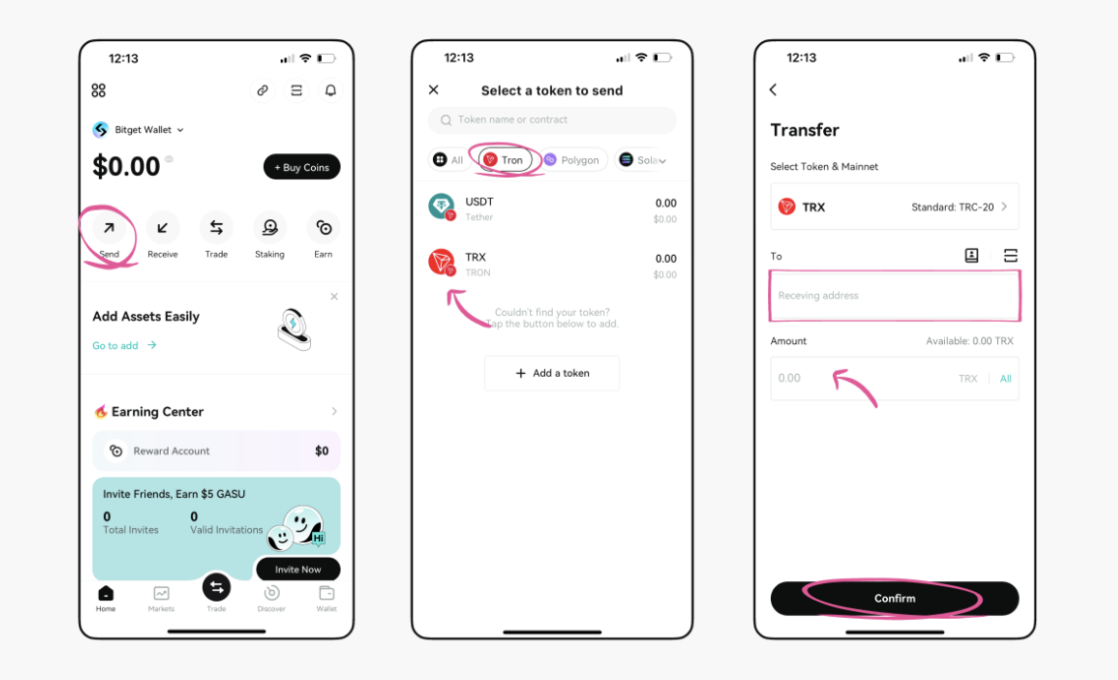
How to Buy BERA on Bitget Wallet (BGW)
Trading Berachain (BERA) is easy on Bitget Wallet. Follow these simple steps to get started:
Step 1: Create an Account
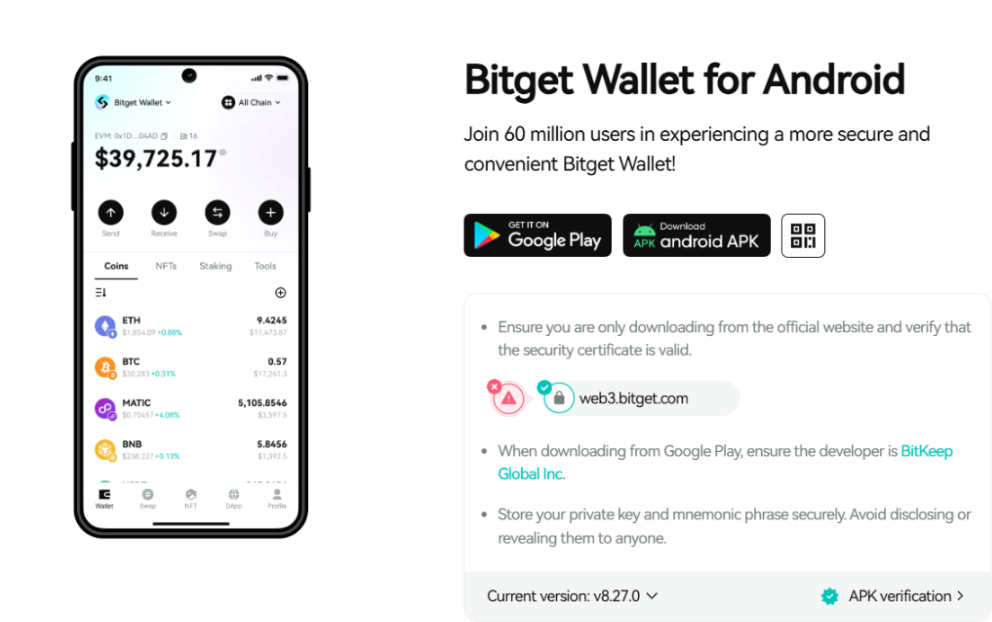
If you don't have an account, download the Bitget Wallet app. Sign up by providing the necessary information and verifying your identity.
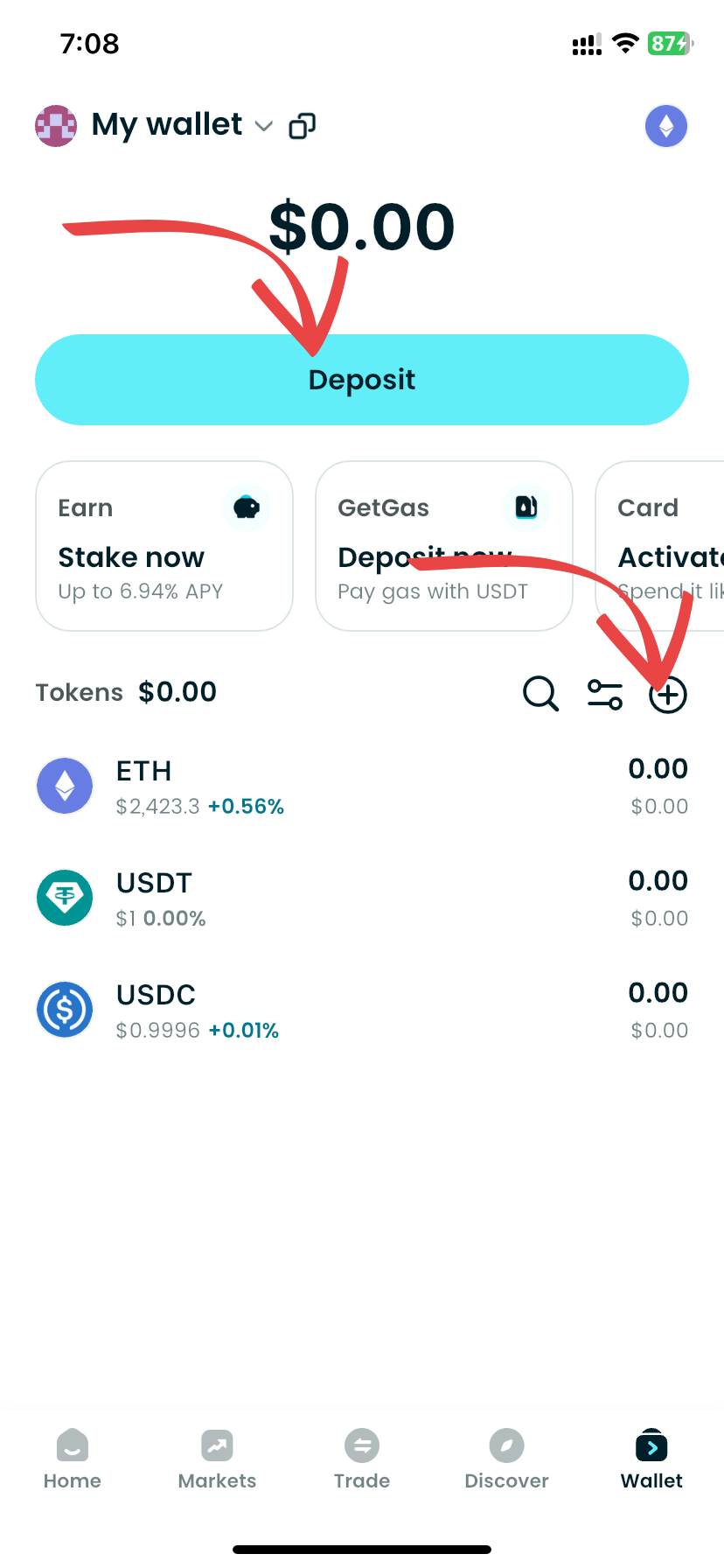
Step 2: Deposit Funds
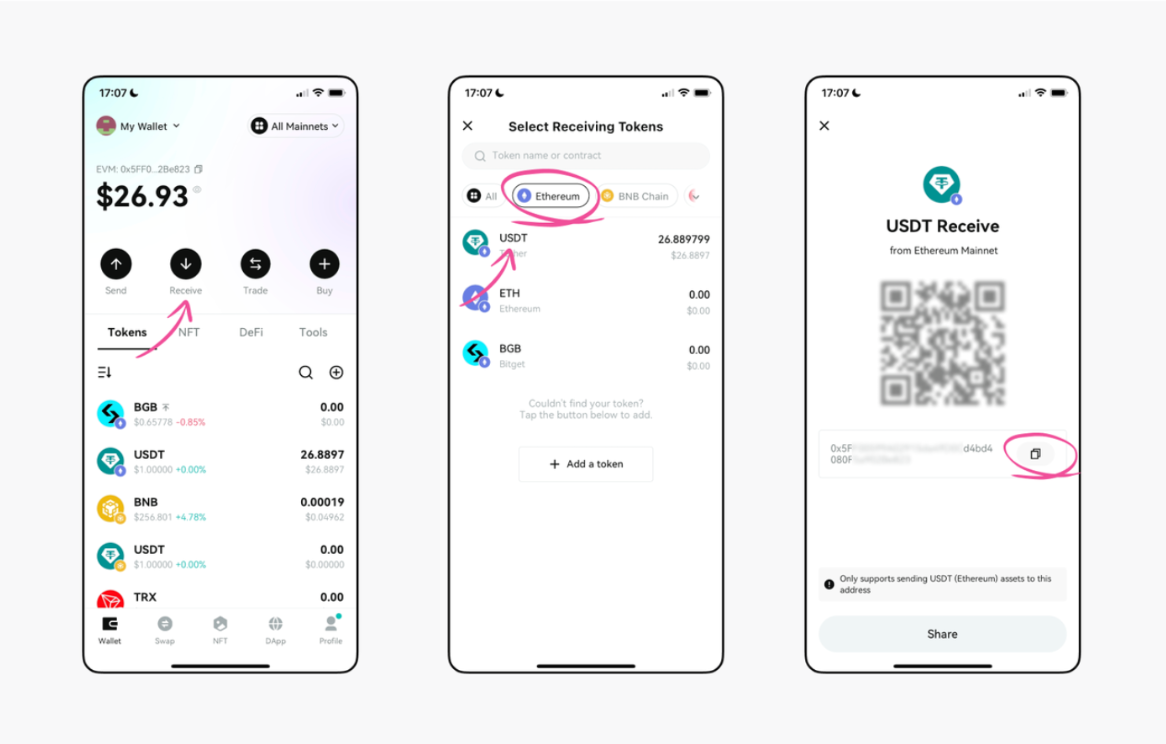
Once your account is set up, you need to deposit funds. You can do this by:
- Transferring Cryptocurrency: Send crypto from another wallet.
- Buying Crypto: Use a credit or debit card to purchase crypto directly on Bitget Wallet, ensuring you have enough funds for trading Berachain (BERA).
Step 3: Find Berachain (BERA)
In the Bitget Wallet interface, navigate to the market section. Use the search bar to find Berachain (BERA). Click on the token to view its trading page.
Since this token has not been listed yet, please refer to the final contract address provided by the project team after the token is officially listed.
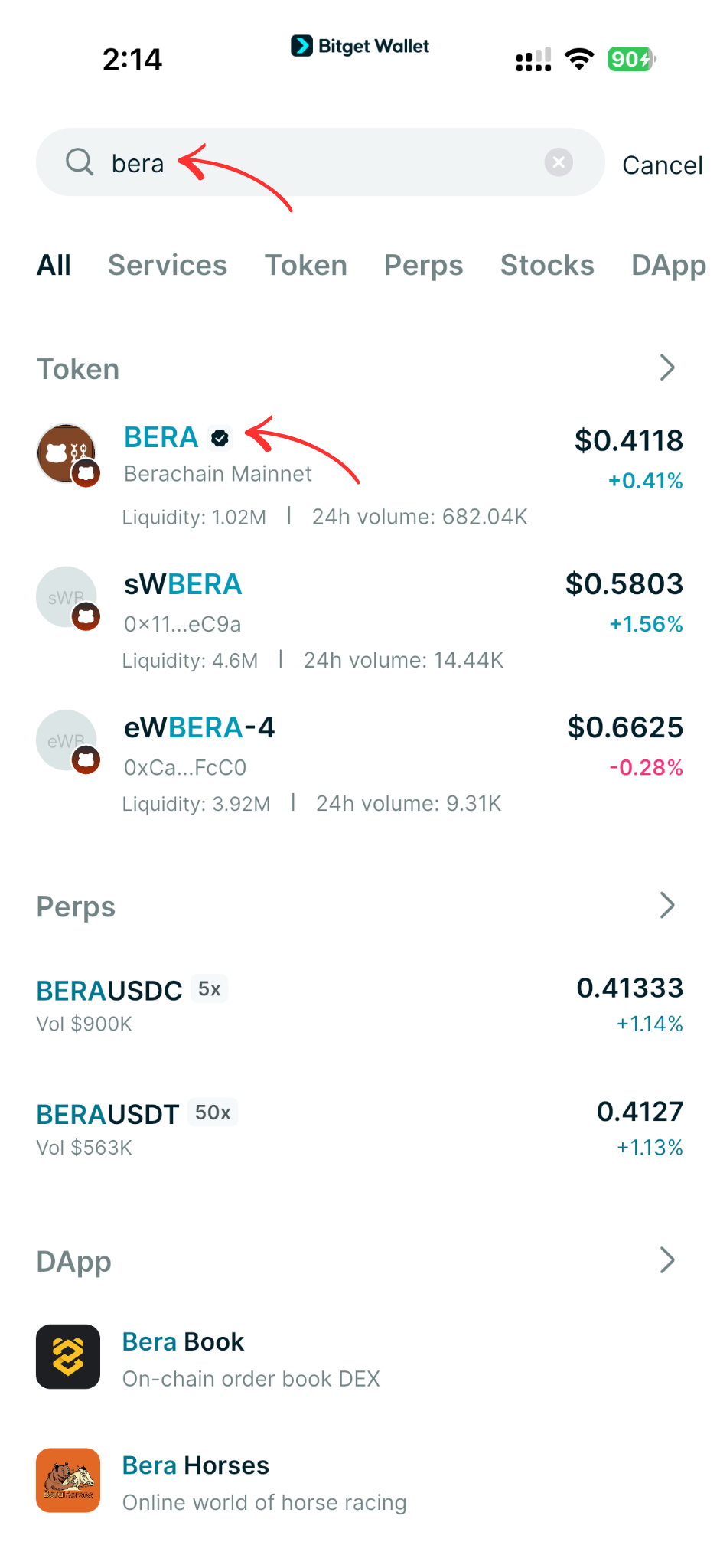
Step 4: Choose Your Trading Pair
Select the trading pair you wish to use, such as BERA/USDT. This will allow you to trade Berachain (BERA) against USDT or another cryptocurrency.
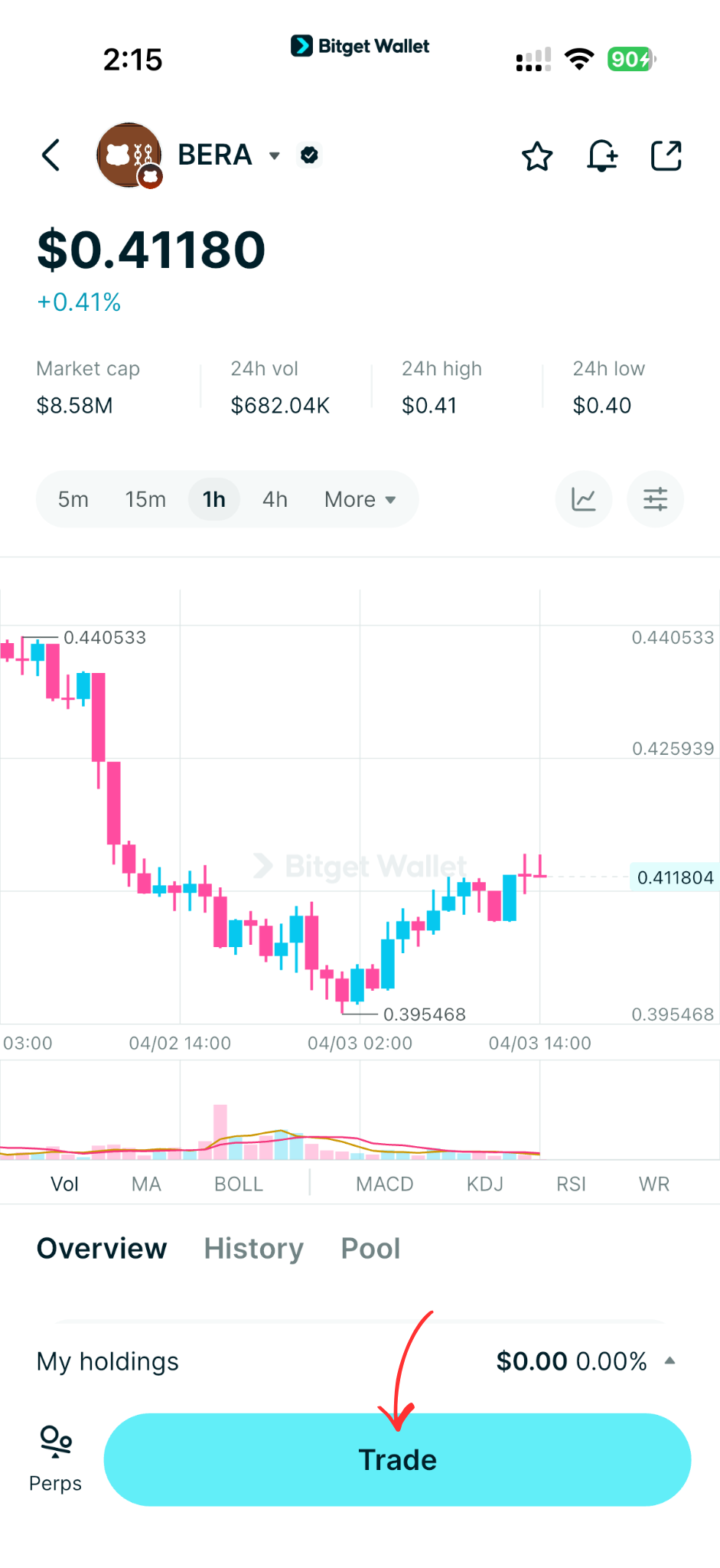
Step 5: Place Your Order
Decide whether you want to place a market order (buy/sell at the current market price) or a limit order (set your own price). Enter the amount of Berachain (BERA) you wish to buy or sell, then confirm your order.
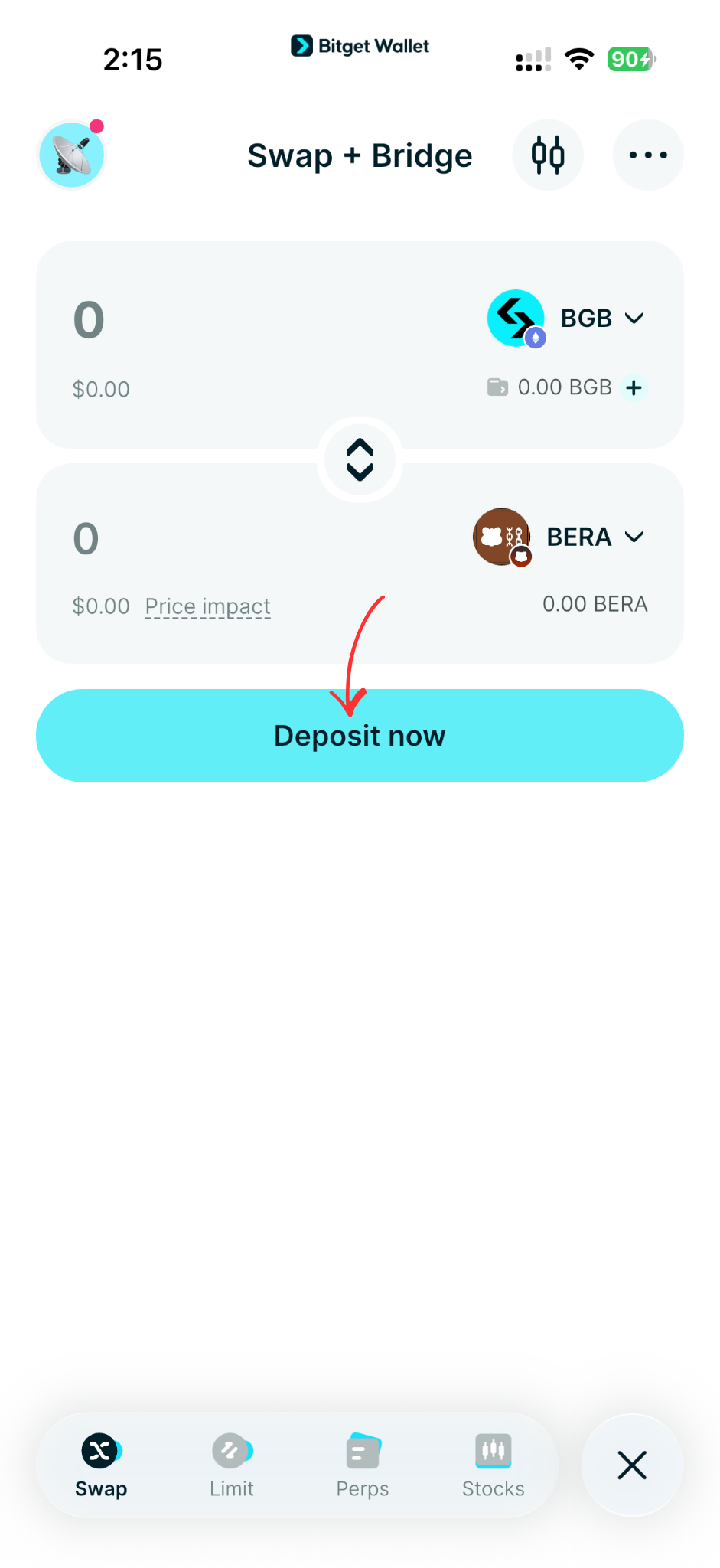
Step 6: Monitor Your Trade
After placing your order, you can monitor its status in the “Open Orders” section. Once the order is executed, you can check your balance to see your newly acquired Berachain (BERA).
Step 7: Withdraw Your Funds (Optional)
If you wish to transfer your Berachain (BERA) or any other cryptocurrency to another wallet, navigate to the withdrawal section, enter your wallet address, and confirm the transaction.
What Should You Know About BERA Price Volatility?
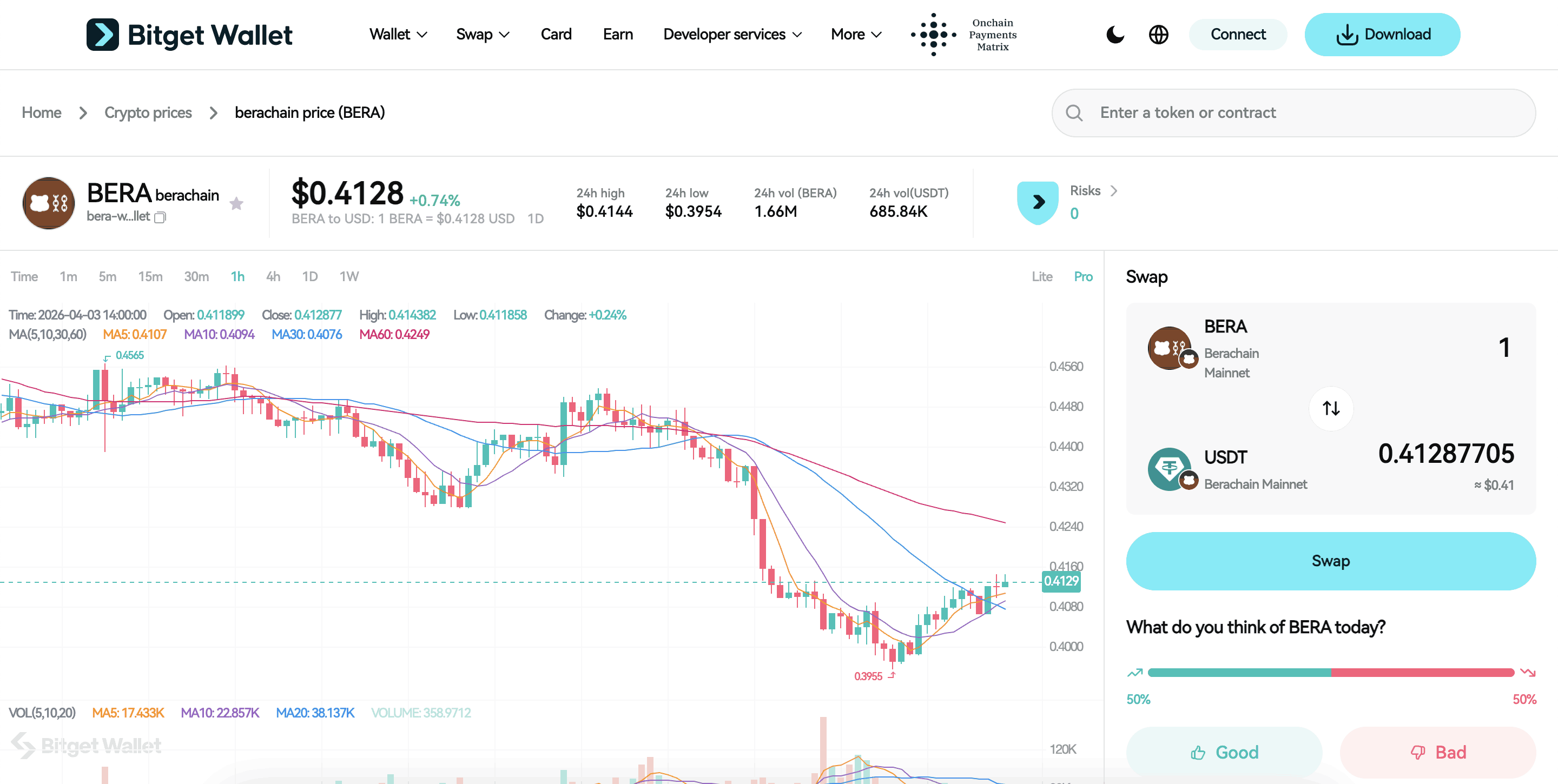
BERA is an early-stage ecosystem and liquidity-driven token, meaning its price volatility is primarily influenced by Launchpool distribution dynamics and exchange liquidity conditions. In the early phases, price movements are shaped more by market participation, trader behavior, and capital flows rather than established fundamentals.
BERA experiences sharp price fluctuations because a significant portion of its supply enters the market through farming rewards and early distribution, often leading to immediate selling pressure once trading begins. At the same time, shallow liquidity and rapid changes in order flow can amplify price swings, making volatility a function of sentiment, attention, and liquidity shifts rather than intrinsic value.
BERA Price Prediction: How High Can Berachain Go?
BERA’s price is influenced by market liquidity, ecosystem participation, and validator activity within Berachain’s Proof-of-Liquidity (PoL) model, rather than purely speculative narratives. As the native gas and security token, BERA derives value from both network usage (transactions, DeFi activity) and staking demand from validators, while still being exposed to short-term trading dynamics and exchange liquidity.
What Affects Berachain (BERA) Price?
Several factors influence the potential price trajectory of Berachain (BERA):
- Investor Sentiment: Early price movement is heavily shaped by Launchpool participants, exchange traders, and short-term capital rotation, especially during initial listing phases where supply enters the market quickly.
- Adoption & Demand: Demand depends on how effectively Berachain’s Proof-of-Liquidity system drives DeFi activity and liquidity participation, since users earn rewards by actively supplying capital rather than passively holding tokens.
- Regulatory Influence: Like most crypto assets, BERA’s accessibility and trading volume are affected by exchange policies, jurisdictional restrictions, and broader regulatory conditions impacting crypto markets.
Future Price Prospects
In the near term, BERA behaves as a liquidity-driven asset, where price is shaped by trading activity, ecosystem traction, and distribution dynamics rather than stable valuation benchmarks. Its long-term positioning depends on whether Berachain can sustain active liquidity, validator participation, and DeFi ecosystem growth, which are core to its PoL design.
However, because the model is still relatively new and the ecosystem is evolving, BERA remains sensitive to market cycles, liquidity shifts, and user participation levels, meaning price stability is not guaranteed and should be approached with caution.
Source: Bitget Wallet
Is BERA Crypto Safe to Invest In?
BERA is not “safe” or “unsafe” by itself—safety depends on how users execute trades, manage risk, and verify information. As an early-stage ecosystem token with active trading and evolving liquidity, the main risks come from user behavior, market conditions, and execution quality, not just the asset itself.
Key risks to consider when buying BERA:
- Fake tokens and impersonation: During early hype cycles, fake BERA tokens or incorrect contract listings may appear, especially on DEX interfaces or unofficial links.
- Liquidity and slippage risk: Early-stage trading environments can have uneven liquidity, leading to large price impact and poor execution if orders are not carefully sized.
- High volatility exposure: BERA’s price can move rapidly due to Launchpool distribution, profit-taking, and sentiment shifts, increasing the risk of entering at unstable price levels.
- Overexposure to a single asset: Allocating too much capital to a newly launched token increases downside risk if market conditions change quickly.
No speculative crypto asset, including BERA, is risk-free. A safer approach comes from verifying sources, controlling position size, and prioritizing secure execution, rather than relying on the token’s perceived potential alone.
How to Approach BERA Volatility With a Smarter Strategy?
When trading BERA, discipline matters more than timing, especially in early-stage markets where price moves are unpredictable. A structured approach focused on risk control, execution quality, and gradual exposure helps reduce avoidable losses while building practical on-chain experience over time.
Instead of trying to catch short-term price movements, users should focus on controlled participation and consistent decision-making, particularly during periods of high volatility. This shifts the goal from chasing gains to managing risk and understanding how liquidity and market behavior evolve.
- Observe on-chain liquidity behavior: Monitor trading volume, pool depth, and order flow to understand how price reacts to buying and selling pressure
- Use small position sizes: Limit exposure per trade to reduce the impact of sudden price swings
- Set clear capital limits: Define how much capital you are willing to allocate before entering the market
- Prioritize secure execution: Always verify token details, avoid unofficial links, and use trusted platforms
Over time, this approach helps users develop transferable on-chain skills, including risk assessment, liquidity analysis, and execution discipline—skills that remain valuable across different tokens and market conditions.
Which Crypto Wallet Is the Best Choice to Buy BERA: Bitget Wallet
Users searching best wallet to buy BERA usually care about three things: security, liquidity access, and execution reliability. For a token like BERA, that question often points toward a non-custodial wallet because many traders want direct control over assets and direct access to on-chain swap routes.
That practical distinction matters. Custodial platforms can be simpler, but non-custodial wallets are often better aligned with users who want to buy BERA on-chain, verify the real token themselves, and move assets without relying on exchange withdrawal windows.
Why Many Traders Choose Bitget Wallet to Buy BERA?
Bitget Wallet can be a suitable option for buying Berachain (BERA) because it combines self-custody, on-chain swap access, and multi-chain compatibility in one interface. Users keep control of private keys and can interact with decentralized liquidity directly instead of depending entirely on a centralized platform.
| Self-custody | • Users keep full control of private keys and assets • Reduces custodial risk compared with centralized platforms |
| On-chain swap access | • Ability to interact with decentralized liquidity pools • Many new tokens appear on DEX before exchange listings |
| Multi-chain compatibility | • Bitget Wallet supports 130+ blockchains • Allows users to access liquidity across ecosystems |
| Trading interface | • Built-in token discovery and swap tools • Simplifies execution for beginners |
On-chain wallets often provide the earliest access to tokens like BERA, especially when liquidity forms before or outside centralized exchange listings. Integrated swap functionality also improves execution efficiency by allowing users to discover, verify, and trade tokens within a single interface, reducing friction and common user errors.
Sign up Bitget Wallet now - grab your $2 bonus!
FAQs
1. How to buy BERA safely as a beginner?
To buy BERA safely, always verify the official token source and avoid interacting with unknown or unofficial links. Start with small amounts and use trusted platforms to reduce execution and security risks.
2. Where can I buy BERA?
You can buy BERA through Binance Launchpool, centralized exchanges, or on-chain swaps depending on where liquidity is available. The best method depends on whether you prefer convenience (CEX) or self-custody (on-chain wallet).
3. Do I need KYC to buy BERA?
Whether KYC is required depends on the purchase method. Centralized exchanges (CEXs) typically require KYC, as users trade through custodial accounts managed by the platform.
In contrast, buying BERA through on-chain swaps using a non-custodial wallet like Bitget Wallet does not require KYC. Users interact directly with decentralized liquidity from their own wallet, without submitting identity information. However, this also means users are fully responsible for security, contract verification, and transaction execution.
4. Is BERA crypto high risk?
Yes, BERA is considered high risk because it is an early-stage token with price movements driven by liquidity and market sentiment. Its volatility can lead to rapid gains or losses, especially during initial trading phases.
5. What is the best strategy for trading BERA after Launchpool?
A disciplined approach is key—avoid chasing early price spikes and focus on liquidity conditions and entry timing. Monitoring break-even levels and using controlled position sizes can help reduce avoidable losses.
Risk Disclosure
Please be aware that cryptocurrency trading involves high market risk. Bitget Wallet is not responsible for any trading losses incurred. Always perform your own research and trade responsibly.

 What Is a Crypto Wallet Address? Examples and How to Find It2026-08-12 | 3 mins
- What Is a Cold Wallet? A Beginner's Guide to Offline Crypto Storage2026-09-25 | 3 mins
- Fintech Wallets vs. Crypto Wallets: What’s the Difference? (2026 Guide)2026-07-24 | 5 mins



