How to Use QR Payments in Vietnam with Bitget Wallet?
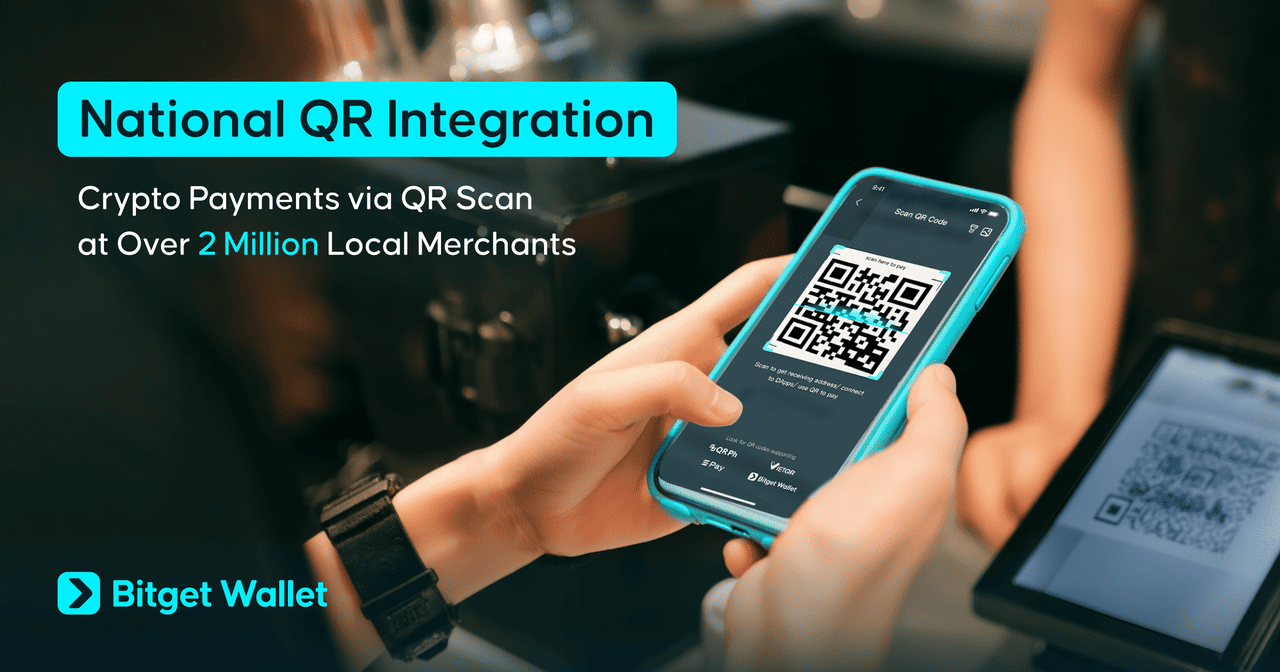
How to Use QR Payments in Vietnam starts with understanding that Bitget Wallet lets users scan supported VietQR codes, pay with USDT or USDC from their wallet, and complete a familiar payment flow while merchants receive Vietnamese Dong through the existing payment system. The experience feels similar to local scan-and-pay apps, but the backend connects blockchain transactions, stablecoins, and settlement infrastructure.
QR payments are already part of everyday life in Vietnam, from coffee shops and taxis to pharmacies and supermarkets. As more users look for simple ways to spend digital assets in the real world, Bitget Wallet helps connect crypto with daily payments in a more practical way.
In this article, we’ll explain how QR payments work in Vietnam, how to use them with Bitget Wallet, and what to watch before you pay.
Key Takeaways
- How to Use QR Payments in Vietnam is simple: fund Bitget Wallet, scan VietQR, confirm the amount, and pay with stablecoins.
- VietQR makes QR payments in Vietnam fast, familiar, and widely accepted across daily spending scenarios.
- Bitget Wallet connects self-custodied digital assets with real-world payments through a smooth scan-and-pay experience.
Overview of QR Payments in Vietnam
How to Use QR payments in Vietnam are built around VietQR, a unified national QR standard used across banks and payment apps. This makes Vietnam one of the most practical markets for wallet-based QR payment experiences because users already understand the scan, confirm, and pay flow.
Core logic:
- Users scan QR: The customer scans a supported VietQR code with a wallet payment feature.
- Merchants receive VND: The merchant receives local currency through the existing payment flow.
- Bridge between Web2 and Web3 payments: The interface feels like local QR banking, while the backend uses digital assets and blockchain-based processing.
How does it works?
How to Use QR Payments in Vietnam work through a simple user flow that feels familiar on the surface while using hybrid payment infrastructure in the background.
- Step 1: Merchant displays a VietQR code A merchant shows a VietQR code linked to their payment details.
- Step 2: User scans using a supported wallet The customer opens the scan feature in a supported wallet and scans the code.
- Step 3: User confirms the payment amount The user checks the amount shown on the payment screen before proceeding.
- Step 4: Digital assets are used in the payment flow Stablecoins from the wallet are used as part of the transaction process.
- Step 5: Merchant receives local currency via settlement The merchant receives VND through the payment settlement flow.
The experience feels like QR banking, but the backend integrates digital assets and hybrid on-chain/off-chain processing, showing how How to Use QR Payments in Vietnam connects traditional payments with Web3 infrastructure.
Where Can Use QR Payments in Vietnam?
That question hits different once you realize just how baked into daily life QR payments really are here. We’re talking restaurants, cafés, supermarkets, taxis, even the tiny street vendors—everyone’s on it. Thanks to the national VietQR standard, you can scan and pay pretty much anywhere in seconds. It’s easily one of the most dominant, no-fuss ways to pay, whether you're in a big city or a rural market.
And here’s where How to Use QR Payments in Vietnam gets even more interesting looking ahead. On December 31, 2025, Đà Nẵng officially greenlit a controlled sandbox to test USDT ↔ VND conversion using a non-custodial model, running from December 2025 through December 2028. Toss in Vietnam’s new digital asset legal framework, which kicks in on January 1, 2026, and you can see the direction things are headed: crypto starting to plug into real-world payments. As these experiments scale, QR payments could soon let you spend crypto seamlessly—even across borders—while merchants still get paid in VND without changing a thing on their end.
How to Use QR Payments in Vietnam with Bitget Wallet?
How to Use QR Payments in Vietnam with Bitget Wallet is simple once your wallet is funded and ready. The process is designed to feel familiar: scan, confirm, and pay in just a few steps. Before starting, make sure your wallet is ready, your USDT or USDC balance is available, and you also hold enough native coins for gas fees.
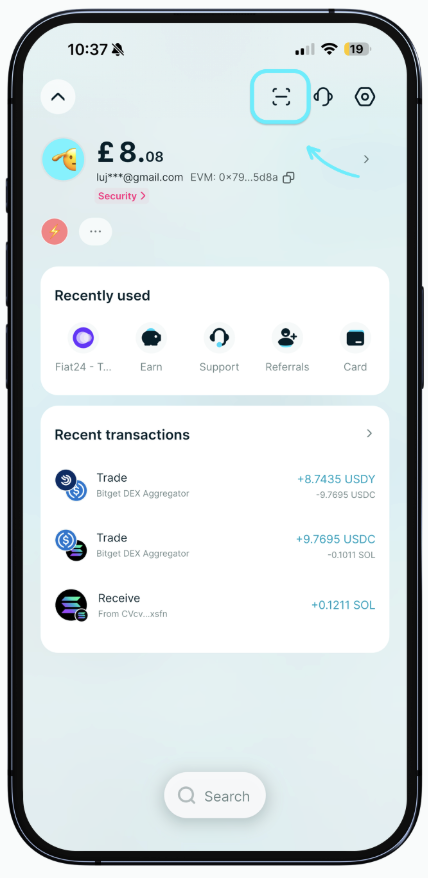
Step 1: Open the scan feature
- Go to Home: open Bitget Wallet and enter the main home screen.
- Tap profile or avatar: select your profile icon to access wallet tools and features.
- Select Scan: tap the scan function to begin the QR payment process.
This is where the QR payment flow begins.
Step 2: Prepare your wallet balance
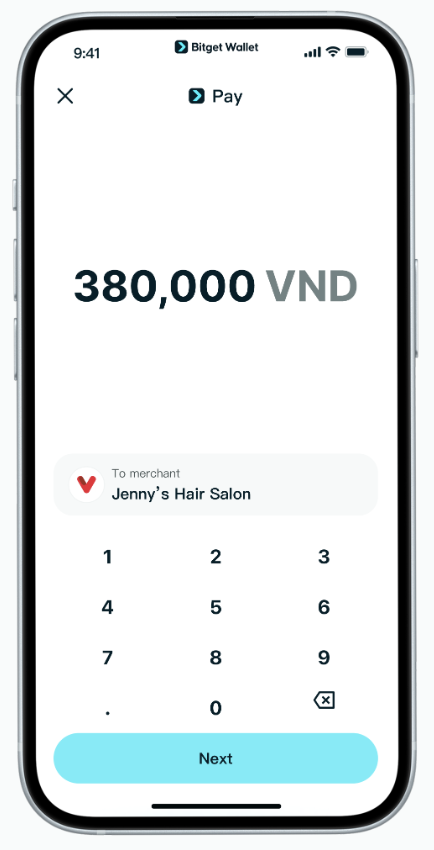
Deposit USDT or USDC into your wallet before paying so the transaction can be completed without interruption.
- Base: fund your wallet with supported stablecoins on the Base network.
- BNB Chain: deposit USDT or USDC on BNB Chain if that is your preferred payment network.
- Ethereum: make sure your Ethereum-based stablecoin balance is available.
- Solana: prepare supported stablecoins on Solana for lower-friction payments.
- Tron: deposit USDT or USDC on Tron if you plan to use that network.
Your funds will be deducted from your stablecoin balance, and automatic conversion happens during payment.
Step 3: Add native coins for gas fees
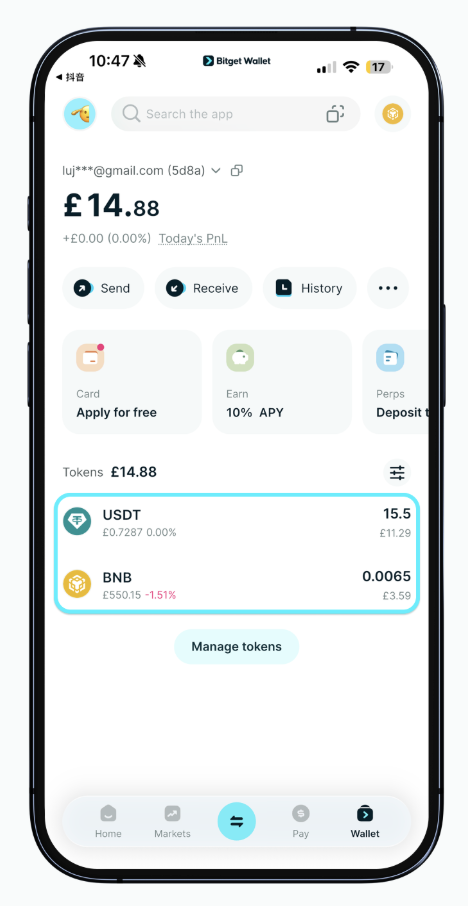
You also need native coins to cover network gas fees because QR payments in Vietnam are processed through blockchain-related transaction flows. For example, if you spend USDT on BNB Chain, you need some BNB in the same wallet to pay the gas fee.
BNB Chain and Solana usually offer lower fees, so they may be more practical for frequent small payments.
Step 4: Scan the VietQR code and enter payment details
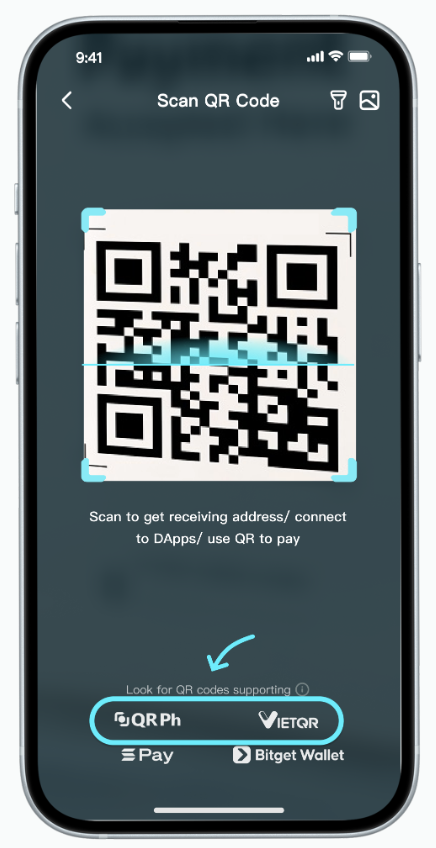
- Scan merchant QR code: point your Bitget Wallet scanner at the VietQR code shown by the merchant.
- Verify amount: check that the payment amount is correct before continuing.
- Check token used: confirm which stablecoin and network are selected for the payment.
The system may auto-select the token with the highest available balance, but users can switch tokens manually before confirming.
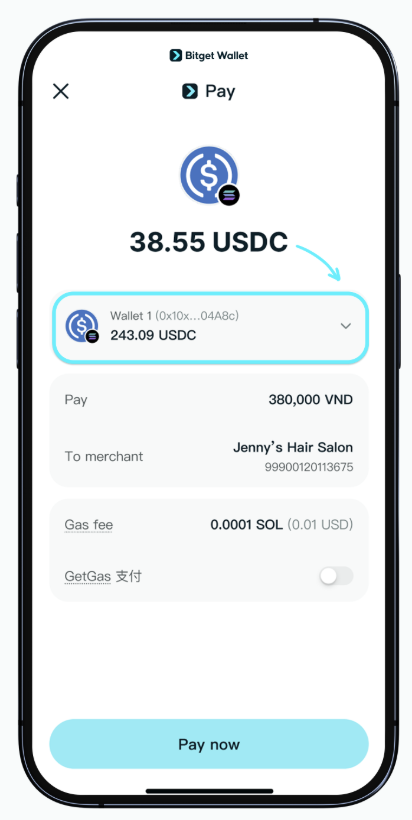
Step 5: Confirm and complete the payment
- Amount: review the payment amount shown on the confirmation page.
- Token: verify that the correct token is selected.
- Gas fee: check the network fee before proceeding.
- Tap Confirm: approve the transaction to complete the payment.
The merchant usually receives funds within seconds.
Step 6: Check your payment history
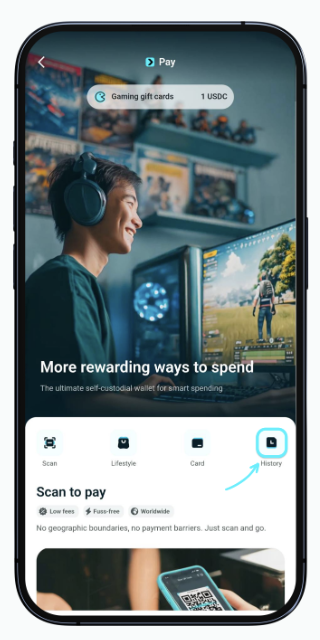
Go to Pay → History to track transactions and verify whether your QR payment was completed successfully.
These simple steps show How to Use QR Payments in Vietnam in a way that feels as easy as using a local payment app, while still letting users spend digital assets directly from Bitget Wallet.
What to do Before Use QR Payments in Vietnam?
Before you use QR payments in Vietnam, understanding How to Use QR Payments in Vietnam correctly means knowing key factors like token support, gas fees, transaction limits, and refunds. These elements help you avoid errors, reduce friction, and improve payment efficiency when using Bitget Wallet.
- Supported assets and networks: USDT and USDC are supported, with payment support across Base, BNB Chain, Ethereum, Solana, and Tron.
- Gas fee considerations: Ethereum and Tron may have higher fees, so always check any high-gas warning before confirming payment.
- Lower-fee networks: BNB Chain and Solana are often more cost-efficient for smaller everyday payments.
- Transaction limits: Payments are typically limited to 500 USD per transaction, 1,500 USD per day, and 10,000 USD per month in Vietnam.
- Payment speed: Most QR payments are completed within seconds, but if a delay happens, users should contact support.
- Refund policy: If a payment fails because of a merchant issue or QR-related error, the deducted amount is typically refunded within 24 hours.
- Practical reminder: Always double-check the amount, token, network, and gas fee before confirming any transaction when applying How to Use QR Payments in Vietnam in real-world situations.
Bitget Wallet: The Best Place to Use QR Payments in Vietnam
How to Use QR Payments in Vietnam becomes more practical with Bitget Wallet because it combines self-custody, stablecoin usability, and a familiar payment experience in one simple flow. In a market where QR-based payments are already part of daily life, Bitget Wallet helps users turn digital assets into a real spending tool while keeping the process easy, familiar, and efficient for everyday payments.
How does Bitget Wallet make QR payments more practical for everyday use?
As QR payments become part of everyday life in Vietnam, users need a wallet that makes spending digital assets feel just as smooth and intuitive. Bitget Wallet helps close that gap by turning stablecoins into a more practical payment tool for real-world use.
- Self-custody: Users keep control of their assets instead of handing them over to a third party.
- Stablecoin utility: USDT and USDC become usable for real payment scenarios, not just holding or trading.
- Familiar UX: The payment process feels close to local QR apps, which lowers the learning curve.
- Web3 integration: Bitget Wallet bridges crypto assets with daily spending and practical payment behavior.
With Bitget Wallet, QR payments feel less like a crypto experiment and more like a natural part of everyday spending!
Conclusion
How to Use QR Payments in Vietnam with Bitget Wallet is a simple process once your wallet is properly prepared. You’ll need some stablecoins like USDT or USDC, a little bit of native crypto for gas fees, and a VietQR-compatible payment flow. Once you’ve got that covered, it’s pretty smooth: just scan the QR, double-check the amount, confirm the transaction, and you’re done. That’s it. Suddenly your digital assets aren’t just sitting there collecting dust or waiting for the next trade—they’re actually useful for buying stuff in real life.
Vietnam’s already one of the best places for QR payments because people use them every single day without thinking twice. So if you’re looking for a practical way to bridge crypto and everyday spending, Bitget Wallet fits right in.
Go ahead and download Bitget Wallet—it’s the easiest way to start using crypto for daily QR payments in Vietnam.
Sign up Bitget Wallet now - grab your $2 bonus!
FAQs
1. How to Use QR Payments in Vietnam with Bitget Wallet?
Open Scan, fund your wallet with USDT or USDC, keep gas ready, scan the VietQR code, review details, and confirm payment.
2. Can I use USDT or USDC for QR payments in Vietnam?
Yes. You can use supported USDT or USDC balances on available networks to complete QR payments in Vietnam.
3. Do I need gas fees to use QR payments in Vietnam?
Yes. QR payments in Vietnam still need gas fees because the payment flow uses blockchain-based transaction processing.
4. How long do QR payments in Vietnam take?
Most QR payments in Vietnam are completed within seconds if the network and payment details are correct.
5. What happens if a QR payment fails?
If the transaction fails because of a merchant or QR issue, the deducted amount is usually refunded within 24 hours.
Risk Disclosure
Please be aware that cryptocurrency trading involves high market risk. Bitget Wallet is not responsible for any trading losses incurred. Always perform your own research and trade responsibly.
 How to Use QR Payments in the Philippines with Bitget Wallet?2026-04-07 | 5 mins