How to Use QR Payments in the Philippines with Bitget Wallet?

QR payments in the Philippines have become one of the fastest-growing ways to transact, driven by the nationwide rollout of QR Ph and the rise of mobile wallets. From small vendors to major retailers, users can now pay instantly by simply scanning a code—making cashless payments more accessible than ever.
As digital payments continue to expand, tools like Bitget Wallet are starting to bridge traditional QR systems with crypto, giving users more flexibility in how they manage and spend their assets. In this guide, you’ll learn how QR payments in the Philippines work, where they’re used, and how to use them efficiently with Bitget Wallet.
If you’re looking to combine everyday QR payments with crypto flexibility, Bitget Wallet offers a simple way to get started while keeping full control of your assets.
Key Takeaways
- QR payments in the Philippines are powered by QR Ph, a national standard led by Bangko Sentral ng Pilipinas
- Widely used across banks and e-wallets like GCash and Maya
- Enables instant, interoperable payments for retail, bills, and transfers
- Growing adoption in transport, merchants, and small businesses nationwide
- Bitget Wallet expands QR use by enabling crypto-to-payment flexibility
What is QR Payments in the Philippines?
QR payments in the Philippines are a standardized digital payment method that lets users scan QR codes to send or receive money instantly. It is built on QR Ph, launched by the Bangko Sentral ng Pilipinas to unify fragmented payment systems.
This system enables interoperability across banks and e-wallets, allowing users to pay merchants, transfer funds, and settle bills using one QR format. It is part of the country’s push to make at least 50% of payments digital.
Today, QR payments are widely used nationwide, especially through apps like GCash and Maya, due to their speed, simplicity, and cashless convenience.
How QR Payments Work?
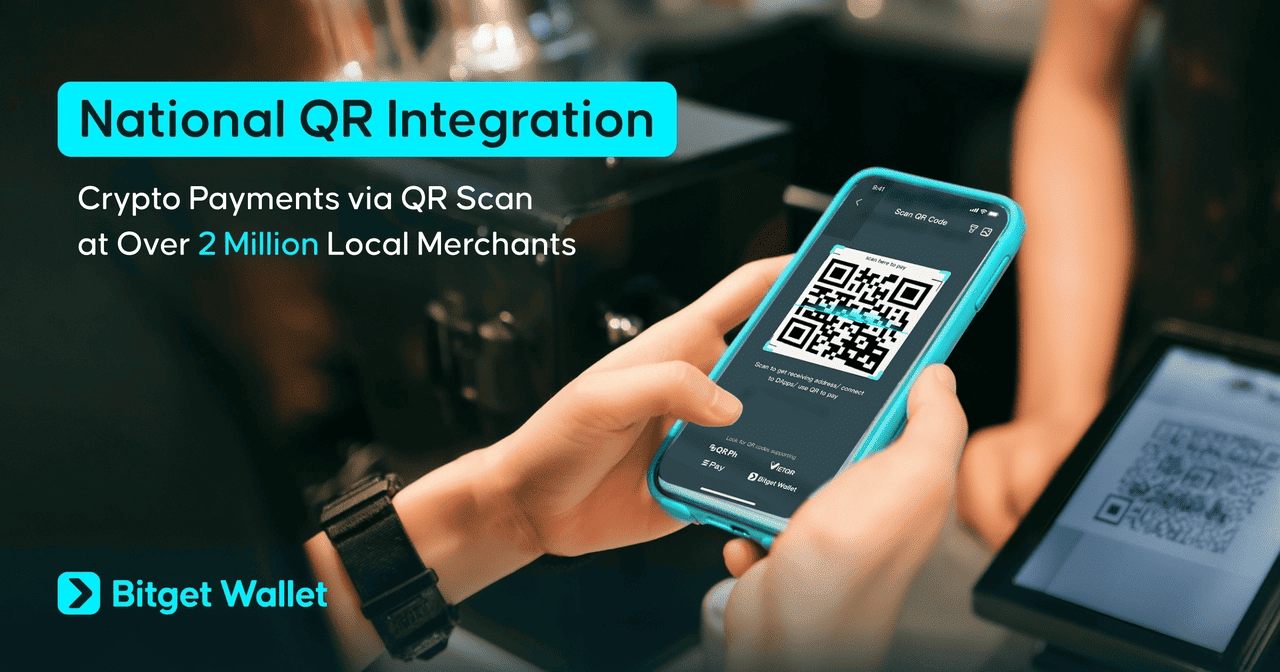
QR payments in the Philippines work by encoding payment details into a scannable QR code.
When scanned, the app automatically fills in the recipient and transaction details. The user reviews and confirms the payment, and funds are transferred via InstaPay (real-time) or PESONet (batch).
This process reduces manual input, speeds up transactions, and improves accuracy.
1. QR Infrastructure
QR payments in the Philippines are built on the QR Ph national standard, launched in 2019 by Bangko Sentral ng Pilipinas in partnership with the Philippine Payments Management, Inc..
- QR Ph ensures interoperability across banks and e-wallets (no need for same provider)
- Supports both Person-to-Person (P2P) and Person-to-Merchant (P2M) transactions
- Connected to InstaPay (real-time) and PESONet (batch clearing) payment rails
- As of recent BSP reports, 50+ financial institutions are integrated into QR Ph
- Contributes to BSP’s target of 50% digital payments share nationwide
This infrastructure standardizes fragmented QR systems into a single national payment layer, improving scalability and adoption.
2. Payment Processing
QR payments rely on a structured backend involving financial institutions and clearing systems.
- User scans QR code via mobile app
- Payment request is routed through InstaPay (real-time <15 seconds) or PESONet (same-day batch)
- Sending bank/e-wallet verifies balance and authenticates user
- Receiving institution credits funds instantly (InstaPay) or within the same day (PESONet)
- Confirmation is displayed in real time via app notification
Key Data Points:
- InstaPay supports transactions up to ₱50,000 per transfer (varies by provider)
- Over 800 million InstaPay transactions annually (BSP data trend)
- Processing uptime typically exceeds 99% system availability
3. Payment Utility
QR payments support multiple transaction types, making them highly versatile in daily financial activity.
- Retail payments: supermarkets, convenience stores, SMEs
- P2P transfers: instant wallet-to-wallet payments
- Bill payments: utilities, telecom, government services
- E-commerce support: QR checkout options for online-to-offline flows
- Micro-transactions: widely used by street vendors and small merchants
Adoption Data:
- Digital payments accounted for ~42% of total retail payments (latest BSP estimate)
- QR usage surged post-2020 due to contactless demand and mobile wallet growth
- Platforms like GCash report tens of millions of active users, driving QR volume
Types of QR Payments in the Philippines
QR payments in the Philippines include several standardized transaction types under QR Ph, allowing users to pay merchants, send money, and settle bills using a single QR system. These payment types support both personal and commercial use cases across banks and e-wallets, making QR payments in the Philippines widely accessible and easy to use.
1. Merchant Payments (P2M)
Used for paying businesses such as stores, markets, and service providers. Customers scan a merchant QR code to complete transactions instantly at checkout.
2. P2P Payments (Person-to-Person)
Enables users to send money directly by scanning a personal QR code, removing the need to input account details.
3. Bill Payments
Used for utilities, telecom services, and government payments. QR codes are often included on invoices for faster and more accurate payment.
4. Retail Payments
Common in supermarkets, convenience stores, and malls where QR is integrated into POS systems for quick, contactless checkout.
5. Transport Payments
An emerging use case of QR payments in the Philippines, including ride-hailing, toll systems, parking, and selected public transport pilots.
QR Payment Types Overview (Quick Comparison)
| Type | Description | Example |
| Merchant QR (P2M) | Payments to businesses and merchants | Store checkout QR |
| Personal QR (P2P) | Transfers between individuals | GCash QR profile |
| Bill QR | QR-based invoice payments | Utility bill QR |
| Dynamic QR | Auto-generated per transaction with amount | POS QR code |
| Static QR | Fixed QR requiring manual input | Small vendor QR |
Types of QR payments in the Philippines include merchant payments, P2P transfers, bill payments, retail checkout, and transport payments—all powered by QR Ph for seamless, interoperable transactions.
What is the difference between QR payments and crypto payments?
QR payments and crypto payments both enable digital transactions, but they differ in how payments are processed, who controls the funds, and where they are used.
QR payments in the Philippines operate on fiat infrastructure, meaning transactions are processed through banks and e-wallets regulated by the Bangko Sentral ng Pilipinas. These systems are designed for fast, everyday payments within the local economy.
Crypto payments, in contrast, run on blockchain networks, where transactions are validated by decentralized nodes. This removes the need for intermediaries and allows users to control their own assets.
The main distinction is practical: QR payments prioritize speed, convenience, and local usability, while crypto payments prioritize ownership, flexibility, and global access.
QR Payments vs Crypto Payments Comparison
| Aspect | QR Payments (Philippines) | Crypto Payments |
| Infrastructure | Banks, e-wallets, QR Ph | Blockchain networks |
| Settlement | PHP (fiat) | BTC, ETH, USDT, etc. |
| Processing | InstaPay / PESONet | Network validation (on-chain) |
| Custody | Custodial (provider holds funds) | Self-custody possible |
| Regulation | Regulated by BSP | Varies by jurisdiction |
| Primary Use | Daily local transactions | Cross-border, DeFi, on-chain use |
Pros and Cons of QR Payments vs Crypto Payments
QR payments and crypto payments both enable digital transactions, but they differ in usability, infrastructure, and user control. QR payments prioritize convenience and local adoption, while crypto payments focus on decentralization and global accessibility. Below is a clear comparison of their advantages and limitations.
| Category | Pros | Cons |
| QR Payments | Fast and widely accepted across merchants in the Philippines | Requires bank or e-wallet account |
| Easy to use, beginner-friendly interface | Limited to local fiat currency (PHP) | |
| No blockchain or technical knowledge required | Custodial (funds controlled by provider) | |
| Crypto Payments | Borderless transactions with no geographic limits | Price volatility can affect value |
| Full self-custody and asset control | Requires technical understanding | |
| Access to DeFi, swaps, and on-chain services | Limited real-world merchant adoption |
What are the Common Use Cases of QR Payments in the Philippines?
QR payments in the Philippines are deeply embedded in everyday transactions, driven by the nationwide rollout of QR Ph by Bangko Sentral ng Pilipinas. With over 50+ participating banks and e-wallets and millions of users on platforms like GCash and Maya, QR payments are now a standard payment method across both formal and informal sectors.
They are especially dominant in low-to-mid value transactions, where speed, convenience, and mobile accessibility matter most. Adoption accelerated after 2020 due to contactless demand and continues to grow in both urban and provincial areas.
Below are the most common real-world use cases:
1. Retail
QR payments are widely used in retail environments ranging from large chains to small businesses.
- Major supermarkets, malls, and convenience stores support QR checkout
- SMEs and sari-sari stores use static QR codes for low-cost payment acceptance
- Eliminates the need for POS terminals, reducing merchant setup costs
- Typical use: groceries, clothing, electronics, daily essentials
Why it matters: QR enables even micro-merchants to accept digital payments without expensive infrastructure.
2. Food & Dining
Food-related transactions are one of the fastest-growing QR payment segments.
- Restaurants and fast-food chains integrate QR payments at checkout
- Cafes and milk tea shops use QR for quick service transactions
- Street food vendors increasingly adopt QR via printed codes
- Supports contactless ordering and payment flows
Example behavior: Instead of cash, users scan a QR code displayed on the counter and pay instantly via mobile wallet.
3. Transportation
QR payments are gradually expanding into mobility and transport systems.
- Ride-hailing apps like Grab support QR-linked wallet payments
- Tollways and parking facilities integrate QR-based payment options
- Selected public transport pilots (e.g., buses, jeepneys) are testing QR systems
- Used for ticketing, fare payments, and parking fees
Key trend: Transport QR adoption is still developing but is part of the Philippines’ push toward a cashless commute ecosystem.
Advantages and Risks of QR Payments in the Philippines
QR payments offer strong convenience and accessibility, but they also introduce operational and security trade-offs that users need to understand.
Advantages of QR Payments
- Instant settlement: Payments via InstaPay are processed in seconds (typically <15 seconds)
- High accessibility: Only requires a smartphone and internet connection
- Low barrier for merchants: No need for expensive POS hardware
- Interoperability: QR Ph allows payments across different banks and e-wallets
- Financial inclusion: Enables unbanked and small merchants to participate in digital finance
Risks of QR Payments
- QR code spoofing scams: Fraudsters may replace legitimate QR codes with malicious ones
- Custodial dependency: Funds are stored in centralized wallets (e.g., GCash/Maya), not user-controlled
- Internet reliance: Transactions fail without stable connectivity
- Limited dispute resolution: Refund processes depend on the provider and may be slow
- Data privacy exposure: Transaction metadata is handled by centralized platforms
QR payments in the Philippines are not just a convenience feature—they are part of a regulated national payment infrastructure. However, unlike crypto payments, they operate within a custodial, fiat-based system, which introduces trade-offs between ease-of-use and control.
Bitget Wallet: The Best Place to Use QR Payments in the Philippines
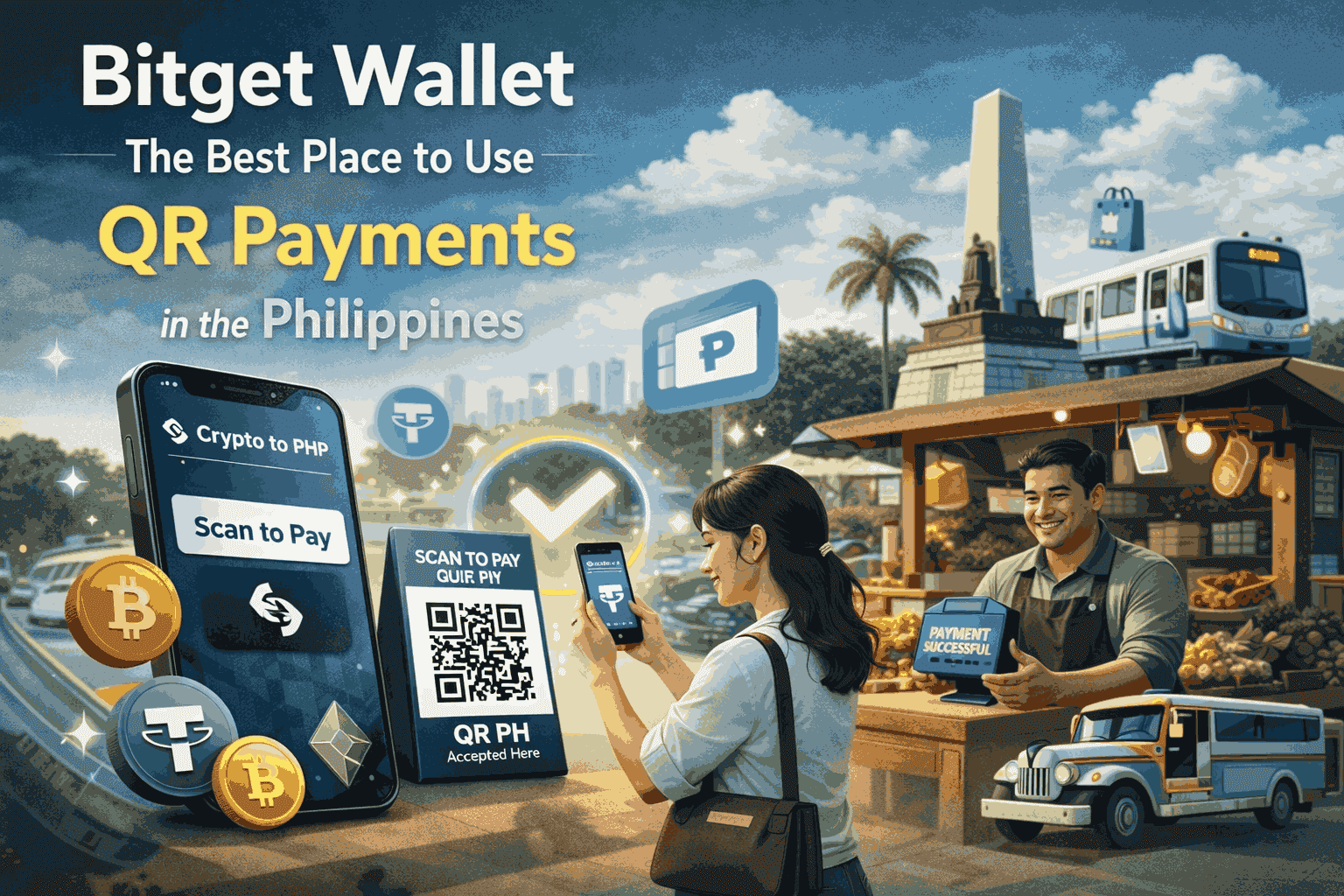
Bitget Wallet combines traditional QR payment usability with blockchain flexibility, allowing users to move between crypto assets and real-world payments within a single interface.
With over 90 million users and support for 130+ blockchains, it provides a scalable infrastructure for both on-chain trading and everyday transactions.
In a QR-dominant market like the Philippines—where interoperability and mobile-first payments are critical—Bitget Wallet offers a practical bridge between fiat-based QR systems and crypto liquidity.
How does Bitget Wallet make QR payments more practical for everyday use in the Philippines?
- Supports multi-chain assets, allowing users to manage different tokens in one wallet
- Enables instant on-chain swaps before payment, improving execution flexibility
- Provides self-custody security (TEE + MPC), reducing reliance on custodial platforms
- Combines payment, trading, and asset management in a unified interface
- Allows smoother transition between crypto holdings and real-world spending scenarios
How to Use QR Payments?
Using QR payments in the Philippines is simple and optimized for fast transactions. With Bitget Wallet, users can execute payments while maintaining control over their assets.
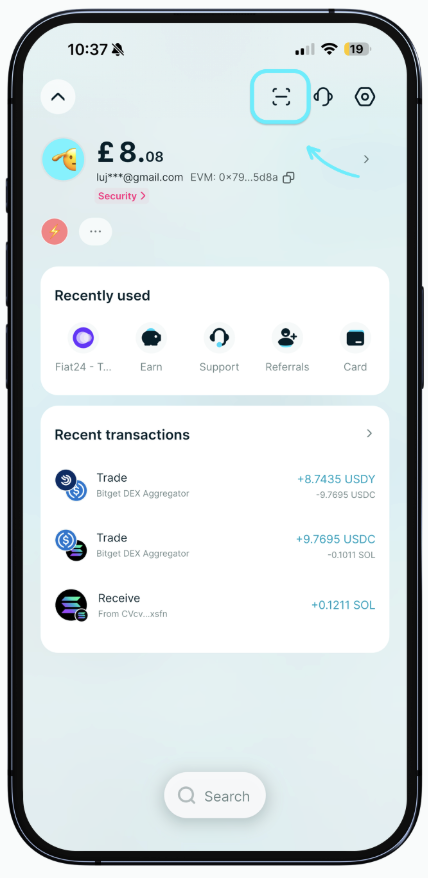
Step 1: Open Bitget Wallet and Access Scan
Open the Bitget Wallet app and navigate to the QR scanner feature. This tool allows you to initiate a payment by scanning a merchant or personal QR code.
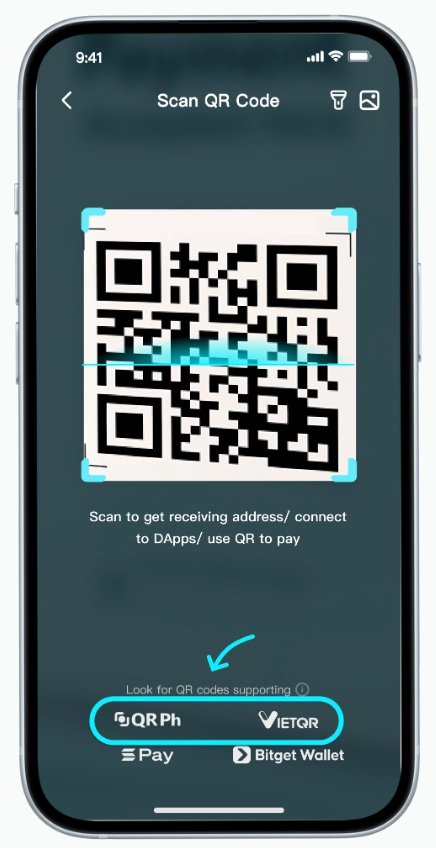
Step 2: Scan the QR Code
Scan the QR code provided by the merchant or recipient. The wallet will automatically detect payment details such as the receiving address and, in some cases, the transaction amount.
Step 3: Confirm and Complete Payment
Review the transaction details, select the asset to use (if applicable), and confirm the payment. Once approved, the transaction is processed and a confirmation is displayed in real time.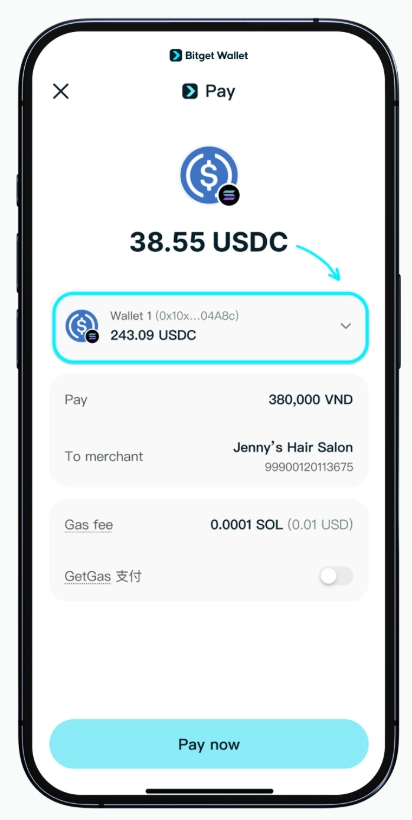
Conclusion
QR payments in the Philippines have become a core part of the country’s digital payment ecosystem, powered by QR Ph and supported by widespread adoption across retail, services, and peer-to-peer transactions. Their speed, interoperability, and mobile-first design make them one of the most efficient ways to transact in everyday scenarios.
By integrating crypto functionality into this system, Bitget Wallet expands how users can use QR payments in the Philippines—bridging fiat convenience with blockchain flexibility. If you want both ease of use and asset control, Bitget Wallet provides a practical way to participate in the next phase of digital finance.
Take control of how you pay—start using Bitget Wallet today and turn everyday QR payments into a seamless, crypto-powered experience.
Sign up Bitget Wallet now - grab your $2 bonus!
FAQs
1. How to use QR payments in the Philippines safely?
To use QR payments in the Philippines safely, always verify the QR code source before scanning and avoid interacting with unknown or tampered codes. Using trusted apps like GCash, Maya, or secure wallets helps reduce fraud risk.
2. Are QR payments widely accepted in the Philippines?
Yes. QR payments are widely accepted across merchants, banks, and e-wallets through the QR Ph system developed by Bangko Sentral ng Pilipinas. Adoption continues to expand nationwide, including small businesses and informal sectors.
3. Do QR payments require internet access?
Yes. Most QR payments require an active internet connection to process transactions through InstaPay or PESONet and to receive real-time confirmation.
4. Can I use crypto for QR payments in the Philippines?
Direct crypto QR payments are still limited in the Philippines, as most QR systems operate on fiat infrastructure. However, wallets like Bitget Wallet allow users to convert or manage crypto alongside QR-based payment workflows.
5. What are the risks of QR payments in the Philippines?
The main risks include QR code spoofing, phishing attempts, and reliance on mobile device security. Users should double-check payment details and avoid scanning QR codes from untrusted sources.
Risk Disclosure
Please be aware that cryptocurrency trading involves high market risk. Bitget Wallet is not responsible for any trading losses incurred. Always perform your own research and trade responsibly.

 How to Use QR Payments in Vietnam with Bitget Wallet?2026-04-07 | 5mins