





What is a opagent Wallet?
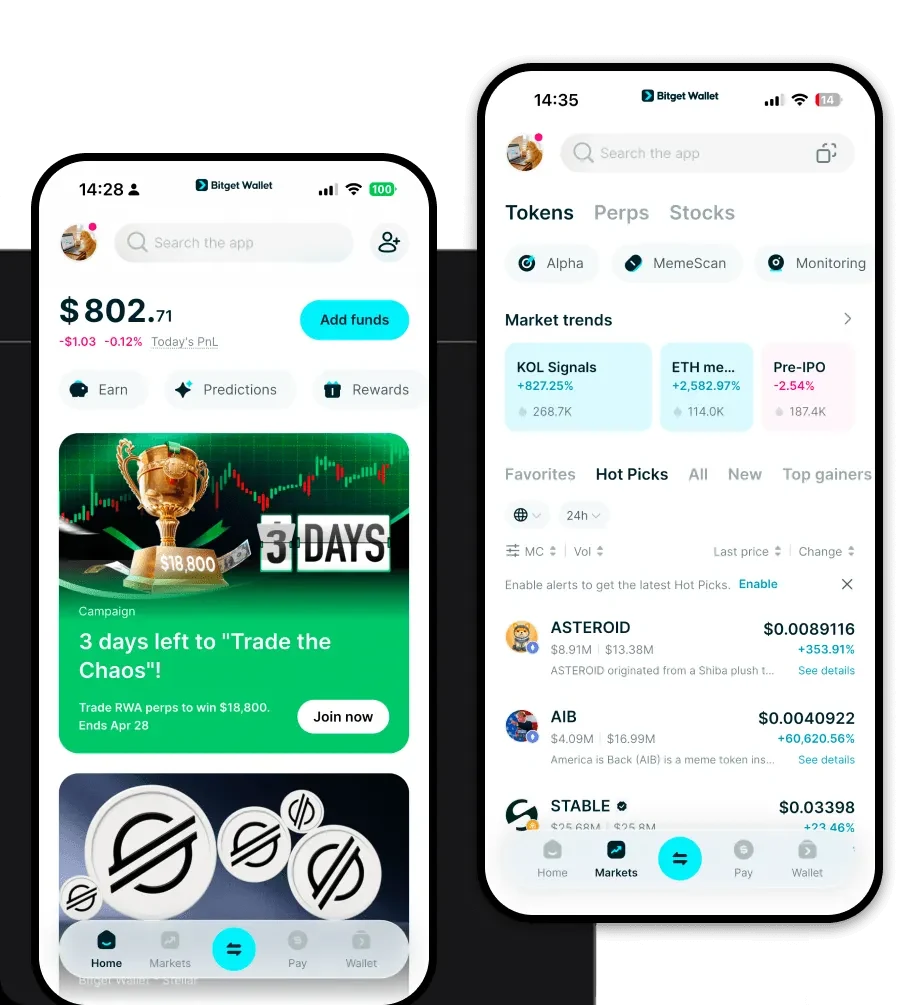
A opagent wallet is a specialized digital interface designed to securely store, send, and manage your opagent tokens, which operate on the EVM (Ethereum Virtual Machine) blockchain. As a critical piece of infrastructure, opagent requires a wallet that can handle complex smart contract interactions and ensure seamless compatibility with decentralized applications. Are you looking for a reliable and secure crypto wallet for your opagent? Bitget Wallet will be your best choice. Trusted by 40 million users, you can freely explore Web3 on Bitget Wallet. Start your journey now!
Download Bitget opagent Wallet
To begin managing your assets, you need a robust application that offers both high security and a user-friendly interface. Bitget Wallet stands out as the premier opagent wallet app, providing full support for cross-chain transactions and self-custody of your private keys. Whether you are using an iOS device, an Android smartphone, or a browser extension for your desktop, Bitget Wallet ensures you remain in total control of your digital assets. You can download Bitget Wallet today to experience a secure, multi-chain gateway to the Web3 ecosystem.
Why Choose Bitget opagent Wallet?
- EVM Compatibility: Bitget Wallet is built with native support for the EVM architecture, allowing you to interact effortlessly with decentralized finance platforms and other infrastructure dApps.
- AI-Driven Automation: Our wallet integrates advanced AI tools that help optimize your transaction paths and automate complex smart contract interactions, ensuring you get the best efficiency possible.
- Robust Security Architecture: With a 300 million USD user protection fund, your opagent assets are shielded against unforeseen risks, providing peace of mind for both new and experienced users.
- Decentralized Data Processing: The platform is designed to handle heavy data loads locally, ensuring that your interactions with the blockchain remain private and fast without relying on centralized intermediaries.
How to Create a opagent Wallet
- Download and install the official Bitget Wallet application on your mobile device or browser.
- Open the app and select 'Create a New Wallet' to generate a unique set of recovery phrases, which you must back up securely.
- Set a strong password for your local device to prevent unauthorized access.
- Navigate to the 'Assets' page and select 'Add Token,' then search for 'opagent' to add it to your visible dashboard.
- Once added, your opagent wallet address will appear, allowing you to receive tokens immediately.
What Can You Do With a opagent Wallet?
Using a dedicated opagent wallet unlocks a variety of powerful features tailored to infrastructure assets:
- Trading: You can execute high-speed token swaps directly within the interface, benefiting from aggregated liquidity across hundreds of DEXs.
- Staking: Participate in network security by locking your opagent tokens into validated pools to earn passive rewards.
- Governance Voting: Use your wallet to directly participate in DAO voting processes, ensuring your voice is heard in the development of the opagent ecosystem.
- Liquidity Provision: Contribute your tokens to liquidity pools to facilitate decentralized trading and earn a share of transaction fees.
How opagent Wallets Are Different from Other Crypto Wallets
Unlike standard wallets that might struggle with complex infrastructure tokens, Bitget Wallet is optimized for the EVM account model. While UTXO-based wallets focus on sequential transaction inputs and outputs, Bitget Wallet utilizes an account-based model that is specifically designed to handle the state changes required by complex smart contracts. Furthermore, while other wallets may struggle with high gas fees during congestion, Bitget Wallet provides real-time gas fee estimation and optimization, ensuring that your transactions remain cost-effective and efficient even during peak network activity.
