





What is a Privacy Wallet?
A Privacy wallet is a digital gateway designed to interact with the Privacy token, which operates primarily on the EVM (Ethereum Virtual Machine) blockchain ecosystem. Because Privacy is built on EVM infrastructure, it benefits from the vast liquidity, mature decentralized finance (DeFi) protocols, and robust security standards that define the Ethereum and EVM-compatible landscape. As an infrastructure-focused token, Privacy requires a wallet that can handle complex smart contract interactions, manage gas fees efficiently, and provide a seamless interface for users to execute transactions across the decentralized web.
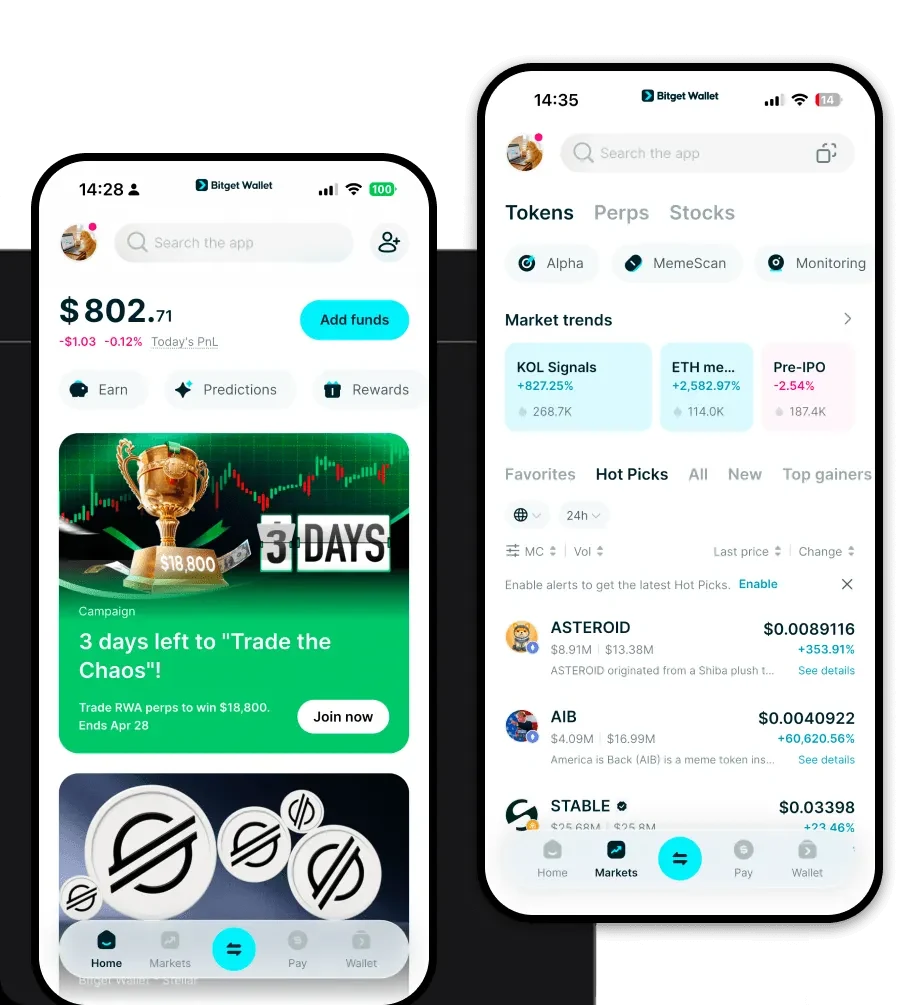
Are you looking for a reliable and secure crypto wallet for your PRIVACY? Bitget Wallet will be your best choice. Trusted by 40 million users, you can freely explore Web3 on Bitget Wallet. Start your journey now!
Download Bitget Privacy Wallet
Choosing the right tool is essential for managing your digital assets effectively. To begin your journey, you should download Bitget Wallet, which offers a comprehensive suite of tools tailored for the modern crypto user. Whether you are using an iOS device, an Android smartphone, or a desktop browser, Bitget Wallet provides a unified experience across all platforms. By choosing to download Bitget Wallet, you gain access to a non-custodial solution where you, and only you, hold the private keys to your Privacy tokens. This multi-chain support ensures that even if you diversify into other blockchains in the future, your Privacy wallet app remains the central hub for your entire portfolio, keeping everything organized and accessible from a single, intuitive interface.
Why Choose Bitget Privacy Wallet?
When selecting the best wallet for Privacy, the infrastructure matters. Bitget Wallet stands out because it is optimized for the EVM environment, ensuring that your interactions with the blockchain are faster, cheaper, and more secure. Here is why it is the preferred choice:
- MetaMask-Level Compatibility: Bitget Wallet offers seamless compatibility with existing EVM dApps, allowing you to connect your Privacy wallet address to thousands of DeFi protocols without any configuration hurdles.
- Smart Gas Management: In the EVM ecosystem, gas fees can fluctuate wildly. Bitget Wallet provides real-time gas fee estimation and optimization, ensuring your Privacy transactions are processed efficiently without overpaying.
- Institutional-Grade Security: With a dedicated 300 million USD user protection fund, Bitget Wallet adds an extra layer of defense against potential vulnerabilities, making it a highly reliable vault for your assets.
- Cross-Chain Interoperability: Beyond just the native chain, Bitget Wallet aggregates hundreds of DEXs and cross-chain bridges, allowing you to swap Privacy tokens across different networks effortlessly.
- Decentralized Asset Management: You maintain full control over your assets. The wallet is non-custodial, meaning your private keys are stored locally on your device, adhering to the core crypto principle of "not your keys, not your coins."
How to Create a Privacy Wallet
Creating your Privacy wallet address is a straightforward process that prioritizes user security and accessibility. Follow these five steps to get started:
Step 1: Installation: Visit the official website or your app store to download the Bitget Wallet app. Ensure you are downloading from the verified source to avoid phishing attempts.
Step 2: Create a New Wallet: Upon opening the app, select the option to create a new wallet. You will be prompted to set a strong, unique password for the application, which adds a layer of encryption to your local storage.
Step 3: Backup Your Seed Phrase: This is the most critical step. The app will generate a 12-to-24-word recovery phrase. Write this down on physical paper and store it in a secure location. Never share this with anyone, as it is the master key to your Privacy wallet.
Step 4: Verify and Activate: Confirm your seed phrase within the app to ensure you have backed it up correctly. Once verified, your wallet will be activated, and you will be presented with your unique Privacy wallet address.
Step 5: Deposit and Manage: You can now copy your Privacy wallet address to receive tokens or import existing accounts if you are migrating from another EVM-compatible wallet.
What Can You Do With a Privacy Wallet?
A Privacy wallet is more than just a place to hold tokens; it is an active tool for engaging with the Web3 economy. Here is how you can maximize your experience:
- Secure Crypto Storage: You can utilize your wallet as a long-term vault. By keeping your Privacy tokens in a non-custodial environment, you protect yourself from the risks associated with centralized exchanges.
- Token Swapping: Through the integrated DEX aggregator, you can swap your Privacy tokens for other assets directly within the wallet interface, benefiting from the best available market rates.
- dApp Interaction: Because your wallet is EVM-compatible, you can connect to various decentralized applications—such as lending platforms or yield aggregators—to utilize your Privacy tokens in complex financial strategies.
- NFT Portfolio Management: Your wallet serves as a gallery and management tool for your digital collectibles. You can view, store, and send NFTs directly from your Privacy wallet interface.
- Staking Participation: You can interact with staking protocols to lock your Privacy tokens, contributing to network security or governance while earning potential yields or rewards.
How Privacy Wallets Are Different from Other Crypto Wallets
Not all wallets are built the same. A Privacy wallet designed for the EVM ecosystem functions differently than wallets built for UTXO-based chains like Bitcoin. In the EVM model, the wallet tracks "account states" and balances, which allows for the complex smart contract interactions required for DeFi. Unlike UTXO models, which require managing individual transaction inputs and outputs, the EVM-based Privacy wallet simplifies the user experience by treating your address as a single, unified account. Furthermore, while some chains like EOS rely on resource models (CPU/NET/RAM) that can be confusing for beginners, EVM wallets focus on gas fees, which are more predictable and widely understood. By using Bitget Wallet, you get an interface that abstracts away the technical complexity of the EVM, providing a smoother, faster experience compared to legacy wallets that haven't kept pace with modern cross-chain developments.
