



What is a GFM Wallet?
A GFM wallet is a specialized digital interface designed to interact with the GFM token, which operates on the EVM (Ethereum Virtual Machine) blockchain. Because GFM exists within the robust EVM ecosystem, it requires a wallet that understands smart contract interactions, token standards, and the nuances of decentralized finance. GFM is a cryptocurrency token that can be safely stored, managed, and traded using the Bitget Wallet, a platform trusted by 40 million users for exploring Web3 ecosystems.
Download Bitget GFM Wallet
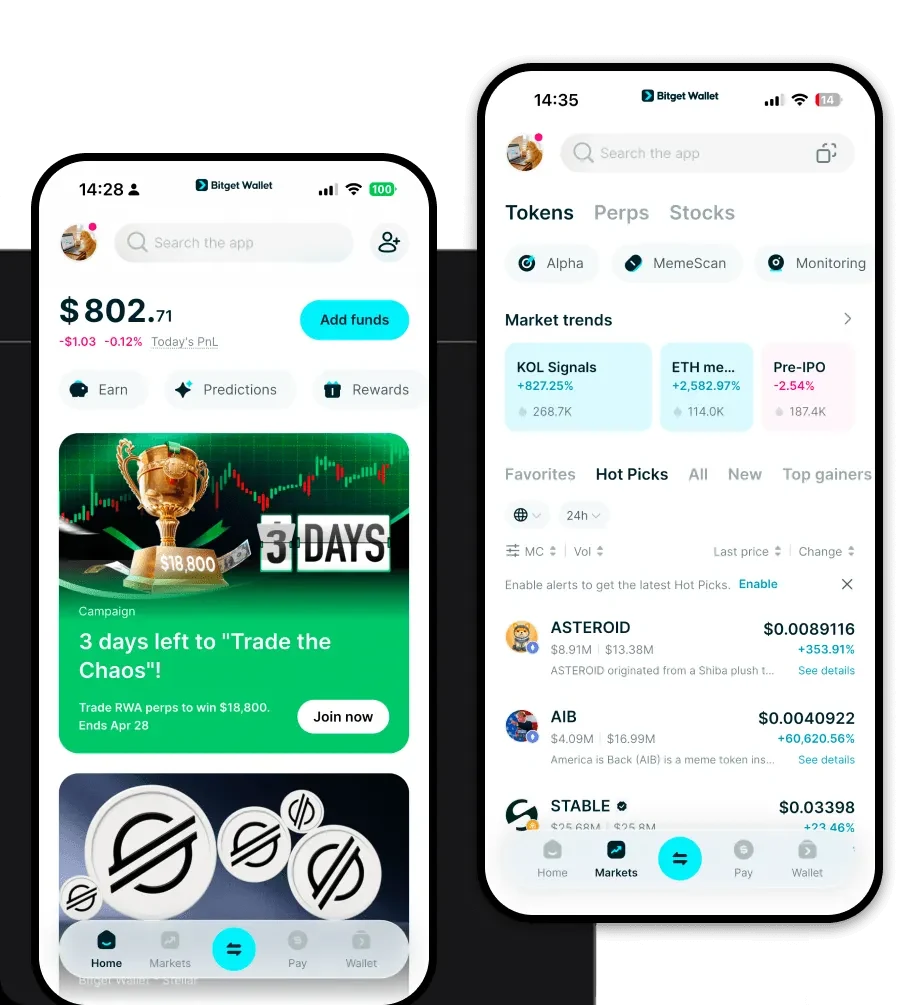
To start managing your assets, you need a secure gateway. You can easily download Bitget Wallet to gain access to a powerful, all-in-one Web3 interface. Bitget Wallet provides full non-custodial control, meaning you hold your private keys, ensuring that you are the sole owner of your GFM. Whether you prefer managing assets on the go via iOS or Android, or you require the precision of a browser extension for desktop DeFi activities, the platform offers a consistent and user-friendly experience. With extensive multi-chain support, you aren't limited to just one ecosystem; you can manage your GFM alongside assets from over 130 other public chains, all within a single, unified interface.
Why Choose Bitget GFM Wallet?
- Native EVM Compatibility: Designed specifically for the EVM architecture, Bitget Wallet ensures seamless interaction with GFM smart contracts and dApps without compatibility errors.
- Deep DEX Integration: Leverage built-in decentralized exchange aggregation to find the best market prices for GFM trades directly within the app.
- High Liquidity Access: The wallet is optimized to handle high-liquidity assets, ensuring that your GFM transactions execute smoothly even during periods of high market volatility.
- Advanced Cross-Chain Interoperability: Effortlessly bridge GFM or related assets between different networks without relying on third-party, insecure external bridges.
- Industry-Leading Security: Backed by a $300 million user protection fund, Bitget Wallet provides a robust security layer that protects your GFM holdings against potential threats.
How to Create a GFM Wallet
Setting up your wallet is a straightforward process designed to prioritize your security while remaining accessible to beginners.
Step 1: Download the official Bitget Wallet application from the App Store, Google Play, or the official website.
Step 2: Launch the app and select 'Create a New Wallet' to generate a unique address on the EVM network.
Step 3: Securely back up your 12-word recovery phrase. Write it down on paper—never store it digitally—as this is the only way to recover your GFM if you lose your device.
Step 4: Verify your recovery phrase by entering the words in the correct order as prompted by the app.
Step 5: Once set up, you can locate your GFM wallet address by selecting the 'Receive' button, ensuring you are on the correct EVM-compatible network.
What Can You Do With a GFM Wallet?
A GFM wallet is more than just a storage vault; it is a gateway to the DeFi ecosystem. Using Bitget Wallet, you can engage in several key activities:
Trading on Decentralized Exchanges: You can swap GFM for other tokens directly through the wallet's integrated DEX aggregator, which sources liquidity from multiple pools to get you the best execution price.
Providing Liquidity: You can deposit GFM into liquidity pools to facilitate trading on the network, earning a portion of the transaction fees generated by the protocol.
Staking for Yield Farming: By utilizing GFM in yield farming strategies, you can lock your tokens into smart contracts to earn rewards and maximize your token holdings over time.
Asset Management in Non-Custodial Wallets: You maintain full sovereignty over your GFM, allowing you to track your portfolio performance, view transaction history, and manage your digital identity across the entire Web3 space without needing a centralized intermediary.
How GFM Wallets Are Different from Other Crypto Wallets
When choosing a wallet for GFM, it is crucial to understand that not all wallets are built for the EVM environment. Unlike Bitcoin-based wallets that utilize the UTXO model (where inputs and outputs are tracked as discrete transaction fragments), GFM wallets are built on an account-based model. This means your wallet tracks a specific 'balance' associated with your address, which is essential for interacting with complex DeFi smart contracts. Furthermore, while some older wallets might struggle with gas fee estimation, a dedicated EVM wallet like Bitget automatically calculates the necessary gas to ensure your transactions are prioritized and confirmed quickly. This distinction is vital for active DeFi users who need to execute time-sensitive trades or liquidity provisions without getting stuck in network congestion.
