





1. What is a $CVNT Wallet?
A $CVNT wallet is a specialized digital interface designed to store, manage, and interact with the Covenant ecosystem. Covenant ($CVNT) is the native token of an agent-native operation layer designed for AI agents. It functions as an infrastructure layer providing eight core primitives—including authority, memory, and settlement—to bridge applications and operating systems. Utilizing a Git-bound append-only audit chain and supporting the Hermes runtime, Covenant ensures provable settlement and accountability, targeting AI agent developers and enterprise-level orchestration needs. Because $CVNT operates as a critical infrastructure component, using a robust, non-custodial wallet is essential for developers and token holders to maintain full control over their assets and agent-related permissions.
2. Download Bitget $CVNT Wallet
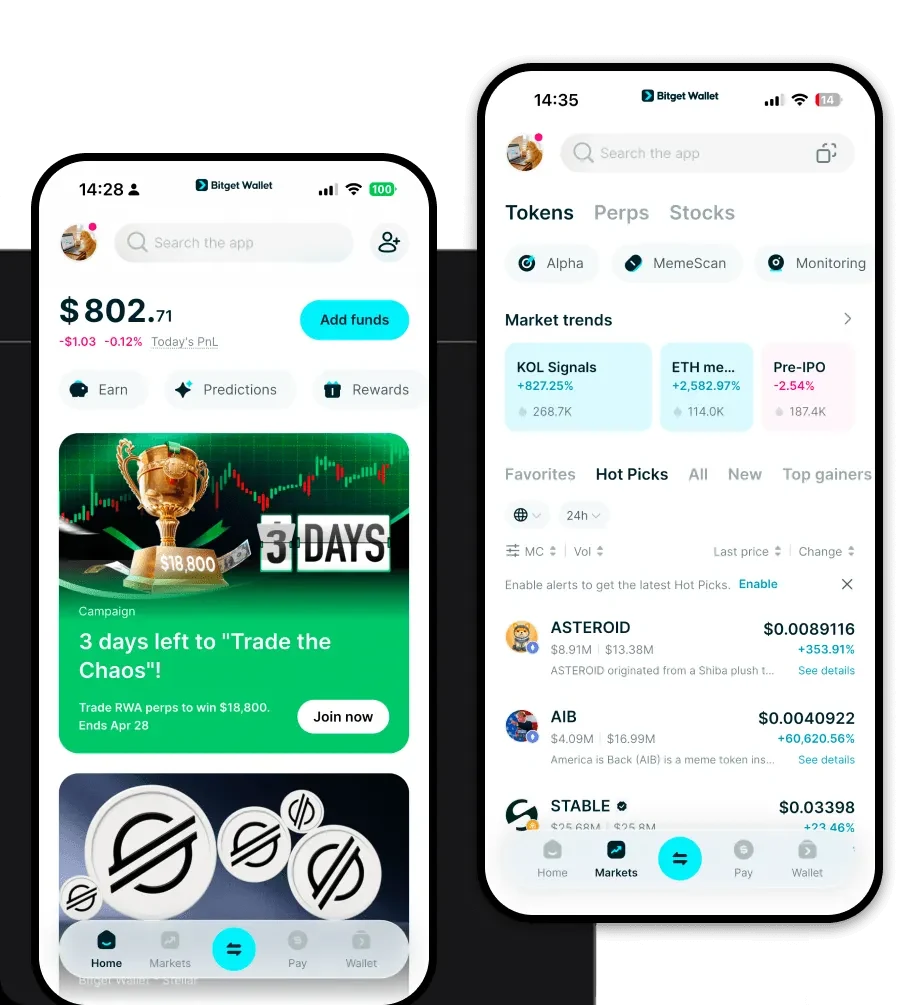
To securely manage your Covenant tokens, you need a wallet that balances high-level security with accessibility. We recommend the Bitget Wallet for its comprehensive support and intuitive design. Whether you are an AI developer or an enterprise user, Bitget Wallet provides a seamless experience across all platforms. It features full self-custody, giving you complete control over your private keys and ensuring that only you have access to your funds. The platform offers a unified experience across mobile and desktop, with dedicated apps for iOS, Android, and a browser extension for seamless web interaction. To get started, download Bitget Wallet today and experience a multi-chain environment that prioritizes your asset security.
3. Why Choose Bitget $CVNT Wallet?
- Infrastructure-Ready Security: Given that $CVNT serves as an enterprise-grade orchestration layer, Bitget Wallet provides a high-security environment backed by a $300 million user protection fund, mitigating risks associated with complex agent interactions.
- Advanced Multi-Chain Integration: Bitget Wallet supports over 130+ mainnets, allowing you to bridge your $CVNT holdings with other assets across diverse ecosystems without needing multiple wallet applications.
- Enterprise-Grade Auditing Capabilities: The wallet interface is optimized to handle high-frequency interactions with audit chains and runtime environments, ensuring you can track your agent’s transactions with clarity and ease.
- DApp Ecosystem Access: With a built-in DApp browser, you can directly connect to the Covenant mainnet interface, allowing for smooth governance voting and protocol interaction without leaving your wallet.
4. How to Create a $CVNT Wallet
Setting up your wallet to hold $CVNT is straightforward. Follow these steps to ensure your assets are protected from the start:
Step 1: Visit the official website and download the Bitget Wallet app for your preferred device (iOS, Android, or Browser Extension).
Step 2: Open the app and select 'Create a New Wallet' to generate a new, unique address.
Step 3: Carefully record your recovery phrase (seed phrase) on paper and store it in a secure, offline location. Never share this phrase with anyone.
Step 4: Once the wallet is initialized, search for the '$CVNT' token in the asset list and add it to your dashboard.
Step 5: You now have a functional $CVNT wallet address. You can copy your public address to receive tokens or interact with the Covenant protocol directly.
5. What Can You Do With a $CVNT Wallet?
Holding $CVNT in a non-custodial wallet opens up a range of functionalities essential for the AI-agent economy. You can participate in governance voting to influence the future development of the Covenant infrastructure. As an operator, you will use your wallet for orchestrating AI agents, ensuring they have the necessary resources to execute tasks. The wallet allows for auditing agent transactions, providing transparency into the automated actions taken by your deployed agents. You can also engage in staking for network security, which helps maintain the integrity of the audit chain while earning potential rewards. Finally, your wallet is vital for securing agent memory and authority, acting as the root of trust for all your agent-based operations.
6. How $CVNT Wallets Are Different from Other Crypto Wallets
Unlike standard wallets designed for simple transactions or Meme coin trading, a wallet managing $CVNT must handle the complexities of an agent-native operation layer. Standard wallets often focus solely on token transfers and basic DeFi swaps. In contrast, a $CVNT-compatible wallet like Bitget must support the specific requirements of the Hermes runtime and Git-bound audit chains. While standard wallets may struggle with the technical overhead of enterprise-grade orchestration, a specialized multi-chain wallet ensures that your interaction with the Covenant infrastructure is not hindered by gas price fluctuations or network congestion. By prioritizing compatibility with sophisticated infrastructure protocols, these wallets ensure that your agent's 'authority' and 'memory' primitives remain immutable and accessible.
