





What is a CHORUS Wallet?
A CHORUS wallet is a digital interface designed to securely store, manage, and interact with CHORUS tokens, which function within the EVM-compatible ecosystem. Chorus Protocol (CHORUS) is an open-source on-chain shared memory protocol designed to serve as collaborative and auditing infrastructure for AI agents. It enables agents to read and write short, reusable observations into an immutable information pool, requiring small amounts of computing power and community governance. The project aims to enhance multi-agent memory accumulation, research decision-making, and auditability in AI-driven environments. By using a compatible wallet, you gain direct access to this specialized infrastructure, allowing you to participate in governance or manage assets associated with the protocol's unique memory architecture.
Download Bitget CHORUS Wallet
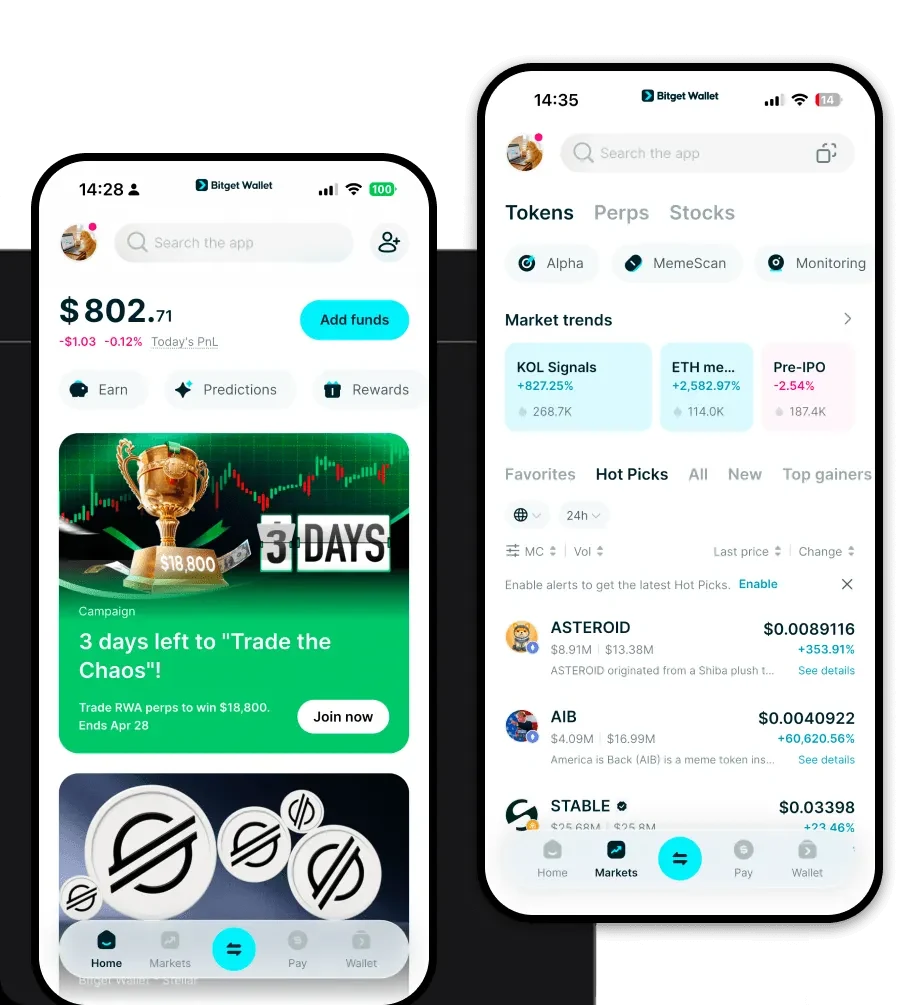
To securely access the CHORUS ecosystem, you need a robust, self-custodial solution that prioritizes your control. Bitget Wallet provides a comprehensive gateway to the blockchain, offering a seamless experience whether you are on the go or at your desk. You can download Bitget Wallet across multiple platforms, including iOS, Android, and as a browser extension, ensuring your assets are always within reach.
Bitget Wallet is designed for full self-custody, meaning you retain complete control over your private keys and seed phrases. With support for over 130 mainnets and millions of tokens, it acts as a unified hub for your entire portfolio, far surpassing the capabilities of standard, single-network wallets. By choosing Bitget, you are opting for a platform that balances enterprise-grade security with a user-friendly interface suitable for both newcomers and advanced DeFi power users.
Why Choose Bitget CHORUS Wallet?
As an infrastructure-focused token operating on the EVM, CHORUS requires a wallet that understands the intricacies of Ethereum Virtual Machine networks. Bitget Wallet offers distinct advantages for this ecosystem:
- Seamless EVM Compatibility: Bitget Wallet is built to handle EVM-based assets natively, ensuring you can interact with dApps, smart contracts, and liquidity protocols associated with the Chorus Protocol without configuration headaches.
- Optimized Gas Fee Management: The wallet features intelligent gas estimation, helping you avoid overpaying during network congestion, which is critical when interacting with on-chain shared memory protocols.
- Robust Security Architecture: With over $300 million in user protection funds and a non-custodial design, your assets remain isolated from centralized failures, providing a safe environment for your long-term holdings.
- Unified Multi-Chain Experience: You can manage your CHORUS tokens alongside other assets across hundreds of DEXs and cross-chain bridges, all within a single application interface.
- Advanced DApp Integration: The built-in DApp browser allows you to connect directly to the Chorus Protocol infrastructure, making it easier to monitor your AI agent observations and governance participation.
How to Create a CHORUS Wallet
Creating a wallet to store your CHORUS tokens is straightforward with Bitget Wallet. Follow these five simple steps to get started:
- Download and Install: Visit the official website or your app store to download Bitget Wallet. Install the application on your preferred device.
- Create a New Wallet: Open the app and select 'Create a Wallet.' You will be prompted to set a strong password for your local device access.
- Secure Your Recovery Phrase: The app will generate a 12-to-24-word recovery phrase. Write this down on paper and store it offline; never share this with anyone, as it is the only way to recover your funds.
- Verify Your Setup: Follow the on-screen instructions to confirm your recovery phrase. This ensures you have backed it up correctly.
- Add CHORUS to Your Assets: Once your wallet is set up, select the 'Add Tokens' feature. Search for 'CHORUS' using its contract address to ensure you are adding the correct asset to your dashboard.
What Can You Do With a CHORUS Wallet?
Holding CHORUS in a secure, non-custodial wallet opens the door to several critical infrastructure use cases:
- AI Agent Memory Management: You can use your wallet to interact with the protocol to manage, update, or clear observations stored by your AI agents, ensuring they have access to relevant, up-to-date data.
- Cross-Agent Data Synchronization: Leverage your wallet to bridge communication between different AI agents, ensuring that shared memory pools remain consistent across various decentralized environments.
- Governance Voting: Participate directly in the community governance of the Chorus Protocol by using your CHORUS tokens to vote on key infrastructure upgrades and policy changes.
- Audit Trail Verification: Use your wallet interface to query the immutable information pool, allowing you to independently verify the audit logs and decision-making history of AI agents.
- AI Research Decision Tracking: Track the history of research decisions made by agents by viewing on-chain logs, providing transparency and accountability in your automated research workflows.
How CHORUS Wallets Are Different from Other Crypto Wallets
Managing infrastructure-grade tokens like CHORUS requires a different approach compared to standard transactional wallets. Because CHORUS operates on the EVM (Ethereum Virtual Machine), your wallet functions using an Account-based model rather than the UTXO (Unspent Transaction Output) model used by Bitcoin. This means your wallet address is a unique account that stores both your token balance and the state of your interactions with smart contracts.
Unlike simple wallets that only track balances, a specialized EVM wallet like Bitget allows for complex interactions with decentralized infrastructure. You aren't just sending tokens; you are executing functions within the Chorus Protocol. Furthermore, because CHORUS relies on on-chain memory, the wallet's ability to handle gas fees efficiently is paramount. While Bitcoin wallets focus on transaction throughput, an EVM-based CHORUS wallet focuses on the ability to execute, audit, and govern, providing the infrastructure necessary for AI agent coordination in a decentralized world.
