





What is an SDE Wallet?
An SDE wallet serves as your personal gateway to managing SDE tokens within the Ethereum Virtual Machine (EVM) ecosystem. Because SDE functions on an EVM-compatible chain, your wallet acts as a bridge, allowing you to interact with smart contracts, decentralized applications, and liquidity pools seamlessly. Whether you are holding, transferring, or engaging with DeFi protocols, an SDE wallet provides the cryptographic interface necessary to sign transactions and verify your ownership on the blockchain.
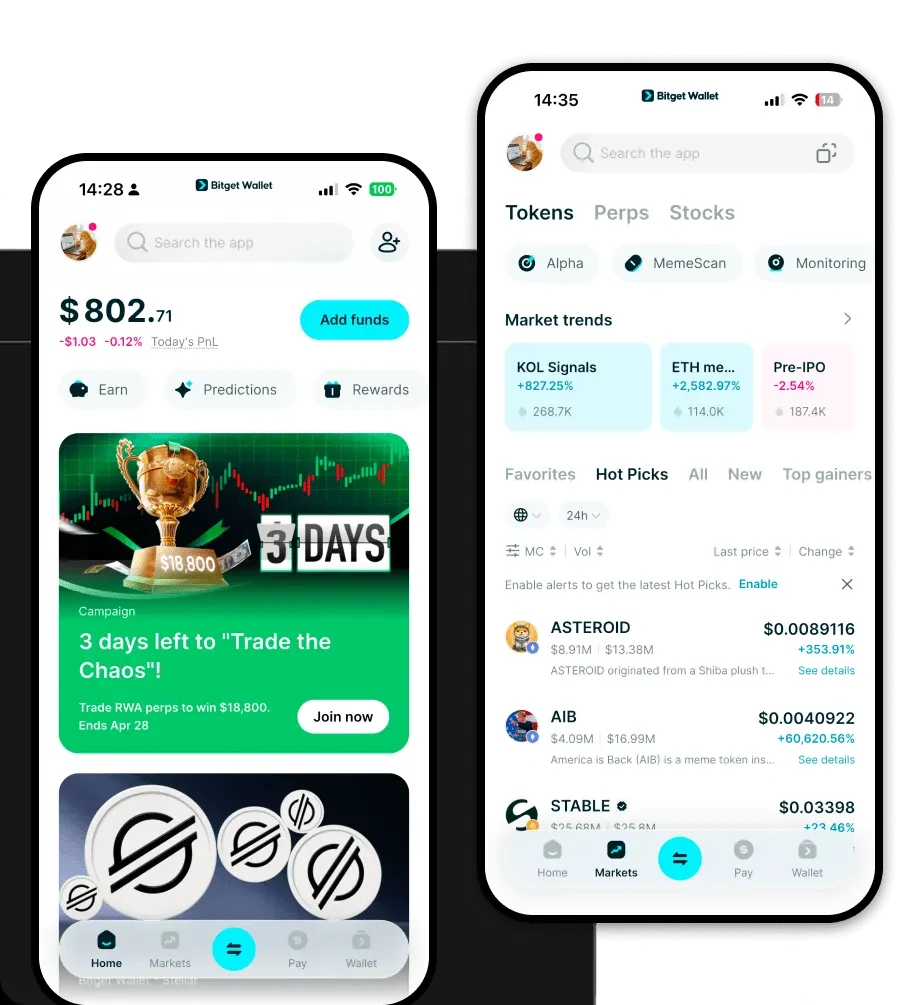
Are you looking for a reliable and secure crypto wallet for your SDE? Bitget Wallet will be your best choice. Trusted by 40 million users, you can freely explore Web3 on Bitget Wallet. Start your journey now! By leveraging the robust infrastructure of the EVM, Bitget Wallet ensures that your SDE holdings remain accessible and manageable across various decentralized platforms.
Download Bitget SDE Wallet
To begin your journey, you need a reliable SDE wallet app that prioritizes user experience without compromising on security. The Bitget Wallet is designed for both mobile and desktop users, offering a consistent and powerful interface across iOS, Android, and browser extensions. By choosing to download Bitget Wallet, you are opting for a non-custodial solution where you retain full control over your private keys and seed phrases. This self-custody model is the gold standard for crypto security, ensuring that no third party can access your funds. The platform's multi-chain architecture means you can manage your SDE alongside other assets, providing a unified dashboard for all your digital holdings.
Why Choose Bitget SDE Wallet?
Selecting the best wallet for SDE requires looking beyond basic storage capabilities. Bitget Wallet stands out by providing an infrastructure-heavy approach tailored for the EVM ecosystem:
- EVM Compatibility: Bitget Wallet is built from the ground up to support the full spectrum of EVM-based tokens and smart contracts, ensuring zero friction when interacting with SDE or related DeFi protocols.
- High Interoperability: The wallet seamlessly bridges across hundreds of decentralized exchanges and cross-chain protocols, allowing you to move your SDE or swap it for other assets without leaving the app interface.
- Secure Asset Management: With a dedicated 300 million USD user protection fund, Bitget Wallet provides an extra layer of security, safeguarding your assets against potential vulnerabilities or platform risks.
- Decentralized Wallet Support: Unlike centralized exchanges, this wallet keeps you in the driver’s seat. Your private keys are stored locally on your device, adhering to the core ethos of decentralized finance.
- Optimized Gas Management: The wallet provides real-time gas fee estimations and suggests optimal network settings, helping you execute SDE transactions more cost-effectively on the EVM.
How to Create an SDE Wallet
Setting up your SDE wallet address is a straightforward process that takes only a few minutes. Follow these steps to get started:
- Download and Install: Visit the official website to download the app. Ensure you are using the verified version for your specific device (iOS, Android, or browser extension).
- Initialize Your Wallet: Open the application and select 'Create a New Wallet'. You will be prompted to set a strong password to protect the app locally.
- Backup Your Seed Phrase: The application will generate a 12 or 24-word recovery phrase. Write this down on paper and store it in a secure, offline location. Never share this with anyone, as it is the only way to recover your SDE wallet if you lose your device.
- Verify and Setup: Confirm your recovery phrase as prompted. Once verified, your wallet is active.
- Add SDE Token: Use the search bar to locate SDE. If it is not automatically visible, you can import it using the token contract address. Your SDE wallet address is now ready to receive funds.
What Can You Do With an SDE Wallet?
A modern SDE wallet is more than just a storage container; it is a tool for active participation in the Web3 economy. Here is how you can utilize your wallet:
- Asset Storage: Safely hold your SDE tokens in a non-custodial environment where you maintain total ownership and control, protecting yourself from the risks associated with centralized exchanges.
- Token Trading: Directly access decentralized exchanges (DEXs) integrated within the wallet to swap your SDE for ETH, stablecoins, or other assets with minimal slippage and efficient execution.
- Cross-chain Transactions: Utilize the wallet’s built-in bridge features to move your SDE between different EVM chains, ensuring your liquidity is always where it needs to be.
- Web3 Application Interaction: Connect your wallet to various DApps, NFT marketplaces, or DeFi yield farms to stake your SDE, participate in governance, or engage in decentralized lending and borrowing.
How SDE Wallets Are Different from Other Crypto Wallets
Understanding the distinction between wallet types is crucial for any crypto user. SDE wallets, specifically those designed for the EVM, operate on an 'Account-Based Model' rather than the UTXO (Unspent Transaction Output) model found in networks like Bitcoin. This means your SDE wallet address functions more like a bank account number that stores a balance and interacts with smart contracts.
Furthermore, because SDE is an EVM asset, the wallet must manage 'Gas Fees'—the computational costs required to process transactions on the chain. Bitget Wallet simplifies this complexity by providing an intuitive interface that abstracts some of the technical difficulty while maintaining the high interoperability required for complex DeFi tasks. Unlike basic wallets that might only support simple 'send' and 'receive' functions, a robust SDE wallet acts as a command center for your entire blockchain portfolio, offering speed, cost-efficiency, and deep integration with the broader ecosystem.
