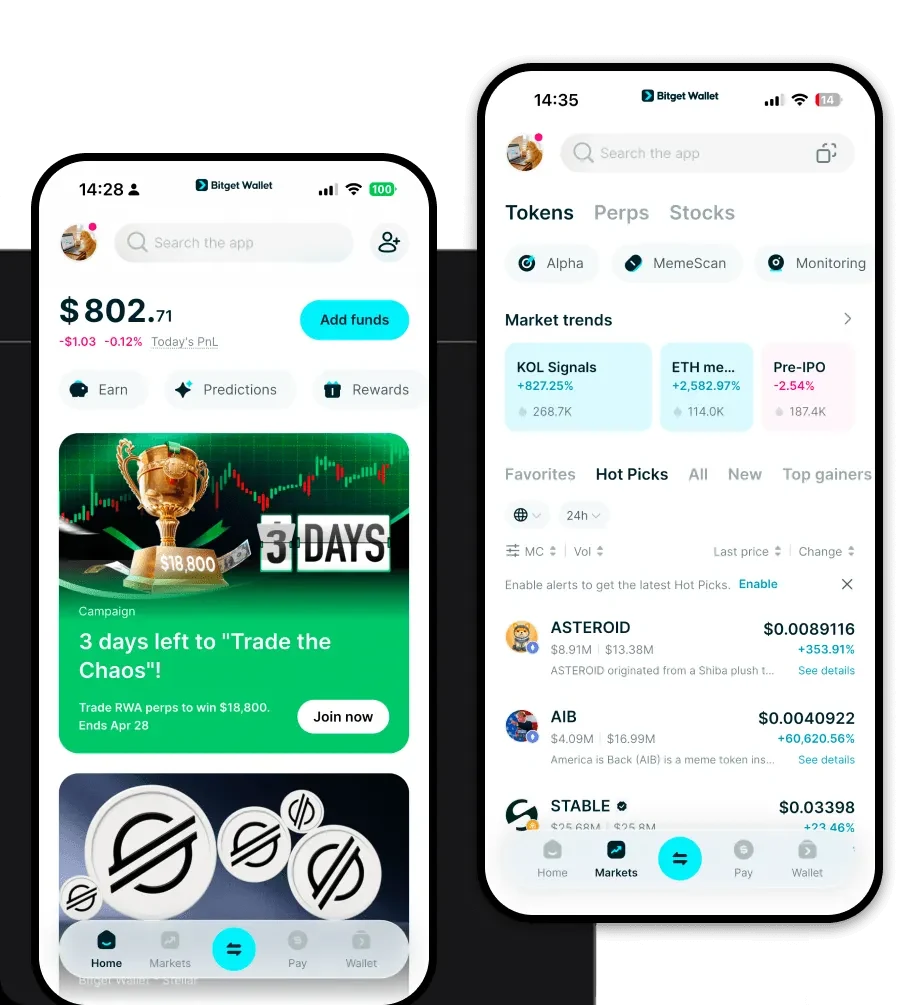
What is an ezETH Wallet? An ezETH wallet is a digital interface designed to interact with the Ethereum Virtual Machine (EVM) ecosystem to manage your ezETH tokens. ezETH is the liquid restaking token (LRT) issued by Renzo Protocol. It represents a user's restaked position on EigenLayer, allowing users to earn Ethereum staking rewards and EigenLayer restaking rewards while maintaining liquidity for use across the DeFi ecosystem. Because ezETH operates on the EVM, it requires a wallet that supports EVM-compatible networks, enabling you to hold, transfer, and interact with smart contracts seamlessly. By choosing the right wallet, you ensure that your assets are not only accessible but also integrated with the broader decentralized finance landscape. Download Bitget ezETH Wallet To effectively manage your holdings, you need a versatile application that bridges the gap between complex DeFi protocols and user-friendly interfaces. We recommend that you 'download Bitget Wallet' (https://web3.bitget.com/zh-CN/wallet-download) to begin your journey. Bitget Wallet provides a robust, non-custodial solution that gives you full control over your private keys, ensuring that you are the sole custodian of your assets. Whether you are an iOS user, an Android enthusiast, or someone who prefers browser-based management, the platform offers a seamless experience across all devices. The Bitget 'ezETH wallet app' is designed for multi-chain flexibility, allowing you to switch between Ethereum and other EVM-compatible chains with ease, ensuring that you never miss a yield opportunity. Why Choose Bitget ezETH Wallet? Selecting the 'best wallet for ezETH' is a critical decision for any DeFi participant. Bitget Wallet stands out for several key reasons tailored to the EVM ecosystem: - Seamless DeFi Integration: Unlike basic wallets, Bitget Wallet features a built-in DApp browser, allowing you to interact directly with Renzo Protocol and other yield-bearing platforms without leaving the application. - EVM Ecosystem Optimization: As a wallet designed for the EVM environment, it offers precise gas estimation and transaction management, which is vital when executing complex restaking operations. - Robust Security Measures: With a $300 million user protection fund, Bitget provides an extra layer of security, safeguarding your assets against potential vulnerabilities while you engage in liquidity provision. - Yield Aggregation Support: The wallet interface is optimized to track your restaking rewards, providing a clear view of your portfolio performance across EigenLayer and various DeFi protocols. - Cross-Chain Liquidity: Bitget aggregates hundreds of DEXs and cross-chain bridges, ensuring that your ezETH can be moved or swapped with minimal slippage and maximum efficiency. How to Create an ezETH Wallet Setting up your wallet is a straightforward process, but it requires careful attention to security. Follow these steps to get started: 1. Download and Install: Visit the official website to download the app for your device. Ensure you are using the official version to avoid phishing attempts. 2. Create a New Wallet: Open the app and select 'Create a New Wallet.' You will be prompted to set a strong, unique password for your local device access. 3. Secure Your Seed Phrase: This is the most critical step. The app will generate a 12-word mnemonic phrase. Write this down on paper and store it in a secure, offline location. Never share this with anyone. 4. Verify Your Phrase: The app will ask you to confirm your phrase to ensure you have backed it up correctly. 5. Access Your Address: Once verified, your wallet is ready. You can now view your 'ezETH wallet address' by clicking on the receive button and selecting the Ethereum network. You can use this address to deposit your ezETH tokens. What Can You Do With an ezETH Wallet? Having an ezETH wallet opens up a world of DeFi possibilities. Because ezETH is a liquid restaking token, your assets are designed to be productive. Here is how you can utilize your holdings: - Staking: Use your wallet to participate in native restaking, allowing your Ethereum to earn additional rewards through EigenLayer without locking up your liquidity. - Providing Liquidity in DEXs: You can deposit your ezETH into decentralized exchange pools, earning trading fees from other users who swap against the pool. - Collateral for Lending Protocols: Use your ezETH as collateral in various lending markets. This allows you to borrow other assets against your restaked position while continuing to earn staking rewards. - Yield Farming: Participate in complex yield farming strategies by depositing your ezETH into vaults that automatically compound rewards across multiple protocols. - Cross-Protocol Yield Maximization: Leverage your wallet to bridge your assets to other chains or protocols, ensuring that your capital is always working in the most profitable environments available. How ezETH Wallets Are Different from Other Crypto Wallets When comparing an EVM-based wallet like Bitget to other types of wallets, the differences lie in the underlying architecture. Unlike wallets built for UTXO-based chains (like Bitcoin), which focus on discrete transactions and privacy-preserving outputs, an EVM wallet is built for the account model. This means that your wallet balance is stored as a state, which is essential for complex smart contract interactions. This architecture allows for the composable liquidity that makes ezETH so powerful. Furthermore, while some chains require specific resource management (like CPU/NET/RAM for EOS), EVM wallets focus on gas fees as the primary economic factor. An effective ezETH wallet must be proficient at handling these gas calculations, providing you with real-time feedback on transaction costs to ensure your DeFi interactions remain cost-effective.