



What is an HKAT Wallet?
An HKAT wallet is a specialized digital gateway designed to interact with the HKAT asset, which operates on the EVM (Ethereum Virtual Machine) blockchain architecture. As a digital asset, HKAT requires a secure, non-custodial environment to ensure that users maintain full control over their private keys and assets. HKAT is a digital asset that can be securely stored and managed using Bitget Wallet. Trusted by millions of users, Bitget Wallet provides a gateway for users to explore Web3, manage their HKAT holdings, and interact with decentralized applications.
Download Bitget HKAT Wallet
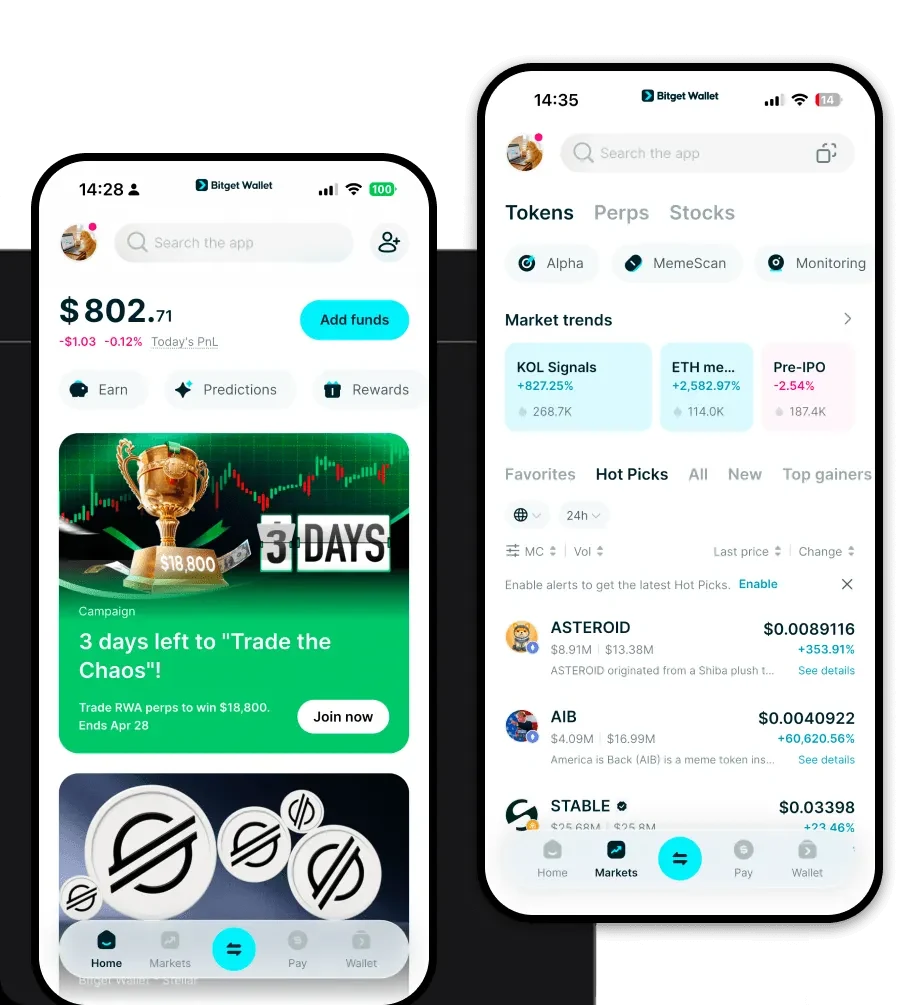
Finding the right home for your digital assets is crucial, and the Bitget Wallet app stands out as a premier choice for HKAT enthusiasts. Whether you are an iOS user, an Android power user, or someone who prefers the convenience of browser extensions, Bitget Wallet offers a seamless interface across all platforms. It is designed with a focus on self-custody, meaning you own your private keys, not the exchange. With support for over 130 public chains, it ensures that your HKAT holdings are part of a broader, interconnected Web3 portfolio. To get started, you can download Bitget Wallet and experience a secure, high-performance environment built for modern DeFi participants.
Why Choose Bitget HKAT Wallet?
- Native EVM Compatibility: Designed specifically for the EVM ecosystem, Bitget Wallet allows you to interact with HKAT smart contracts without friction, ensuring your transactions are processed with optimal gas efficiency.
- Deep DeFi Integration: Since HKAT operates within the DeFi space, Bitget Wallet provides direct access to liquidity pools and decentralized exchanges, making it the best wallet for HKAT yield farming and trading.
- Robust Security Architecture: With a $300 million user protection fund and advanced encryption, Bitget Wallet provides institutional-grade security for your digital assets.
- High Interoperability: Manage your HKAT alongside other assets easily; the wallet’s cross-chain bridge technology allows you to move assets fluidly between different networks.
- Smart Contract Visualization: Unlike generic wallets, Bitget provides clear insights into the smart contracts you are interacting with, reducing the risk of malicious transactions.
How to Create an HKAT Wallet
- Install the App: Download Bitget Wallet from the official website or your device's app store.
- Create/Import Wallet: Open the app and select 'Create Wallet' to generate a new set of private keys or 'Import' if you already have a seed phrase.
- Secure Your Backup: Write down your 12-word or 24-word recovery phrase on paper and store it in a secure, offline location. Never take a screenshot.
- Add HKAT Asset: Navigate to the asset management section, click the '+' icon, and search for HKAT to enable it in your dashboard.
- Verify Connection: Ensure your wallet is set to the correct EVM network to view your balance and interact with dApps seamlessly.
What Can You Do With an HKAT Wallet?
Owning an HKAT wallet opens up a world of decentralized finance opportunities. You can engage in trading on decentralized exchanges, where you swap HKAT for other tokens directly from your wallet interface without needing a centralized intermediary. By holding in non-custodial wallets, you ensure that you remain the sole custodian of your assets, free from the risks associated with centralized exchanges. Users can also participate in liquidity pools, where you stake your HKAT to provide market depth and earn yield rewards based on trading volume. Furthermore, if you need to move your assets across different chains, you can perform cross-chain transfers using built-in bridges, ensuring your HKAT reaches its destination efficiently.
How HKAT Wallets Are Different from Other Crypto Wallets
When dealing with an EVM-based token like HKAT, the choice of wallet significantly impacts your user experience. Unlike legacy wallets that might struggle with complex smart contract interactions, an HKAT-optimized wallet like Bitget utilizes the Account Model architecture common to EVM chains. This means it manages your 'state'—the balance, nonce, and code—directly on the blockchain. While UTXO-based wallets (like those for Bitcoin) focus on unspent transaction outputs, your HKAT wallet is built to handle the 'Gas' model, where every transaction requires a fee to execute code. This ensures that your interactions with DeFi protocols are faster, more transparent, and highly compatible with the vast landscape of Ethereum-based dApps.
