





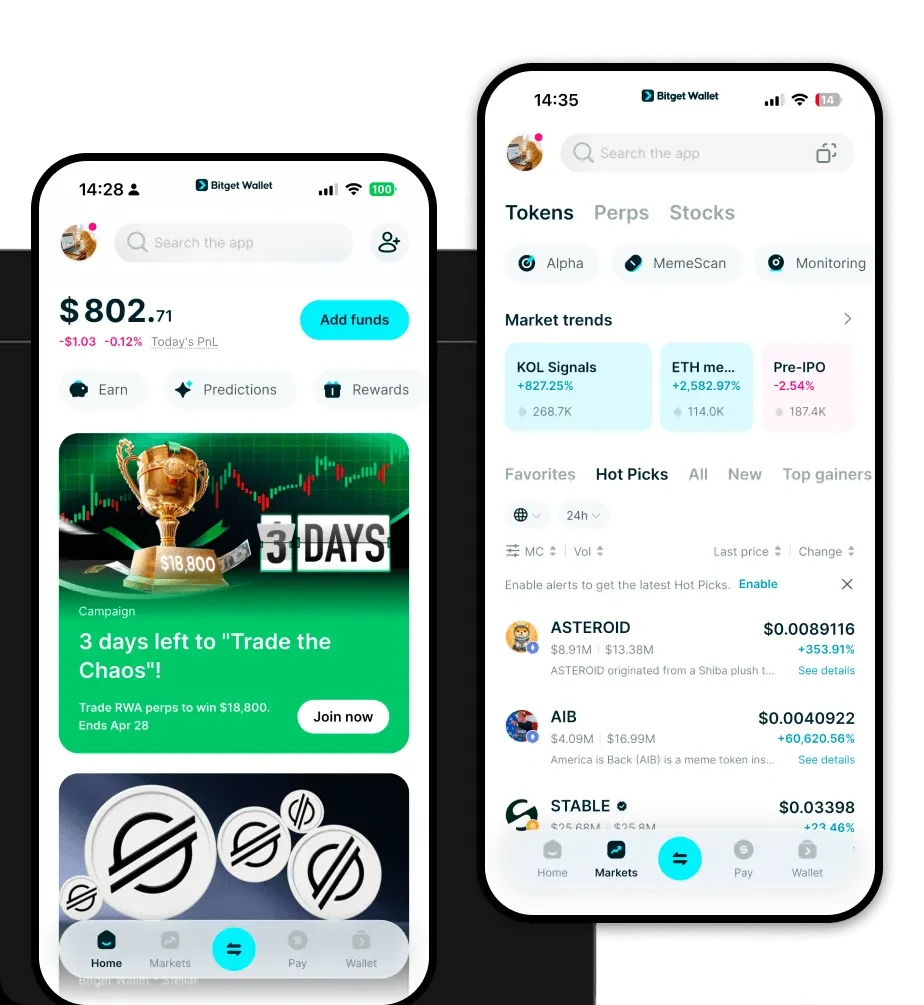
1. What is a shell Wallet?
A shell wallet is a specialized digital interface designed to interact with the shell token, which operates on the EVM (Ethereum Virtual Machine) blockchain. Because the shell token is built on EVM infrastructure, it requires a wallet that can handle complex smart contract interactions, gas fee management, and decentralized finance protocols seamlessly. Are you looking for a reliable and secure crypto wallet for your shell? Bitget Wallet will be your best choice. Trusted by 40 million users, you can freely explore Web3 on Bitget Wallet. Start your journey now!
2. Download Bitget shell Wallet
Getting started with your shell assets requires a secure and versatile gateway. Bitget Wallet provides a comprehensive, non-custodial solution that gives you full control over your private keys. Whether you are using an iOS device, an Android smartphone, or a desktop browser, you can easily download Bitget Wallet to begin managing your portfolio.
The application is designed for multi-chain flexibility, allowing you to manage shell alongside hundreds of other tokens within a single, unified interface. By choosing a non-custodial wallet, you ensure that only you hold the keys to your assets, providing a level of security that custodial exchanges cannot match. Simply visit the official download page to install the version that suits your device and start your secure Web3 journey today.
3. Why Choose Bitget shell Wallet?
As an infrastructure-focused asset on the EVM chain, shell requires a wallet that understands the nuances of the Ethereum ecosystem. Bitget Wallet stands out for several critical reasons:
- EVM Ecosystem Optimization: The wallet is built with deep compatibility for EVM-based tokens, ensuring that your shell transactions are processed smoothly with accurate gas estimation.
- Non-Custodial Security: You maintain full ownership of your private keys and seed phrases, ensuring that your assets are protected from centralized platform risks.
- DApp Ecosystem Integration: Seamlessly connect your wallet to the vast array of decentralized applications, DeFi protocols, and NFT marketplaces that support the shell token.
- Advanced Cross-Chain Interoperability: Easily swap shell for assets on other chains using built-in bridges, eliminating the need to rely on complex third-party platforms.
- Gas-Free Transaction Options: Take advantage of innovative features that help optimize or even subsidize transaction costs, making your shell activities more cost-effective.
4. How to Create a shell Wallet
Creating your wallet is a straightforward process that prioritizes user security and efficiency. Follow these steps to set up your shell-compatible wallet:
Step 1: Download and install the Bitget Wallet application on your preferred mobile or desktop device.Step 2: Open the app and select 'Create a New Wallet' to generate a unique set of recovery phrases.Step 3: Securely back up your recovery phrase offline—never share this with anyone, as it is the only way to recover your shell assets if you lose access to your device.Step 4: Once the wallet is initialized, navigate to the asset management section and search for 'shell' to add it to your visible token list.Step 5: Your shell wallet address is now ready; you can copy this address to receive tokens from exchanges or other external wallets.
5. What Can You Do With a shell Wallet?
Holding shell in a powerful wallet like Bitget unlocks a range of utility functions essential for infrastructure-focused assets:
- Managing multi-chain assets: You can consolidate your shell holdings alongside assets from various other chains, ensuring your entire portfolio is visible in one dashboard.
- Swapping tokens: Use the integrated DEX aggregator to exchange your shell for other cryptocurrencies instantly, finding the best rates across multiple liquidity pools.
- Interacting with DApps: Directly connect your wallet to decentralized infrastructure projects, governance platforms, and other Web3 services that utilize shell.
- NFT storage and viewing: Store and showcase your digital collectibles, as the wallet provides a native interface to view and manage your NFT assets on the EVM chain.
- Staking and yield farming: Participate in DeFi activities by locking your shell into liquidity pools or staking protocols to earn potential yield, directly through your wallet interface.
6. How shell Wallets Are Different from Other Crypto Wallets
When dealing with an EVM-based token like shell, the wallet you choose must support the specific mechanics of the Ethereum Virtual Machine. Unlike wallets built for UTXO-based chains like Bitcoin—which focus on simple transaction outputs and address reuse prevention—a shell wallet must be an 'account-based' model. This means it manages smart contract states, approvals, and complex gas fee calculations in real-time.
Furthermore, while some basic wallets only offer simple storage, a dedicated shell wallet provides deep integration with DeFi protocols. You aren't just storing tokens; you are interacting with complex logic. Bitget Wallet optimizes this experience by handling the complexities of gas fee estimation and contract interactions, ensuring that your transactions are fast and efficient, whereas more primitive wallets might struggle with high traffic or complex DApp requirements.
