





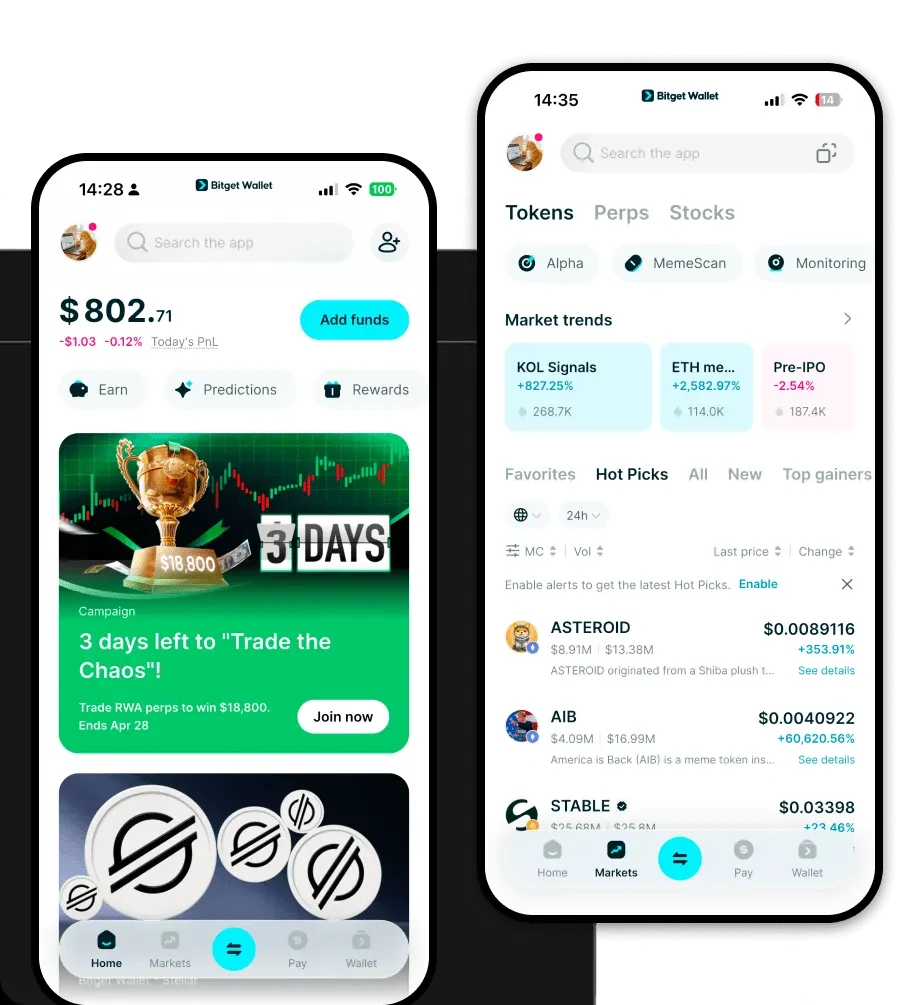
1. What is a 1968shekel Wallet?
A 1968shekel wallet is a digital interface that allows you to interact with the 1968shekel token on its native blockchain. Operating within the EVM (Ethereum Virtual Machine) ecosystem, 1968shekel benefits from the robust infrastructure and interoperability that Ethereum-compatible networks provide. 1968SHEKEL is a crypto asset that can be securely stored and managed using Bitget Wallet, a platform trusted by 40 million users for exploring Web3 ecosystems.
2. Download Bitget 1968shekel Wallet
Getting started with your 1968shekel journey is seamless with Bitget Wallet. As a non-custodial solution, it ensures you retain complete control over your private keys and assets at all times. Whether you are on the move or at your desk, the wallet provides a consistent experience across iOS, Android, and browser extensions. With support for over 130 public chains, it is the ideal tool for managing your diverse crypto portfolio. You can download Bitget Wallet today to experience secure, multi-chain asset management designed for the modern Web3 user.
3. Why Choose Bitget 1968shekel Wallet?
- EVM Compatibility: As a token built on EVM architecture, 1968shekel requires a wallet that perfectly integrates with decentralized applications (dApps). Bitget Wallet offers seamless compatibility, allowing you to interact with DeFi protocols without friction.
- Optimized for Meme Culture: Bitget Wallet provides lightning-fast transaction speeds and real-time market data, which are crucial for navigating the high-volatility environment often associated with community-driven meme tokens.
- Aggregated Liquidity: By connecting to hundreds of DEXs and cross-chain bridges, Bitget Wallet ensures you get the best swap rates when trading 1968shekel, maximizing your potential gains.
- Robust Security Architecture: With a $300 million user protection fund, Bitget Wallet adds an extra layer of security on top of standard non-custodial protocols, giving you peace of mind while holding speculative assets.
4. How to Create a 1968shekel Wallet
Setting up your wallet is a straightforward process designed to get you into the ecosystem quickly:
1. Install the Application: Download the official Bitget Wallet app from your preferred app store or the official website.
2. Create a New Wallet: Open the app and select 'Create Wallet.' Ensure you are in a private environment.
3. Backup Your Recovery Phrase: Write down your 12 or 24-word recovery phrase on paper. Never store this digitally or share it with anyone.
4. Set a Secure Password: Choose a strong, unique password to protect your local wallet access.
5. Import or Add 1968shekel: Since it is an EVM token, you can manually add the contract address to your asset list to view your 1968shekel balance.
5. What Can You Do With a 1968shekel Wallet?
- Trading: You can actively swap 1968shekel for other tokens directly within the wallet interface using the integrated DEX aggregator.
- Holding: Securely store your 1968shekel for the long term, knowing your private keys are held solely by you in a non-custodial environment.
- Portfolio Management: Track the value of your 1968shekel holdings alongside your other digital assets with the wallet's real-time performance dashboard.
- Speculative Investment: Engage with the broader crypto market by using the wallet to participate in new opportunities and emerging trends within the meme coin sector.
6. How 1968shekel Wallets Are Different from Other Crypto Wallets
Unlike wallets designed for Bitcoin's UTXO (Unspent Transaction Output) model, a 1968shekel wallet operates on the Account/Balance model common to EVM chains. This means your wallet functions more like a bank account, where transactions involve updating a balance rather than spending specific transaction inputs. Furthermore, while some wallets struggle with the high-frequency trading needs of meme coins, Bitget Wallet is optimized for the gas-efficient and high-speed environment of EVM networks, ensuring that you can execute trades even during periods of high network congestion.
