



1. What is a ZCHF Wallet?
A ZCHF wallet is a secure digital interface that allows you to store, manage, and interact with ZCHF (Frankencoin). As an EVM-compatible asset, ZCHF operates primarily within the Ethereum ecosystem, requiring a wallet that supports the ERC-20 token standard and understands the intricacies of the Ethereum Virtual Machine.
ZCHF (Frankencoin) is a decentralized, stablecoin pegged to the Swiss Franc (CHF), designed to be capital-efficient and censorship-resistant. It is backed by a diversified basket of crypto assets and allows users to mint new ZCHF by providing collateral, maintaining stability through the Frankencoin protocol. Because it is decentralized, you need a non-custodial wallet—like Bitget Wallet—to maintain full control over your private keys and participate directly in the protocol's minting and stability mechanisms.
2. Download Bitget ZCHF Wallet
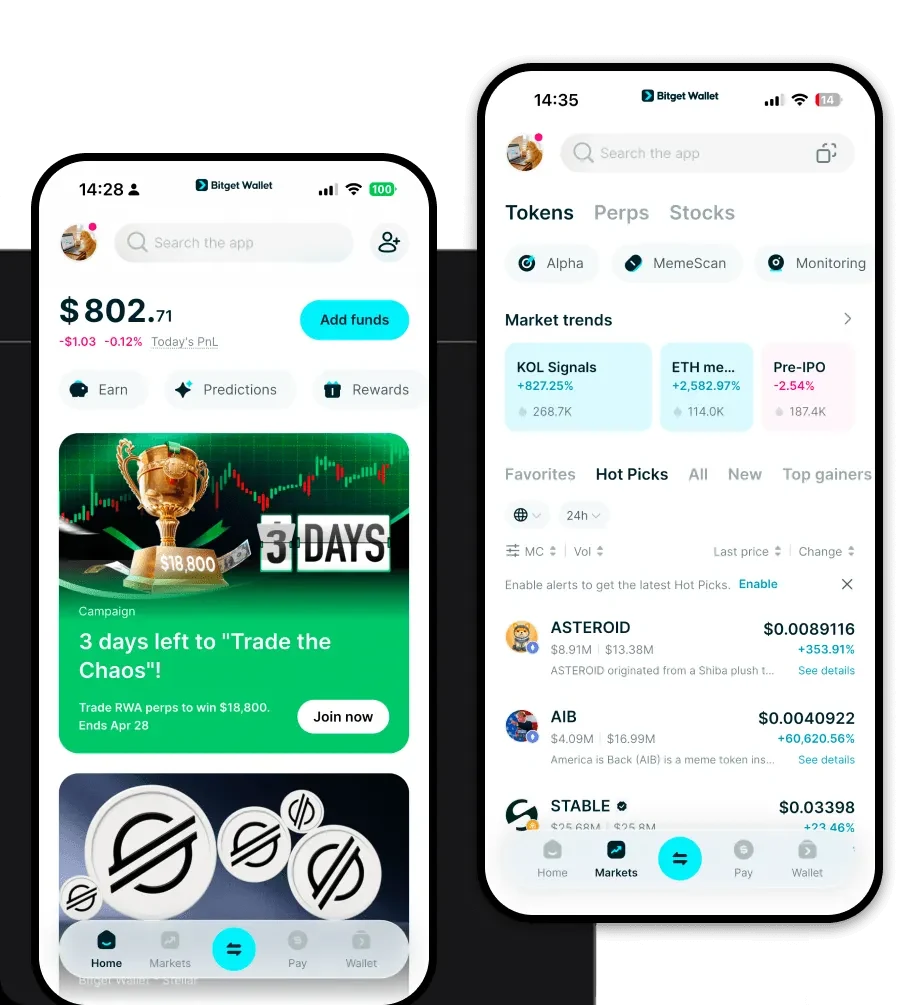
Managing a specialized stablecoin like ZCHF requires a robust, flexible, and secure infrastructure. The Bitget Wallet app provides a seamless experience for users looking to engage with the Frankencoin ecosystem. By choosing this wallet, you are opting for a platform that offers full self-custody, giving you complete authority over your assets without relying on centralized intermediaries.
You can easily download Bitget Wallet across multiple platforms, including iOS, Android, and as a browser extension. This ensures that whether you are monitoring your collateralization levels on the go or executing trades from your desktop, your ZCHF management remains fluid and synchronized. With multi-chain support and a user-friendly interface, it is designed to be the best wallet for ZCHF, simplifying the complex world of decentralized stablecoins.
3. Why Choose Bitget ZCHF Wallet?
For an EVM-based stablecoin like ZCHF, your wallet choice directly impacts your DeFi efficiency. Bitget Wallet is optimized to handle the specific requirements of the Frankencoin protocol:
- EVM Compatibility: Seamlessly integrates with the Ethereum ecosystem, ensuring you can interact with the Frankencoin protocol without compatibility hurdles.
- Advanced Gas Fee Management: Provides real-time gas fee estimation and optimization, which is crucial for cost-effective minting and liquidity provision activities.
- Unmatched Security Infrastructure: Protected by a $300 million user protection fund and robust local encryption, ensuring your collateralized assets remain secure from external threats.
- Native DApp Integration: Connect directly to the Frankencoin dApp and other DEXs within the wallet’s built-in browser to manage your positions without leaving the app.
- Multi-Chain Synergy: While ZCHF is EVM-centric, Bitget Wallet supports 130+ chains, allowing you to manage your entire portfolio, including bridged assets, in one unified interface.
4. How to Create a ZCHF Wallet
Creating your secure gateway to the Frankencoin ecosystem takes only a few minutes. Follow these steps to get started:
Step 1: Download and install the official Bitget Wallet app on your preferred device (iOS, Android, or browser extension).
Step 2: Open the app and select 'Create a New Wallet' to generate a new set of private keys. Ensure you follow the prompts to back up your mnemonic phrase securely—write it down and store it offline.
Step 3: Once your wallet is set up, locate the 'Manage Tokens' or 'Add Token' button. Since ZCHF is an EVM token, you can simply search for the ZCHF contract address to add it to your visible asset list.
Step 4: Your ZCHF wallet address is now active. You can find this address under your Ethereum (ETH) account, as it shares the same address format typical of the EVM ecosystem.
Step 5: Fund your wallet by sending ETH for gas fees and your chosen collateral assets, then connect to the Frankencoin protocol to start minting or transacting.
5. What Can You Do With a ZCHF Wallet?
A ZCHF wallet is more than just a storage container; it is a gateway to the Frankencoin protocol's utility. Here is how you can utilize your assets:
- Stable Value Storage: Use your wallet to hold ZCHF as a reliable store of value that maintains a peg to the Swiss Franc, providing a hedge against the volatility of other crypto assets.
- Yield Farming: Participate in various DeFi protocols by staking your ZCHF or LP tokens to earn rewards, leveraging the capital efficiency of the Frankencoin ecosystem.
- Providing Liquidity in DEXs: Deposit your ZCHF into decentralized exchanges to facilitate trading pairs, earning trading fees in return for providing necessary market depth.
- Collateralized Minting: Interact directly with the Frankencoin protocol smart contracts via your wallet to mint new ZCHF by locking up your crypto assets as collateral.
- Cross-Border Payments: Utilize the speed and stability of ZCHF to execute seamless transactions, making it an efficient tool for transferring value across borders without traditional banking delays.
6. How ZCHF Wallets Are Different from Other Crypto Wallets
ZCHF wallets, specifically when using Bitget Wallet, are uniquely tuned for the EVM environment, which differs significantly from other network architectures. Unlike Bitcoin wallets that rely on the UTXO (Unspent Transaction Output) model, ZCHF wallets utilize the Ethereum 'Account-based' model. This means your wallet tracks a balance rather than a list of individual unspent outputs, making it easier to interact with complex smart contracts like those required for minting Frankencoin.
Furthermore, while some chains use delegated proof-of-stake or resource models (like EOS), ZCHF wallets on the EVM must prioritize gas management. Because Ethereum and its L2s require gas fees for every interaction, a superior ZCHF wallet provides tools to monitor network congestion and optimize transaction costs—a feature where Bitget Wallet excels compared to basic, static wallets.
