Will Iran Ceasefire? Prediction Market Odds and Timeline Explained (2026)

Will Iran ceasefire remains one of the most closely watched geopolitical questions in 2026, with prediction markets offering real-time insight into how traders are pricing the outcome. Following Iran’s rejection of a ceasefire proposal, market signals continue to indicate a low near-term likelihood of resolution, despite rising global attention and diplomatic pressure.
Instead, traders are positioning for a more delayed timeline, reflected in shifting probabilities, cross-market signals, and a $27M+ surge in betting activity. In this article, we break down prediction market odds, trading volume, and sentiment indicators to explain what they reveal about the likelihood and timing of a potential Iran ceasefire.
Track real-time prediction market trends and act on emerging signals with Bitget Wallet.
Key Takeaways
- Prediction markets indicate a low near-term likelihood of an Iran ceasefire, despite recent diplomatic developments
- A $27M+ surge in betting activity reflects increased speculation following Iran’s rejection of a ceasefire proposal
- Market signals suggest a delayed resolution timeline, with traders positioning for outcomes later in 2026
- Tools like Bitget Wallet help users track real-time prediction market trends and respond to shifting on-chain signals
Will Iran Ceasefire? Iran Ceasefire Talks Stall as Iran Rejects Proposal Amid War Tensions
Iran’s rejection of a ceasefire proposal has intensified uncertainty around the conflict, reinforcing expectations of a delayed resolution rather than immediate peace. As geopolitical tensions persist, markets are reacting quickly to new developments, reflecting how sensitive ceasefire expectations are to real-time events.
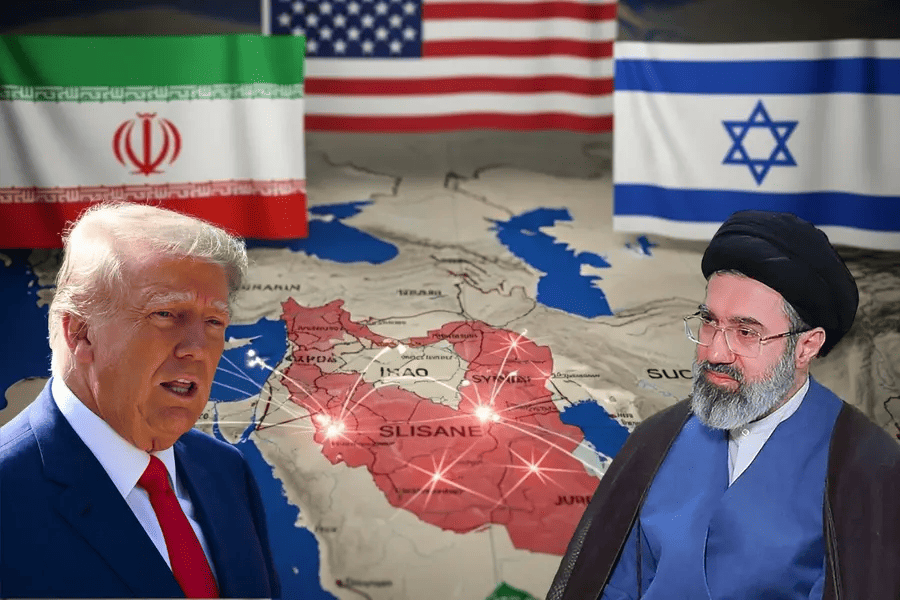
Tensions between Iran, the United States and Israel have sharply escalated as ceasefire efforts stall and military strikes intensify across the region.
Source: mathrubhumi
Iran Ceasefire Rejection: Market Reaction and Betting Activity Surge
- Iran’s rejection triggered a sharp spike in short-term betting activity, as traders repositioned around stalled ceasefire negotiations.
- A $27M+ surge in prediction market bets signals heightened speculation, driven by uncertainty rather than a confirmed shift in ceasefire outlook.
- Market volatility increased immediately, with pricing movements reflecting short-term reactions to geopolitical developments, not long-term conviction.
Will Iran Ceasefire? Latest Predictions and Market Odds
Prediction markets indicate a limited near-term likelihood of an Iran ceasefire, with recent trading activity and pricing trends pointing toward an extended timeline rather than immediate resolution.

Current Iran Ceasefire Probability (Short vs Long Term)
Prediction market data shows that short-term contracts remain skewed against an immediate ceasefire, reflecting expectations of continued conflict in the near term.
Longer-term contracts, however, begin to price in a higher probability of resolution, suggesting that market expectations shift as timelines extend into late 2026.
Polymarket vs Kalshi Iran Ceasefire Odds Comparison
Both Polymarket and Kalshi indicate a similar directional outlook: low probability of a near-term Iran ceasefire, with gradually higher expectations over longer timelines.
Polymarket reacts faster to geopolitical headlines due to higher liquidity and global participation, while Kalshi reflects more stable pricing through its regulated structure.
| Category | Polymarket | Kalshi |
| Market Type | Decentralized prediction market | Regulated prediction market |
| Reaction Speed | Fast — reacts quickly to breaking geopolitical news | Slower — reflects gradual pricing adjustments |
| Market Sentiment | Real-time, sentiment-driven | More stable, less reactive |
| Trading Volume | Higher prediction market trading volume | Lower trading activity |
| Volatility | High — rapid price fluctuations | Lower — smoother probability changes |
| Use Case | Short-term Iran ceasefire sentiment tracking | Long-term probability outlook |
| Pros | Fast signals, early trend detection, high liquidity | Stability, regulated structure, clearer long-term trends |
| Cons | Overreactive to headlines, high volatility, less structured | Slower updates, lower volume, delayed sentiment capture |
Polymarket is more effective for tracking short-term Iran ceasefire sentiment and market reactions, while Kalshi provides a clearer signal of long-term probability expectations and sustained market positioning.
Iran Ceasefire Yes vs No Market Breakdown
Prediction market positioning shows that near-term markets are dominated by the “No” outcome, indicating that traders do not expect an immediate ceasefire.
In contrast, the “Yes” side becomes more active in longer-duration contracts, reflecting conditional optimism tied to future diplomatic progress.
Iran Ceasefire Trading Volume and Market Sentiment
Prediction market trading volume linked to Iran ceasefire outcomes has increased following recent developments, signaling rising participation rather than a decisive directional shift.
Overall sentiment remains cautious, with market behavior driven by short-term reactions to geopolitical events, while maintaining a bias toward an extended resolution timeline.
Will Iran Ceasefire: Bull vs Bear Scenarios
The outlook for an Iran ceasefire remains uncertain, with current geopolitical conditions supporting both faster resolution scenarios and continued conflict risks.
Bull Scenario — Conditions for a Faster Iran Ceasefire
A faster Iran ceasefire would likely require a clear diplomatic breakthrough, backed by coordinated international mediation and sustained negotiation progress.
Stronger external pressure from global powers, combined with economic or energy disruptions—such as rising oil prices—could increase incentives for all parties to move toward de-escalation.
| Factor | Impact on Ceasefire Probability |
| Diplomatic breakthrough | Directly accelerates negotiations toward agreement |
| International mediation | Increases pressure for coordinated resolution |
| Global power involvement | Aligns incentives across key stakeholders |
| Rising oil prices | Creates economic urgency to stabilize the region |
| Sustained negotiation progress | Builds momentum toward a formal ceasefire |
Bear Scenario — Why Iran Ceasefire May Be Delayed
A delayed Iran ceasefire remains the base-case scenario, driven by ongoing regional tensions and unresolved strategic priorities.
Stalled negotiations, along with competing geopolitical interests, create conditions where prolonging conflict may be viewed as more advantageous than reaching an immediate agreement.
| Factor | Impact on Ceasefire Probability |
| Ongoing regional tensions | Sustains conflict conditions |
| Unresolved strategic objectives | Reduces incentive to compromise |
| Stalled or failed negotiations | Delays any formal agreement |
| Competing geopolitical interests | Creates friction between key players |
| Tactical advantage in prolonging conflict | Encourages delay over resolution |
Background: What Is Driving the Iran Ceasefire Talks?
Iran ceasefire discussions are shaped by regional instability, diplomatic positioning, and global strategic interests, making outcomes complex and highly sensitive to new developments.
Combination images of U.S. Middle East envoy Steve Witkoff and Iran's Foreign Minister Abbas Araghchi. Photo: Mandel NGAN and Amer HILABI / AFP) (Photo by MANDEL NGANAMER HILABI/AFP via Getty Images)
Causes, Current Situation, and Key Countries
The conflict is rooted in longstanding geopolitical tensions and regional power dynamics, involving multiple actors with competing objectives.
The situation remains fluid, with intermittent escalation and ongoing diplomatic efforts influencing the direction of talks. Key countries include regional actors and major global powers, whose interests continue to shape the pace and likelihood of any Iran ceasefire.
Best Tool to Track Iran Ceasefire Prediction Market Trends: Bitget Wallet
Tracking Iran ceasefire prediction market trends requires access to real-time on-chain data, liquidity shifts, and fast execution tools, especially as geopolitical developments rapidly influence market sentiment.

How Bitget Wallet Tracks Iran Ceasefire Prediction Market Trends in Real Time
- Surfaces trending tokens and narratives linked to geopolitical events, helping users identify early market reactions
- Detects on-chain activity and liquidity movements, which often signal shifts in prediction market sentiment before pricing stabilizes
- Aggregates data across 130+ blockchains, enabling broader visibility into cross-market trends and capital flow
- Provides integrated swap tools for fast execution during high-volatility periods, when timing becomes critical
- Maintains full self-custody, allowing users to act on market signals without relying on centralized platforms
This allows users to track real-time market signals and respond more effectively to narrative-driven trends shaped by geopolitical developments.
Conclusion
Prediction markets currently indicate that an Iran ceasefire is unlikely in the near term, with trading activity and probability signals pointing toward a delayed resolution rather than immediate peace. The recent surge in betting volume highlights how quickly sentiment can shift, but also reinforces that market reactions are driven by evolving geopolitical developments, not certainty.
For users following this narrative, the key is not predicting exact outcomes but understanding how probability, liquidity, and sentiment interact in real time. By tracking these signals and maintaining disciplined execution, traders can better navigate volatility as the Iran ceasefire outlook continues to evolve throughout 2026.
Track the Iran ceasefire narrative in real time—monitor market signals, spot shifts early, and act with precision using Bitget Wallet.
Sign up Bitget Wallet now - grab your $2 bonus!
FAQs
1. Will Iran ceasefire soon?
Prediction market data indicates a low probability of a near-term Iran ceasefire, with most traders expecting continued tensions rather than immediate resolution.
2. What are the odds of an Iran ceasefire in 2026?
Markets suggest higher probability for a ceasefire later in 2026, reflecting expectations of prolonged negotiations before any agreement is reached.
3. How accurate are prediction markets like Polymarket for geopolitical events?
Prediction markets reflect real-time crowd sentiment and probability estimates, but they are not definitive. Accuracy depends on liquidity, information flow, and evolving geopolitical conditions.
4. How much is being bet on Iran ceasefire predictions?
Iran ceasefire markets have seen multi-million-dollar trading volume, including recent spikes above $27M in short-term activity, signaling strong trader interest and volatility.
5. Why do prediction markets matter for events like an Iran ceasefire?
They provide live probability signals, helping users understand how global participants are pricing outcomes based on risk, news, and market sentiment.
Risk Disclosure
Please be aware that cryptocurrency trading involves high market risk. Bitget Wallet is not responsible for any trading losses incurred. Always perform your own research and trade responsibly.