


What is BlockDAG (BDAG)? A Strategic Assessment of Its Presale Momentum and Layer-1 Ambitions
What is BlockDAG (BDAG)? BlockDAG (BDAG) represents a next-generation Layer-1 infrastructure model, blending traditional blockchain security with Directed Acyclic Graph (DAG) architecture to improve scalability and throughput. BlockDAG (BDAG) uses advanced distributed ledger design to bring parallel transaction processing into the digital asset space. By combining blockchain principles with DAG structure, it unlocks higher transaction capacity while aiming to maintain decentralization and network security.
With reported large-scale presale participation and a rapidly growing global community, BlockDAG (BDAG) is positioning itself as a high-throughput Layer-1 alternative focused on mining incentives, smart contract compatibility, and ecosystem expansion. More than just a token, BDAG functions as the core utility asset for transaction fees, mining rewards, staking incentives, and future dApp activity within the network.
This article breaks down BlockDAG (BDAG), covering its architecture, tokenomics, ecosystem design, and long-term positioning. If you're looking to understand how DAG-based Layer-1 networks work, evaluate BDAG’s risk-reward profile, or assess its market trajectory in 2026, this guide provides a structured overview.
Unlock cross-chain DeFi and stablecoin savings easily in Bitget Wallet.
Key Takeaways
- BlockDAG (BDAG) is a Layer-1 network using DAG architecture, enabling parallel transaction processing to improve scalability and throughput compared to traditional blockchains.
- BDAG is the core utility token, used for transaction fees, mining rewards, staking incentives, and future ecosystem governance and dApp interactions.
- The project gained attention through a large presale and aggressive growth strategy, but remains a high-risk, early-stage infrastructure play with execution and listing uncertainties to consider.
What Is BlockDAG (BDAG): Overview and Key Features
BlockDAG (BDAG) is a Layer-1 infrastructure token built on its own BlockDAG native network, which combines blockchain security principles with a Directed Acyclic Graph (DAG) structure. The project represents a modern evolution of Proof-of-Work systems, aiming to enhance scalability while maintaining decentralization. The project embodies the following values:
- Scalability through parallel transaction processing (DAG structure)
- Decentralized security supported by hybrid PoW consensus
- Community-driven mining and ecosystem expansion
BlockDAG (BDAG) moves beyond traditional linear block production by enabling multiple blocks to be processed simultaneously, reducing congestion and increasing throughput. Rather than focusing on cultural symbolism, the project applies distributed ledger innovation to Layer-1 infrastructure development, building a performance-oriented, miner-inclusive, and ecosystem-focused blockchain environment.
Source: X
BlockDAG (BDAG) continues to attract attention after its large-scale presale phase, with the team signaling progress toward mainnet deployment and broader exchange exposure in 2026.
BlockDAG (BDAG) Listing Details and Launch Date
1. Key Listing Information
Here are the important details about the BlockDAG (BDAG) listing:
- Exchange: To be announced
- Trading Pair: BDAG/USDT
- Deposit Available: To be announced
- Trading Start: To be announced
- Withdrawal Available: To be announced
Don’t miss your chance to start trading BlockDAG (BDAG) on exchanges and be part of this groundbreaking journey once official listings are confirmed.
- Please refer to the official announcement for the most accurate schedule.
BlockDAG (BDAG) Future Price Outlook: 2026 and Beyond
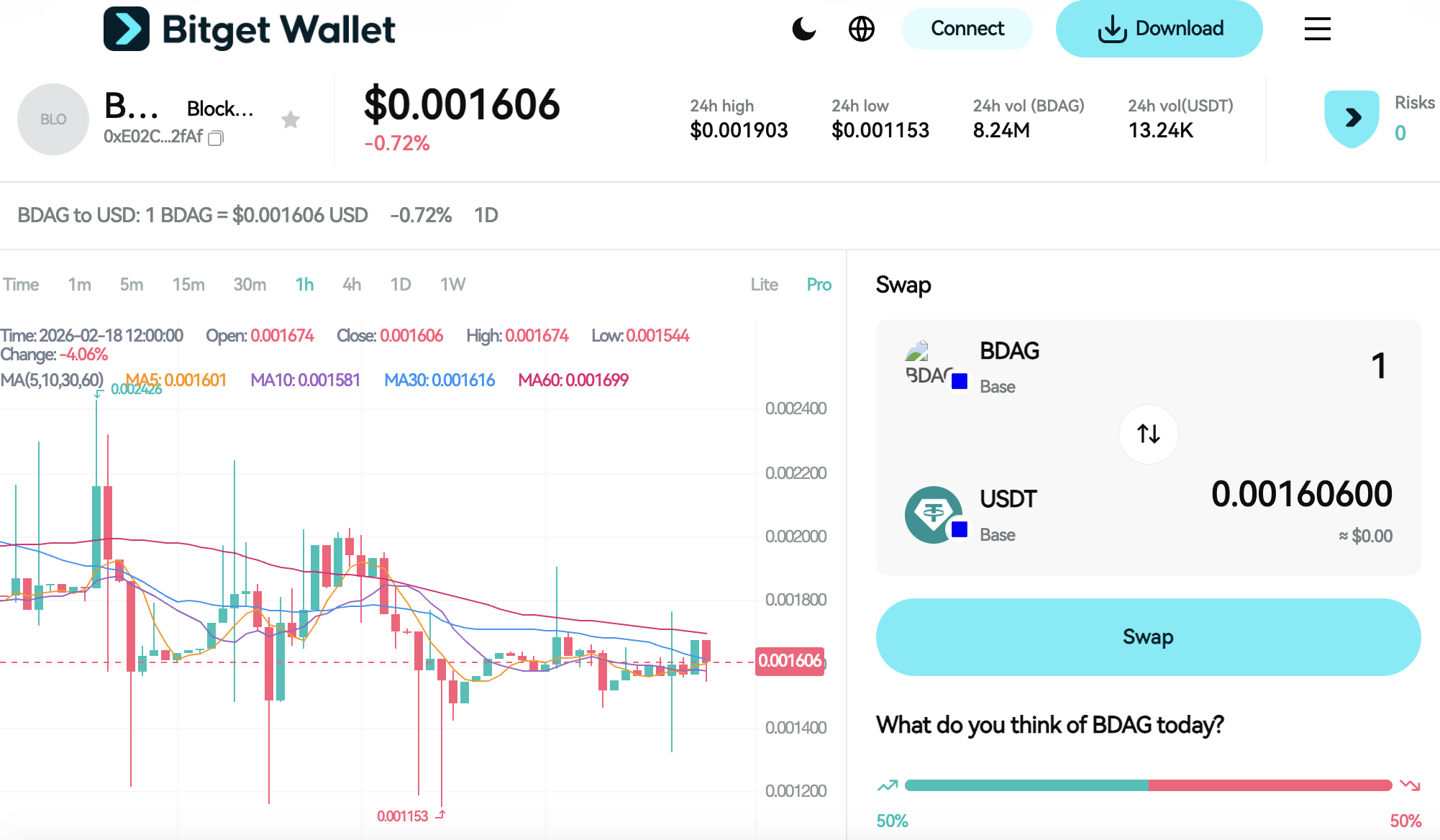
Market cycles, execution milestones, liquidity access, and total token supply structure will influence BDAG’s valuation trajectory. Based on its fixed total supply of 150 billion BDAG, valuation modeling can be constructed using Fully Diluted Valuation (FDV) scenarios. If BlockDAG secures moderate adoption and achieves a $3B–$8B FDV range — consistent with emerging Layer-1 peers — BDAG may trade within an estimated $0.02 – $0.07 range.
If ecosystem expansion accelerates significantly and the network approaches a $15B–$20B FDV tier during a strong crypto cycle, BDAG could potentially rise toward $0.10 – $0.13. Higher levels beyond that would require top-tier Layer-1 adoption scale and sustained institutional liquidity.
What Affects BlockDAG (BDAG) Price?
Several factors influence the potential price trajectory of BlockDAG (BDAG):
-
Investor Sentiment:
Early-stage Layer-1 tokens are highly sensitive to market cycles, narrative momentum, and speculative positioning during listing and post-launch phases.
-
Adoption & Demand:
Network activity — including miner participation, smart contract deployment, dApp usage, and transaction volume — determines whether BDAG develops organic demand beyond presale distribution.
-
Regulatory Influence:
Jurisdictional policies affecting token sales, mining incentives, and digital asset classification may impact exchange accessibility and capital inflows.
Future Price Prospects
If BlockDAG (BDAG) continues expanding its infrastructure and secures consistent developer and user adoption, increased demand for transaction fees, staking, and mining rewards could support higher valuation tiers. Under favorable macroeconomic conditions and strong execution, BDAG’s modeled long-term range could extend toward $0.10+.
However, investors must carefully consider token unlock schedules, liquidity depth, market competition among Layer-1 networks, and broader economic conditions before forming expectations.
Source: BlockDAG, Bitget Wallet
Source: Bitget Wallet
Why BlockDAG (BDAG) Stands Out: Essential Features
The standout features of BlockDAG (BDAG) include:
1. DAG-Based Parallel Block Processing
BlockDAG replaces the traditional linear blockchain structure with a Directed Acyclic Graph (DAG) architecture, allowing multiple blocks to be confirmed simultaneously rather than sequentially. This parallel processing model aims to increase throughput, reduce congestion, and improve scalability compared to conventional Proof-of-Work chains. Instead of waiting for a single block to finalize before producing the next, the network can validate multiple transactions concurrently, theoretically enhancing performance efficiency.
2. Hybrid Proof-of-Work Security Model
Unlike many newer Layer-1 networks that rely solely on Proof-of-Stake, BlockDAG incorporates a hybrid PoW-based consensus approach. This design is positioned to retain the security principles associated with mining-based networks while integrating DAG scalability mechanics. Mining incentives remain central to token distribution, with a significant portion of BDAG supply allocated to miners, reinforcing decentralization through participation incentives.
3. Mining-Focused Ecosystem & Mobile Accessibility
BlockDAG differentiates itself through its emphasis on community mining participation, including the promotion of mobile mining via the BlockDAG X1 application. This lowers the technical barrier for entry compared to traditional ASIC-based mining models. By combining accessibility with large token allocation toward mining rewards, the project aims to broaden participation and expand its ecosystem footprint before full-scale exchange liquidity.
Understanding BlockDAG (BDAG): The Technology Behind It
BlockDAG is a decentralized Layer-1 blockchain project designed to enhance scalability while maintaining Proof-of-Work–based network security. By combining a Directed Acyclic Graph (DAG) structure with blockchain principles, it aims to improve transaction throughput and mining participation while supporting smart contract functionality and token-based incentives.
Below is a step-by-step overview of how the BlockDAG ecosystem works:
| Step | Process | Benefit |
| 1. Blockchain Integration | BlockDAG runs on its own native Layer-1 network using a DAG-based architecture with hybrid PoW consensus. | Enables parallel transaction validation while preserving decentralized security. |
| 2. Token Transactions | Users can acquire, transfer, and utilize $BDAG for transaction fees, mining rewards, and ecosystem activity. | Facilitates value exchange and network utility within the protocol. |
| 3. Smart Contracts | The network is designed to support smart contract deployment (EVM compatibility has been referenced in project materials). | Allows dApp development and programmable financial interactions. |
| 4. Governance Participation | Future ecosystem governance mechanisms may allow token holders to influence network upgrades and strategic decisions. | Encourages community involvement in long-term protocol direction. |
| 5. Mining & Incentive Model | A large portion of BDAG supply is allocated to mining rewards, including mobile-access mining participation (X1 app). | Expands decentralization and incentivizes network security through participation. |
Who Leads BlockDAG (BDAG) – Team & Key Partnerships
| Section | Details |
| The Team | BlockDAG is presented as being led by a publicly introduced core team featured in project materials and promotional events. Leadership profiles have been shared through official channels, positioning the team as experienced in blockchain development, marketing, and infrastructure scaling. However, detailed third-party background verification of all executives remains limited in independent research databases. |
| The Vision | The project’s stated goal is to build a high-throughput Layer-1 network combining DAG scalability with Proof-of-Work security. BlockDAG aims to create a mining-inclusive ecosystem capable of supporting smart contracts, decentralized applications, and large-scale transaction processing within the broader Web3 infrastructure sector. |
| Partnerships | BlockDAG has referenced collaboration efforts related to exchange coordination, hardware mining distribution, and ecosystem development initiatives. While promotional materials mention coordination with multiple exchanges and mining hardware channels, independently verifiable long-term strategic institutional partnerships remain limited at this stage. |
How BlockDAG (BDAG) Is Used: Practical Benefits
BlockDAG (BDAG) serves a variety of purposes within its Layer-1 ecosystem, including:
-
Transaction Fees
BDAG is used to pay network fees for processing transactions on the BlockDAG chain, supporting validation and block confirmation within its DAG-based infrastructure.
-
Mining Rewards & Network Security
A significant portion of the total supply is allocated to miners. BDAG incentivizes participants to secure the network through its hybrid Proof-of-Work structure, including participation via dedicated mining hardware and mobile-access mining tools.
-
Ecosystem Utility & Smart Contract Interaction
BDAG is designed to function as the core utility asset for smart contract deployment, decentralized application usage, and future ecosystem services such as staking and governance mechanisms.
These applications highlight the practical role of $BDAG within the Layer-1 blockchain infrastructure sector, where it operates as both a transactional asset and a network incentive mechanism.
BlockDAG (BDAG) Roadmap 2026: Key Milestones and Expansion Plans
The roadmap for BlockDAG (BDAG) outlines a phased transition from presale-driven development to full Layer-1 operational deployment:
| Quarter | Roadmap |
| Q1 2026 | Finalization of presale phases, token distribution preparation, infrastructure stress testing, and continued expansion of mining participation (including X1 mobile mining ecosystem growth). |
| Q2 2026 | Mainnet rollout milestones, validator/miner onboarding expansion, smart contract environment refinement, and initial ecosystem dApp onboarding initiatives. |
| Q3 2026 | Broader exchange coordination efforts, ecosystem tooling improvements, developer incentive programs, and potential DeFi integration pilots. |
| Q4 2026 | Network scalability optimization, cross-ecosystem integrations, governance framework progression, and long-term infrastructure stabilization efforts. |
These milestones reflect BlockDAG’s positioning within the Layer-1 blockchain infrastructure sector, where $BDAG functions as a utility, mining incentive, and network participation asset supporting long-term ecosystem expansion.
How to Buy BlockDAG (BDAG) on Bitget Wallet?
Trading BlockDAG (BDAG) is easy on Bitget Wallet. Follow these simple steps to get started:
Step 1: Create an Account
If you don't have an account, download the Bitget Wallet app. Sign up by providing the necessary information and verifying your identity.
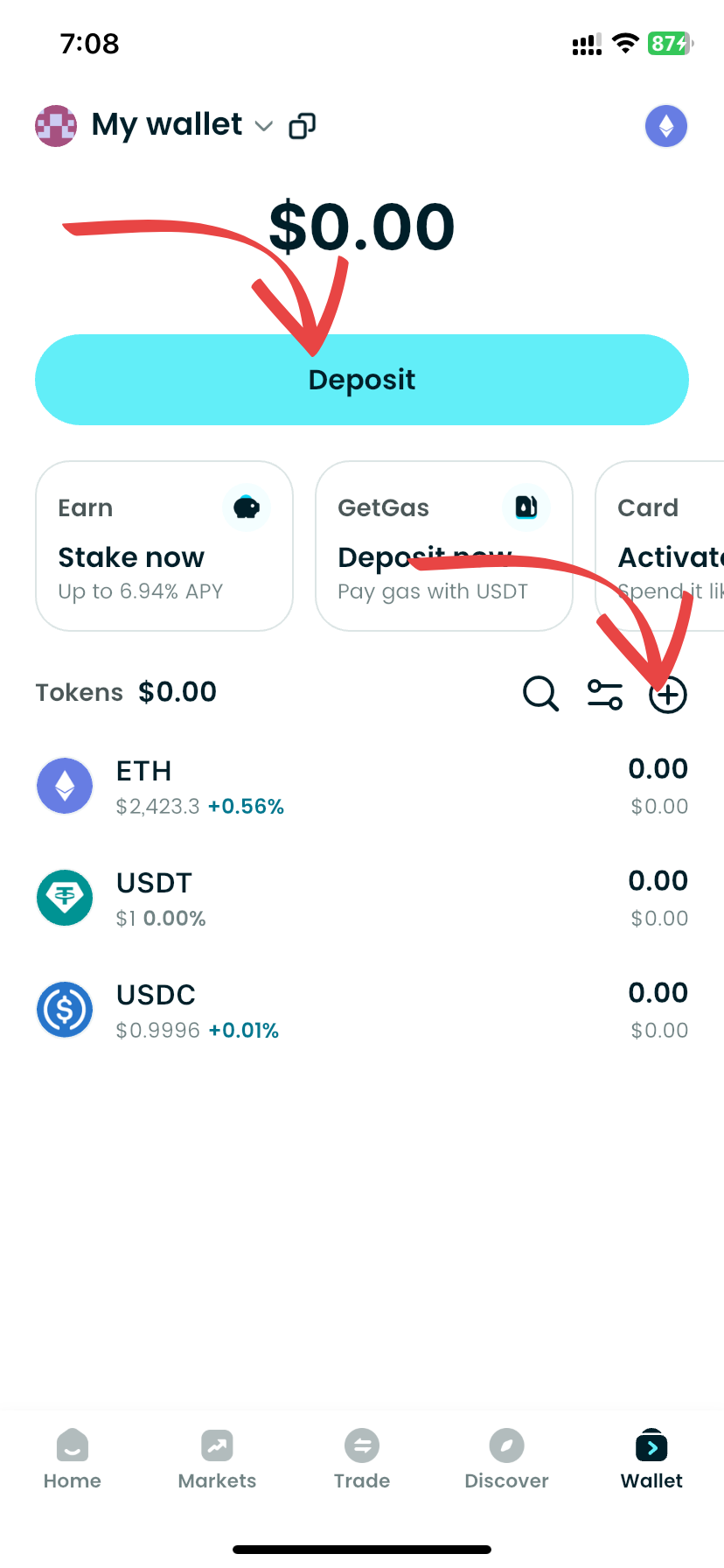
Step 2: Deposit Funds
Once your account is set up, you need to deposit funds. You can do this by:
- Transferring Cryptocurrency: Send crypto from another wallet.
- Buying Crypto: Use a credit or debit card to purchase crypto directly on Bitget Wallet, ensuring you have enough funds for trading BlockDAG (BDAG).
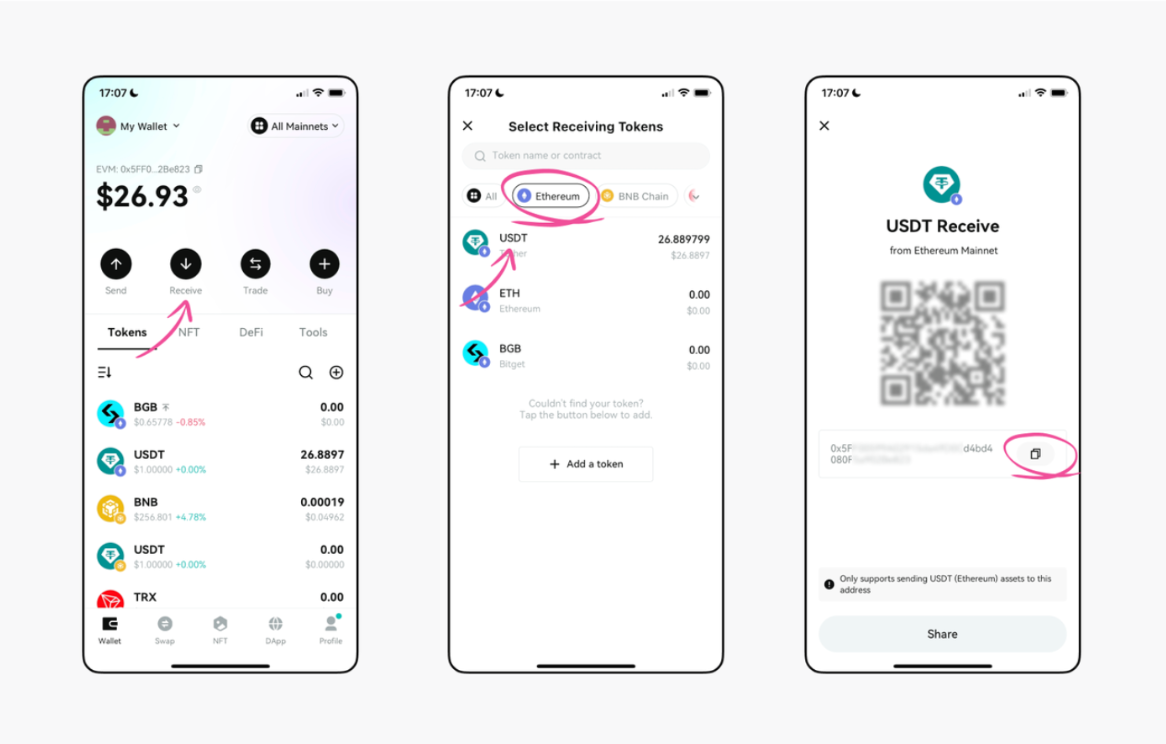
Step 3: Find BlockDAG (BDAG)
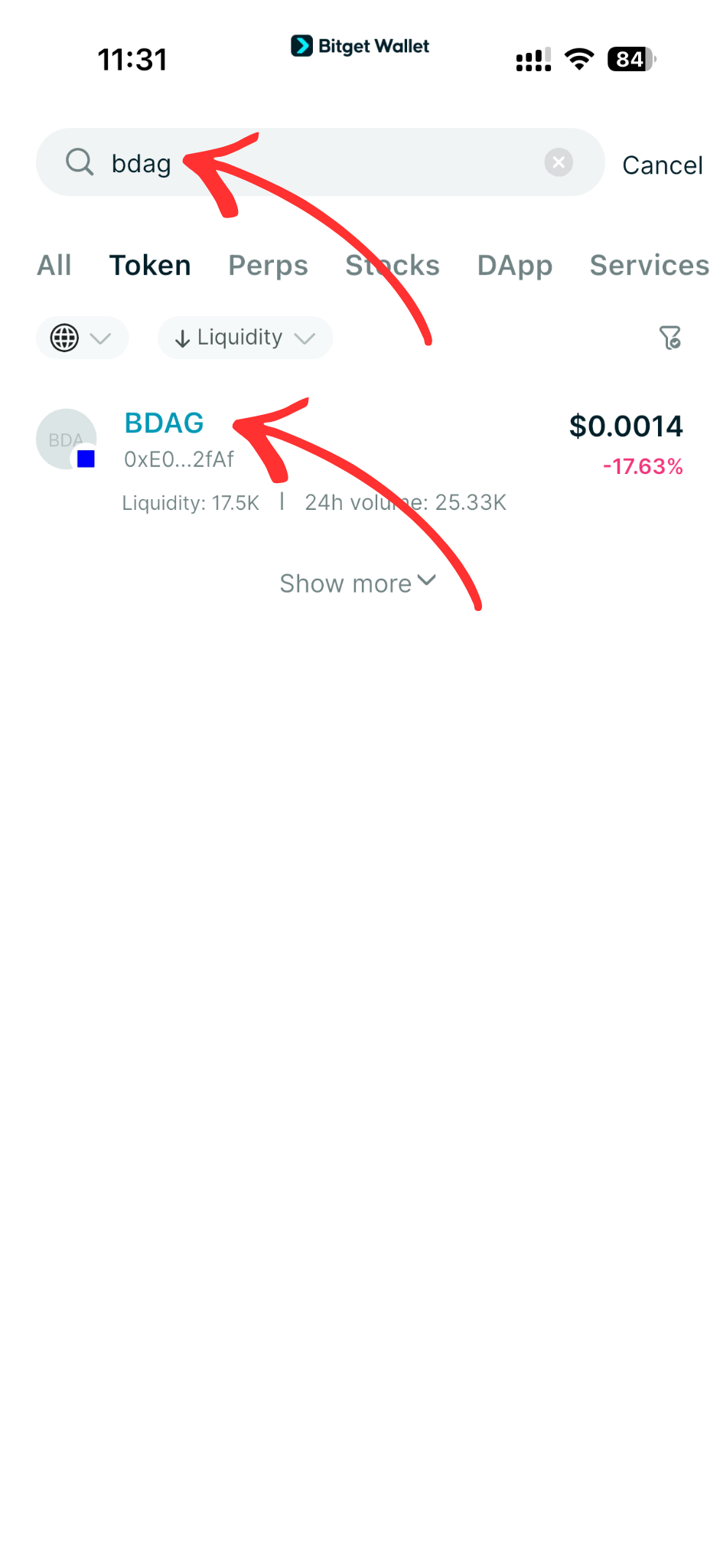
In the Bitget Wallet interface, navigate to the market section. Use the search bar to find BlockDAG (BDAG). Click on the token to view its trading page.
Since this token has not been listed yet, please refer to the final contract address provided by the project team after the token is officially listed.
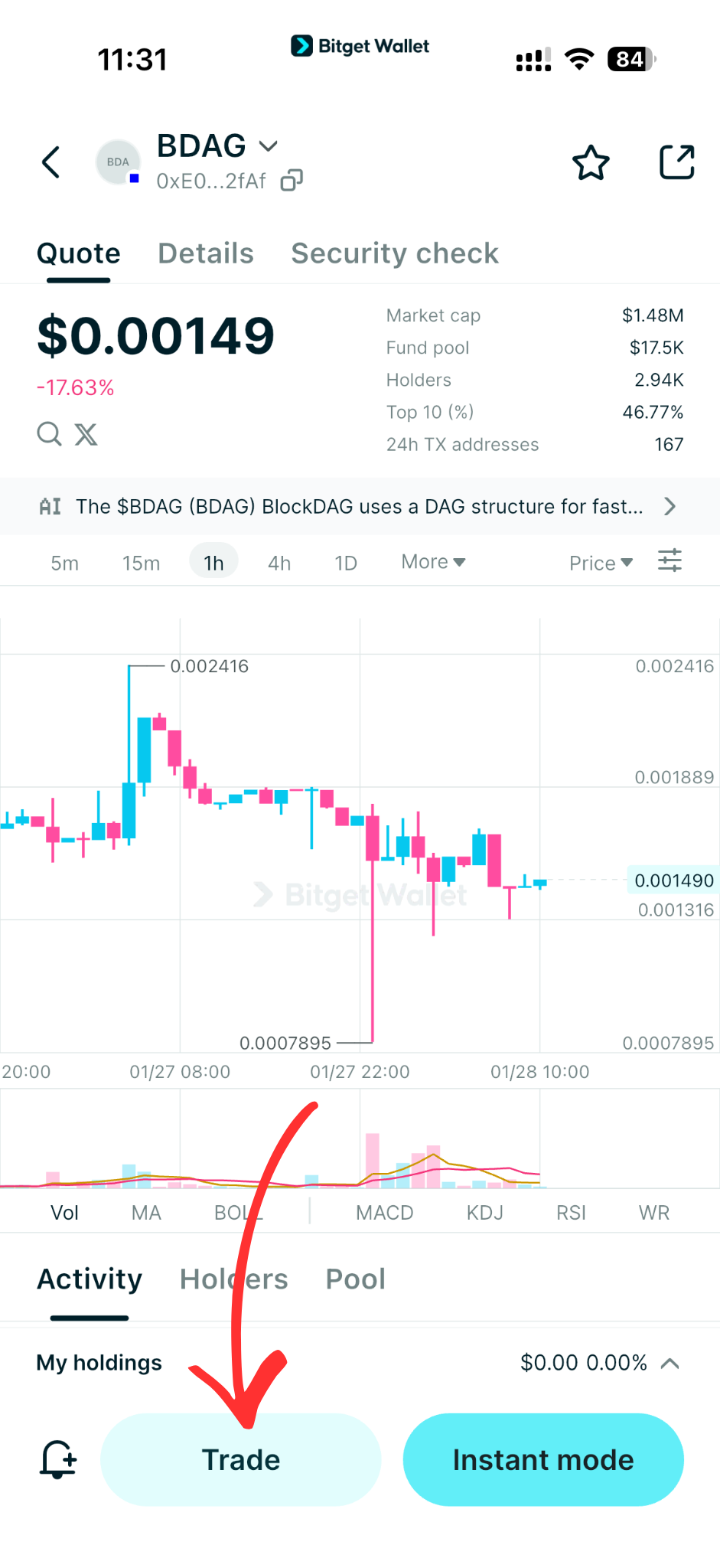
Step 4: Choose Your Trading Pair
Select the trading pair you wish to use, such as BDAG/USDT. This will allow you to trade BlockDAG (BDAG) against USDT or another cryptocurrency.
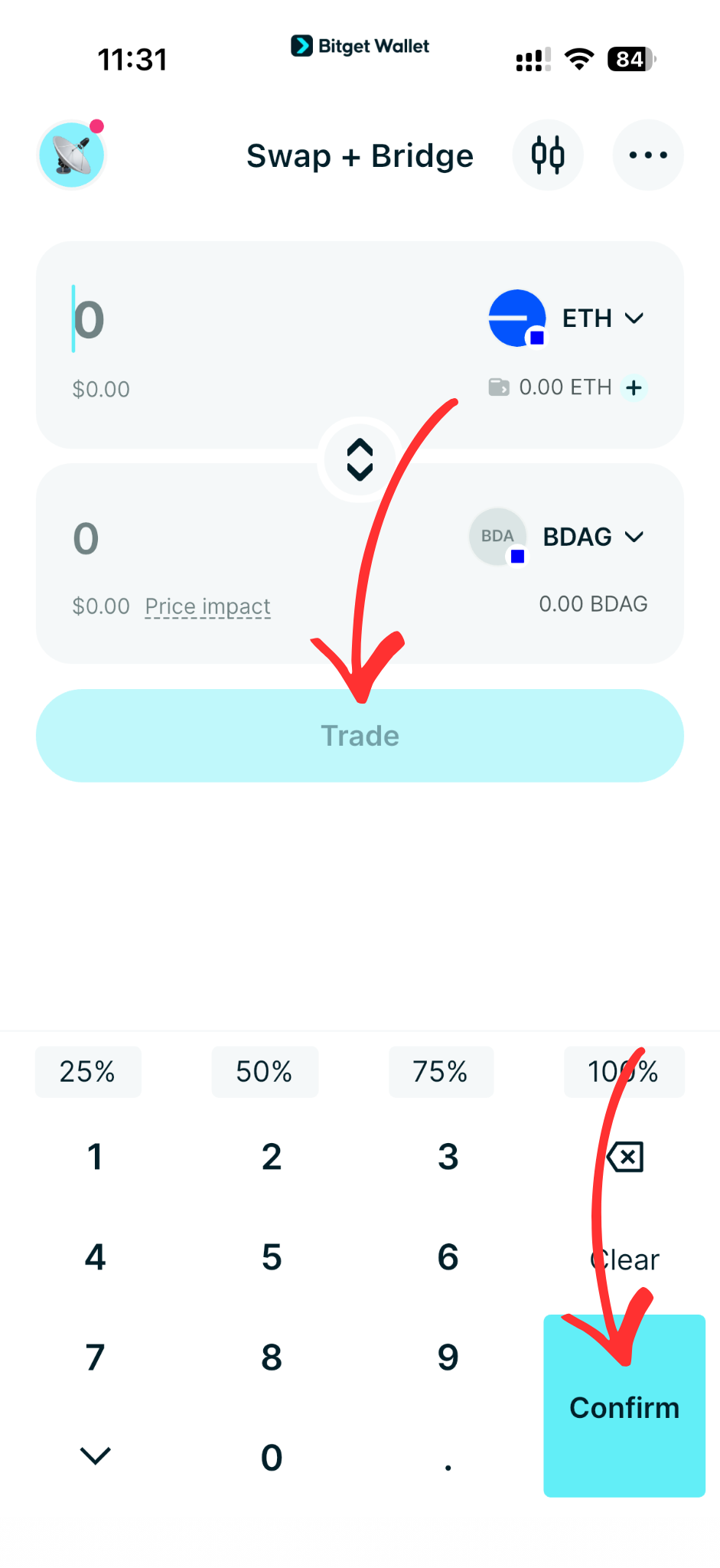
Step 5: Place Your Order
Decide whether you want to place a market order (buy/sell at the current market price) or a limit order (set your own price). Enter the amount of BlockDAG (BDAG) you wish to buy or sell, then confirm your order.
Step 6: Monitor Your Trade
After placing your order, you can monitor its status in the “Open Orders” section. Once the order is executed, you can check your balance to see your newly acquired BlockDAG (BDAG).
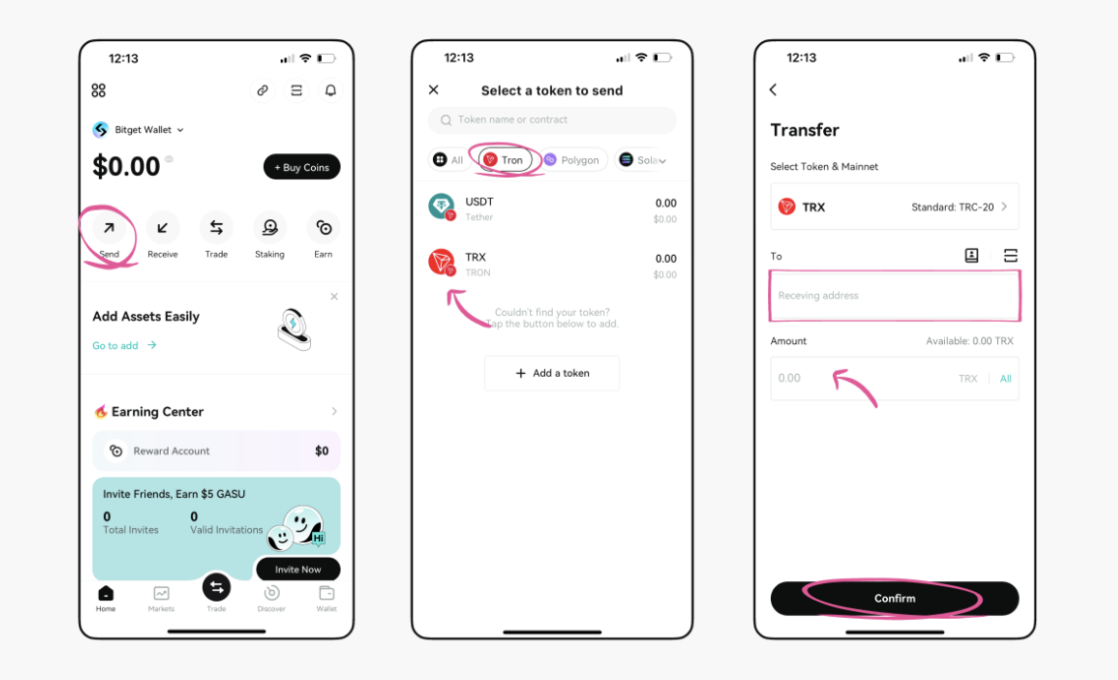
Step 7: Withdraw Your Funds (Optional)
If you wish to transfer your BlockDAG (BDAG) or any other cryptocurrency to another wallet, navigate to the withdrawal section, enter your wallet address, and confirm the transaction.
▶Learn more about BlockDAG (BDAG):
Conclusion
BlockDAG (BDAG) positions itself as a scalability-focused Layer-1 project combining DAG-based parallel processing with Proof-of-Work security. Throughout this article, we explored its architecture, tokenomics, roadmap, and valuation modeling. While still in an early-stage development phase, BlockDAG’s emphasis on mining incentives, infrastructure growth, and ecosystem expansion makes it a high-risk but high-upside infrastructure contender within the evolving blockchain sector.
For users looking to access BDAG efficiently, using Bitget Wallet provides a secure and flexible gateway. As a non-custodial wallet, Bitget Wallet allows users to maintain full control over their assets while accessing multi-chain swaps, real-time on-chain trading, and seamless token management. With features such as cross-chain aggregation, strong security standards, and an intuitive interface, Bitget Wallet enhances the buying experience by combining secure asset storage, efficient swap execution, and broad Web3 accessibility — making it a practical choice for acquiring and managing BDAG.
Manage all your tokens in one beginner-friendly app – download Bitget Wallet today.
Sign up Bitget Wallet now - grab your $2 bonus!
FAQs
1. What is BlockDAG (BDAG)?
BlockDAG (BDAG) is a Layer-1 blockchain project that combines Directed Acyclic Graph (DAG) architecture with Proof-of-Work security. It aims to improve scalability by enabling parallel block processing while maintaining decentralized network validation.
2. Is BlockDAG (BDAG) listed on major exchanges?
As of now, BDAG does not have a confirmed Tier-1 centralized exchange listing. Users should verify official exchange announcements before assuming live trading availability.
3. What is the total supply of BDAG?
The total supply of BDAG is 150 billion tokens, according to the project’s official tokenomics documentation. A large portion is allocated to mining rewards and ecosystem development.
4. How can I buy BlockDAG (BDAG)?
Users can acquire BDAG through supported platforms once officially available, or via wallet-based swaps when liquidity exists. Always verify the correct contract address before purchasing.
5. What affects the future price of BlockDAG (BDAG)?
BDAG’s price will depend on network adoption, exchange liquidity, mining participation, macro market conditions, token unlock schedules, and overall investor sentiment toward Layer-1 infrastructure projects.
Risk Disclosure
Please be aware that cryptocurrency trading involves high market risk. Bitget Wallet is not responsible for any trading losses incurred. Always perform your own research and trade responsibly.
 Top Arc Tokens and Memecoins: What’s Trending on Arc Mainnet2026-09-16 | 5 mins
 Circle Arc Mainnet Launch: What Is Arc and Why Does It Matter?2026-09-14 | 5 mins
 Top Robinhood Chain Memecoins 20262026-09-09 | 5 mins



